The best ski boots for large calves combine a wider upper cuff, easy adjustment, warmth, and secure heel hold.
If standard ski boots pinch your shins, leave red marks, or make you dread the walk from the car to the lift, you are not alone. A large calf needs room in the cuff, but the boot must still hold your heel and support your turns. I reviewed these 10 options for comfort, adjustability, fit, and value. This 2026 guide will help you find the best ski boots for large calves without guessing from a product photo alone.
Rossignol Kelia 50 Women’s Ski Boots

The Rossignol Kelia 50 is a gentle, comfort-first boot for women who want a less demanding ride. Its softer flex can feel more forgiving than a stiff performance boot. That matters when a tight cuff causes pressure around a fuller calf. I would place this model on the shortlist for new skiers and relaxed resort days.
The Kelia 50 also makes sense for skiers who value easy control over race-level power. A softer boot can let you bend your knees without feeling locked in place. Still, the listed size and shell shape matter more than the name on the box, so check the fit guide before ordering. For the best ski boots for large calves, comfort should never mean a loose heel.
Pros:
- Soft flex feels friendly for beginners
- Comfort-focused design suits long resort days
- Less intimidating than a stiff race boot
- Women-specific shape may improve overall fit
- Good choice for calm, controlled turns
- Rossignol offers a familiar ski-boot name
Cons:
- Soft flex may feel less powerful at high speed
- Calf room still depends on leg shape and size
- May not satisfy advanced skiers seeking a firm response
My Recommendation
The Rossignol Kelia 50 is best for a beginner or casual woman skier who needs a softer, more forgiving boot. I like it for groomed runs, ski lessons, and moderate speeds. It can be a strong value pick among the best ski boots for large calves, but I would confirm the upper-cuff fit before buying. Availability and size selection can change, so compare the seller’s current chart with your foot and calf measurements.
K2 BFC 80 Men’s Ski Boots
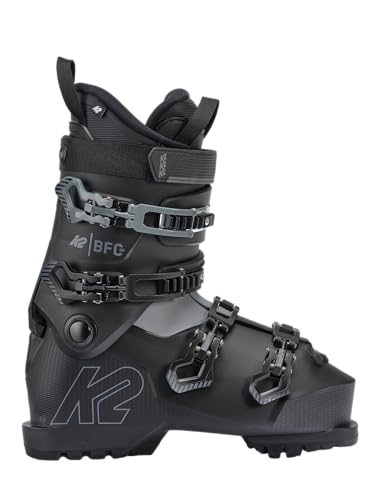
The K2 BFC 80 is built around the idea that a ski boot should not feel like a vise. BFC stands for comfort-focused boot design, and this model targets skiers who want easier entry and a roomier feel. Its 80 flex sits in a useful middle ground for many progressing men. It should give more support than a very soft beginner boot while remaining manageable.
I would consider the BFC 80 when a broad foot and a fuller calf make narrow boots painful. The roomy lower fit can reduce pressure, while the buckles let you set a more secure hold when needed. Do not assume that “wide” means every calf will fit; the cuff still needs a real try-on. A thin ski sock and careful buckle tension can also make a large difference.
Pros:
- Comfort-led design helps reduce pressure points
- Moderate flex suits many intermediate skiers
- Roomier feel benefits broad feet
- Easy entry can help skiers with limited mobility
- Adjustable buckles allow a more secure fit
- Useful for full days on groomed trails
Cons:
- May feel too soft for expert, aggressive skiing
- Exact calf clearance varies by size
- Roomy fit can reduce precision if sized poorly
My Recommendation
I recommend the K2 BFC 80 to men who want comfort, useful support, and a less restrictive fit. It is especially appealing to recreational and intermediate skiers with broad feet or large calves. Of these choices, it is one of the more natural starting points for a comfort-driven fit search. Buy from a seller with a clear return policy, since boot fit cannot be judged by the stated last width alone.
Rossignol Kelia 50 Women’s Boots, Alternate Size
This second Kelia 50 listing represents another size or seller option for the same comfort-minded women’s boot. That distinction matters because ski boots are sold in Mondopoint sizes, and a small size change can alter both foot volume and cuff position. The model’s soft character remains useful for beginners. It is a sensible option for skiers who want simple control rather than maximum stiffness.
When I assess boots for large calves, I look beyond the shell color and advertised size. I check whether the cuff can close without forcing the shin forward or cutting into the leg. The Kelia 50 may work well with a medium-thickness ski sock and careful buckle adjustment. Buyers should compare calf measurements, foot length, and the retailer’s return terms before choosing this listing.
Pros:
- Forgiving flex supports first-time skiers
- Comfortable feel can reduce early fatigue
- Women’s model may provide a better lower-leg shape
- Simple design is easy to learn in
- Suitable for groomed resort terrain
- Alternate listing may offer useful size availability
Cons:
- Limited aggressive-response capability
- Soft cuff may not suit powerful skiers
- Listing details and available sizes may vary
My Recommendation
Choose this Kelia 50 listing if the available size matches your measurements and the seller offers a practical return option. It is best for a beginner or easygoing skier who places comfort above speed. It may help a larger calf, but no women’s ski boot should be called a guaranteed wide-calf fit without measuring first. As a budget-friendly choice, it offers good basic value when the size is right.
Rossignol EVO 70 HV+ Ski Boots

The Rossignol EVO 70 HV+ stands out because “HV” signals a high-volume fit approach. That does not automatically solve every large-calf problem, but it is a helpful clue for shoppers who find standard shells too tight. The 70 flex should feel approachable for newer skiers and relaxed intermediates. I see this as a balanced choice between a soft comfort boot and a more demanding performance model.
The high-volume shape may give your foot more breathing room, especially across the forefoot. A supportive fit still matters around the heel, because excess space can cause heel lift and weak edge control. I would use thin socks, buckle the lower shell snugly, and avoid overtightening the upper cuff. For many shoppers, the EVO 70 HV+ is a strong candidate for the best ski boots for large calves.
Pros:
- High-volume design may suit fuller feet
- Moderate flex balances comfort and control
- Approachable for beginner and intermediate skiers
- Useful choice when narrow shells create pressure
- Roomier forefoot can improve all-day comfort
- Versatile enough for regular resort use
Cons:
- HV labeling does not guarantee a wide calf cuff
- 70 flex may feel mild for advanced skiers
- Fit can feel loose if your foot is narrow
My Recommendation
I would recommend the EVO 70 HV+ to a recreational skier who needs more volume but still wants basic edge support. It suits people moving beyond beginner lessons and skiing mostly groomed runs. It is one of the most logical models here for a high-volume foot and a potentially fuller lower leg. Its overall value is strong when the current seller provides the correct size and a reasonable return window.
Rossignol Kelia 50 Women’s Boots, Third Listing
This third Rossignol Kelia 50 listing gives shoppers another route to the same beginner-friendly boot. Separate listings can show different sizes, prices, or fulfillment terms, so I would compare those details before placing an order. The boot’s softer flex can make basic turns feel less tiring. It may also feel more forgiving when you are still learning how to stand centered over your skis.
A large calf often needs a cuff that closes without creating a hard pressure band. The Kelia 50 may provide a more comfortable starting point than a stiff, narrow boot, but fit remains personal. Try it with the socks you actually ski in, not thick everyday socks. If the heel moves or the cuff leaves pain after a short indoor fit test, choose another shell.
Pros:
- Friendly flex helps new skiers gain confidence
- Comfort-first design suits slow, steady learning
- May feel less harsh on a fuller lower leg
- Good match for casual weekend skiing
- Women-specific construction can improve comfort
- Multiple listings may make size hunting easier
Cons:
- Not intended as a high-performance race boot
- Large-calf fit is not guaranteed by the model name
- Separate listings may have different stock and returns
My Recommendation
This Kelia 50 option is best for a woman learning to ski or enjoying easy resort runs. I like it for users who want a soft, calm feel and a simple entry into alpine skiing. It can be a good value among the best ski boots for large calves if your shin sits comfortably inside the cuff. Confirm the size and seller policy, then make the final choice from your measurements.
Rossignol EVO 70 HV+ Alternate Listing
This alternate EVO 70 HV+ listing offers the same core model in another Amazon product entry. That can be useful when one listing has a better size, price, or delivery option. The high-volume shell concept is attractive for skiers who feel cramped in low-volume boots. Its moderate flex should remain approachable during lessons and regular resort days.
I would pay close attention to the upper buckle and the point where the cuff meets the calf. A boot can feel roomy at the toes yet still press too hard above the ankle. The right fit should hold the heel, allow normal circulation, and keep the shin supported without sharp pain. If your calf is much larger than average, a professional boot fitter may still need to adjust the cuff.
Pros:
- High-volume fit helps address cramped boots
- Moderate flex is easy to control
- Good option for progressing recreational skiers
- Roomier feel may reduce foot numbness
- Alternate listing can improve shopping flexibility
- Works well for common groomed-run use
Cons:
- May lack the power experts want
- High volume cannot replace a proper calf measurement
- Different listings may differ in stock and service
My Recommendation
I recommend this listing to shoppers who already like the EVO 70 HV+ concept and want to compare availability. It is best for a beginner-to-intermediate skier who needs room without giving up all structure. The model deserves attention in a search for the best ski boots for large calves, especially when standard boots feel narrow. Check the current product page for size, seller, and return details before buying.
Nordica Cruise S W Women’s Ski Boots
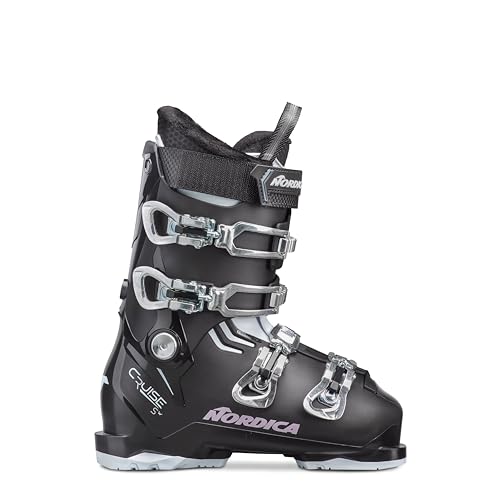
The Nordica Cruise S W is made for women who want a comfort-focused all-mountain boot. Its name points toward easy cruising, not a punishing race fit. That makes it appealing when long days, cold feet, or calf pressure matter more than maximum power. I would consider it for a new skier who wants a stable platform without an overly aggressive feel.
The comfort fit may help skiers who need more space around the foot and lower leg. However, “comfort fit” is not a substitute for checking the actual shell and cuff dimensions. A proper ski stance should feel natural, with the shin touching the tongue gently rather than being forced into it. This model could become one of the best ski boots for large calves for women who prefer relaxed all-mountain skiing.
Pros:
- Comfort-focused design suits long days
- Women-specific model may improve lower-leg comfort
- All-mountain label supports varied resort use
- Gentle feel can help beginners relax
- Roomier fit may reduce pressure on broad feet
- Nordica has strong ski equipment experience
Cons:
- May not offer enough stiffness for aggressive riders
- Actual cuff space depends on size and leg shape
- Comfort fit can feel imprecise on a narrow foot
My Recommendation
The Cruise S W is best for a woman who values comfort during easy all-mountain days. It fits the skier who wants to explore beyond the beginner slope but does not need a race-like response. I would shortlist it for a fuller calf when the boot’s cuff feels smooth and secure during a real fitting. Its value is strongest for recreational users who want a familiar brand and a forgiving ride.
Nordica The Cruise Men’s Ski Boots

Nordica The Cruise is the men’s counterpart for skiers who want comfort and simple control. It is aimed at relaxed alpine use, so I would not compare it with a stiff expert boot. The comfort fit may be helpful for a broad foot or a lower leg that dislikes a tight shell. It also makes sense for skiers who spend more time on groomers than in deep, demanding terrain.
A good fit should feel snug when the liner is new, because it will pack down with use. That does not mean accepting pain, tingling, or a hard cuff edge. I recommend standing in the boots for at least 10 to 15 minutes and flexing forward several times. The Cruise can be a practical member of the best ski boots for large calves group when comfort and easy skiing lead your priorities.
Pros:
- Comfort fit can ease pressure on the foot
- Relaxed design suits beginner and casual skiers
- Good match for groomed resort trails
- Roomy feel may help fuller lower legs
- Easygoing character reduces the learning curve
- Large listed sizes may help some men find a match
Cons:
- Too mild for very aggressive skiing
- Comfort fit can reduce precision when oversized
- Large calf fit still requires an individual check
My Recommendation
I recommend Nordica The Cruise to men who want a relaxed boot for lessons, cruising, and occasional ski trips. It is particularly suited to users who hate the cramped feel of narrow shells. It will not turn a recreational boot into a race boot, but it can make skiing more pleasant and consistent. For value, it is a sensible option when the size and cuff feel right in your actual ski socks.
Head Edge 65 W HV Women’s Boots

The Head Edge 65 W HV combines a women’s fit with a high-volume focus. That combination deserves attention from anyone who finds regular women’s boots too narrow or restrictive. A 65 flex is generally friendly for entry-level and lighter recreational skiing. I see this boot as a comfort and control option for skiers who want to build confidence on groomed runs.
The HV label may give the foot more space, while the softer flex can make forward movement easier. For a larger calf, the key test is still the upper shell: it should close with normal pressure and no sharp bite. I would also check whether your heel stays planted while you bend into a ski stance. For many women, this is a promising pick among the best ski boots for large calves.
Pros:
- High-volume shape may suit fuller feet
- Women-specific fit supports comfort goals
- Soft flex feels manageable for beginners
- May reduce pressure from narrow shells
- Good for lessons and relaxed resort days
- Simple performance level suits learning turns
Cons:
- 65 flex may feel too soft for strong skiers
- High volume does not guarantee calf clearance
- May feel loose if your foot is slim
My Recommendation
The Head Edge 65 W HV is best for a woman who needs a roomier fit and a forgiving flex. It is a good match for beginners, occasional skiers, and anyone who wants comfort before speed. I would choose it over a narrow boot if the heel stays secure and the calf feels free of pressure. Its overall value is appealing, but correct sizing remains the deciding factor.
ROCES Idea Up Adjustable Ski Boots

The ROCES Idea Up is different from the other choices because its adjustable sizing design aims to cover a range from 22.5 to 25.5. That feature can help families, rental-style users, or growing young skiers. It may also make entry easier for someone who struggles with a fixed shell. Still, an adjustable boot is not automatically the best fit for an adult with a large calf.
I would view this model as a convenience pick rather than a high-performance alpine boot. The flexible size range can be useful, but a ski boot must still hold the heel and support the ankle. Check the product’s current fit instructions and use only the intended size setting. It may work well for light use, but experienced adults may want a more precise, supportive boot.
Pros:
- Adjustable size range adds practical flexibility
- Useful for growing feet or shared equipment
- May be easier to put on than a rigid boot
- Good option for casual snow trips
- Can reduce the need for frequent replacement
- Black and silver design looks simple and clean
Cons:
- Not a dedicated large-calf adult boot
- Adjustable construction may feel less precise
- Limited size range will not fit every skier
- May not provide enough support for advanced skiing
My Recommendation
The ROCES Idea Up is best for young skiers, occasional users, or households that need adjustable sizing. I would not make it my first choice for an adult seeking the best ski boots for large calves and strong downhill control. Its main benefit is flexibility, not race-level response. It offers good practical value when its size range fits the user and the skiing will remain light and casual.
How to Choose the Best Ski Boots for Large Calves
Shopping for ski boots with large calves can feel like trying to close a suitcase that is already full. The shell may fit your foot, yet the cuff can still pinch your leg. I recommend treating foot fit and calf fit as two separate checks. Both must work before you judge comfort, warmth, or price.
Measure Your Foot and Calf
Measure your foot in Mondopoint, which uses centimeters. Stand on paper with your heel against a wall, then measure from the wall to your longest toe. Measure both feet because one can be slightly longer. For the calf, measure around the widest part while standing in the socks you plan to ski in.
Write down these numbers before browsing. Product pages may list a size, last width, or volume category, but they may not list cuff circumference. When that measurement is missing, ask the seller or visit a ski shop. A few minutes with a tape measure can prevent an expensive return.
Look for High-Volume and Comfort Fits
High-volume boots usually provide more room through the forefoot, instep, and overall shell. Comfort-fit models often use a more forgiving shape and flex. These traits can help, but they do not guarantee a wide upper cuff. A tall or muscular calf may need shell work, a different buckle position, or a boot made for a broader lower leg.
Do not buy a boot that is too long just to create calf space. An oversized boot lets the heel lift and makes the ski feel slow. Instead, find the correct length first, then solve the cuff issue through the right model or professional adjustment.
Understand Flex
Flex describes how much force the boot needs to bend forward. A lower number usually feels softer and easier to flex. That can help beginners, lighter skiers, and people who want less pressure on the shin. A higher number can give stronger skiers more support, but it may feel harsh and less forgiving.
Flex numbers are not perfectly equal across brands. An 80 in one family may not feel exactly like an 80 in another. Think of flex as a guide, not a universal test score. For many recreational skiers searching for the best ski boots for large calves, a moderate or soft flex is a comfortable place to start.
Check Heel Hold
Your toes may lightly touch the front when you stand upright. When you bend your knees, they should pull back slightly. Your heel should stay down as you flex forward. If your heel moves up and down, the boot is too large, too wide, or not closed correctly.
Good calf room should never come from loosening every buckle. The boot needs even pressure around your foot and lower leg. If you must crank the buckles until they hurt, the shell shape is likely wrong for you.
Use the Right Socks
Wear one thin ski sock. Thick socks often create pressure, reduce warmth by limiting circulation, and make a boot seem smaller than it is. Avoid cotton because it holds moisture. A smooth wool or synthetic ski sock gives a better fit test and helps manage sweat.
Consider Boot Fitting
A boot fitter can adjust a cuff, move a buckle, heat-mold a liner, or modify a shell. These changes may solve pressure that no online size chart can predict. If you have a very large calf, past injuries, or major left-right differences, professional help is worth the cost.
I would rather pay for a small adjustment than spend a full season in pain. A good boot should feel like a firm handshake, not a clamp. Never ignore numbness, tingling, cold toes, or sharp pain.
Best Features for Different Skiers
| Best for | Why |
|---|---|
| Beginner women with fuller calves | The Rossignol Kelia 50 and Head Edge 65 W HV offer softer, more forgiving starting points. |
| Men needing a roomier comfort fit | The K2 BFC 80 and Nordica The Cruise focus on easier entry and relaxed resort skiing. |
| Progressing skiers with broad feet | The Rossignol EVO 70 HV+ adds high-volume space while keeping moderate support. |
Common Ski Boot Fit Mistakes
The first mistake is choosing by shoe size alone. Ski boots use a different sizing system, and street shoes often have extra room. The second mistake is assuming a boot must feel loose to be comfortable. A correct boot feels snug but should not create pain or restrict circulation.
Another mistake is wearing two pairs of socks. This rarely fixes a fit problem. It often adds pressure and makes cold feet worse. I also advise against cutting liners or punching shells at home unless you understand the risks. A small error can damage the boot or weaken its support.
Some shoppers focus only on the word “wide.” Width can refer to the footbed, not the cuff. High-volume boots may still have a narrow calf opening. Read every measurement available, and contact the seller when the important number is missing.
How I Evaluate Ski Boots for Large Calves
I start with the fit clues in the product name, such as HV, comfort fit, or adjustable. Then I consider the flex and intended user. A beginner needs a different balance from an expert who drives hard into the front of the boot.
I also look at practical details. Can the skier enter the boot without a struggle? Can the buckles close with normal pressure? Does the boot offer enough support for the stated use? I do not treat a brand name as proof of fit, because leg shape varies from person to person.
For online buyers, return terms matter. Ski boots are personal equipment, and a product can look perfect yet fail during a real fit test. Keep the boot clean, try it indoors, and follow the seller’s return rules. Do not ski outside until you know the fit works.
FAQs Of Best Ski Boots for Large Calves
What makes a ski boot good for large calves?
A good boot offers enough upper-cuff room without losing heel hold. High-volume shells, comfort fits, adjustable buckles, and cuff changes can help. The correct foot length remains essential.
Are high-volume ski boots always best for large calves?
No. High-volume usually refers to space around the foot and instep. It may not describe calf circumference. Check the cuff shape, measure your leg, and test the boot in a ski stance.
Should I buy a larger ski boot for more calf room?
No. A longer boot can cause heel lift, poor control, and foot fatigue. Choose the correct Mondopoint length first. Then select a wider shell or ask a boot fitter about cuff adjustments.
Can a boot fitter make a ski boot fit a large calf?
Often, yes. A professional may adjust the cuff, move a buckle, heat-mold the liner, or modify the shell. The available work depends on the boot design and the amount of extra room needed.
What socks should I wear with ski boots?
Wear one thin ski sock made from wool or a synthetic blend. Avoid cotton and thick sock layers. Thin socks improve fit and help circulation keep your feet warm.
Final Verdict: Which Should You Buy?
For most recreational skiers, the Rossignol EVO 70 HV+ is my top pick because its high-volume design balances room and support. The K2 BFC 80 is a strong men’s comfort choice, while the Head Edge 65 W HV suits women who want a softer fit.
The best ski boots for large calves must fit your foot and cuff without pain. Measure first, use thin socks, and confirm the return policy before ordering.
Madison Clark is a footwear expert and the voice behind MyStyleGrid.com. She specializes in honest shoe reviews, style tips, and practical guides to help readers find the perfect pair for any occasion. With years of experience in blogging and content creation, Madison makes footwear knowledge simple, stylish, and easy to follow.