The best slip on sandals for plantar fasciitis combine firm arch support, soft cushioning, and a stable, non-slip sole.
If your first steps in the morning feel like tiny shocks through your heel, the right sandals can make daily life much easier. Plantar fasciitis often worsens when you walk barefoot or wear flat shoes with little support. I looked at these slip-on sandals for the features that matter most: arch shape, heel comfort, foot stability, grip, fit, and ease of use. These sandals cannot cure plantar fasciitis, but a supportive pair may reduce strain and help your feet feel less tired during home use, errands, travel, and recovery.
shevalues Orthopedic Slide Sandals

The shevalues orthopedic slide has a simple design, but its support-focused shape gives it more purpose than a basic flat sandal. The raised arch area helps fill the space under the middle of the foot. Its broad slide style also makes it easy to put on when your heel feels sore or stiff. I like this type of design for quick trips around the house, patio, or store.
The cushioned footbed helps soften contact with hard floors. The open upper allows air to move around the foot, which is useful during warm weather. As with any slide, the fit matters because a loose sandal may make your toes grip the footbed. Check the size chart and make sure your heel sits securely before wearing it for long walks.
Pros:
- Supportive shape for daily arch comfort
- Easy slip-on design
- Cushioned feel for hard floors
- Open construction helps keep feet cool
- Useful for home, errands, and casual wear
- Simple style pairs with many summer outfits
Cons:
- Slides may feel less secure during fast walking
- Arch height may not suit every foot shape
- Limited protection around the toes
KuaiLu Fashion Orthotic Recovery Slides

These KuaiLu fashion orthotic slides stand out when you want comfort without the look of a medical shoe. The wide upper gives the foot a relaxed feel, while the contoured footbed supports the arch. The thick sole adds a soft layer between your heel and the ground. I see them as a practical choice for casual summer use and light recovery after a busy day.
The lightweight build keeps the sandal from feeling like an anchor on your foot. The yoga-mat-style cushion may feel pleasant on tile, wood, and concrete floors. Still, cushioning alone does not replace support, so I would pay close attention to the arch and heel fit. These sandals work best when your foot stays centered instead of sliding from side to side.
Pros:
- Fashionable look for everyday outfits
- Lightweight feel reduces foot fatigue
- Contoured footbed supports the arch
- Thick cushioning softens heel impact
- Easy to wear after exercise or long shifts
- Good option for indoor and casual outdoor use
Cons:
- Open slide design offers limited foot control
- May not provide enough support for severe symptoms
- Thick sole can feel less flexible at first
KuaiLu Arch Support Comfort Slides

This KuaiLu slide focuses on the basic comfort needs of people with tired arches and tender heels. Its footbed has a raised arch zone instead of the thin, flat feel found in many casual sandals. The broad front section can give your toes more room to rest naturally. That makes it a useful pick for relaxed days, short walks, and household chores.
I would choose this model when easy entry matters as much as cushioning. You can step into it without bending down or pulling straps. The sole should feel more protective than a flimsy flip-flop, although it is still best for moderate use rather than demanding hikes. Give your feet a short break-in period if the arch feels noticeable at first.
Pros:
- Raised arch area supports the middle of the foot
- Quick slip-on access
- Roomy feel for relaxed casual wear
- Better floor protection than thin sandals
- Helpful for indoor use and short errands
- Simple design is easy to pair with casual clothes
Cons:
- Not designed for rugged trails
- Heel may lift if the size is too large
- Support level may feel too firm for some users
KuaiLu Women’s Recovery Slides

Recovery sandals should feel forgiving after a long day, and this KuaiLu pair is built around that idea. The thick footbed gives the heel a soft landing while the arch section helps spread pressure across the foot. The open slide format makes it easy to wear after work, exercise, or travel. I also like the green color for shoppers who want something less plain than black or gray.
This model is most useful when your feet need rest but you still need to walk around. It can help create a more comfortable transition from stiff work shoes to a relaxed home sandal. The roomy shape may suit feet that swell during the day, but you should still avoid a sloppy fit. A supportive sandal should guide the foot, not force the toes to hold it in place.
Pros:
- Soft, thick footbed for recovery comfort
- Arch support helps reduce flat-footed feel
- Easy to wear after work or exercise
- Roomy design may suit mild foot swelling
- Distinct green color adds visual appeal
- Useful for indoor and light outdoor walking
Cons:
- Color may not match every wardrobe
- Slides can move on steep or uneven ground
- May feel bulky beside a thin fashion sandal
LLSOARSS Orthotic Flip-Flop Sandals
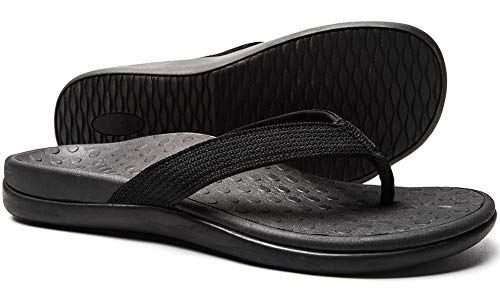
The LLSOARSS sandal is different from the other slide styles because it uses a toe post. That design gives the foot a little more hold while keeping the airy feel of a flip-flop. Its orthotic footbed aims to support the arch and reduce the flat, hard sensation found in basic beach sandals. I consider it a strong option for shoppers who prefer thong sandals but still want more structure.
The black finish is easy to wear with shorts, swimwear, or casual summer clothes. The footbed can help make short walks more pleasant, especially on hard surfaces. However, people with sensitive skin between the toes may prefer a wide slide instead. Wear it for short periods first and stop if the toe post creates rubbing or blisters.
Pros:
- Orthotic-style footbed supports the arch
- Toe post gives more hold than a loose slide
- Breathable design suits hot weather
- Black color works with many outfits
- Good choice for poolside and casual use
- More structured than a basic flat flip-flop
Cons:
- Toe post may irritate sensitive skin
- Not ideal for long-distance walking
- Flip-flop shape gives less heel security than a closed shoe
KuaiLu Women’s Recovery Sandals
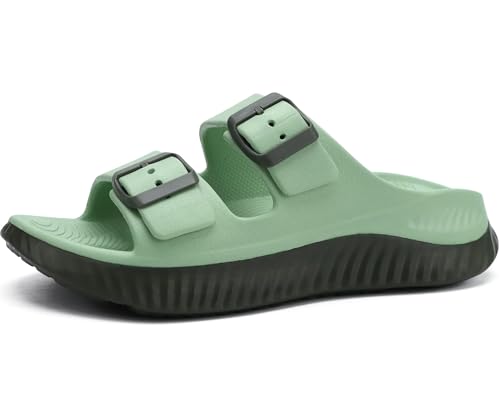
This KuaiLu recovery sandal gives tired feet a soft place to land. The thick sole and supportive footbed work together to create a more cushioned step. I would look at this pair for home wear, post-work recovery, or light trips when your feet do not want a tight shoe. Its open shape also helps reduce heat during warm months.
The green color gives the sandal a fresh, sporty look. The easy slip-on shape saves time when you need to get ready quickly, and the wide upper does not require complex straps. Like other recovery slides, it may feel best on level ground. If your plantar fasciitis pain is severe, use it as a comfort sandal rather than a replacement for medical care or a prescribed orthotic.
Pros:
- Thick sole cushions each step
- Arch area adds useful foot support
- Comfortable choice for post-work recovery
- Open upper helps improve airflow
- Easy to put on and remove
- Sporty green color looks modern
Cons:
- Limited protection for the toes
- May slide on wet or uneven surfaces
- Can feel too soft for users who prefer a firm footbed
KuaiLu Orthotic Thong Sandals

These KuaiLu thong sandals combine the airiness of flip-flops with a more supportive footbed. The arch contour gives the sole a shaped feel, which can be more comfortable than walking in a completely flat pair. The wide design may help users who dislike narrow sandals that squeeze the forefoot. I see this model as a practical summer option for casual indoor and outdoor use.
The thong construction keeps the sandal from feeling as loose as a simple slide. Still, the toes may work harder if the fit is not right, so avoid sizing up too far. The thick base helps buffer your heel from hard ground, but it does not turn the sandal into a walking shoe. For plantar fasciitis, I would use it for short walks, errands, and relaxed days rather than all-day sightseeing.
Pros:
- Arch support adds structure to a thong sandal
- Wide shape may give toes more room
- Light and easy to pack for travel
- Thicker sole protects against hard floors
- Good airflow for summer wear
- Useful indoors and outdoors on level surfaces
Cons:
- Thong post can cause rubbing
- Not the best choice for long walks
- Toe grip may increase if the sandal fits loosely
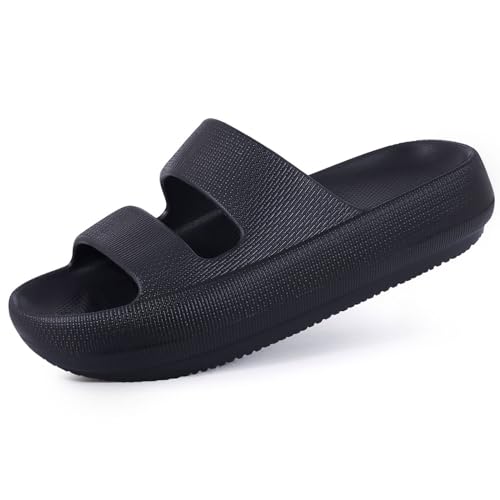
KuaiLu Women’s Orthotic Slip-On Slides

This black KuaiLu slide is a good fit for people who want a clean look and a support-focused footbed. The contoured base helps the sandal feel more shaped around the heel and arch. Its slip-on design is especially useful when bending down feels uncomfortable. I would keep this pair near the door for quick errands, school runs, or short walks.
The black color gives it a versatile look that works with jeans, leggings, and casual dresses. The sole adds protection from cold or hard floors, while the open upper keeps the foot from feeling trapped. As with most slides, the upper does not lock the heel in place. Choose the smallest comfortable size that holds your foot without pressure across the toes.
Pros:
- Versatile black color
- Contoured footbed supports the arch
- Fast, hands-free entry
- Comfortable for common daily tasks
- Thicker sole helps shield the heel
- Easy to keep by the door
Cons:
- Heel is not secured by a rear strap
- May not suit very narrow feet
- Not intended for intense exercise or rough terrain
PIMIO Women’s Arch Support Recovery Slides

The PIMIO recovery slide is aimed at people who want thick cushion, arch support, and a light feel in one sandal. Its shape may be helpful when your feet feel worn after standing or walking. The slip-on build also works well for mornings, when heel pain can make every extra step feel harder. I like the focus on comfort for home wear and simple daily movement.
The non-slip sole is an important feature for anyone who walks across smooth floors. Its cushion can make a firm floor feel less harsh, while the supported arch helps avoid the totally flat feel of many slippers. Even so, “non-slip” does not mean safe on every wet surface, so use care around pools and showers. This is one of the more appealing choices for recovery and indoor comfort.
Pros:
- Thick cushioning helps soften heel contact
- Arch support suits recovery use
- Lightweight design is easy to wear
- Non-slip sole adds confidence on many floors
- Helpful for morning and indoor walking
- Simple slide style allows quick access
Cons:
- May feel too thick for users who like low soles
- Open upper does not secure the heel
- Wet surfaces still require caution
My Recommendation
After comparing these sandals, I would start with the shevalues orthopedic slide for shoppers who want a balanced mix of arch support, cushion, and easy daily wear. The PIMIO model is a strong choice for indoor recovery and non-slip comfort. The LLSOARSS pair suits people who prefer a thong sandal, while the KuaiLu options offer several shapes for different style and fit needs.
The best slip on sandals for plantar fasciitis should feel supportive without creating a new pressure point. I recommend wearing any new pair for short periods first. If pain continues, worsens, or affects your normal walking, consult a podiatrist or other qualified health professional.
| Best for | Why |
|---|---|
| Everyday arch comfort | shevalues gives easy entry, a shaped footbed, and useful cushion for daily tasks. |
| Indoor recovery | PIMIO combines thick cushioning, arch support, and a non-slip sole for home use. |
| Thong sandal fans | LLSOARSS and KuaiLu thong styles offer airflow with more structure than flat flip-flops. |
How I Evaluated These Plantar Fasciitis Sandals
I did not judge these sandals by appearance alone. For plantar fasciitis, I first look at how well a sandal supports the arch and spreads pressure across the foot. I also check heel cushioning, sole stability, toe room, grip, and the way the upper holds the foot. A pretty sandal can still fail if your toes must claw the footbed to keep it on.
Medical groups such as the American College of Foot and Ankle Surgeons and the American Academy of Orthopaedic Surgeons commonly point to supportive footwear, activity changes, stretching, and proper care as part of plantar fasciitis management. The condition often involves pain near the heel and along the plantar fascia, a strong band of tissue under the foot. Footwear cannot fix every cause, but it can affect how much stress reaches the heel.
I also considered real-life use. Most people do not need sandals only for sitting by a pool. They need a pair for cooking, walking to the mailbox, taking the dog out, traveling, or standing at a backyard event. That is why I gave extra weight to easy entry, comfort on hard floors, steady fit, and practical versatility.
What Makes the Best Slip on Sandals for Plantar Fasciitis?
The best slip on sandals for plantar fasciitis usually have a contoured footbed. The arch should support your foot without digging into it. A heel cup or raised rear edge can help your foot stay centered. The sole should also resist twisting too easily, because an overly soft sandal may let the foot roll and tire.
Cushioning matters, but more is not always better. A very soft footbed may feel great for ten minutes and still lack the support you need. I prefer a balanced sole that feels padded yet stable. Think of it as a mattress with a frame: the cushion gives comfort, while the structure keeps your foot aligned.
Look for enough space around the toes. Your toes should rest flat rather than press against the front. The upper should hold the sandal in place without squeezing the top of your foot. If your feet swell, leave a little extra room, but do not buy a size so large that your heel slides off the back.
Why Slip-On Sandals Can Help in Daily Life
Morning pain is one reason slip-on sandals appeal to people with plantar fasciitis. After sleep, the plantar fascia may feel tight, and sudden barefoot steps on a hard floor can be unpleasant. A supportive sandal by the bed may offer a gentler first step. It does not replace treatment, but it can reduce the shock of walking directly on a cold, hard surface.
Slip-on sandals also help people who find straps or laces hard to manage. You can put them on with little bending and remove them quickly at the door. This can be useful after foot surgery, during pregnancy, or when swelling makes closed shoes uncomfortable. Still, a hands-free design should never come at the cost of a poor fit.
Many people use recovery sandals after a work shift or workout. Your feet may feel hot, tired, and compressed after hours in firm shoes. A supportive slide gives the foot more air and room while still offering a shaped base. I would use these sandals for recovery, not as an excuse to ignore pain or continue an activity that causes symptoms.
Common Mistakes to Avoid When Buying
The first mistake is choosing a flat sandal because it looks light and stylish. Flat soles may lack the arch shape and heel protection that tired feet need. The second mistake is buying a very soft pair with no stable base. Soft foam can feel pleasant, but your foot may sink, twist, or work harder to stay balanced.
Another mistake is picking a loose slide. If the sandal does not stay under your foot, your toes may grip with every step. That extra gripping can make your feet feel tired. Walk on a level surface after trying the sandals on, and watch for heel lift, side movement, or pressure across the toes.
I also caution against wearing new sandals for a full day at once. Start with 20 to 30 minutes. Check your heel, arch, and skin for sore spots. Increase wear time only when your feet respond well. A gradual start lets you find fit problems before they become blisters or worse pain.
How to Wear Sandals More Safely
Use supportive sandals on level, dry surfaces first. Slides and flip-flops are not ideal for running, climbing, or rough trails because they do not hold the heel like an athletic shoe. Take shorter steps if the sole feels thick or unfamiliar. Keep your eyes on wet floors, since even a textured outsole can lose grip.
Stretching may also help. Gentle calf stretches and plantar fascia stretches are often used in conservative care, but you should perform them within a comfortable range. Do not bounce or push into sharp pain. If you have diabetes, poor circulation, numbness, or a recent injury, ask a health professional for personal advice before changing footwear or exercise.
Keep the sandals clean and inspect the sole from time to time. Worn tread can reduce traction, and a crushed footbed may no longer support your arch. Replace a pair when it becomes uneven, cracked, or permanently compressed. Even the best slip on sandals for plantar fasciitis lose value when the support has broken down.
Fit Guide for Arch Support Slides
Measure both feet late in the day, when they are often at their largest. Use the larger measurement when choosing a size. Your heel should sit on the footbed, and your toes should remain inside the front edge. A small amount of space is fine, but too much space can cause sliding.
Pay attention to width as well as length. A narrow sandal may press on the sides and make the foot shift toward the arch. A very wide sandal may fail to hold the foot. If one foot is larger, fit the larger foot and consider a thin insert only if the sandal design allows it without crowding.
The arch should feel present but not painful. Some users need a low, gentle arch, while others prefer a taller and firmer shape. There is no single arch height that works for everyone. If the support feels like a hard lump or creates numbness, the sandal is not a good match, even if the product description uses the word “orthotic.”
Slip-On Slides Versus Orthotic Flip-Flops
Slides are usually easier to wear and often give the upper part of the foot more room. They work well around the home and for quick trips. Their main weakness is heel security. If the front strap does not hold your foot well, the sandal may move as you walk.
Orthotic flip-flops use a toe post, so they can feel more secure than a loose slide. They also provide strong airflow and pack easily. However, the post may rub, and some users grip with their toes. I would choose a thong style only when the toe area feels comfortable and the sandal stays stable without effort.
Neither style is automatically better. The right choice depends on your foot shape, pain pattern, walking needs, and personal comfort. If you need to walk far, climb stairs, or move quickly, a supportive closed shoe may be safer. Sandals are best viewed as one part of a complete footwear plan.
Are These Sandals a Medical Treatment?
No. These products are comfort footwear, not a cure for plantar fasciitis. They may reduce strain for some users by adding arch support, heel cushion, and a more stable base. Results vary because plantar fasciitis can involve activity load, calf tightness, body weight, foot structure, and other factors.
See a clinician if pain is severe, lasts for several weeks, causes limping, or comes with swelling, numbness, redness, or sudden injury. A podiatrist can assess your gait and determine whether you need physical therapy, a custom orthotic, or another treatment. Do not rely on product claims alone when symptoms continue.
FAQs Of Best Slip on Sandals for Plantar Fasciitis
Are slip-on sandals good for plantar fasciitis?
They can help when they offer real arch support, heel cushioning, and a stable fit. Avoid thin, flat sandals that make your toes grip or let your foot slide.
Should I wear sandals around the house?
A supportive pair may feel better than walking barefoot on hard floors. Start with short wear periods and stop if the sandal increases pain.
Is a firm or soft footbed better?
Most people need a balance. Cushioning can reduce impact, while moderate firmness can keep the foot stable. The best feel depends on your foot shape and symptoms.
Can flip-flops worsen heel pain?
Basic flat flip-flops may worsen discomfort because they offer little support and can make you grip with your toes. An orthotic-style flip-flop may work better if the toe post does not rub.
When should I replace plantar fasciitis sandals?
Replace them when the footbed becomes uneven, the sole loses grip, or the cushion stays compressed. Worn support may increase fatigue and reduce comfort.
Final Verdict: Which Should You Buy?
For most shoppers, the shevalues slide is the best slip on sandals for plantar fasciitis because it balances arch support, cushion, and easy wear. Choose PIMIO for indoor recovery, or LLSOARSS if you prefer a supportive thong style.
The best slip on sandals for plantar fasciitis should fit securely and feel comfortable from the first steps. Choose by support and stability, not looks alone, and seek care if heel pain continues.

Madison Clark is a footwear expert and the voice behind MyStyleGrid.com. She specializes in honest shoe reviews, style tips, and practical guides to help readers find the perfect pair for any occasion. With years of experience in blogging and content creation, Madison makes footwear knowledge simple, stylish, and easy to follow.