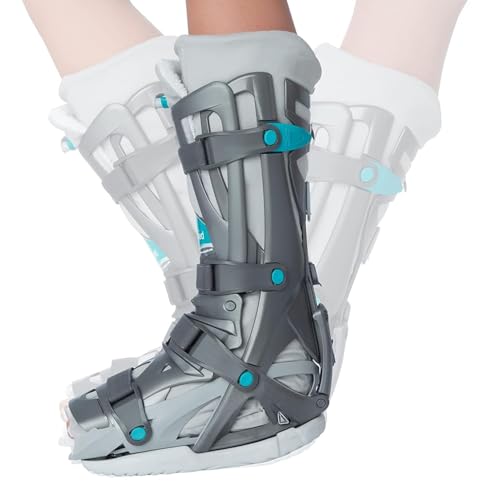
The best walking boot for Achilles rupture is a doctor-approved, adjustable boot that protects healing while allowing safe movement.
You step out of the car, feel a sharp snap, and suddenly walking becomes hard. An Achilles rupture can turn simple tasks into daily challenges. The right boot can act like a steady bridge between injury and recovery. I look for firm support, safe heel positioning, low weight, good fit, and easy adjustments. Your surgeon or physical therapist must guide the boot angle and wear plan. Still, this guide can help you compare popular options and choose a walking boot for Achilles rupture with greater confidence.
VACOped Achilles Boot, Medium

The VACOped Achilles boot is made for users who need more than basic ankle coverage. Its design focuses on controlled range of motion, which matters during staged Achilles recovery. The medium size may suit many adult users, but you should compare the maker’s measurements with your foot and calf before ordering. A correct fit helps the boot work as intended and limits unwanted movement.
The vacuum-style support system is a notable feature. It can help spread pressure around the lower leg instead of placing all the load on a few hard points. The boot also has a firm sole that can make short steps feel more stable. I would view this as a recovery tool for people under active medical care, not as a general shoe for casual use.
Pros:
- Designed specifically for Achilles and fracture recovery
- Controlled range-of-motion approach
- Vacuum support may improve pressure distribution
- Firm structure helps limit unwanted ankle motion
- Useful for staged rehabilitation plans
- German-designed medical boot format
Cons:
- Higher price than many basic air walker boots
- Medium sizing may not suit every leg shape
- Motion settings need medical guidance
OPED VACOped Achilles Boot, Large

The large OPED VACOped is another specialized option for Achilles rupture and lower-leg support. Its larger size can provide more room for a wider foot or a larger calf, but size alone does not guarantee comfort. Always measure while wearing the socks or liner you expect to use. The boot should feel secure without cutting into the skin.
This version uses vacuum technology and a range-of-motion design. Those features may help a clinician set a more controlled path from protection to gradual movement. The rocker-style base can also make each step smoother than a flat, rigid sole. I like this model for people who want a purpose-built medical boot and have access to follow-up fitting help.
Pros:
- Large size offers added space for some users
- Made for Achilles rupture and fracture care
- Vacuum system may reduce pressure spots
- Supports controlled ankle movement
- Rocker base may improve step-through motion
- Strong option for a structured care plan
Cons:
- Large size may feel bulky on a smaller leg
- Usually costs more than simple walking boots
- May require a clinician to adjust correctly
VACOped Achilles Boot, Small
The small VACOped is built around the same recovery-focused idea as the medium model. Its smaller profile may be a better match for a petite adult, a narrow foot, or a slimmer lower leg. Fit is especially important after Achilles injury because swelling can change from day to day. Leave enough room for a medical sock, but do not allow the heel to lift inside the boot.
I see this as one of the more advanced choices in this guide. The range-of-motion feature may support a planned rehabilitation schedule, while the vacuum system aims to hold the leg with even contact. The rigid shell can feel reassuring when balance is poor. However, this is not a boot I would adjust by guesswork; the care team should set the position and explain when to change it.
Pros:
- Small size may suit narrower legs and feet
- Specialized design for Achilles recovery
- Controlled motion can support staged care
- Vacuum support may help hold the limb evenly
- Rigid shell offers strong protection
- Made for users who need a medical-grade design
Cons:
- Small size may not allow enough swelling room
- More complex than a standard cam walker
- May feel warm during long periods of wear
Mathgetin Short Air Walker Boot

The Mathgetin short air walker is a simpler choice for foot, ankle, and lower-leg support. Its shorter shape may feel less restrictive than a tall boot, especially for users whose treatment plan does not require full calf coverage. The built-in air feature lets you adjust the fit as swelling changes. That can be helpful during the first part of recovery, when the leg may feel different in the morning and evening.
The rocker bottom is designed to help the foot roll forward during a step. This may reduce the need to bend the injured ankle, but it does not remove the need for careful walking. The boot can work well for a sprain or certain post-operative plans, yet an Achilles rupture often needs a specific plantar-flexed position. Confirm with your surgeon before choosing a short model for a serious tendon tear.
Pros:
- Short design may feel less bulky
- Inflatable support allows fit changes
- Rocker sole can aid forward movement
- Useful for several foot and ankle conditions
- Often easier to put on than a complex medical boot
- May suit users who need moderate support
Cons:
- Short height may not protect the full calf
- Not ideal for every Achilles rupture protocol
- Air pressure needs regular checking
Ossur Rebound Air Walker Low Top

The Ossur Rebound Air Walker brings a well-known orthopedic design to this list. It uses an air pump and compression straps to help create a close fit around the foot and ankle. The low-top shape can be easier to manage at home than a tall boot. It also has a rocker sole, which may make short, careful steps feel more natural.
I would consider this model for users whose clinician approves a low-top walker. It can offer a useful balance of support and daily comfort for selected ankle injuries. Still, a low boot may expose more of the lower leg than an Achilles rupture protocol allows. Ask whether your care plan requires a tall boot, heel wedges, or a fixed plantar-flexed angle before buying.
Pros:
- Air pump supports a customized fit
- Compression straps help reduce loose movement
- Low-top profile may be easier to handle
- Rocker bottom can support smoother steps
- Established orthopedic brand design
- Medium size may fit many adult users
Cons:
- Low top may not provide enough Achilles coverage
- Air pressure can change with swelling
- May not include the heel angle your doctor wants
Tairibousy Air Cam Walker, Medium

The Tairibousy air cam walker is aimed at post-operative care, ankle sprains, broken toes, and Achilles-related problems. Its inflatable interior can help the boot feel more secure without relying only on tight straps. A medium fit may work for many adults, though you should use the sizing chart and account for swelling. The hard frame helps shield the foot from sudden bumps.
This type of boot is often easier to understand than a specialized range-of-motion system. You place the foot inside, secure the straps, and add air in small amounts. That simple setup can be useful when pain, reduced balance, or limited hand strength makes gear frustrating. I would still ask the care team if the boot needs a heel lift or a specific angle for your tendon.
Pros:
- Inflatable liner offers adjustable comfort
- Cam-walker frame helps protect the foot
- Suitable for several common recovery needs
- Medium size is convenient for many adults
- Simple strap system is easy to learn
- May reduce side-to-side ankle movement
Cons:
- Generic design may need added heel wedges
- Can feel heavy compared with a normal shoe
- Overinflation may create pressure points
JorWystia Air Cam Walker, Medium

The JorWystia medium air cam walker focuses on basic protection and mobility after foot or ankle injury. It uses an inflatable support system to help hold the foot in place. The lightweight claim is appealing because every extra ounce feels bigger when one leg is weak. Its open design may also make it easier to inspect the skin and adjust the fit.
This boot may suit a person who needs a practical walker for home tasks and short trips. It can help reduce ankle motion while the user follows a medical recovery plan. I would pay close attention to the heel position because a general cam walker is not automatically the best walking boot for Achilles rupture. A therapist can show you how to step, turn, and use stairs safely.
Pros:
- Air support allows small fit adjustments
- Medium size suits many adult feet
- Lightweight format may reduce walking fatigue
- Protective frame helps limit ankle motion
- Open structure may improve ventilation
- Useful for post-surgery mobility in approved cases
Cons:
- May lack advanced motion control
- Fit can change as swelling rises or falls
- May need a separate shoe-balancing solution
Tairibousy Tall Inflatable Walker, Medium

The Tairibousy tall walker provides more lower-leg coverage than a short boot. That added height can feel reassuring when the ankle and calf both need protection. Its inflatable support helps you fine-tune the fit, which is useful when swelling changes during recovery. The tall shape may also reduce the temptation to move the ankle too freely.
A tall boot can be a sensible choice for some Achilles plans, but height is only one part of the answer. Your physician may prescribe a certain heel lift, angle, or weight-bearing limit. The rocker sole can help with step motion, yet it does not make unrestricted walking safe. I like this model as a value-minded option for users who need broad coverage and a simple air system.
Pros:
- Tall profile covers more of the lower leg
- Inflatable liner supports a closer fit
- May help limit unwanted ankle movement
- Rocker sole supports a smoother gait
- Useful for selected sprain and fracture plans
- Medium size is easy to find for many adults
Cons:
- Tall shape can feel warm and bulky
- May require a shoe lift on the other foot
- Does not replace a prescribed Achilles protocol
JorWystia Air Cam Walker, Small

The small JorWystia air cam walker gives petite users a compact support option. A smaller shell can reduce extra space around the heel and ankle, which may improve control. Its air liner lets you make modest fit changes as swelling settles. As with any medical boot, the goal is snug support, not painful pressure.
This model may be useful for a smaller adult recovering from an ankle injury or an approved Achilles treatment plan. It is easier to carry than some larger specialist boots, and the straps are fairly straightforward in concept. I would inspect the foot each day for redness, numbness, or rubbing. Those signs mean the fit or wear schedule needs prompt review.
Pros:
- Small size may suit petite users
- Adjustable air liner supports changing swelling
- Compact shell may improve heel control
- Protects the foot during approved walking
- Simple straps make daily use more manageable
- May be less bulky than a large medical boot
Cons:
- Limited space for significant swelling
- May not fit a wide foot or large calf
- Basic design lacks advanced motion settings
My Recommendation
For a confirmed Achilles rupture, I would first discuss the VACOped models with the treating surgeon or physical therapist. They offer a more focused range-of-motion design than a general fracture boot. Choose the medium or small version by measurement, not by guesswork. The OPED large model is better for users who need more room around the foot or calf.
If your clinician approves a standard walker, the Tairibousy tall boot gives useful coverage, while the Ossur low-top model may feel easier for selected ankle injuries. The Mathgetin, JorWystia, and Tairibousy air walkers offer adjustable support at a lower level of complexity. In my view, the best walking boot for Achilles rupture is the one that matches your prescribed angle, size, swelling, and weight-bearing stage.
| Best for | Why |
|---|---|
| Controlled Achilles rehabilitation | VACOped models focus on planned range of motion and structured support. |
| Full lower-leg coverage | The Tairibousy tall walker offers a taller frame and adjustable air fit. |
| Simple adjustable support | JorWystia and Mathgetin walkers use air liners and practical strap systems. |
Clinical guidance matters more than brand claims. The American Academy of Orthopaedic Surgeons notes that Achilles rupture treatment may include surgery or nonsurgical care, followed by immobilization and rehabilitation. The American Orthopaedic Foot & Ankle Society also emphasizes follow-up care and gradual return to activity. These facts explain why I do not rank a boot by comfort alone.
Before you buy, check five points. First, confirm whether you need a tall or short boot. Second, ask about the ankle angle and heel wedges. Third, measure both foot length and calf size. Fourth, confirm whether you may bear weight. Fifth, ask how often to remove the boot for skin checks, bathing, sleep, and exercises.
A good boot should not cause lasting numbness, blue or pale toes, severe rubbing, or worsening pain. If you notice those problems, loosen the straps only as your care instructions allow and contact your medical team. Seek urgent help for severe swelling, chest pain, sudden shortness of breath, or calf pain that feels unusual. A boot protects the healing area, but it cannot replace medical care.
How to Choose the Best Walking Boot for Achilles Rupture
Choosing a boot after an Achilles tear can feel like picking a bridge while the river is rising. You need support now, but you also need a path toward movement later. The best choice depends on the injury, treatment method, swelling, and stage of recovery. I use the following features to compare an Achilles walking boot.
1. Ask About the Required Ankle Position
After rupture, many care plans keep the foot pointed down for a period of time. This position can reduce strain on the healing tendon. The exact angle and timing vary by person and treatment plan. Do not change the setting because the boot feels too stiff or because walking starts to feel easier.
Some boots have a fixed position. Others have wedges or range-of-motion controls. A specialized model may offer more adjustment than a basic cam walker. That does not make it right for every patient. Your surgeon or therapist should approve the setting before you walk in the boot.
2. Get the Size Right
A boot that is too loose lets the heel slide. A boot that is too tight can create pressure and reduce comfort. Measure your foot as the product guide instructs. Also check calf width, since tall boots can feel tight even when the foot length is correct.
Swelling can change across the day. Try the boot with the sock or liner you plan to wear. Your toes should not press hard against the front. The heel should stay seated when you lift the leg and take a slow step with support.
3. Look for a Stable Sole
A rocker bottom can help the foot move forward with less ankle bend. This matters when your ankle must stay protected. A broad sole can also improve balance on flat ground. Still, a rocker bottom can feel awkward on stairs, wet floors, gravel, and uneven paths.