The best women’s ski boots for intermediate skiers blend comfort, control, warmth, and easy turns.
You may have outgrown soft beginner boots but still want a pair that feels kind to your feet. That middle ground can be hard to find. A boot that is too stiff may punish small mistakes, while one that is too soft can feel vague on icy runs. The best women’s ski boots for intermediate skiers give you steady support without making every chairlift ride a battle. I looked at flex, fit, comfort, control, and value to help you choose with confidence.
Nordica Sportmachine 3 65 Women’s Ski Boots

The Nordica Sportmachine 3 65 W is a strong choice for an intermediate skier who wants more support without jumping to a race-style boot. Its moderate flex gives you a useful mix of comfort and response. The shell feels supportive when you lean into a turn, yet it does not feel overly harsh at slower speeds. I especially like this balance for skiers who are improving their edge control.
The three-buckle design helps spread pressure across the foot and lower leg. That can make long ski days feel less tiring than they do in a narrow, stiff boot. The boot also gives your heel a more secure feel, which helps reduce unwanted movement inside the shell. The 23.5 size is a good option for smaller feet, but proper measurement remains essential before ordering.
Pros:
- Balanced 65 flex for developing intermediate technique
- Supportive feel without a race-boot level of stiffness
- Three-buckle layout offers useful adjustment
- Good heel hold for more precise turns
- Comfortable choice for full days on groomed runs
- Sporty design with a practical women’s fit
Cons:
- May feel too firm for a complete beginner
- Not the widest option for very high-volume feet
- Small shell changes can make fit sensitive
Nordica Cruise 65 W Comfort Fit Ski Boot

The Nordica Cruise 65 W focuses on comfort, simple control, and an easy fit. It suits intermediate skiers who spend most of their time on groomed slopes and want a boot that does not feel intimidating. The 65 flex offers enough support for linked turns and moderate speed. At the same time, it stays forgiving when your stance is not perfect.
The comfort-focused shape gives your foot more room than many performance boots. That extra space can help skiers with wider feet or those who dislike a tight race fit. I would consider this model for resort skiers who take breaks, ski with family, or enjoy a relaxed pace. It may not deliver the sharpest response for aggressive carving, but it offers strong everyday value.
Pros:
- Comfort-oriented shape for relaxed resort skiing
- Moderate flex works well for many intermediate skiers
- Easy to use for skiers moving beyond beginner boots
- Roomier feel than many narrow performance models
- Good choice for long, casual ski days
- All-mountain design supports varied groomed terrain
Cons:
- Less precise than a stiffer performance boot
- May feel loose on a narrow foot without professional fitting
- Not ideal for very aggressive skiers
Rossignol Kelia 50 Women’s Ski Boots

The Rossignol Kelia 50 is built for comfort and easy skiing. Its softer flex makes it approachable for a skier who is still gaining confidence on blue runs. It does not demand a strong forward stance or perfect technique. That forgiving nature can help reduce fatigue and make each run feel less stressful.
This boot works best for light to moderate skiers who value comfort over hard-charging performance. It is also a sensible choice for someone who skis only a few weekends each season. The soft flex can help with walking and general resort use, although it will not offer the same edge power as the Sportmachine 3 65. If your skills are growing quickly, you may eventually want a firmer boot.
Pros:
- Forgiving flex for confidence-building turns
- Comfortable option for casual resort skiers
- Easy feel for skiers coming from rental boots
- Light, approachable design for shorter ski days
- Good value for occasional winter trips
- Soft response helps reduce pressure on the shins
Cons:
- May be too soft for advanced intermediate skiers
- Less power during fast carving
- Limited room for future performance growth
Nordica Sportmachine 3 65 W Ski Boots

This Nordica Sportmachine 3 65 W offers the same general performance idea as the smaller version, with a size suited to larger feet. It is a dependable middle-ground boot for women who want support but still need comfort. The 65 flex makes it easier to bend the boot into a turn than a high-flex model. That makes it useful for intermediate skiers who want to improve without fighting their equipment.
The shell gives you a stable platform on groomers and moderate mixed terrain. Three buckles help you tune the fit around the foot and calf. I find this style useful because the boot can feel snug without forcing one tight pressure point. The W26.5 size may suit a larger foot, but skiers should still compare the boot’s mondo size with a measured foot length.
Pros:
- Good support for progressing intermediate technique
- 65 flex stays manageable at moderate speeds
- Three buckles allow useful fit adjustments
- Stable feel on groomed and light mixed terrain
- More precise than soft comfort-first boots
- Suitable for larger women’s mondo sizes
Cons:
- May not fit very wide feet comfortably
- Can feel firm to skiers who prefer a soft boot
- Requires careful sizing and buckle adjustment
Nordica Cruise S W Comfort Fit Ski Boots
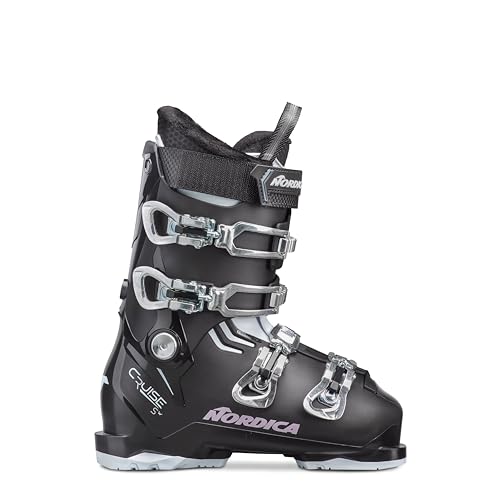
The Nordica Cruise S W is a comfort-led boot for women who want a relaxed fit and simple handling. It can be a smart upgrade from rental boots when foot comfort matters most. The softer design helps you flex the boot without using much force. That trait is helpful on mellow blue runs, teaching areas, and family ski days.
The Cruise S W is not meant to feel like a race boot. Instead, it gives you a calm and forgiving ride. The wider comfort shape can be helpful for feet that swell during a long day, though too much room can reduce control if the size is wrong. I recommend this boot to skiers who prefer ease, warmth, and walking comfort over quick edge response.
Pros:
- Relaxed shape helps reduce pressure on the foot
- Easy flex for casual and improving skiers
- Comfortable choice for long resort days
- Helpful option for wider or higher-volume feet
- Simple, forgiving handling on groomed runs
- Good upgrade for skiers leaving rental equipment
Cons:
- Not the best choice for hard carving
- Extra room may weaken control on narrow feet
- Soft response may limit advanced progression
Nordica Cruise 65 W Ski Boots, 26.5
This Nordica Cruise 65 W in size 26.5 combines a comfort fit with a useful level of support. It is a good match for intermediate women who need more room than a narrow race-style shell provides. The 65 flex gives the boot enough structure for controlled turns on blue and easy black terrain. It remains friendly for skiers who do not want to push hard all day.
The larger size makes this version worth considering for women whose feet measure around the 26.5 mondo range. Still, size alone should never decide the purchase. A good ski boot should hold the heel firmly while leaving the toes relaxed when standing upright. This model offers good value when matched with the right foot shape and skier level.
Pros:
- Comfort fit suits many medium-to-high volume feet
- 65 flex supports steady intermediate skiing
- Good size option for larger feet
- Forgiving feel helps limit early-day foot fatigue
- Useful balance of room and support
- Versatile choice for resort groomers
Cons:
- May feel too roomy for low-volume feet
- Not designed for aggressive expert skiing
- Fit may need a thin ski sock for fine tuning
Head Edge 65 W HV Alpine Ski Boots

The Head Edge 65 W HV stands out for skiers who need a high-volume fit. Its shape gives the foot more space across key areas, which can make a big difference for comfort. The 65 flex adds structure for an intermediate skier who wants to move beyond basic wedge turns. I see it as a practical bridge between a soft beginner boot and a more demanding performance model.
A roomier shell can reduce pressure on wide feet, but it must still hold your heel in place. If your heel lifts when you flex forward, the boot is too large or needs professional adjustment. When the fit is correct, this Head model can provide a stable, comfortable platform. It is especially appealing to skiers who have struggled with cramped rental boots.
Pros:
- High-volume shape helps wide feet feel less cramped
- 65 flex gives useful support for progression
- Comfortable option for longer resort sessions
- Good choice for skiers with higher insteps
- More forgiving than a stiff performance boot
- Can improve comfort over poorly fitted rental boots
Cons:
- Too spacious for narrow or low-volume feet
- Heel hold needs close attention during fitting
- Less precise than a snug medium-volume boot
Nordica Cruise 65 W Ski Boots, 27.5
The 27.5 version of the Nordica Cruise 65 W serves skiers with larger feet who still want a comfort-first alpine boot. It provides a moderate flex rather than an aggressive, demanding feel. That makes it easier to bend into turns and more pleasant during slow lift-line walks. The comfort shape also helps skiers who dislike a tight shell around the forefoot.
For an intermediate skier, this boot offers a sensible mix of room and response. It can handle groomed trails, light bumps, and normal resort conditions. I would not choose it for racing or very forceful off-piste skiing, but that is not its purpose. If you need a larger women’s ski boot with an easy ride, it deserves a close look.
Pros:
- Large 27.5 size supports bigger feet
- Comfort fit helps reduce forefoot pressure
- 65 flex is friendly for intermediate technique
- Good for relaxed, full-day resort use
- Easy to flex at moderate speed
- Useful option for skiers who need extra room
Cons:
- Too large for feet below the listed size range
- Not suited to race-level edge demands
- Roomy fit can reduce response if sizing is incorrect
Rossignol Pure Comfort 60 Women’s Ski Boots

The Rossignol Pure Comfort 60 is designed for skiers who place comfort at the top of the list. Its relaxed fit gives your foot a less crowded feel than many narrow alpine boots. The 60 flex has enough support for basic parallel turns and steady blue-run skiing. It also stays forgiving when your legs tire late in the day.
This is a good option for a low-mileage skier, a vacation skier, or anyone with sensitive feet. The relaxed shape can feel like a welcome break after years of forcing your feet into tight boots. However, the same soft and roomy design may not satisfy a strong intermediate skier who wants fast edge changes. For gentle resort use, it offers a friendly and approachable ride.
Pros:
- Relaxed fit promotes all-day comfort
- 60 flex feels forgiving and easy to manage
- Good option for casual and vacation skiers
- Helps reduce pressure on sensitive feet
- Simple choice for groomed resort runs
- Comfortable feel for skiers with wider feet
Cons:
- Less support for fast or aggressive turns
- May feel too relaxed for advanced intermediates
- Heel hold can suffer if the shell is oversized
Rossignol Kelia 50 Women’s Ski Boots
This Rossignol Kelia 50 is another approachable choice for women who want a soft downhill boot. It is especially useful for beginners moving into intermediate terrain at a careful pace. The softer flex lets you make relaxed turns without needing powerful legs. It also feels less demanding when you stand, walk, or wait in lift lines.
I would choose this boot for comfort-focused skiers who spend most of their time on easy and moderate runs. It can help build confidence because it does not magnify every small movement. Still, skiers who are already carving hard may outgrow its response. As one of the more forgiving options in this guide, it offers value for occasional use.
Pros:
- Easy flex supports relaxed turn initiation
- Friendly option for cautious intermediate skiers
- Comfortable for occasional resort trips
- Less tiring than a stiff performance boot
- Good value for a soft women’s alpine boot
- Simple feel for groomed snow
Cons:
- Limited power for aggressive carving
- May not support rapid technical growth
- Soft flex can feel vague at higher speed
How I Chose These Women’s Ski Boots
I judged these boots by the needs of an intermediate skier, not by race-room numbers alone. At this level, a boot should help you learn while keeping your feet calm. The right pair should hold the heel, bend in a controlled way, and transfer movement to the ski without creating sharp pain. Comfort is not a luxury here. It is part of performance because tired feet make it harder to balance and turn.
Flex is one of the most important traits. A flex rating around 60 to 65 often works well for many recreational women, but brands do not measure flex in one universal way. Body weight, height, leg strength, snow conditions, and skiing style all change how a boot feels. A smaller or lighter skier may find a 65 boot quite firm, while a stronger skier may find it gentle.
Last width matters just as much. A narrow foot can slide inside a wide shell, which makes the ski feel slow and unclear. A wide foot can suffer in a narrow shell, leading to numb toes and pressure points. I recommend measuring both feet in millimeters and comparing that measurement with the manufacturer’s mondo sizing chart.
What Intermediate Skiers Should Look For
The best women’s ski boots for intermediate skiers should feel snug, not painful. Your toes may lightly touch the front when you stand straight. When you bend your knees, your toes should pull back slightly. Your heel should stay nearly fixed when you flex forward. If the boot feels comfortable only because it is too large, it will likely ski poorly.
Choose a boot flex that matches your body and goals. A 50 or 60 flex can suit a light skier, a casual skier, or someone who values ease. A 65 flex often gives a little more support for someone who is improving on steeper blue and easy black runs. I would avoid selecting a very stiff boot simply because it sounds more advanced. A boot that you cannot flex will not help you turn.
Think about your normal terrain. Groomed runs call for a secure, predictable boot. Bumps and mixed snow reward a boot that bends smoothly and does not punish mistakes. If you ski quickly or want to carve harder, the Nordica Sportmachine models offer more useful support than the softer Kelia or Pure Comfort models. If you ski slowly and care more about warmth, the Cruise and Pure Comfort lines may fit your routine better.
Fit Tips Before You Buy
Try ski boots with one thin ski sock. Thick socks often create pressure and can make a large boot feel falsely comfortable. Keep the boots on for at least 10 to 15 minutes if possible. Flex forward, walk carefully, and check whether your heel rises.
Do not rely on your everyday shoe size. Ski boots use mondo sizing, which relates more closely to foot length in centimeters. Shoe sizes vary by brand, while foot measurements give you a better starting point. If you can visit a boot fitter, ask for a shell check and advice about footbeds.
Remember that liners soften after several ski days. A boot that feels slightly snug at first may become ideal after a short break-in period. A boot that feels loose in the store will usually feel even looser later. Small pressure points may improve with professional heat molding, but excess length cannot be fixed by molding.
My Recommendation
After comparing the full group, I would start with the Nordica Sportmachine 3 65 W for most intermediate women. It gives the best blend of control, support, and comfort for skiers who want to improve. The Nordica Cruise 65 W is my comfort pick for a roomier fit and relaxed resort days. The Head Edge 65 W HV is the better choice for a high-volume foot.
The Rossignol Kelia 50 and Pure Comfort 60 suit casual skiers who prefer a soft, easy feel. They are less tiring, but they offer less room for aggressive progression. The Nordica Cruise S W is another strong comfort choice, while the larger Cruise 65 versions help shoppers who need 26.5 or 27.5 sizing. In short, the Best Women’s Ski Boots for Intermediate Skier will depend on fit first, then flex and terrain.
| Best for | Why |
|---|---|
| Progressing intermediate skier | Nordica Sportmachine 3 65 W offers balanced support and control. |
| Wide or high-volume foot | Head Edge 65 W HV gives more useful space across the foot. |
| Casual comfort-focused skier | Rossignol Pure Comfort 60 and Kelia 50 feel soft and forgiving. |
Overall value depends on finding the correct size and last. Even a highly rated boot can feel poor when the shell is too long or too wide. Check current availability, size options, and return rules before ordering. A careful fit is worth more than a small discount.
FAQs Of Best Women’s Ski Boots for Intermediate Skier
What flex should an intermediate woman choose?
Many intermediate women do well with a flex between 60 and 70. Lighter skiers may prefer a softer 50 or 60 flex. Stronger or more aggressive skiers may prefer 65 or higher. Use the rating as a guide, not a rule.
Should women’s ski boots fit tightly?
Yes, ski boots should feel snug and secure, but they should not cause sharp pain or numbness. Your heel should stay in place while your toes should have slight movement. A professional boot fitter can correct small pressure points.
Are softer ski boots better for beginners?
Soft boots often feel easier for beginners because they need less force to bend. However, an intermediate skier may benefit from a moderate 60 to 65 flex for better support. The best choice depends on weight, strength, terrain, and comfort needs.
Can I use thick socks with ski boots?
I recommend thin ski socks instead. Thick socks can restrict blood flow and create pressure. They can also make the boot fit less accurately. Warmth comes mainly from a correct fit, dry socks, and proper liner insulation.
How do I know if a ski boot is too big?
A boot may be too big if your heel lifts, your foot slides, or you must overtighten the buckles. Your toes may also feel comfortable only because they touch nothing. A shell check can confirm whether the length and volume are correct.
Final Verdict: Which Should You Buy?
For most progressing skiers, the Nordica Sportmachine 3 65 W is the best women’s ski boots for intermediate skier pick because it balances control and comfort. Choose Nordica Cruise or Head Edge for more room, and Rossignol for a softer ride.
Measure carefully, match the flex to your goals, and check current Amazon availability. The right women’s ski boots can make every turn warmer, calmer, and more fun.

Madison Clark is a footwear expert and the voice behind MyStyleGrid.com. She specializes in honest shoe reviews, style tips, and practical guides to help readers find the perfect pair for any occasion. With years of experience in blogging and content creation, Madison makes footwear knowledge simple, stylish, and easy to follow.