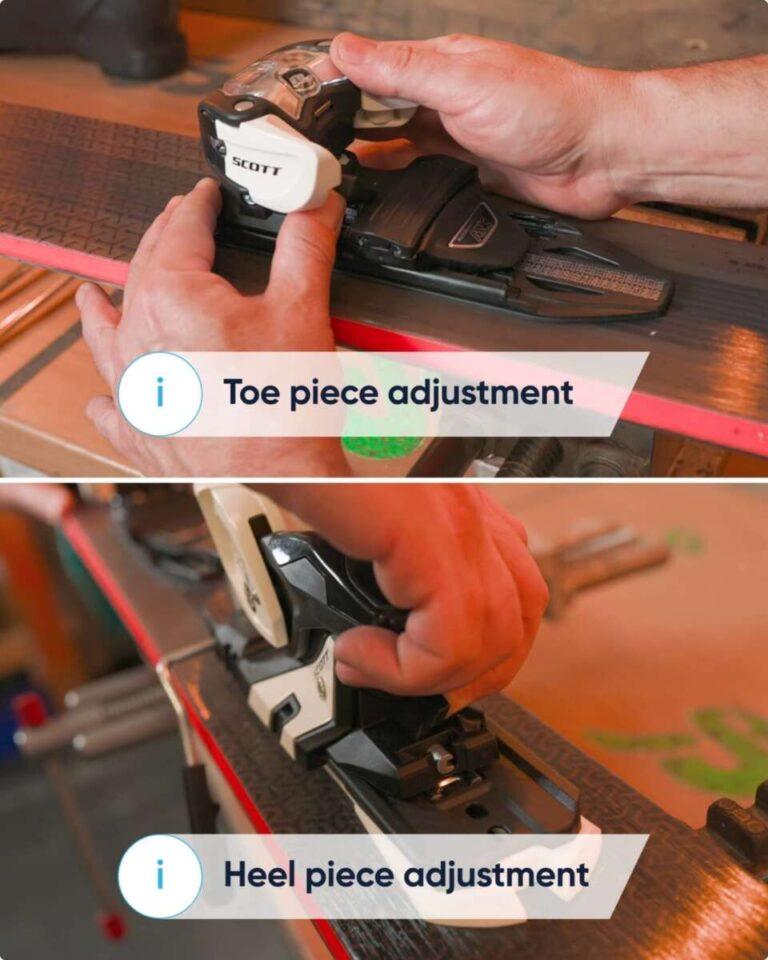
Yes — most alpine ski bindings can be adjusted to fit different boot sole lengths and sizes safely.
As a skier and certified binding tech with years of hands-on experience, I’ll walk you through what “can you adjust ski bindings for different size boots” really means. You’ll learn the limits, the step-by-step process, the safety checks, and when you must see a pro. Read on to avoid common mistakes and keep your gear safe on the hill.

How ski bindings work and why size matters
Bindings hold you to the ski and release you when forces are high. They do two main jobs: secure the boot and release at the correct force to reduce injury risk. Boot sole length and boot type affect how a binding clamps and where the release points sit.
Bindings use rails or adjustable toe and heel pieces. The adjusters move to match the boot sole length. But safe adjustment is more than moving parts. It also includes setting the correct release value, called the DIN, and checking forward pressure and lateral release alignment.
Common terms to know:
- DIN: A number that sets how easily the binding releases.
- Boot sole length (BSL): The length in millimeters printed on the boot.
- Forward pressure: The correct tension so the heel and toe behave as designed.
Understanding these basics helps answer “can you adjust ski bindings for different size boots” clearly.

Can you adjust ski bindings for different size boots — detailed answer
Short answer: yes, most alpine bindings let you adjust for different boot sizes within a set range. The binding heel and toe move on tracks or by screws. You match the boot sole length and then set forward pressure and DIN.
But there are limits:
- Every binding has a stated adjustment range in millimeters. Do not exceed that range.
- Some bindings are designed for a single boot category and cannot safely accept very long or very short soles.
- Race bindings and tech bindings behave differently; their adjustability differs.
So, “can you adjust ski bindings for different size boots” is true with caveats. You must stay inside the manufacturer’s specs and perform correct checks.

Types of bindings and how adjustability differs
Different binding styles change how you answer “can you adjust ski bindings for different size boots” in practice.
- Alpine (frame) bindings
- Often adjustable over a moderate range. Adjust with screws or slide tracks.
- Integrated bindings
- Built into the ski or plate system. Adjustment exists but may be limited by the ski/plate design.
- Race and step-in bindings
- May allow micro adjustments for toe and heel. Some are less forgiving with large size jumps.
- Tech (pin) bindings
- Use heel pins and toe pieces. Adjustability is limited and must match boot tech fittings.
Check your binding manual for the exact millimeter range and method. This tells you if a boot swap is safe.

Step-by-step: how to adjust ski bindings for different size boots
Follow these steps when answering “can you adjust ski bindings for different size boots” practically and safely.
- Check binding specs and boot BSL
- Find the binding’s adjustment range in millimeters.
- Read the boot’s BSL printed on the sole.
- Move toe and heel to match BSL
- Loosen the adjustment screws or release the track-lock.
- Slide the toe and heel so the boot seats squarely.
- Set forward pressure
- Lock the heel and check the forward pressure indicator or marker.
- The indicator should align in the specified window.
- Adjust DIN to rider weight, height, ability, and boot sole length
- Use a DIN chart as a baseline.
- Fine-tune for skiing style and age.
- Perform function tests
- Check lateral release at toe and heel.
- Test heel release by hand torque checks.
- Final safety check
- Confirm screws are torqued to spec.
- Re-check BSL and forward pressure.
If any step is unclear or your binding lacks clear markings, stop and consult a certified technician.

Safety, limits, and what can go wrong
Answering “can you adjust ski bindings for different size boots” must include risks. Improper adjustment raises injury risk.
Common errors:
- Exceeding the binding adjustment range
- Wrong DIN for weight or ability
- Incorrect forward pressure
- Loose screws or worn components
Consequences include unexpected release or failure to release. Binding wear, cracked components, or mismatched boot geometry can make a safe adjustment impossible. When in doubt, get a pro check.

When to call a professional
You should consult a technician if:
- The boot BSL is outside the binding’s specified range
- The binding parts look worn, corroded, or damaged
- You’re unsure about DIN or forward pressure settings
- You switch between very different boot types (race, alpine touring, plate systems)
A certified tech has the tools and test bench to verify release values and performance. This is critical for answering “can you adjust ski bindings for different size boots” with safety.

Personal experience, tips, and common mistakes I’ve seen
I’ve adjusted hundreds of bindings over the years. Here are practical lessons from the shop and the hill.
- Tip: Always measure boot sole length yourself. Don’t rely on model names.
- Tip: Small size changes within the range are fine; large jumps can shift release behavior.
- Mistake: Someone once used the wrong screw length and sheared it while skiing. Always match hardware.
- Tip: After any adjustment, do a short test run on easy terrain and re-check settings.
- Tip: Keep bindings clean and free of ice; debris can affect release.
These real-world notes help when you ask “can you adjust ski bindings for different size boots” and want reliable, practical guidance.

People also ask
Will adjusting bindings affect my DIN?
Yes. Changing boot position can change the effective leverage and may require DIN adjustment. Always re-check DIN after moving toe or heel.
Can rentals be adjusted for different boots?
Yes, rental bindings are built to be adjusted quickly. Staff will set BSL, DIN, and forward pressure before you leave the shop.
Are all ski technicians trained to adjust bindings?
Most certified ski techs are trained, but quality varies. Look for techs with documented certification and good reviews.
Frequently Asked Questions of can you adjust ski bindings for different size boots
Can any binding fit any boot by adjusting?
No. Bindings have specific ranges and types they accept. You must check the binding’s specs and boot category before trying to fit.
Is it safe to adjust bindings myself?
Basic sliding adjustments are sometimes safe for experienced skiers. However, setting DIN and final checks should be done by a certified technician for best safety.
How often should bindings be checked after adjustment?
Check immediately after adjustment and again after your first run of the day. Also inspect annually or after any crash.
What tools do I need to adjust bindings?
You need a proper screwdriver or hex driver, a torque driver if the manual specifies torque, and a way to measure boot sole length in millimeters.
What if my boot sole length is just outside the range?
Do not force it. Use a different binding, a plate system, or swap to boots with compatible BSL. Forcing a fit is unsafe.
Can I move bindings more than the manufacturer range with modification?
No. Modifying mounts or exceeding range compromises safety and can cause ski failure.
Will adjusting bindings change my ski feel?
Yes. Moving the binding changes the balance point and can alter turn behavior. Small moves affect stance and control.
Conclusion
Most alpine bindings can be adjusted to fit different boot sizes, but safe adjustment always follows the binding’s specs and a series of checks. Know your boot sole length, set forward pressure, match DIN to the skier, and test the setup before charging down a slope. When in doubt, trust a certified tech—your knees and future seasons depend on it.
Try one safe adjustment this season: measure your boots, read the binding range, and ask a tech to verify. If you found this guide helpful, leave a comment, share your experience, or subscribe for more gear and safety tips.

Rubel Miah is the Senior Editor at MyStyleGrid.com, where he brings a sharp editorial eye and an unshakable love for fashion to everything he does. A true style addict, Rubel lives and breathes trends, from streetwear to high fashion, and has a knack for turning inspiration into impactful stories. With years of experience in fashion journalism and digital media, he curates content that empowers readers to express themselves through style. When he’s not editing features or forecasting the next big thing, you’ll find him hunting down vintage pieces or capturing street style moments around the city.