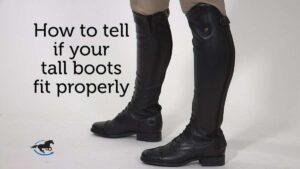
Tall boots should usually reach just below the knee, with enough room to bend and walk comfortably.
Knowing how high should tall boots be helps you choose a pair that looks balanced, feels secure, and works with your clothes. In footwear fitting, the best shaft height depends on your knee shape, leg length, boot style, and intended use—not just a measurement on a product page. This guide explains how to measure, fit, and style tall boots with confidence.

What counts as a tall boot?
A tall boot is footwear with a shaft that rises well above the ankle. Most tall boots reach the knee or sit slightly below it. Some styles extend above the knee and are called over-the-knee boots.


Common tall boot types include:
• Knee-high boots: The shaft ends at or just below the knee.
• Riding boots: These often reach below the knee and have a firm, structured shaft.
• Dress boots: These may have a slim shaft, a heel, and a polished finish.
• Slouch boots: These have a softer shaft that gathers around the calf.
• Over-the-knee boots: These extend above the knee and may cover part of the thigh.
The question of how high should tall boots be has no single answer for every person. A boot that fits a tall person may sit too high on someone with shorter legs. Your comfort, movement, and leg shape matter as much as the style name.
How high should tall boots be for the best fit?
For most people, tall boots should finish about 1 to 2 inches below the bottom of the kneecap. This position gives your knee room to bend while keeping the boot shaft high enough to create a long, clean line.
When asking how high should tall boots be, use these basic fit points:
• The top edge should not press into the back of your knee.


• The shaft should stay upright without cutting into your leg.
• Your knee should bend without hitting the boot’s top edge.
• The boot should not slide down with each step.
• You should have room for the socks or pants you plan to wear.
A tall boot that ends too low can look more like a mid-calf boot. One that ends too high may rub the knee crease and make sitting uncomfortable. Think of the ideal shaft as a picture frame: it should support your leg without crowding it.
In my experience fitting and reviewing boots, the most common mistake is focusing only on the boot’s listed height. The listed number may be measured from the floor, the heel, or the sole. Always check the brand’s measurement method before comparing styles.
Where should knee-high boots end?
Knee-high boots should usually end below the knee joint, not directly across it. A gap of about 1 inch is often comfortable, although the best space varies by leg shape and boot design.
The top of the shaft should sit below the kneecap when you stand. When you sit or climb stairs, it should still leave your knee free to move. A stiff leather boot may need a little more space than a soft stretch boot.
Check the position in three ways:
-
Stand naturally and look at the top edge.
-
Bend your knee as if sitting in a chair.
-
Walk for several minutes on a firm surface.
If the boot feels fine while standing but digs into your knee when you sit, it is too high or too stiff for your leg. This issue often appears in structured riding boots with a tall front shaft.
The answer to how high should tall boots be for daily wear is simple: high enough to cover most of the calf, but low enough to avoid the knee crease.


How to measure tall boot height at home
Measuring your leg can help you compare boots before ordering online. Use a soft tape measure, and wear the type of sock or pants you expect to wear with the boots.
Follow these steps:
-
Stand upright with your weight spread evenly across both feet.
-
Place the end of the tape on the floor beside your heel.
-
Measure straight up the back or front of your leg to the spot where you want the boot to end.
-
Measure both legs because one leg may be slightly longer or wider.
-
Record your calf circumference at the widest point.
Boot height is often listed in inches. However, brands may measure from the footbed, outsole, or heel. A boot described as 15 inches tall may not fit like another 15-inch boot from a different brand.
Also check the boot opening. Height tells you where the shaft ends, but calf width tells you whether it will close comfortably. These two measurements work together.
How tall should boots be for different leg lengths?
Leg proportion has a major effect on boot height. The same knee-high boot may sit below the knee on one person and touch the knee on another.
Short legs
If you have shorter legs, choose a shaft that ends slightly below the knee. A low heel and a narrow shaft can also create a longer visual line. Avoid a top edge that lands at the widest part of your calf, as it can make the leg look shorter.
Pointed toes, matching pants, and a clean boot front may also help. These styling choices are optional, but they can improve balance.
Average-length legs
Most standard knee-high boots work well on average-length legs. Look for a shaft that leaves about 1 inch of space beneath the kneecap and does not bunch behind the knee.


Long legs
People with long legs may prefer a taller shaft or an over-the-knee style. A boot that stops several inches below the knee can look more like a mid-calf style on a long leg.
The best answer to how high should tall boots be depends on proportion, not a fixed number. Measure the boot against your leg rather than relying on the label alone.
How high should over-the-knee boots be?
Over-the-knee boots should reach at least 1 to 3 inches above the kneecap. The top edge should rest on the lower thigh without squeezing or sliding down.
A properly fitted over-the-knee boot should:
• Stay above the knee while walking.
• Allow the knee to bend naturally.
• Avoid pinching the inner thigh.
• Keep the top edge smooth under clothing.
• Hold its shape without excessive wrinkles.
Stretch suede and elastic panels often provide a more secure fit than rigid leather. However, a very tight boot can restrict movement and cause pressure points.
If the boot rolls down, the shaft may be too wide or too short. If it leaves deep marks, the shaft may be too narrow. A small amount of grip is useful, but pain is a clear sign that the fit is wrong.
When deciding how high should tall boots be for an over-the-knee look, prioritize stable placement over maximum height.
Why calf fit matters as much as boot height
Many shoppers ask how high should tall boots be but overlook the calf opening. A boot can have the perfect shaft height and still feel uncomfortable if the calf is too narrow.


Measure your calf at its widest point while standing. Compare that measurement with the brand’s boot opening. Leave extra room if you plan to wear thick socks, leggings, or tucked-in jeans.
A good calf fit should feel secure but not tight. You should be able to slide one finger between your calf and the shaft. This is only a general guide, since stretch materials and boot structure change the feel.
Common calf-fit problems include:
• A zipper that stops before the top closes.
• Wrinkles caused by too much space.
• Pressure behind the knee.
• A shaft that slides down during walking.
• A gap that lets in cold air or rain.
Wide-calf boots can solve these problems. Some brands also offer adjustable buckles, elastic panels, and stretch inserts. These features help the boot fit more body shapes without sacrificing style.
How tall boots should feel when you walk
A new pair of tall boots may feel firm, especially when made from full-grain leather. Firm does not mean painful. The boot should support your leg while allowing normal movement.
Walk for at least 5 to 10 minutes when trying boots indoors. Pay attention to the following:
• Does the top edge touch the knee?
• Does the heel lift excessively?
• Does the shaft twist around your leg?


• Does the calf feel compressed?
• Can you climb stairs without pulling the boot down?
A small amount of heel movement can be normal in a new boot. Too much movement may cause blisters. Thin socks, heel grips, or a better insole may help, but they cannot fix a boot that is the wrong size.
Do not assume leather boots will stretch much in height. Leather may soften and expand slightly in width, but it usually will not become meaningfully shorter or taller. Buy for the correct shaft height from the start.
How high should tall boots be for different outfits?
The right height also depends on what you plan to wear. Clothing changes the visual balance and the amount of space needed inside the boot.
With jeans
Tall boots work well over slim jeans, straight-leg jeans, and leggings. The shaft should be wide enough to fit the fabric without creating a painful bulge.
Avoid forcing thick denim into a narrow boot. This can create pressure at the calf and make the boot zipper bend.
With dresses and skirts
A knee-high boot often looks balanced with a dress or skirt that ends above the knee. Leave a small area of skin between the boot and hem for a lighter look, or wear tights for a continuous line.
With leggings
Slim, close-fitting boots create a smooth shape over leggings. If the boot is loose, the fabric may bunch around the ankle or calf.
With work clothing
Choose a moderate heel, stable sole, and shaft that does not rub the knee while sitting. A polished knee-high boot usually works better than an extremely tall style in a professional setting.
The best answer to how high should tall boots be for an outfit is the height that supports the full look without making movement difficult.
Tall boot height and comfort for all-day wear
Height is only one part of comfort. The heel, toe box, shaft material, and footbed also affect how a boot feels after several hours.
For long days, look for:
• A roomy toe box.
• A low or medium heel.
• Cushioning under the ball of the foot.
• A flexible sole.
• Soft lining around the shaft.
• A secure zipper or adjustable closure.
Podiatry guidance commonly emphasizes proper toe room and a stable heel. Your toes should not press against the front, and your foot should not slide forward when you walk downhill.
I once chose a beautiful pair with the ideal shaft height but a narrow toe box. They looked perfect for the first hour and became painful by the afternoon. That experience reinforced an important lesson: the right height cannot rescue an uncomfortable foot shape.
Common mistakes when choosing tall boots
Several simple mistakes can lead to poor fit or wasted money.
• Measuring only one leg: Legs and calves are not always identical.
• Ignoring socks: Thick winter socks can change the fit.
• Buying by height alone: Calf width and knee placement matter too.
• Testing only while standing: Sitting and walking reveal pressure points.
• Assuming leather will stretch in height: It usually will not.
• Choosing a tight fit for a sleek look: Tight boots can restrict circulation and movement.
• Forgetting the heel: A taller heel changes your leg position and may make the shaft feel higher.
Try boots late in the day if possible. Feet often swell slightly after hours of standing and walking. This test gives you a more realistic idea of everyday comfort.
How to care for tall boots and maintain their shape
Proper care helps tall boots keep the right height and fit. Store them upright with boot shapers or rolled towels inside the shafts. This prevents creasing and helps the material retain its form.
For leather boots, use a conditioner made for leather. Suede needs a suede brush and a suitable protective spray. Avoid soaking either material unless the care label allows it.
Let wet boots dry at room temperature. Do not place them against a heater, since strong heat can dry leather, damage adhesives, and change the shape.
Replace worn insoles when needed, but do not add thick inserts if they make the shaft press higher against your knee. Small changes inside the foot can affect how high the boot feels on the leg.
When to return or exchange tall boots
Return the boots if the fit problem is structural rather than minor. Breaking in should soften materials, not solve major pressure or sizing issues.
Consider an exchange when:
• The top edge hits the back of your knee.
• The zipper cannot close without force.
• Your calf feels numb or painful.
• The boot slides down several inches.
• Your heel slips with every step.
• Your toes touch the front.
Wear boots indoors on a clean surface while checking the fit. Keep the packaging and follow the retailer’s return rules. Many stores will not accept worn footwear, even when the size is technically correct.
Frequently Asked Questions About How High Should Tall Boots Be
How high should tall boots be on the leg?
Most tall boots should end about 1 to 2 inches below the kneecap. This height gives the knee room to bend while keeping the boot tall enough to cover the calf.
Should knee-high boots touch the knee?
No, knee-high boots should usually sit slightly below the knee. If the top edge touches or presses into the knee crease, the boots may feel uncomfortable when you sit or walk.
How high should over-the-knee boots reach?
Over-the-knee boots should rise about 1 to 3 inches above the kneecap. They should stay in place without squeezing the thigh or restricting knee movement.
Should tall boots be tight around the calf?
Tall boots should feel secure but not tight. You should have enough room for normal socks or pants, and the shaft should not cause pain, numbness, or deep pressure marks.
How do you measure tall boot height?
Stand barefoot or in thin socks and measure from the floor beside your heel to your preferred shaft height. Also measure your calf at its widest point, then compare both numbers with the brand’s size chart.
Can tall boots be too high?
Yes, boots can be too high if the top edge presses behind the knee or limits movement. A boot may also be too high for your proportions even when its listed measurement seems standard.
Should tall boots slide down?
A small amount of movement can occur with soft materials, but tall boots should not slide down repeatedly. Frequent slipping usually means the shaft is too wide, too short, or missing enough grip.
Conclusion
The ideal answer to how high should tall boots be is usually just below the knee, with enough space for easy bending and comfortable walking. Over-the-knee boots should sit securely above the kneecap, while calf width, leg length, socks, and clothing all affect the final fit.
Measure both your leg height and calf circumference, test the boots while sitting and walking, and never trade comfort for appearance. Use these tips the next time you shop, compare the brand’s measurements carefully, and share your favorite tall-boot fitting tips in the comments.
Madison Clark is a footwear expert and the voice behind MyStyleGrid.com. She specializes in honest shoe reviews, style tips, and practical guides to help readers find the perfect pair for any occasion. With years of experience in blogging and content creation, Madison makes footwear knowledge simple, stylish, and easy to follow.