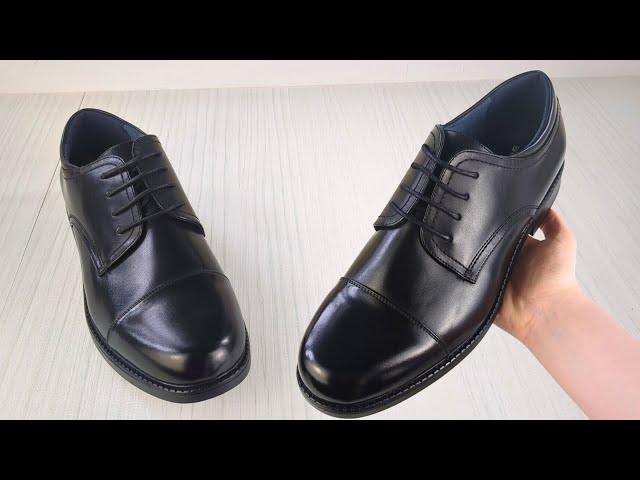
Secure, even lacing keeps dress shoes comfortable, sharp, and prevents premature wear.
I’ve spent years fitting shoes for clients and testing lacing methods across styles. In this guide I’ll show exactly how to properly lace dress shoes. You’ll learn which laces to use, step-by-step techniques, simple fixes for common problems, and maintenance tips that keep shoes looking sharp. Read on and you’ll gain clear, practical skill you can use the next time you put on dress shoes.

Why lacing matters for dress shoes
How you lace your dress shoes affects fit, comfort, and appearance. Proper lacing helps hold the heel in place, avoids pressure points, and keeps the shoe aligned with your foot. It also changes how formal the shoe looks on the foot, so lacing is both functional and style work. I’ve seen small lacing changes turn an ill-fitting pair into a daily favorite.

Key parts, lace types, and how to choose
Know the parts before you lace. Eyelets are the holes, the quarters are the side panels, and the tongue sits under the laces. Choose a lace that matches form and function.
- Waxed round laces: Dressy, slim, stay tied well.
- Flat cotton laces: Less formal, softer knot.
- Length guide: Count eyelet pairs. 5 pairs usually needs 27–30 inch laces; 6 pairs 30–34 inches.
Selecting the right lace makes how to properly lace dress shoes easier and neater. I always match lace thickness to the shoe’s eyelet size for a polished look.

Step-by-step: Classic criss-cross lacing
The classic criss-cross is the most versatile for dress shoes. It is elegant and easy to tighten.
- Start with the lace centered. Feed both ends through the bottom eyelets so equal length shows.
- Cross the ends and feed each end into the next eyelet from the outside in.
- Keep each cross flat and tidy as you move up.
- Pull evenly after two or three crosses to set tension.
- Finish with a neat knot and tuck extra lace under the facing for a cleaner look.
Tips:
- Keep tension even from bottom to top to avoid pressure at any single point.
- For a slimmer look, keep the crosses tight and close to the eyelets.
- If the lace ends are too long, replace with a shorter pair.
How to properly lace dress shoes normally means balanced tension and a tidy finish. With practice this method becomes quick and reliable.
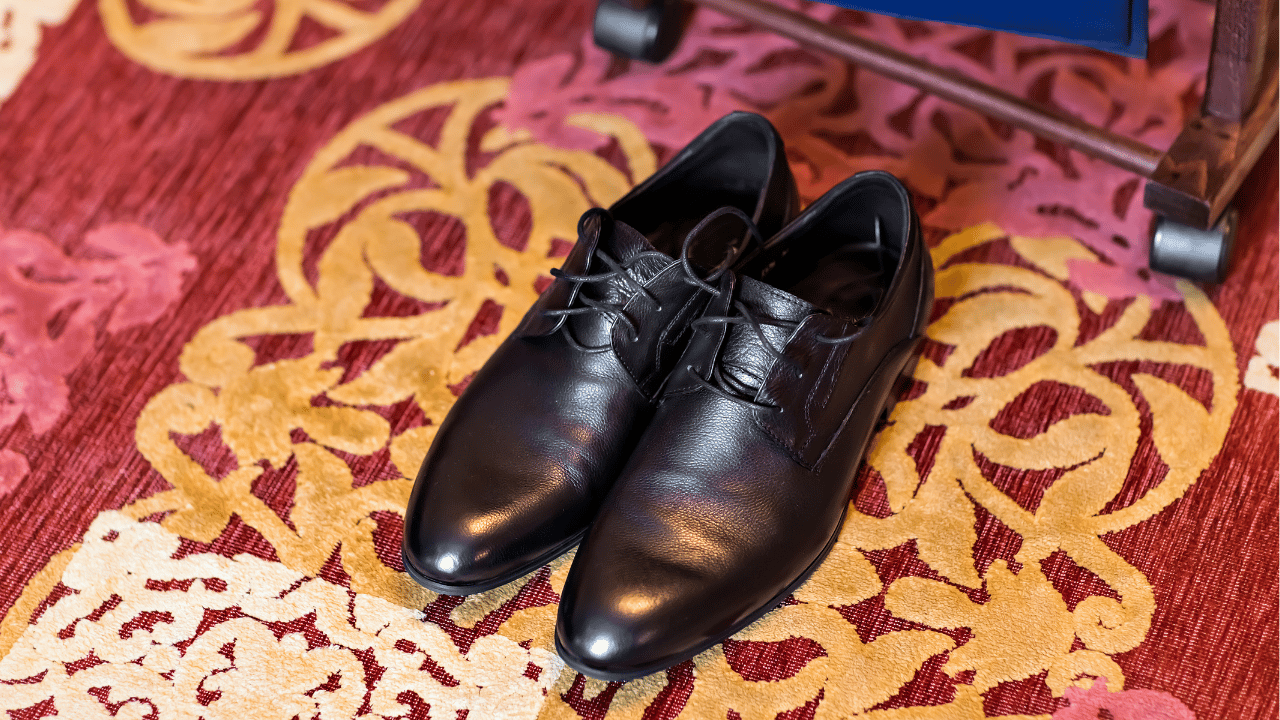
Alternative elegant lacing methods
Different lacing styles change fit and formality. Try these when you want a different look or function.
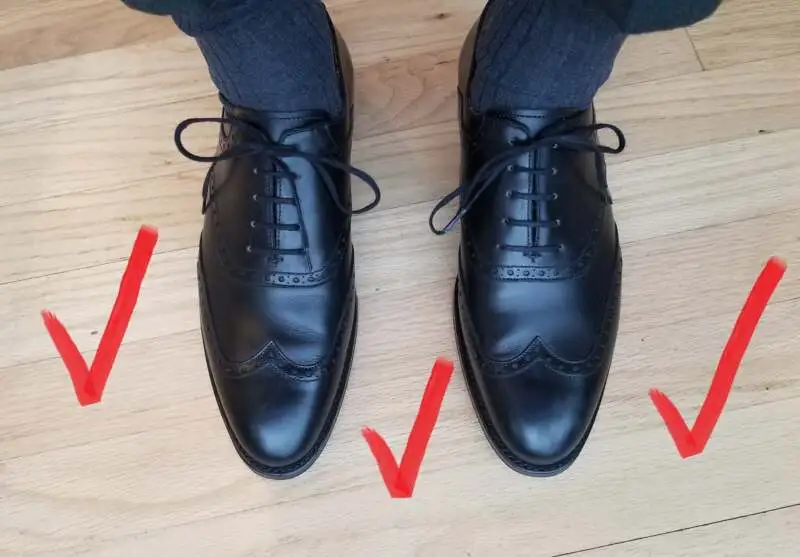
- Straight bar (European/ladder): Keeps appearance clean and formal. Best for tux or business shoes.
- Hidden knot: Knot tucked under tongue for ultra-clean front.
- Heel-lock (double-back) hybrid: Adds heel grip for walking comfort.
Straight bar quick steps:
- Run lace straight across bottom from inside out.
- Bring one end up one eyelet and across to create a bar. Repeat with the other end.
- Continue alternating to top for even bars.
Each method answers a different need. I use straight bar for formal events and heel-lock for long days on my feet.

Fit, tension, and comfort tips
Lacing is about comfort first, looks second. Pay attention to these small details.
- Tightness: Laces should secure the foot without pinching. You want firm hold and some wiggle room in the toes.
- Heel slip: Use a heel-lock or lace lock to stop the heel from lifting.
- Even pressure: Tighten gradually from the bottom up to avoid hotspots.
Personal note: I once tightened the top too much and developed a hot spot. Loosening two eyelets fixed the pain in minutes. Little adjustments matter.

Common mistakes and quick fixes
Avoid these frequent errors when you learn how to properly lace dress shoes.
- Too tight at one point: Loosen and re-tension evenly from the bottom.
- Uneven lengths: Re-center the lace at the bottom before re-lacing.
- Wrong lace type: Swap bulky laces for slim waxed ones on formal shoes.
- Big knot: Use a smaller surgeon’s knot or tuck the knot under the tongue.
Fixes are fast. A single re-lace often cures fit and look problems.
Maintenance and care for laces and shoes
Taking care of laces extends shoe life and keeps presentation sharp.
- Clean laces: Hand wash or replace if frayed.
- Rotate shoes: Let dress shoes rest between wears to recover shape.
- Replace when worn: Frayed laces and damaged eyelets degrade fit and look.
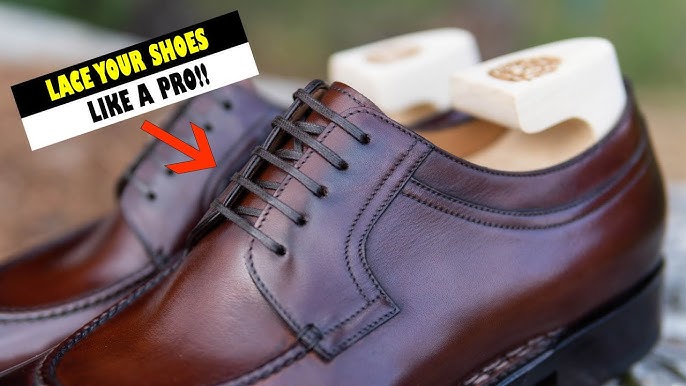
- Store properly: Use shoe trees to keep shape and reduce creasing.
I replace waxed laces annually on my daily pairs. Small habits keep shoes performing like new.
Short practical answers (PAA-style)
How tight should dress shoes be laced? Aim for firm hold with room for toe movement; you should not feel numbness or sharp pressure.
Which lacing is best for formal events? Straight bar lacing gives the cleanest, most formal look for oxfords and dress boots.
How long should laces be? Match lace length to eyelet pairs; 5 pairs = ~27–30 in, 6 pairs = ~30–34 in.

Frequently Asked Questions of how to properly lace dress shoes
How often should I replace my dress shoe laces?
Replace laces when they fray or lose stiffness. For daily use, expect to replace them every 6–12 months.
Can I use flat laces on formal shoes?
You can, but waxed round laces look more formal and hold knots better. Choose round waxed laces for black-tie or business wear.
What is the best knot for dress shoes?
A simple bow with a firm double-knot or a surgeon’s knot works well. Tuck the knot under the tongue for a cleaner front.
How do I stop heel slip with dress shoes?
Use a heel-lock lacing technique or add a heel pad for extra grip. Adjusting tension at the top eyelets often fixes slip.
Are longer laces better than shorter ones?
No; overly long laces create bulk and look messy. Pick a length that reaches the top eyelets with a small tail for tying.
Does lacing affect shoe break-in time?
Yes. Even lacing reduces hotspots and speeds comfortable break-in. Tight uneven lacing can slow the process and cause discomfort.
Can different lacing styles change shoe formality?
Yes. Straight bar lacing reads dressy. Criss-cross is versatile. More complex styles can look casual.
(Each answer above is 2–3 sentences.)
Conclusion
Proper lacing combines fit, comfort, and style. Learning how to properly lace dress shoes gives you control over comfort and appearance. Start with the classic criss-cross, pick the right lace length and type, and use heel-lock when you need more grip. Try one change at a time and note how it feels. If you liked this guide, try re-lacing your favorite pair today and share what worked in the comments or subscribe for more practical shoe care advice.

Madison Clark is a footwear expert and the voice behind MyStyleGrid.com. She specializes in honest shoe reviews, style tips, and practical guides to help readers find the perfect pair for any occasion. With years of experience in blogging and content creation, Madison makes footwear knowledge simple, stylish, and easy to follow.