Rubber boots are made from natural rubber, synthetic rubber, PVC, polyurethane, or blended waterproof materials.
When people ask what are rubber boots made of, the answer is more detailed than it first seems. Boot makers choose materials based on waterproofing, warmth, flexibility, cost, weight, and how the boots will be used. This guide explains each material, how it is processed, and what to look for before you buy.

What Are Rubber Boots Made Of?
Rubber boots are usually made from one of four main materials:
• Natural rubber
• Synthetic rubber
• PVC, or polyvinyl chloride
• Polyurethane, often called PU
Some boots use a blend of these materials. They may also include fabric linings, foam insulation, steel or composite toe caps, rubber outsoles, and special coatings.
The word “rubber” can be a little misleading. Many boots sold as rubber boots contain no natural rubber at all. For example, PVC boots look like rubber boots but are made from plastic. Polyurethane boots also have a rubber-like feel, yet their chemical structure is different.
The best material depends on the job. A garden boot needs water resistance and easy cleaning. A hunting boot may need warmth, quiet movement, and flexibility. A work boot may need puncture resistance, a protective toe, and strong traction.

Natural Rubber: The Traditional Boot Material
Natural rubber comes from latex, a milky liquid collected from rubber trees. The latex is cleaned, mixed with other ingredients, and heated in a process called vulcanization. Vulcanization makes the rubber stronger, more stable, and less sticky.
Natural rubber is valued for its soft feel and flexibility. A well-made natural rubber boot can bend with your foot and remain comfortable during long walks. It also tends to provide a close, flexible fit around the calf.
Common benefits include:
• Excellent flexibility in normal temperatures
• Strong waterproof protection
• A soft and comfortable feel
• Good grip when properly formulated
• A traditional appearance and finish
Natural rubber also has limits. It can become stiff in very cold weather, especially if the boot has a thin wall. It may crack when exposed to sunlight, ozone, oils, or harsh chemicals for long periods. Regular cleaning and proper storage can slow this damage.
Natural rubber is not automatically biodegradable. The finished boot contains added chemicals and has been vulcanized, so it does not break down quickly like a fallen leaf. Still, rubber from renewable tree sources may have a different environmental profile from fossil-fuel-based plastics.
Synthetic Rubber in Waterproof Boots
Synthetic rubber is made through chemical processes, often using materials linked to petroleum or natural gas. Manufacturers can design synthetic rubber for specific needs, such as cold resistance, chemical resistance, or improved durability.
Several types may appear in footwear:
• Neoprene, known for insulation and stretch
• Nitrile rubber, valued for oil resistance
• Butyl rubber, used for strong air and water resistance
• EPDM rubber, known for weather and ozone resistance
• Styrene-butadiene rubber, often used in general-purpose products
A boot may use synthetic rubber in the outer shell while using neoprene around the upper leg. This combination is common in fishing, farming, and hunting boots. Neoprene feels more like a thick, flexible wetsuit material than a hard rubber shell.
Synthetic rubber can offer more consistent performance than natural rubber. It can also be less sensitive to some oils, chemicals, or temperature changes. However, performance varies greatly by formula, thickness, and manufacturing quality.
The label “synthetic rubber” does not tell you everything. Two boots can use synthetic rubber and perform very differently. Look for details about insulation, chemical resistance, temperature ratings, and intended use.

PVC Boots: Affordable and Easy to Clean
PVC boots are made from polyvinyl chloride, a plastic that can be softened with additives called plasticizers. The result can feel flexible, smooth, and rubber-like. PVC is common in rain boots, farm boots, food-service footwear, and inexpensive work boots.
PVC boots are popular because they offer several practical advantages:
• Low purchase cost
• Good resistance to water
• Easy cleaning
• Strong resistance to many acids and salts
• A smooth surface that resists dirt
PVC boots are often molded as one piece. This reduces the number of seams where water could enter. For muddy yards, wet sidewalks, and short outdoor tasks, this construction can work very well.
The main weakness is temperature performance. PVC may become stiff in cold weather and softer in high heat. It can also crack or split after repeated bending, especially when exposed to sunlight or low temperatures.
PVC is not the same as natural rubber. If you need soft flex, cold-weather comfort, or long walking performance, a quality natural rubber or synthetic rubber boot may be a better choice.

Polyurethane Boots and Their Special Features
Polyurethane is a lightweight material used in many modern waterproof boots. It can be formed into a dense outer shell or a foamed structure. Foamed polyurethane contains tiny air cells, which reduce weight and improve insulation.
PU boots often feel much lighter than traditional rubber boots. This matters when you walk across fields, construction sites, or warehouses for many hours. Some PU designs also provide good resistance to oils, fats, and cleaning agents.
Key benefits include:
• Low weight
• Good insulation
• Strong abrasion resistance
• Comfortable cushioning
• Resistance to many oils and chemicals
Polyurethane has one important storage concern. In warm, damp conditions, some PU materials can suffer from hydrolysis. Hydrolysis is a chemical breakdown caused by moisture and heat. It may make the sole crumble or peel over time.
To reduce this risk, store PU boots in a cool, dry place. Do not leave them for months in a hot car, damp shed, or sealed plastic bag. Clean them after use and allow them to dry naturally.

What Other Parts Are Inside Rubber Boots?
The waterproof outer shell is only one part of a boot. Manufacturers add several layers to improve comfort, safety, and performance.
Linings
Boot linings may be made from polyester, nylon, cotton blends, mesh, or neoprene. A lining helps control moisture, reduces rubbing, and makes the boot easier to put on and remove.
Neoprene linings add warmth and stretch. Mesh linings feel cooler in mild weather. Some work boots use moisture-wicking fabrics to move sweat away from the foot.
Insulation
Winter rubber boots may contain:
• Neoprene
• Thinsulate-style synthetic insulation
• Felt
• Wool blends
• Foam
• Reflective thermal layers
The thickness of the insulation affects warmth. A thick lining may feel warm but can reduce interior space. Always wear the socks you plan to use when trying on insulated boots.
Insoles
Insoles may use EVA foam, polyurethane foam, rubber, felt, or a combination of materials. EVA is light and cushioning. Polyurethane usually offers better long-term support but may feel firmer.
A removable insole is useful because you can dry it separately or replace it with an orthopedic insert. This small feature can make a major difference in daily comfort.
Outsoles and Tread
The outsole may be made from rubber, PVC, polyurethane, or a rubber compound. Its tread pattern controls traction on mud, wet pavement, snow, and loose ground.
Deep lugs work well in mud but can feel awkward on smooth indoor floors. Fine tread patterns are quieter and more comfortable on pavement. No boot tread grips every surface equally well, so match the sole to your usual ground conditions.
Safety Components
Work boots may include steel toe caps, aluminum toe caps, composite toe caps, puncture-resistant plates, or electrical protection. These features are separate from the waterproof shell.
If you need protective footwear, check the safety marking and the standard for your region. A fashion rain boot should never replace certified work footwear.
How Rubber Boots Are Manufactured
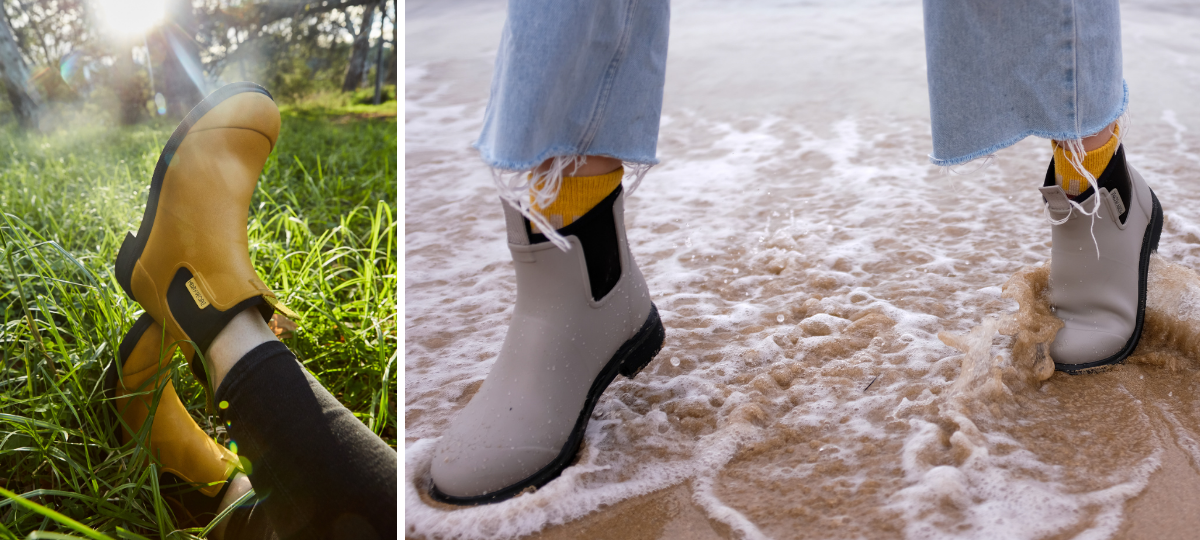
Understanding how rubber boots are made helps explain why some pairs last for years while others fail after one season.
1. Material Preparation
Rubber compounds are mixed with ingredients that control strength, color, flexibility, curing time, and resistance to sunlight. These ingredients may include sulfur, pigments, oils, stabilizers, fillers, and reinforcing agents.
PVC and PU use different chemical systems. The manufacturer selects a formula based on the required balance of weight, flexibility, durability, and cost.
2. Boot Shaping
Many waterproof boots are formed over a foot-shaped mold called a last. The material is pressed, dipped, injected, or layered around the mold.
Some rubber boots are built from multiple layers. Others are molded in one piece. A one-piece design usually has fewer seams and fewer possible leak points.
3. Heat Treatment
Natural and synthetic rubber often undergo vulcanization. Heat and pressure create links between rubber molecules, improving strength and shape retention.
PVC and PU boots may use injection molding. In this process, heated material is pushed into a mold and allowed to cool into its final form.
4. Adding the Sole
The outsole may be attached with heat, adhesives, pressure, or a second molding step. A strong bond is important because the sole faces constant flexing, friction, water, and dirt.
5. Inspection
Responsible manufacturers inspect boots for leaks, weak seams, uneven walls, poor bonding, and sole defects. Some industrial boots undergo more formal tests for slip resistance, chemical exposure, impact, compression, or electrical protection.
How to Tell What Your Boots Are Made Of
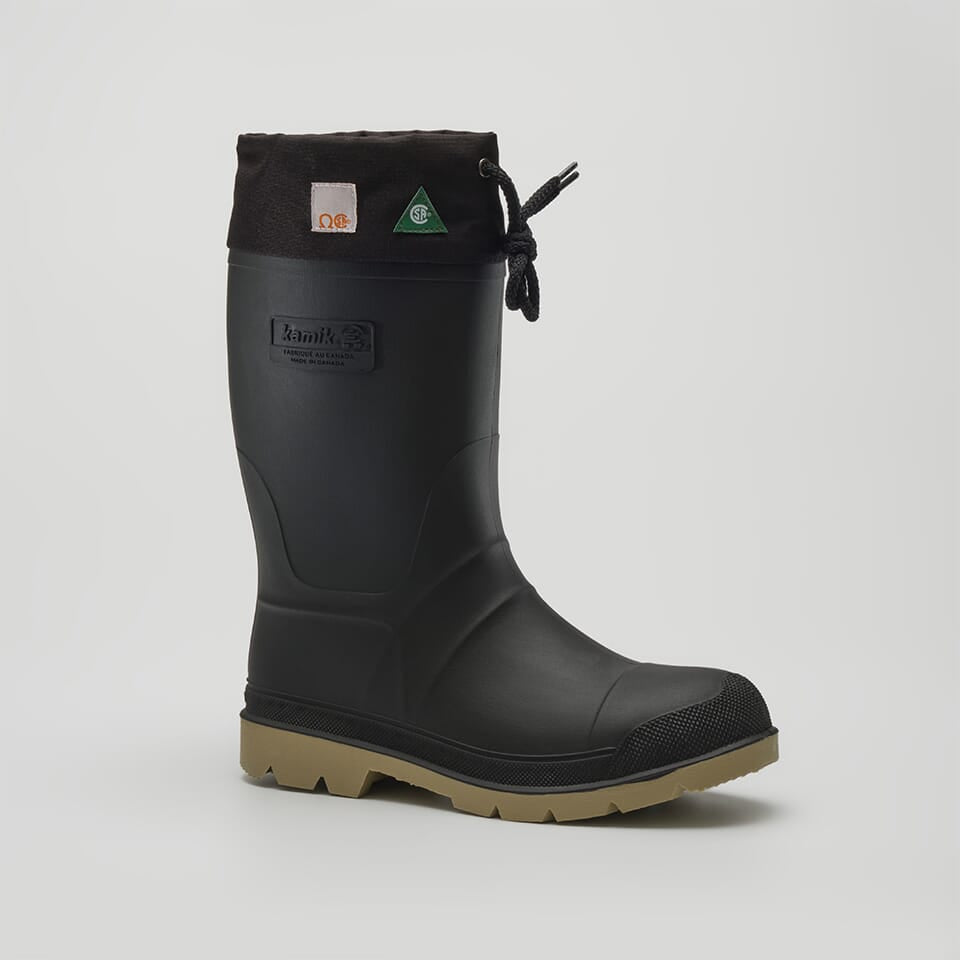
The product label is the best starting point. Look for terms such as “100% natural rubber,” “PVC,” “polyurethane,” “neoprene,” or “synthetic rubber.”
You can also check the manufacturer’s product page. Reliable specifications often list the upper, lining, insole, and outsole separately. A boot described simply as “rubber” may contain several different materials.
A few physical clues can help, but they are not proof:
• Natural rubber often feels supple and has a mild rubber scent.
• PVC may feel smoother, stiffer, and more plastic-like.
• PU is often noticeably light for its size.
• Neoprene feels soft, thick, and fabric-like.
• A laminated boot may show visible layers near the opening or cut edge.
Avoid cutting a boot to identify it. That can create a leak and may release dust or material fragments. If you have an allergy, check the manufacturer’s material statement instead of relying on touch or smell.
People with latex sensitivity should pay special attention to natural rubber. Synthetic alternatives may be suitable, but the complete product should be checked because adhesives, elastic parts, and linings can contain different materials.

Which Rubber Boot Material Is Best?
There is no single best material for every person. The right choice depends on your climate, activity, fit, and budget.
| Use | Often suitable | Why |
|---|---|---|
| Light rain and city walks | PVC or natural rubber | Waterproof and easy to clean |
| Gardening | Natural rubber or PVC | Flexible and simple to maintain |
| Cold-weather use | Neoprene-lined rubber or PU | Better warmth and insulation |
| Long walks | Flexible natural rubber or quality synthetic rubber | More comfortable movement |
| Food or farm work | PVC or nitrile-based materials | Easy cleaning and chemical resistance |
| Oil exposure | Nitrile rubber or suitable PU | Better resistance to many oils |
| Heavy work | Certified protective rubber or PU boots | May include toe and puncture protection |
Price is not a perfect measure of quality. A costly boot can still fit poorly or use a material unsuitable for your climate. Focus on construction, lining, tread, fit, and care instructions.
One common mistake is buying a thick, warm boot for mild weather. Feet can sweat, and moisture inside the boot can cause blisters. Another mistake is choosing a lightweight boot for rough work without checking its safety rating.

Rubber Boots and the Environment
Material choice affects environmental impact, but the full picture includes manufacturing, shipping, use, repair, and disposal.
Natural rubber comes from a renewable crop, yet rubber plantations can affect forests, land use, and biodiversity. Synthetic rubber and PVC commonly rely on fossil-based chemicals. PU may reduce weight and shipping energy, but it can be difficult to recycle in a mixed-material boot.
A longer-lasting boot often has a lower impact than a cheap pair that must be replaced each year. Proper care can extend service life:
• Rinse away mud and salt after use.
• Dry boots away from radiators and open flames.
• Keep them out of direct sunlight during storage.
• Use a material-safe conditioner when the maker recommends one.
• Store boots upright so they do not crease.
• Replace worn insoles when the shell and sole remain sound.
Do not assume that “natural” means compostable or harmless. Do not burn old boots. Some materials can release harmful fumes when burned, and local rules may limit disposal options.
Recycling programs for footwear are still limited in many areas. Before throwing boots away, check local waste guidance or ask the manufacturer about take-back programs.
How to Care for Different Boot Materials
Care should match the material. A method that helps natural rubber may not be suitable for PVC or PU.
Natural Rubber Care
Wash natural rubber with clean water and mild soap. Let it dry away from direct heat and sunlight. A rubber conditioner made for footwear can help reduce surface drying, but avoid petroleum-based products unless the manufacturer approves them.
PVC Care
PVC usually needs only water and mild soap. Avoid strong solvents, sharp brushes, and high heat. These can damage the surface or remove plasticizers that keep the material flexible.
Polyurethane Care
Wipe PU boots clean and dry them in a ventilated place. Avoid storing them in damp heat for long periods. If the sole begins to crumble, the material may be breaking down internally, and repair is often not practical.
Neoprene Care
Rinse neoprene-lined boots after exposure to salt, mud, or chemicals. Dry them fully before storage. Do not twist or wring the neoprene, because repeated force can damage its structure.
In my experience reviewing footwear construction, the biggest care mistake is drying boots beside a heater. Fast heat feels helpful after a wet walk, but it can harden rubber, warp plastic, and weaken glue. Slow drying is less exciting but much safer.
Common Mistakes When Buying Rubber Boots
A waterproof label does not guarantee comfort or durability. Before buying, check more than the outer material.
Use this simple checklist:
- Check the material and lining.
- Confirm the boot’s height and calf fit.
- Look for a removable insole.
- Examine the outsole depth and pattern.
- Check whether the boot is insulated.
- Read the temperature and chemical guidance.
- Confirm safety standards for work use.
- Inspect the return policy and size advice.
Do not buy boots that are too large just to fit thick socks. Excess space can cause heel lift and blisters. Do not buy boots that are too tight, either; waterproof materials often stretch less than leather or cloth.
If you will wear the boots for hours, walk around in them before deciding. Bend your feet, climb a step, and check whether the top edge rubs your calf. Fit is not a minor detail. It is part of the boot’s performance.
Frequently Asked Questions About What Are Rubber Boots Made Of
Are rubber boots made from real rubber?
Some rubber boots are made from natural rubber collected from rubber trees. Others use synthetic rubber, PVC, polyurethane, or a blend of materials.
Are PVC boots the same as rubber boots?
No. PVC is a plastic, while rubber is an elastic material made from natural or synthetic compounds. PVC boots can still be waterproof and useful, but they may feel stiffer in cold weather.
Are natural rubber boots better than synthetic boots?
Neither is always better. Natural rubber often offers a soft, flexible feel, while synthetic materials can provide lower weight, improved chemical resistance, or better cold-weather performance.
Can people with latex allergies wear rubber boots?
People with latex allergies should be cautious with natural rubber boots. Check the full material information and ask the manufacturer whether the product contains natural rubber latex.
Why do rubber boots crack?
Rubber boots can crack from age, sunlight, ozone, chemicals, repeated bending, or improper storage. Keeping them clean, cool, dry, and away from direct sunlight can help reduce cracking.
Are rubber boots waterproof?
Most well-made rubber, PVC, and PU boots are waterproof when intact. Leaks can develop through worn soles, damaged seams, cracks, punctures, or poor construction.
How long should rubber boots last?
Service life varies by material, use, storage, and quality. Light-use boots may last several years, while boots exposed to heavy work, chemicals, or daily flexing may wear out sooner.
Conclusion
Rubber boots are made from natural rubber, synthetic rubber, PVC, polyurethane, and supporting materials such as neoprene, foam, fabric, and rubber compounds. Each material has strengths and limits, so the best choice depends on weather, work, comfort, safety, and care needs.
Check the label, inspect the sole, consider the lining, and choose a boot that matches your daily conditions. With the right material and good storage, your boots can stay dry, comfortable, and useful for many seasons. Explore more footwear care guides, compare trusted product specifications, and share your own boot experience in the comments.

Madison Clark is a footwear expert and the voice behind MyStyleGrid.com. She specializes in honest shoe reviews, style tips, and practical guides to help readers find the perfect pair for any occasion. With years of experience in blogging and content creation, Madison makes footwear knowledge simple, stylish, and easy to follow.