The different types of sunglasses include polarized, photochromic, mirrored, prescription, sport, fashion, and safety sunglasses.
Knowing what are the different types of sunglasses helps you choose the right pair for your eyes, daily habits, and personal style. Lens technology, frame shape, UV protection, and fit all affect how well sunglasses work. This guide explains each option in simple terms so you can make a smart choice instead of buying only for looks.

What Are the Different Types of Sunglasses?
The different types of sunglasses are designed for different needs. Some reduce glare on roads and water. Others improve contrast, protect the eyes during sports, or provide clear vision for people who need prescription lenses.
The main ways to classify sunglasses are:
• Lens technology, such as polarized, mirrored, tinted, and photochromic lenses
• Use, such as driving, sports, fashion, safety, and outdoor work
• Prescription needs, including single-vision, bifocal, and progressive sunglasses
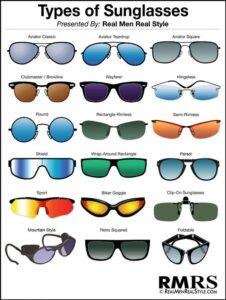
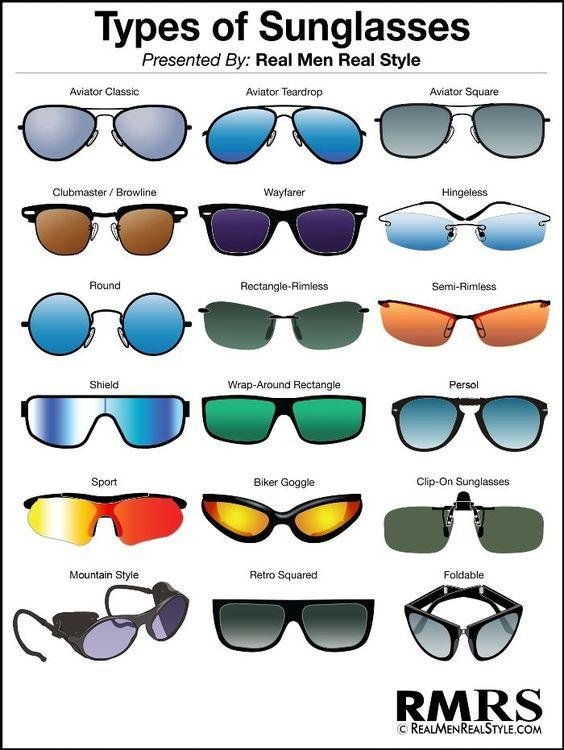
• Frame design, such as aviator, wayfarer, round, cat-eye, wraparound, and rectangular frames
A good pair should block 99% to 100% of UVA and UVB rays. In the United States, look for a label that says “100% UV protection” or “UV400.” Dark lenses alone do not prove that sunglasses protect your eyes. A very dark lens without UV protection can make your pupils open wider and allow more harmful ultraviolet light to enter.

Polarized Sunglasses
Polarized sunglasses use a special filter to reduce horizontal glare. This glare often comes from roads, water, snow, sand, and car hoods. The result is a clearer and more comfortable view, especially on bright days.
Polarized lenses are popular with:
• Drivers who deal with glare from pavement and nearby cars
• Boaters, anglers, and beachgoers


• Hikers and campers
• Skiers and snowboarders
• People who are sensitive to bright light
Polarization can make colors and details look more natural. It may also reduce squinting and eye fatigue. However, polarized lenses do not automatically provide UV protection, so check the label before buying.
One limitation is that polarization can make some digital screens harder to see. A phone, dashboard display, or ATM screen may look dim or uneven when viewed through certain polarized lenses. Turning your head slightly often solves the problem.
In my experience, the most common mistake is assuming that every dark, expensive-looking lens is polarized. A simple test is to look at an LCD screen while rotating the sunglasses. If the screen becomes darker at a certain angle, the lenses may be polarized. This test is useful, but the product label is more reliable.

Nonpolarized Sunglasses
Nonpolarized sunglasses reduce the amount of light entering the eyes, but they do not filter reflected glare in the same way polarized lenses do. They are often more affordable and work well for basic outdoor use.
These sunglasses may suit you if you:
• Want simple UV protection
• Spend time outdoors in normal conditions
• Need a low-cost backup pair
• Prefer clear viewing of digital screens
Nonpolarized lenses can be a practical choice for walking, shopping, commuting, or casual use. They are also common in inexpensive fashion sunglasses.
The key point is that UV protection and polarization are different features. UV protection guards against ultraviolet radiation. Polarization reduces glare. A lens can have one feature, both, or neither.


Photochromic Sunglasses
Photochromic sunglasses, often called transition lenses, darken when exposed to ultraviolet light. They become lighter indoors or in low light. This lets one pair serve as regular eyeglasses and sunglasses.
Photochromic lenses can be helpful for:
• People who move often between indoor and outdoor spaces
• Commuters
• Travelers
• People who dislike changing glasses
The lenses may not darken fully inside a car because most windshields block much of the UV light that activates them. Temperature can also affect performance. In cold weather, some photochromic lenses may become darker, while heat can slow or reduce the darkening effect.
These lenses offer convenience, but they may not be the best choice for long drives or intense sunlight. A dedicated pair of polarized prescription sunglasses often gives stronger glare control on the road.

Mirrored Sunglasses
Mirrored sunglasses have a thin reflective coating on the outside of the lens. The coating sends some light away before it reaches the eye. This can make them useful in very bright settings.
Mirrored lenses are common for:
• Skiing and snowboarding
• High-altitude hiking
• Water sports


• Cycling
• Beach activities
• Fashion-forward everyday wear
The mirror color does not tell you how much UV protection the lens provides. Silver, gold, blue, green, and rose mirrors can all offer strong protection when made to the proper standard.
The coating can scratch more easily than a standard lens surface. Store mirrored sunglasses in a hard case and clean them with a soft microfiber cloth. Avoid paper towels, shirt sleeves, and household glass cleaners.

Gradient Sunglasses
Gradient sunglasses are darker at the top and lighter at the bottom. This design blocks strong overhead light while allowing more light through the lower part of the lens.
They work well for:
• Driving
• Reading outdoors
• Everyday city wear
• Outdoor dining
• Situations where you need to look down often
A gradient lens can be comfortable behind the wheel because it shields the eyes from sunlight above while keeping the dashboard easier to see. However, it may not be ideal for skiing, boating, or open-water activities where bright light comes from many directions.
Double-gradient lenses are darker at both the top and bottom, with a lighter band in the center. They offer a stylish look and can work well in bright outdoor settings.


Tinted Sunglasses
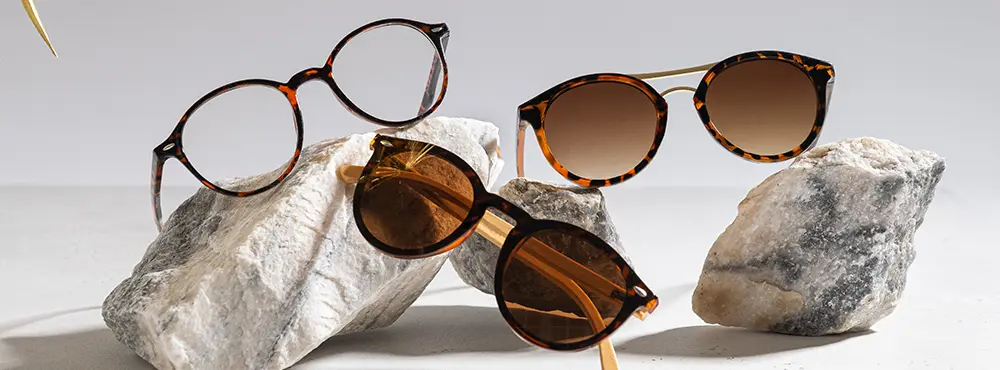
Tinted lenses come in many colors. Each tint changes how light reaches the eyes, but the color does not always show the level of UV protection.
Common lens colors include:
• Gray: Reduces brightness while keeping colors fairly natural
• Brown or amber: Improves contrast and depth in some outdoor conditions
• Green: Reduces glare while maintaining good color balance
• Yellow: May improve contrast in low-light conditions, but is not ideal for intense sunlight
• Rose or copper: Can make contrast feel sharper in some settings
Gray sunglasses are often a safe all-purpose choice. Brown lenses may feel comfortable for driving and hiking. Yellow lenses are sometimes used for cloudy conditions, but they should not be treated as a replacement for proper low-light or night-driving eyewear.
Tint can affect visual comfort, but it does not replace UV protection. Always confirm that the lenses block UVA and UVB rays.

Prescription Sunglasses
Prescription sunglasses combine vision correction with outdoor protection. They can be made with single-vision, bifocal, or progressive prescriptions.
They are useful for people with:
• Nearsightedness
• Farsightedness
• Astigmatism
• Presbyopia
Prescription sunglasses are available in many frame styles and lens materials. You can also add features such as polarization, anti-reflective coatings, impact resistance, and photochromic technology.
An important fitting issue is the position of the prescription lens in front of your eyes. If the frame sits too far away, too close, or at an unusual angle, vision may feel distorted. Strong prescriptions and progressive lenses need especially careful measurements.
A practical lesson is to avoid choosing a frame only because it looks good online. Frame width, bridge fit, lens height, and the space needed for your prescription all matter. An optician can help prevent discomfort and poor vision.
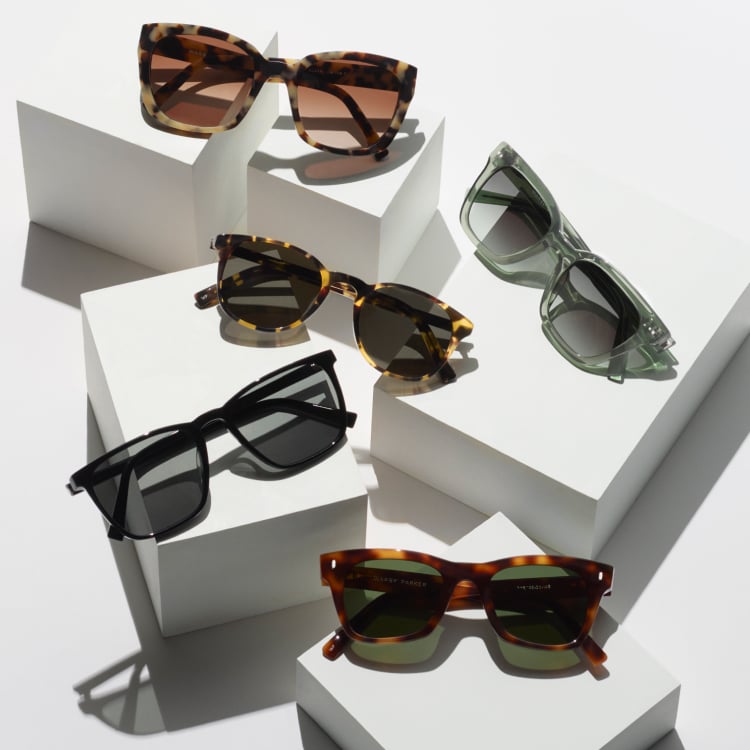
Sport and Performance Sunglasses
Sport sunglasses are built for movement, wind, sweat, and impact. They often have curved lenses, rubber nose pads, grippy temple tips, and lightweight frames.
Different sports may call for different designs:
• Cycling sunglasses often use wide lenses and strong airflow control
• Running sunglasses need a secure, light fit
• Golf sunglasses may use contrast-enhancing tints
• Ski sunglasses need strong side coverage and glare protection
• Fishing sunglasses often use polarization to reduce water glare
• Mountain sunglasses may include side shields for intense sunlight
Wraparound sport sunglasses cover more of the face than regular frames. This helps block sunlight and wind from the sides. However, highly curved lenses can cause distortion if they are not designed or fitted correctly.
For contact sports, choose protective eyewear made for athletic use. Regular sunglasses may break or come off during impact. The right product should meet relevant impact-resistance standards.
Safety Sunglasses
Safety sunglasses protect the eyes from hazards such as flying particles, dust, chemicals, and bright light. They are used in construction, laboratories, manufacturing, landscaping, and some outdoor jobs.
Safety eyewear may include:
• Impact-resistant polycarbonate lenses
• Side shields
• Full coverage
• Anti-fog coatings
• Specialized filters for welding or high-intensity light
Regular sunglasses are not a replacement for safety glasses. Fashion frames may shatter, leave gaps, or fail to protect the sides of the eyes.
In the workplace, choose eyewear that meets the safety standard required for the task. Welding, lasers, and chemical work need specialized protection. A general pair of sunglasses is not enough for these hazards.
Blue-Light and Computer Sunglasses
Blue-light sunglasses are marketed for screen use, but they are different from outdoor sunglasses. Most indoor screens are not bright enough to require dark lenses. Wearing dark sunglasses indoors can make the eyes work harder and may reduce clear vision.
For computer work, better options may include:
• A comfortable screen distance
• Regular breaks
• Reduced glare from windows and lamps
• Proper room lighting
• An updated prescription
• An anti-reflective lens coating
Some people find blue-light filtering lenses comfortable, but evidence about their ability to prevent digital eye strain is limited. Dry eyes, long screen sessions, poor posture, and infrequent blinking are often bigger causes of discomfort.
Use regular sunglasses outdoors and clear, suitable eyewear indoors unless an eye-care professional recommends something else.
Fashion Sunglasses
Fashion sunglasses focus on style, shape, color, and brand design. They can be round, square, cat-eye, oval, geometric, oversized, or inspired by vintage frames.
Popular fashion styles include:
• Aviator sunglasses with a teardrop-shaped lens
• Wayfarer sunglasses with a thick, angled frame
• Cat-eye sunglasses with lifted outer corners
• Round sunglasses with a soft, retro look
• Oversized sunglasses with broad face coverage
• Rimless sunglasses with a light, minimal appearance
Fashion and protection do not have to conflict. Many stylish sunglasses provide excellent UV protection. The key is to check the label, inspect the frame quality, and choose a pair that fits securely.
A frame should not slide down when you look down or leave painful pressure behind your ears. The best-looking pair is not useful if you stop wearing it because it feels uncomfortable.
Clip-On and Fit-Over Sunglasses
Clip-on sunglasses attach to prescription eyeglasses. Fit-over sunglasses are larger frames that sit over regular glasses.
These options can help if you:
• Need prescription glasses all day
• Want a quick and affordable solution
• Do not want a second prescription pair
• Need temporary protection while traveling
Clip-ons are light and convenient, but they may scratch prescription lenses if handled carelessly. Fit-over sunglasses offer more coverage but can feel bulky.
Magnetic clip-ons are often more secure and attractive than older clip designs. Still, make sure the attachment does not block your view or place pressure on the eyeglass frame.
How to Choose the Right Type of Sunglasses
Choosing among the different types of sunglasses becomes easier when you start with your main activity. Think about where you wear them, how bright the environment is, and whether you need vision correction.
Use this simple process:
-
Identify your main setting. Choose different features for driving, water, snow, sports, work, or casual use.
-
Confirm UV protection. Look for 100% UVA and UVB protection or UV400 labeling.
-
Decide whether you need polarization. It is useful for reflected glare, but not essential for every activity.
-
Check your vision needs. Consider prescription sunglasses if regular glasses are necessary for clear distance or near vision.
-
Test the fit. The frame should sit level, feel stable, and leave no painful pressure points.
-
Inspect the lens quality. Look through the center of each lens at a straight line. If the line bends when you move the glasses, the lens may have distortion.
-
Match the coverage to the activity. Wraparound frames help with side light, while smaller frames may leave more exposure.
-
Consider durability. Polycarbonate and other impact-resistant materials may be wise for sports, children, and active jobs.
Face shape can guide style, but it should not control your whole decision. Comfort, coverage, lens quality, and UV protection matter more than a style rule.
Sunglasses Lens Materials
The lens material affects weight, clarity, impact resistance, and cost. The most common options are glass, plastic, polycarbonate, and high-index plastic.
Glass lenses
Glass offers excellent optical clarity and strong scratch resistance. However, it is heavier and can break under impact, so it is less common for sports.
Standard plastic lenses
Plastic lenses are light and affordable. They can provide good optical performance but may scratch more easily without a protective coating.
Polycarbonate lenses
Polycarbonate is light and impact resistant. It is widely used for children’s eyewear, safety glasses, and sport sunglasses. It may show more optical distortion than glass or premium plastic if poorly made.
High-index lenses
High-index materials are thinner than standard plastic. They can be useful for stronger prescriptions, though the best material depends on the prescription and frame.
No lens material is perfect for every person. Your optician can recommend the best option based on your prescription, activity, and budget.
Sunglasses Care and Common Mistakes
Even high-quality sunglasses can perform poorly when they are damaged or poorly cared for. Small habits can protect the lenses and extend their useful life.
Avoid these mistakes:
• Leaving sunglasses on a hot car dashboard
• Cleaning lenses with a shirt or paper towel
• Placing lenses face down on a table
• Using household cleaners that may damage coatings
• Wearing scratched lenses for long periods
• Buying from a seller who cannot confirm UV protection
Rinse dusty lenses with clean water first. Then use a lens-safe cleaner and a clean microfiber cloth. Store the glasses in a hard case when they are not in use.
Scratches usually cannot be polished away safely. Deep scratches, loose hinges, or a bent frame are signs that replacement may be better. If sunglasses cause headaches, blurred vision, or unusual eye strain, stop using them and ask an eye-care professional for advice.
How Sunglasses Protect Eye Health
Ultraviolet exposure can affect the skin around the eyes and the eyes themselves. Long-term exposure is linked with conditions such as cataracts, growths on the eye surface, and damage from intense light. Sunglasses and a wide-brimmed hat can reduce exposure.
Children also need sunglasses because they spend more time outdoors and may receive substantial lifetime UV exposure. Choose durable, well-fitting eyewear that a child will actually keep on.
Sunglasses do not replace regular eye exams. They also do not treat eye disease, severe light sensitivity, or sudden vision changes. New flashes, floaters, pain, or vision loss require prompt medical care.
Frequently Asked Questions About What Are the Different Types of Sunglasses
What are the best types of sunglasses for driving?
Polarized sunglasses can reduce glare from roads and nearby vehicles. Gray or brown lenses are often comfortable, but make sure the tint is not so dark that it reduces safe visibility.
Are polarized sunglasses better than regular sunglasses?
Polarized sunglasses are better at reducing reflected glare, but they are not always necessary. Both polarized and regular sunglasses can protect your eyes if they provide verified UVA and UVB protection.
What type of sunglasses is best for the beach?
Polarized sunglasses with 100% UV protection are often a strong choice for the beach. Wraparound coverage can also reduce light entering from the sides.
Do dark sunglasses protect your eyes better?
Darkness does not prove protection. The sunglasses must block UVA and UVB rays, and the label should clearly state 100% UV protection or UV400.
What are the best sunglasses for sports?
Sport sunglasses should fit securely, resist impact, and provide suitable coverage for the activity. Wraparound frames, grippy nose pads, and lightweight impact-resistant lenses are common useful features.
Can I wear prescription sunglasses instead of regular glasses?
Yes, prescription sunglasses can replace regular glasses outdoors while providing vision correction and UV protection. You may still need clear prescription glasses for indoor use or low-light conditions.
Do sunglasses prevent cataracts?
Sunglasses can reduce UV exposure, which is one factor linked with cataract development. They cannot guarantee prevention, so use them with other healthy habits and attend routine eye exams.
Conclusion
The different types of sunglasses serve different purposes. Polarized lenses reduce glare, photochromic lenses adjust to changing light, mirrored lenses suit bright conditions, and prescription sunglasses combine clear vision with outdoor protection. Sport, safety, fashion, gradient, and clip-on designs each solve specific needs.
Start with your main activity, confirm full UV protection, and choose a comfortable fit. Do not rely on lens darkness or appearance alone. Compare the options carefully, ask an optician when needed, and choose sunglasses you will wear consistently.

Rubel Miah is the Senior Editor at MyStyleGrid.com, where he brings a sharp editorial eye and an unshakable love for fashion to everything he does. A true style addict, Rubel lives and breathes trends, from streetwear to high fashion, and has a knack for turning inspiration into impactful stories. With years of experience in fashion journalism and digital media, he curates content that empowers readers to express themselves through style. When he’s not editing features or forecasting the next big thing, you’ll find him hunting down vintage pieces or capturing street style moments around the city.