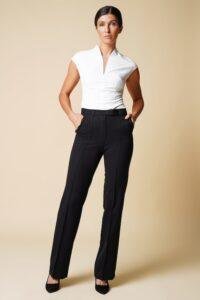
Women's dress pants are tailored trousers designed to create a polished, professional, or formal look.
Women’s dress pants are a key part of a modern wardrobe because they blend comfort, structure, and style. They can take you from the office to dinner with only a change of shoes or a top. This guide explains what women’s dress pants are, how they should fit, which fabrics work best, and how to choose a pair for your needs.
What Are Women’s Dress Pants?
Women’s dress pants are trousers made for polished outfits rather than casual wear. They usually have a clean shape, a smooth finish, and details such as a waistband, belt loops, pockets, and a front crease.
Unlike jeans, leggings, or sweatpants, women’s dress pants are made to look refined. They may be slim, straight, wide-leg, bootcut, or relaxed. Some have a flat front, while others include pleats for extra room and a classic look.
The term can include many styles, such as:
• Tailored trousers for work or formal events
• Suit pants designed to match a blazer
• Ankle pants that end above the shoe
• Wide-leg pants with a flowing shape
• Ponte dress pants with stretch and a smooth finish
• Pull-on dress pants with an elastic back or waistband
Women’s dress pants do not need to feel stiff or uncomfortable. Modern designs often use stretch fibers, soft lining, and flexible waistbands. The best pair looks sharp while allowing you to sit, walk, and move with ease.

How Women’s Dress Pants Differ From Casual Pants
The main difference is structure. Women’s dress pants often use pressed seams, shaped waistbands, and smooth fabrics to create a neat outline.
Casual pants focus more on ease and durability. Dress pants focus on a finished appearance. This does not mean one type is better than the other. Each serves a different purpose.
Here are some common differences:
• Fabric: Dress pants often use wool blends, polyester blends, rayon, ponte knit, or polished cotton. Casual pants may use denim, canvas, fleece, or soft jersey.
• Finish: Dress pants usually have a smooth or pressed finish. Casual pants may have visible stitching, fading, cargo pockets, or a rougher texture.
• Shape: Dress pants often follow the body in a clean line. Casual pants may have a looser or more relaxed shape.
• Use: Women’s dress pants work well for offices, interviews, ceremonies, dinners, and professional events. Casual pants are better for errands, travel, and relaxed settings.
• Details: Dress pants may have discreet pockets and simple closures. Casual pants often use large pockets, drawstrings, zippers, or decorative hardware.
Slacks and dress pants are often used as the same term in the United States. “Trousers” is also common, especially in British English and fashion writing. In most shopping searches, these terms point to a similar category of polished pants.
Common Types of Women’s Dress Pants
Different cuts suit different body shapes, wardrobes, and dress codes. Knowing the main types makes shopping much easier.
Straight-leg dress pants
Straight-leg pants keep a similar width from the hip to the hem. They create a balanced, classic line and work well with blouses, sweaters, and blazers.
This style is a strong choice for a business wardrobe because it looks neat without feeling too formal. It also pairs well with both flats and low heels.
Wide-leg dress pants
Wide-leg pants are roomy from the hip or thigh to the hem. They can look elegant and modern, especially when made from fabric that drapes well.
Wear them with a fitted top or a shorter jacket to keep the outfit balanced. Very loose tops can make the whole look seem bulky.
Slim and skinny dress pants
Slim dress pants follow the leg closely without always feeling skin-tight. Skinny styles fit even more closely from the hip to the ankle.
These pants look polished with longer blazers, tunic tops, and loafers. Choose fabric with stretch so the pants do not pull across the hips or knees.
Bootcut dress pants
Bootcut pants are narrow through the thigh and open slightly from the knee to the hem. They were designed to fit over boots, but they also work with heels and pointed-toe shoes.
A longer bootcut style can make the legs look longer. The hem should nearly touch the floor when worn with the shoes you plan to use.
Ankle-length dress pants
Ankle pants end near the ankle bone. They offer a fresh, practical look and work well in warm weather or with loafers and ballet flats.
The exact length matters. A pair that ends at the narrowest part of the ankle often looks intentional. A pair that stops at an awkward mid-calf point may look too short.
Pleated dress pants
Pleats are folds of fabric near the front waistband. They add room around the hips and thighs and create a traditional tailored look.
Pleated pants can be very comfortable, but the pleats should lie flat when you stand. If they spread open, the pants may be too tight or poorly cut for your shape.
How Should Women’s Dress Pants Fit?
The right fit is more important than the label size. Sizes vary between brands, so use the garment’s measurements and your comfort as your guide.
Check these areas when trying on women’s dress pants:
• Waist: The waistband should sit securely without digging into your skin. You should be able to slide one or two fingers under it.
• Hips: The fabric should lie smoothly. Pulling, horizontal lines, or open pockets can signal that the pants are too small.
• Rise: The rise is the distance from the crotch seam to the top of the waistband. A comfortable rise prevents pinching and helps the pants stay in place.
• Thighs: You should be able to walk and sit without the fabric feeling tight. Test the pants in a chair before buying them.
• Seat: The back should cover you fully without sagging or pulling. Extra fabric may mean the seat is too large or the cut does not match your shape.
• Hem: The hem depends on the style and shoes. Straight and wide-leg pants often need a longer hem, while ankle pants should end with a clean break or no break.
A useful fitting test is to move naturally. Sit down, take a few steps, bend slightly, and place your hands in the pockets. If the pants still feel secure and smooth, they are more likely to work in daily life.
One lesson I have learned from helping people build work wardrobes is that comfort often improves appearance. When you are not adjusting your waistband or pulling down your hem, you stand more naturally and look more confident.
Best Fabrics for Women’s Dress Pants
Fabric affects comfort, breathability, drape, care, and price. No single fabric is best for every season or setting.
Wool and wool blends
Wool is a classic choice for tailored pants. It resists wrinkles, regulates temperature, and creates a refined drape.
A wool blend can reduce cost and improve durability. For warm weather, look for lightweight wool or a wool blend with a breathable weave.
Polyester blends
Polyester blends are common because they resist wrinkles and hold their color well. They are often easy to wash and suitable for travel.
The limitation is breathability. Some polyester fabrics can feel warm, especially in humid weather. A lined pair may also feel warmer than an unlined pair.
Rayon and viscose
Rayon and viscose create a soft, fluid drape. They are popular in wide-leg and relaxed dress pants.
These fibers can wrinkle more easily and may need careful washing. Always follow the care label because shrinkage and shape changes vary by garment.
Ponte knit
Ponte is a thick, smooth knit with stretch. It feels closer to a structured legging but looks more polished.
Ponte dress pants are useful for travel, long workdays, and people who value comfort. They may look less formal than crisp wool trousers, so consider the dress code before wearing them to a very formal event.
Cotton blends
Cotton blends feel comfortable and breathable. They work well for spring, summer, and business-casual settings.
They may wrinkle more than synthetic blends. A small amount of stretch can improve comfort and help the pants keep their shape.
How to Choose Women’s Dress Pants for Work
Start with your workplace dress code. A corporate office may call for dark, tailored trousers, while a creative or business-casual office may allow lighter colors, knit fabrics, and wider cuts.
Reliable work colors include:
• Black
• Navy
• Charcoal
• Gray
• Camel
• Dark brown
• Soft beige
For a first pair, black or navy women’s dress pants are often the most useful. They work with white shirts, knit tops, blazers, cardigans, and many shoe colors.
Pay attention to fabric weight. Very thin fabric may show pocket linings or underwear lines. Very heavy fabric may feel uncomfortable indoors. A medium-weight material is often the most versatile choice.
For interviews, choose a simple cut and a neutral color. Avoid excessive shine, bold patterns, distressed details, or very tight fits unless the workplace clearly supports them.
How to Style Women’s Dress Pants
Women’s dress pants can support many outfits. Think of them as the foundation of a look, much like a blank page supports a clear sentence.
Try these combinations:
• Pair black dress pants with a white button-down and loafers for a classic office outfit.
• Wear wide-leg pants with a tucked-in knit top and low heels for a balanced shape.
• Combine ankle pants with a blazer and pointed flats for a polished business-casual look.
• Match gray pants with a soft-colored blouse and dark pumps for a professional outfit with less contrast.
• Wear ponte dress pants with a long cardigan and leather loafers for comfortable travel.
• Add a belt when the waistband has belt loops. It can define the waist and make the outfit look more complete.
The shoe affects the final shape. Flats create a practical look, heels add height, loafers feel polished, and clean sneakers may work in relaxed offices.
If you wear wide-leg pants, make sure the top does not overwhelm the outfit. If you wear slim pants, a longer blazer or looser sweater can add balance.
Dress Pants for Different Body Shapes
There is no single correct body shape for women’s dress pants. The goal is to find a cut that feels comfortable and creates the line you prefer.
If you have fuller hips or thighs, look for pants with enough room through the seat and thigh. Stretch fabric, a contoured waistband, or a curvy fit may reduce waist gaps.
If you have a straighter shape, pleats, wide legs, and belted styles can add visual shape. Slim cuts can also create a clean, streamlined effect.
If you have a shorter frame, try ankle pants, high-rise styles, and a similar color in your top and pants. These choices can create a longer visual line.
If you have a taller frame, longer inseams and wide-leg styles may offer better balance. Check the rise as well as the length, since a short rise can feel uncomfortable even when the hem is long enough.
These are style suggestions, not rules. Personal comfort and preference matter more than fashion formulas.
Common Mistakes to Avoid
Even high-quality women’s dress pants can look wrong when the fit or styling is off.
Avoid these common mistakes:
• Buying by size alone: Compare measurements because sizing differs among brands.
• Ignoring the rise: A waistband that sits too low or too high can affect comfort and appearance.
• Choosing the wrong hem: Try pants with the shoes you will wear most often.
• Wearing thin underwear under thin fabric: Seamless, smooth underwear can prevent visible lines.
• Overlooking pockets: Pocket openings that pull or flare may show that the pants are too tight.
• Skipping alterations: Small changes to the hem or waistband can make affordable pants look custom-made.
• Washing without checking the label: Heat can shrink, fade, or damage certain fibers.
A frequent mistake is buying pants that fit perfectly in one area but fail everywhere else. Alterations can fix length and small waist issues, but they cannot always fix a poor rise or a badly placed crotch seam. Start with the best overall shape, then tailor the details.
How to Care for Women’s Dress Pants
Good care helps women’s dress pants keep their shape and color.
Follow these steps:
-
Read the care label before washing or drying.
-
Hang pants on a proper trouser hanger to reduce creases.
-
Use a steamer for light wrinkles when the fabric allows it.
-
Avoid high heat unless the label approves it.
-
Empty pockets before cleaning.
-
Rotate several pairs instead of wearing one pair every day.
-
Repair loose hems, buttons, or seams early.
Dry cleaning may be useful for some wool trousers, but it is not automatically required for every pair. Some garments can be machine washed on a gentle cycle. The care label is the most reliable guide because fiber blends and finishes differ.
For travel, fold pants along the crease and place them near the top of your bag. Hanging them in the bathroom during a warm shower may relax small wrinkles, but direct steam or high heat can damage some fabrics.
Are Women’s Dress Pants Worth Buying?
Women’s dress pants are worth buying if you need clothing for work, interviews, events, travel, or polished everyday outfits. One well-fitting pair can create many looks and reduce the stress of getting dressed.
Their main benefits include:
• A professional appearance
• Easy outfit coordination
• More comfort than many skirts or dresses
• Better coverage in cool weather
• Options for many body shapes and style preferences
• Long-term use when properly cared for
They also have limitations. Some fabrics wrinkle, some cuts require alterations, and formal pants may feel too dressed up in casual settings. The best purchase matches your lifestyle, climate, workplace, and comfort needs.
A practical starter wardrobe might include one black pair, one navy or gray pair, and one seasonal option such as beige, olive, or a subtle pattern.
Frequently Asked Questions About Women’s Dress Pants
What are women’s dress pants used for?
Women’s dress pants are used for work, interviews, business meetings, formal events, dinners, and polished everyday outfits. Their tailored shape makes them more refined than casual pants.
Are women’s dress pants the same as slacks?
In the United States, women’s dress pants and slacks usually mean the same thing. Both terms describe polished trousers, although “dress pants” may sound slightly more formal in retail and fashion writing.
Should women’s dress pants be tight or loose?
Women’s dress pants should fit smoothly without pulling, pinching, or sagging. The best fit allows you to sit and walk comfortably while keeping a clean line through the waist, hips, and legs.
What color women’s dress pants are most versatile?
Black, navy, charcoal, and gray are among the most versatile colors. They coordinate easily with blouses, shirts, sweaters, jackets, and many types of shoes.
Can women wear dress pants casually?
Yes. Pair women’s dress pants with a simple T-shirt, sweater, cardigan, loafers, or clean sneakers for a relaxed look. Soft fabrics such as ponte, cotton blends, and rayon can make dress pants feel less formal.
Should women’s dress pants have a crease?
A crease is common in tailored dress pants, but it is not required. A pressed crease can create a sharper look, while flat-front pants without a strong crease may feel more modern and relaxed.
Can women’s dress pants be altered?
Many women’s dress pants can be shortened, and some can be adjusted slightly at the waist. Major changes to the rise, hips, or crotch area may be difficult, so choose a pair with a good overall fit first.
Conclusion
Women’s dress pants are tailored trousers that offer a polished look with practical comfort. They come in many cuts, fabrics, colors, and rises, so the right pair depends on your body, lifestyle, workplace, and preferred style.
Focus on fit at the waist, hips, rise, thighs, and hem. Choose breathable, durable fabric when possible, and care for each pair according to its label. Start with a versatile neutral pair, then add styles that suit your daily life. Explore different cuts, try them with your real shoes, and build outfits that make you feel confident.
Madison Clark is a footwear expert and the voice behind MyStyleGrid.com. She specializes in honest shoe reviews, style tips, and practical guides to help readers find the perfect pair for any occasion. With years of experience in blogging and content creation, Madison makes footwear knowledge simple, stylish, and easy to follow.