The best glasses balance your face shape, features, lifestyle, personal style, and proper frame fit.
Finding out what glasses would look best on me is easier when you look beyond trends. Face shape, skin tone, brow line, prescription, bridge fit, and daily needs all affect how a frame looks and feels. This guide brings those factors together so you can choose glasses that flatter your features and work in real life.
How to Find What Glasses Would Look Best on Me
The right glasses should feel like a natural part of your face, not a costume placed on top of it. Start by studying your face shape, then compare frame shape, size, color, and material. No single rule works for everyone, but a few simple patterns make the choice much easier.
Your best frame should also:
• Sit level across your face
• Keep your eyes near the center of each lens
• Rest comfortably on your nose without sliding
• Follow your brow line without covering it fully
• Feel secure behind your ears
• Match your prescription and daily activities
A frame can look attractive online and still feel wrong in person. I have seen this happen often with oversized frames. They may look stylish in a photo, but they can slip, feel heavy, or make the eyes look too close to the frame edges.
Face shape is a helpful starting point, not a strict rule. Your face may combine several shapes, and your hairstyle, facial hair, makeup, and personal style can change the overall effect.
Match Glasses to Your Face Shape
The question “what glasses would look best on me” often begins with face shape. To identify yours, pull your hair back and look straight into a mirror. Notice the widest part of your face, the shape of your jaw, and whether your face looks longer than it is wide.
Oval face
An oval face usually has balanced proportions, a gently curved jaw, and cheekbones that are slightly wider than the forehead or chin. Most frame styles can work well.
Try:
• Rectangular or square frames for structure
• Soft cat-eye frames for lift
• Round frames for a relaxed look
• Medium to bold frames if your features can support them
Avoid frames that are much larger than your face. Very wide glasses can overpower balanced features.
Round face
A round face often has fuller cheeks, a curved jaw, and similar length and width. Angular frames can add contrast and make the face look longer.
Try:
• Square frames
• Rectangular frames
• Browline glasses
• Geometric frames with clear corners
Avoid very small, round frames if you want more definition. They may emphasize facial roundness, although they can work well if you prefer a soft, vintage style.
Square face
A square face often has a broad forehead, strong cheekbones, and a defined jaw. Rounded styles can soften those lines.
Try:
• Round frames
• Oval glasses
• Thin metal frames
• Soft cat-eye shapes
Avoid very boxy frames with sharp corners if you want a gentler appearance. If you like a bold look, matching angular glasses with a square face can create a confident, polished style.
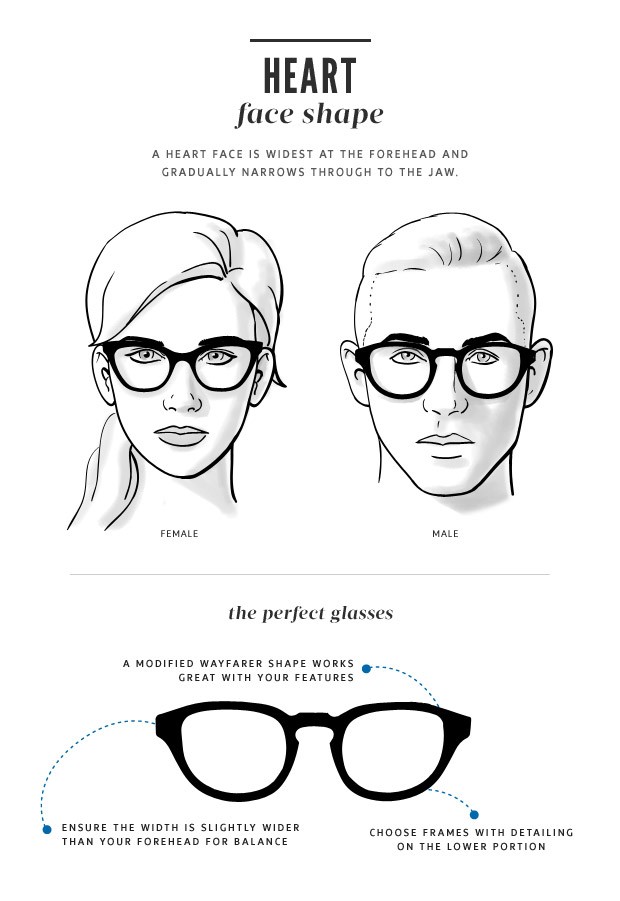
Heart-shaped face
A heart-shaped face often has a wider forehead, high cheekbones, and a narrower chin. Frames that add visual weight near the lower half of the face can create balance.
Try:
• Round or oval frames
• Light-colored frames
• Rimless glasses
• Bottom-heavy or low-set styles
• Subtle cat-eye frames
Avoid very heavy upper rims unless you want to highlight the forehead and brow area.
Long or oblong face
A long face usually appears longer than it is wide. Taller lenses and strong bridge details can help create a sense of balance.
Try:
• Deep rectangular frames
• Oversized glasses that fit correctly
• Round or square frames
• Bold colors and patterns
Avoid very narrow, shallow frames. They can make the face appear longer.
Diamond face
A diamond-shaped face often has a narrow forehead and chin with wider cheekbones. Curved frames can soften the cheek area and draw attention toward the eyes.
Try:
• Oval frames
• Cat-eye glasses
• Rimless frames
• Soft rectangular designs
Avoid very narrow frames that sit only across the widest part of the face.

Choose Frames Based on Your Features
Face shape helps, but individual features matter just as much. When people ask what glasses would look best on me, they often focus only on face shape and miss the details that control fit.
Consider your eyebrows
Your eyebrows help define the upper frame of your face. A frame that follows the natural brow line often looks balanced. The top of the frame does not need to hide your brows, but it should not cut across them in an awkward way.
If you have strong, dark brows, a thin or clear frame may create balance. If your brows are lighter, a darker browline or upper rim can add definition.
Consider your eyes
Your pupils should sit close to the center of each lens. If your eyes sit too close to the inner edges or too far toward the outer edges, the frame may be the wrong size or shape.
This matters for both appearance and vision. Correct lens placement helps the prescription work as intended, especially with strong prescriptions or progressive lenses.
Consider your nose and bridge
A narrow nose bridge may need adjustable nose pads or frames designed for a low bridge. A high bridge may suit frames with a standard saddle bridge.
Signs of a poor bridge fit include:
• The glasses slide when you look down
• The frame leaves deep marks
• Your lashes touch the lenses
• The bridge feels pinched
• The frame sits too close to your cheeks
Do not rely on frame size alone. Two frames with the same width can fit very differently because of bridge shape, lens height, and temple design.
Consider your cheekbones
If the lower edge of the frame touches your cheeks when you smile, the frame may be too deep or too low. This can cause discomfort and make the glasses appear unstable.
Smile, speak, and move your face when trying on glasses. A frame should remain comfortable during normal expressions.

Pick the Best Frame Shape for Your Style
The shape that looks best depends partly on the message you want your glasses to send. Frames can make you look creative, serious, warm, modern, or playful.
Round glasses
Round frames create a friendly, artistic, and often vintage impression. They work well when you want to soften sharp facial lines.
Choose a medium size with a firm bridge. Very large round glasses may slide or make the eyes appear smaller.
Square and rectangular glasses
Square and rectangular frames add structure. They are useful when you want a sharp, professional, or confident look.
These frames often suit rounder faces, but they can also look striking on square faces when the color or material is softer.
Cat-eye glasses
Cat-eye frames lift the outer corners of the face. They can look elegant, expressive, or playful.
A gentle cat-eye works for daily wear. A dramatic upswept style creates a stronger fashion statement.
Aviator glasses
Aviator styles have a wider upper line and a tapered lower shape. They can add length and soften angular features.
Check the bridge carefully. Aviator frames often have a wider fit and may slide on smaller noses.
Browline glasses
Browline frames draw attention to the upper face. They can add definition without covering the entire eye area.
They are a good choice if you want a classic look with a modern edge.
Geometric glasses
Hexagonal, octagonal, and irregular frames offer a creative look. They can add interest to simple outfits and make a subtle style statement.
Keep the size moderate if the shape is bold. A dramatic shape and a very large frame may compete with your features.

Choose the Right Glasses Color
Color plays a major role in what glasses would look best on me. The best shade should complement your skin tone, hair, eyes, wardrobe, and comfort level.
Neutral frame colors
Black, brown, tortoiseshell, gray, and clear frames are easy to wear. They work well for school, work, and everyday outfits.
Black frames create contrast and definition. Brown and tortoiseshell shades often look warmer and softer. Clear frames feel light and modern but may wash out very pale features in some lighting.
Warm skin undertones
Warm undertones often pair well with:
• Gold
• Bronze
• Copper
• Warm brown
• Honey
• Olive
• Cream
Cool skin undertones
Cool undertones often pair well with:
• Silver
• Gunmetal
• Black
• Blue
• Purple
• Cool gray
• Clear crystal
Neutral undertones
If both warm and cool shades look good on you, you likely have a neutral undertone. You can move between gold, silver, tortoiseshell, black, and colorful frames with more freedom.
The wrist-vein test can offer a rough clue, but it is not a scientific diagnosis. Natural light and personal preference are more useful than a strict color chart.

Select Glasses for Your Prescription
Your prescription affects both frame choice and lens thickness. If you have a strong prescription, frame size becomes especially important.
Smaller, well-centered frames often reduce lens thickness in higher prescriptions. High-index lenses can also make lenses thinner and lighter, although they may cost more.
Ask your eye care professional about:
• High-index lenses for stronger prescriptions
• Aspheric lens designs for a flatter appearance
• Anti-reflective coating for clearer vision and fewer reflections
• Photochromic lenses for changing light conditions
• Polarized lenses for glare from roads and water
• Impact-resistant materials for children and active adults
Blue-light glasses deserve a careful explanation. Some people find them comfortable for screen use, but current evidence does not clearly show that blue-light filtering lenses prevent digital eye strain. Better habits include regular breaks, comfortable screen brightness, proper distance, and frequent blinking.
For driving, sports, or industrial work, choose lenses and frames designed for that task. Regular fashion glasses may not offer enough protection during impact or high-risk activities.

Get the Correct Frame Size
Frame size is one of the strongest answers to what glasses would look best on me. A beautiful frame will not look good if it is too wide, too narrow, too deep, or too heavy.
Most frames show three numbers on the inside of the temple, such as 52-18-140:
• 52 is the lens width in millimeters
• 18 is the bridge width
• 140 is the temple length
These numbers help you compare frames, but they are not universal. Shape, thickness, hinge design, and bridge height also affect fit.
Use these signs as a guide:
• The frame should not extend far beyond your face
• Your eyes should sit near the lens centers
• The temples should not press against your head
• The bridge should rest securely without pinching
• The frame should not slide when you smile or bend down
A frame that is slightly wider than your face may look fashionable. A frame that is much wider can look unbalanced and may let in more side glare.

Use Virtual Try-On Tools Carefully
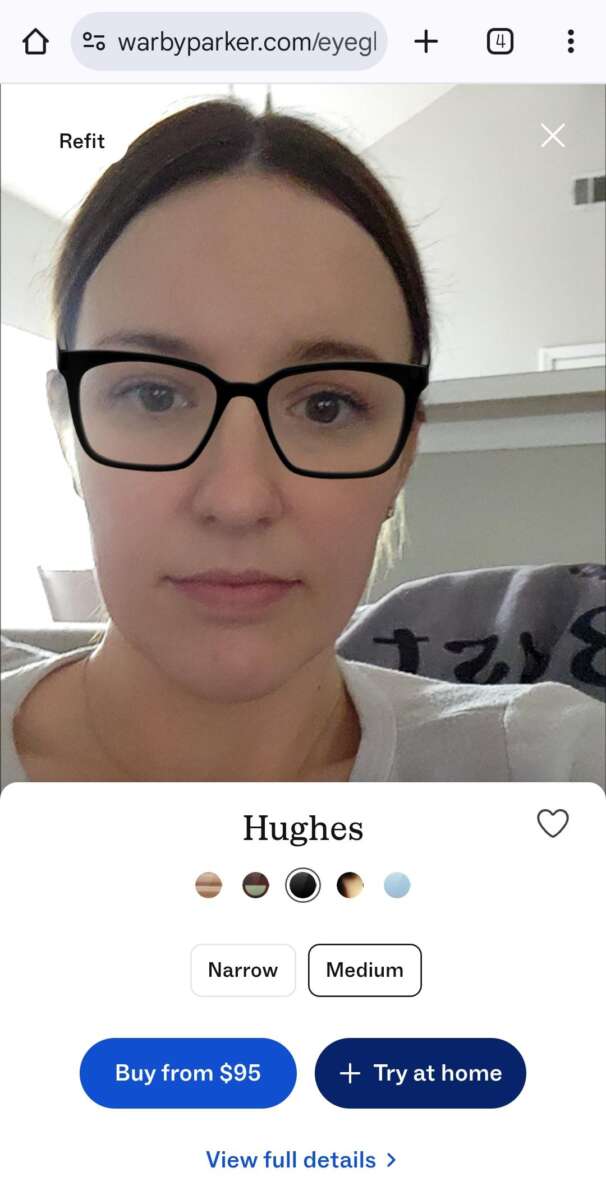
Virtual try-on tools can help you compare colors and general shapes. They are useful for narrowing your choices, especially when shopping online.
They cannot always show:
• True frame scale
• Actual bridge comfort
• Lens weight
• Color under different lighting
• How the frame moves during speech
• Whether the frame works with your prescription
Use virtual tools as a first filter, not a final fitting service. Compare the digital frame with your current glasses and check the listed measurements.
One mistake I often see is choosing a frame because it looks good in a close-up selfie. Phone cameras can change proportions, especially at short distances. A photo taken from farther away, or a mirror viewed from a normal distance, usually gives a more realistic impression.

Avoid Common Glasses Shopping Mistakes
Knowing what glasses would look best on me also means knowing what to avoid. Many poor choices come from focusing only on appearance.
Choosing the wrong size
A frame can be attractive but still too wide or narrow. Always check the fit at the bridge, temples, and cheeks.
Following face-shape rules too strictly
Face-shape advice is a guide, not a law. If you love round glasses and have a round face, wear them. Personal style matters more than a simple chart.
Ignoring your daily routine
A fragile frame may not suit someone who plays sports or works outdoors. A heavy metal frame may not suit someone who wears glasses for long hours.
Buying without checking the return policy
Online shopping has limits. Confirm the return window, prescription requirements, warranty, and adjustment policy before ordering.
Forgetting lens height
Progressive lenses need enough vertical space for distance, intermediate, and near vision zones. Very shallow frames may not be suitable for every progressive design.
Picking a trend over comfort
Trends change. A well-fitted frame that feels good can serve you for years. Style should support comfort, not compete with it.
A Simple Method to Find Your Best Frames
Use this five-step process when comparing glasses:
-
Measure your current glasses and note what feels comfortable.
-
Identify your general face shape and the features you want to highlight.
-
Choose two or three frame shapes that create the effect you want.
-
Compare frame width, bridge fit, lens height, and temple length.
-
Test the frames with your normal expressions, hairstyle, and daily activities.
Try frames in natural light when possible. Look at them from the front and side. Ask whether they stay in place, whether your eyes are centered, and whether you still like them after several minutes.
If you need progressive lenses, have a strong prescription, or struggle with frames sliding, professional fitting is worth the time. An optician can adjust the temples, nose pads, and angle of the frame in ways an online tool cannot.
Frequently Asked Questions About What Glasses Would Look Best on Me
What glasses look best on my face shape?
Round faces often suit angular frames, while square faces often suit round or oval frames. Oval faces can wear many styles, but the frame should still match your size and personal style.
How do I know if my glasses fit correctly?
Your eyes should sit near the center of the lenses, and the frame should stay level without pinching or sliding. The temples should rest comfortably, and the lenses should not touch your cheeks or eyelashes.
Should glasses be darker or lighter than my skin tone?
Both can work. Dark frames create contrast and definition, while light, clear, or warm frames create a softer look; choose the effect that matches your style.
Are oversized glasses flattering for everyone?
Oversized glasses can look stylish, but they must still fit your bridge and face width. If they slide, cover too much of your cheeks, or make your eyes look off-center, they are likely too large.
What frame color is best for everyday wear?
Black, brown, tortoiseshell, gray, and clear frames are versatile choices. Pick a shade that works with most of your clothing and complements your skin undertone.
Can I choose glasses based only on my face shape?
No. Face shape is only one factor. Prescription strength, bridge fit, eye position, lifestyle, comfort, and personal taste are equally important.
Do I need an optician to choose my glasses?
You can narrow down styles on your own, but an optician can check fit, lens placement, prescription needs, and frame adjustments. Professional help is especially useful for progressive or high-prescription lenses.
Conclusion
The best answer to what glasses would look best on me is a frame that balances your features, fits securely, supports your prescription, and feels true to your style. Use face shape as a starting point, then check size, bridge fit, eye position, color, lens needs, and daily comfort.
Try several shapes before deciding. Take photos in natural light, move your face, and give each frame time to settle. When you find a pair that feels comfortable and makes you feel confident, you have likely found the right match. Explore more frame options, visit a trusted optician, and share your favorite style in the comments.

Rubel Miah is the Senior Editor at MyStyleGrid.com, where he brings a sharp editorial eye and an unshakable love for fashion to everything he does. A true style addict, Rubel lives and breathes trends, from streetwear to high fashion, and has a knack for turning inspiration into impactful stories. With years of experience in fashion journalism and digital media, he curates content that empowers readers to express themselves through style. When he’s not editing features or forecasting the next big thing, you’ll find him hunting down vintage pieces or capturing street style moments around the city.