The best glasses match your face shape, features, style, skin tone, and the way each frame fits your eyes.
Finding what style of glasses fit my face is easier when you look beyond simple face-shape charts. Your brow line, cheekbones, nose bridge, hairstyle, prescription, and personal taste all affect the best choice. This guide combines practical fitting advice with basic optical standards, so you can choose frames that look good, feel comfortable, and work well every day.
Start by Identifying Your Face Shape
Face shape is a useful starting point, but it is not a strict rule. Most people have a mix of features, and their face shape may look different depending on hair, weight, facial hair, and camera angle.
Look straight into a mirror with your hair pulled back. Use a washable marker to lightly trace the outer shape of your face on the mirror, or take a front-facing photo with the camera held at eye level.
Common face shapes include:
• Oval: The face is longer than it is wide, with a gently curved jaw and balanced proportions.
• Round: The face has similar width and length, with soft cheeks and a curved jaw.
• Square: The forehead, cheeks, and jaw have similar widths, with a strong jawline.
• Heart-shaped: The forehead is wider, while the chin is narrower or more pointed.
• Diamond: The cheekbones are the widest part, with a narrower forehead and jaw.
• Oblong: The face is noticeably longer than it is wide, often with a longer nose or taller forehead.
• Triangle: The jaw is wider than the forehead, creating a stronger lower face.
Your face may not fit one label perfectly. That is normal. Think of face shape as a map, not a set of laws.

What Style of Glasses Fit My Face Shape?
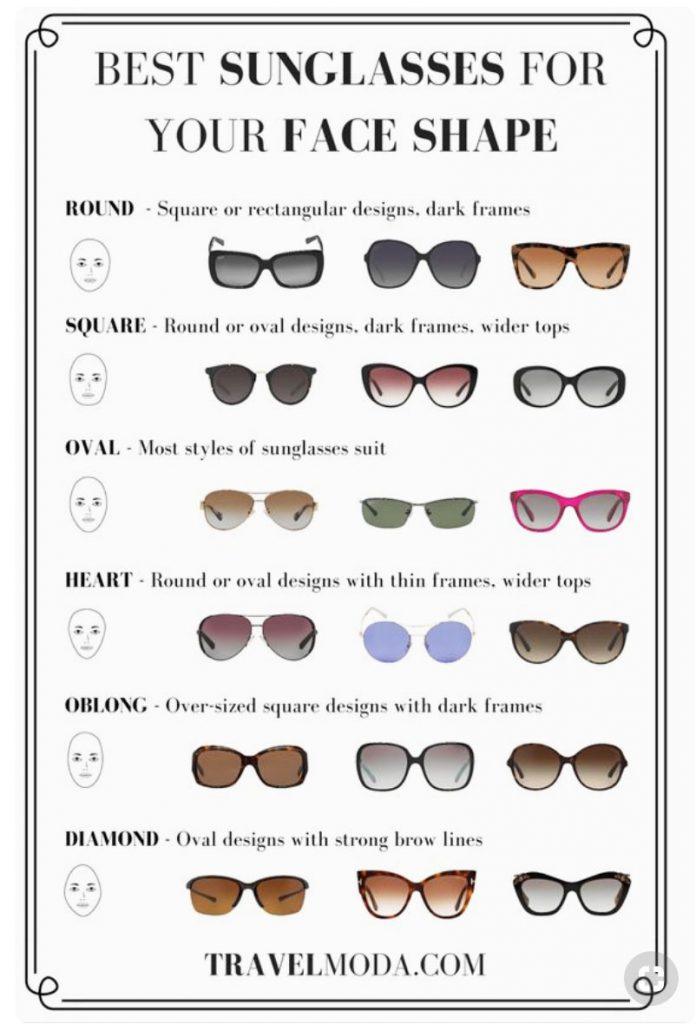
The right frame often creates balance. If your face has soft curves, angular frames can add structure. If your face has strong angles, rounded frames can soften your appearance.


Glasses for an Oval Face
An oval face usually works well with many frame styles because its proportions are fairly balanced. rectangular, square, round, browline, and geometric frames can all look attractive.
Choose frames that are at least as wide as the broadest part of your face. Avoid frames that are too large, as they can cover your brows and make your features look smaller.
Good choices include:
• Wayfarer-style frames
• Soft rectangular frames
• Browline glasses
• Round metal frames
• Modern geometric frames
Glasses for a Round Face
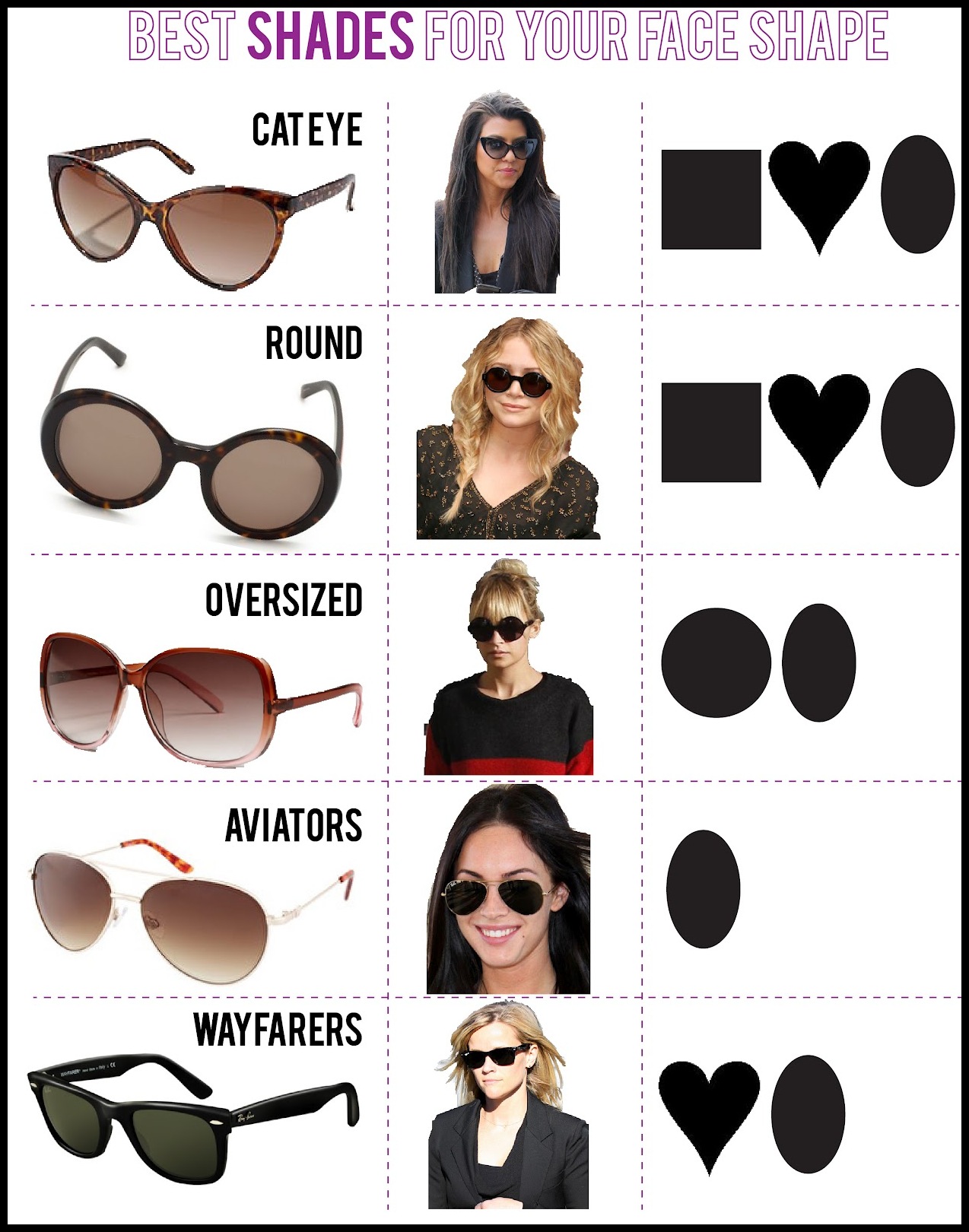
For a round face, frames with straight lines can add contrast. Rectangular, square, and angular frames often make the face appear longer and more defined.
Look for frames with more width than height. A slightly upswept frame, such as a subtle cat-eye shape, can also lift the appearance of the cheeks.
Try to avoid very small, narrow frames. Very round frames may repeat the curves of your face instead of creating balance, although they can still work if you prefer a soft, vintage look.
Glasses for a Square Face
A square face often has a broad forehead, strong cheekbones, and a defined jaw. Round or oval frames can soften those angles.
Thin metal frames, rounded acetate frames, and gentle aviator shapes are common choices. If you prefer rectangular frames, select styles with softened corners rather than sharp edges.
Large, boxy frames can make a square face look heavier. A frame with a little curve usually creates a more relaxed appearance.
Glasses for a Heart-Shaped Face
A heart-shaped face is often wider at the forehead and narrower near the chin. The goal is to create visual balance between the upper and lower parts of the face.


Light-colored, thin, or rimless frames can reduce emphasis on the forehead. Round, oval, and low-set frames may also work well.
You can consider:
• Thin metal frames
• Oval glasses
• Light tortoiseshell frames
• Rimless or semi-rimless styles
• Softly rounded cat-eye frames
Avoid very heavy top bars if you do not want to draw more attention to the upper face.
Glasses for a Diamond Face
A diamond face often has prominent cheekbones with a narrower forehead and jaw. Frames that emphasize the brow or add softness can create a balanced look.
Browline frames, oval glasses, cat-eye frames, and rimless styles are worth trying. These designs can highlight the eyes while softening the widest part of the face.
Avoid frames that are very narrow at the top and bottom. They may make the cheeks appear even more prominent.
Glasses for an Oblong Face
An oblong face is longer than it is wide. Taller lenses and deeper frames can help create a sense of balance.
Try bold temples, decorative bridge details, and frames with a deeper lens shape. Round, square, and softly geometric glasses can all work.
Very narrow frames may make the face look longer. If you like a slim style, choose one with enough lens height to keep your features in proportion.
Glasses for a Triangle-Shaped Face
A triangle-shaped face is wider around the jaw and narrower at the forehead. Frames that draw attention upward can help balance the lower face.


Browline glasses, cat-eye frames, and colorful upper rims are good options. Choose designs with a stronger top section and a lighter lower rim.
Avoid extremely heavy frames that add more visual weight around the jaw.

Use Your Features to Choose the Best Frame
Face shape is only one part of what style of glasses fit my face. Your individual features can make a bigger difference than a general shape label.
Consider Your Eyebrows
Your frame should work with your eyebrows, not hide them completely. The top of the frame may follow the brow line, but it does not need to match it perfectly.
If your eyebrows are high or strongly arched, a frame with a clear top line can create harmony. If your brows are straight, a softly curved frame may add contrast.
Consider Your Nose Bridge
The bridge is the part of the frame that rests across your nose. A poor bridge fit can cause sliding, pinching, or red marks.
If your nose bridge is low, look for low-bridge-fit frames. These often have a larger nose area, higher cheek clearance, and adjustable nose pads.
If you have a narrow bridge, adjustable pads or frames with a narrower bridge measurement may help. A professional optician can adjust the pads and temples for a more secure fit.
Consider Your Cheekbones
Your glasses should not rest on your cheeks when you smile. If they do, the lenses may collect oil, the frames may move, and the fit may feel irritating.
Try frames with a higher bridge, a slightly smaller lens height, or more space between the bottom rim and your cheeks.
Consider Your Eyes
Your pupils should sit near the center of each lens. This matters for comfort and vision, especially with strong prescriptions, progressive lenses, or high-index lenses.
When trying on frames, check that your eyes are not too close to the inner edge or outer edge of the lenses. Proper optical alignment is one reason an in-person fitting can be valuable.
Consider Your Hair and Skin Tone
Frame color can change the whole effect of your glasses. Warm colors such as honey, brown, gold, and olive often complement warm undertones. Cool colors such as silver, blue, gray, and black may suit cool undertones.
You do not have to follow color rules. The best shade is one that makes you feel confident. Your hair color, makeup, wardrobe, and contrast level can matter just as much as your skin tone.


Check the Frame Measurements Before You Buy
Most eyeglass frames have three key measurements printed on the inside of the temple. They may look like this: 52□18 140.
The numbers usually mean:
• Lens width: 52 millimeters
• Bridge width: 18 millimeters
• Temple length: 140 millimeters
These measurements help you compare a new frame with a pair that already fits you well. They are useful, but they are not perfect. Two frames with the same numbers can fit differently because of their shape, curve, material, and bridge design.
A frame should meet these basic checks:
• The eyes sit near the center of the lenses.
• The frame does not slide when you look down.
• The temples rest comfortably without pressure.
• The frame does not pinch at the sides of your head.
• The lenses do not touch your cheeks or eyelashes.
• The frame does not move when you smile or speak.
Frame width is especially important. If the temples flare outward, the frame may be too narrow. If there is a large gap between your face and the temples, it may be too wide.

Match the Frame to Your Prescription
Your prescription can affect what style of glasses fit my face. A frame that looks excellent on a display model may not be the best choice for your lenses.
Strong prescriptions may benefit from smaller, rounder, or more compact frames. These designs can reduce lens thickness and weight. High-index lenses can also help create a thinner profile, but your eye care professional should discuss the best lens material for your prescription.
Progressive lenses need enough vertical lens space for distance, intermediate, and reading zones. Very shallow frames may limit the usable area of a progressive lens.
For children and teens, impact-resistant lenses are often recommended because they are more durable for active use. Sunglasses may also need specific lens materials and coatings for outdoor use.
Ask your optician about:
• Lens thickness
• High-index materials
• Polycarbonate or Trivex lenses
• Progressive lens height
• Anti-reflective coating
• UV protection
• Blue-light filtering claims
UV protection is important for sunglasses. Blue-light filters may help some people feel more comfortable with screens, but they should not be treated as a cure for eye strain or a replacement for good screen habits.

Choose Frames Based on Your Personal Style
The question what style of glasses fit my face also includes how you want to present yourself. Glasses are part of your daily clothing, like shoes or a jacket.
For a Classic Look
Choose black, brown, tortoiseshell, gold, or silver frames. Rectangular and oval shapes are easy to wear and suit many outfits.
For a Creative Look
Try transparent acetate, bright colors, geometric shapes, or mixed materials. A bold frame can become a focal point without changing your whole wardrobe.
For a Minimal Look
Rimless, semi-rimless, thin metal, and clear frames create a lighter appearance. These styles are useful if you want your glasses to blend into your look.
For a Professional Look
Medium-width rectangular, oval, or browline frames often look polished. Neutral colors can be easy to coordinate with work clothes.
For a Retro Look
Round wire frames, cat-eye glasses, and thick acetate frames can create a vintage feel. Choose one retro feature rather than combining too many at once.
A useful rule is to buy one everyday pair first. If you love the fit, add a second pair with a different color or shape. Comfort should come before trend.
Common Glasses-Fitting Mistakes to Avoid
Many people choose glasses by appearance alone. That can lead to discomfort later.
Avoid these common mistakes:
• Choosing a frame that is too wide because it feels fashionable
• Buying a frame that touches your cheeks
• Ignoring bridge fit
• Selecting lenses that make the eyes look too small or too large
• Choosing a very shallow frame for progressive lenses
• Assuming every frame measurement fits the same way
• Buying online without checking the return policy
• Forgetting to adjust the frame after delivery
One fitting lesson comes up again and again: a frame can look perfect in a photo but feel wrong after eight hours. Walk, smile, look down, and move your head when testing glasses. These simple actions reveal problems that a still mirror may hide.
Also, do not judge a frame only by how it looks on someone else. Face width, bridge height, eye position, and prescription all change the final result.

How to Try Glasses at Home or Online
If you shop online, begin with a pair you already own that fits well. Record its lens width, bridge width, and temple length. Compare those numbers with the new frame, but still check the store’s return policy.
Many online retailers offer virtual try-on tools. These can help you compare colors and general shapes, but they may not measure the fit accurately. A screen cannot always show bridge pressure, cheek contact, lens position, or temple tension.
Before placing an order:
-
Measure your pupillary distance, or PD, using the retailer’s approved method.
-
Compare the frame size with glasses you already wear.
-
Check whether the frame has adjustable nose pads.
-
Confirm that the lenses suit your prescription.
-
Read the return and remake policy.
-
Have the glasses adjusted by an optician after they arrive.
A licensed optician can make small changes to the temple angle, nose pads, and frame position. Those adjustments often turn an almost-right pair into a comfortable one.

When to See an Optician
An optician can help when you are unsure what style of glasses fit my face. This is especially useful if you have a strong prescription, progressive lenses, a narrow bridge, facial asymmetry, or frequent frame problems.
Seek professional help if:
• Your glasses cause headaches or eye discomfort
• Your vision seems off with a new pair
• The frame keeps sliding
• One lens sits higher than the other
• The temples hurt behind your ears
• The lenses touch your eyelashes
• You have trouble adapting to progressive lenses
A frame adjustment should not hurt. Do not bend the frame at home with hot water or tools, since you may damage the lenses or weaken the material.
Your eye doctor also plays an important role. A complete eye exam checks vision and eye health, while an optician focuses on frame fit, lens options, and adjustments.
Frequently Asked Questions About What Style of Glasses Fit My Face
What glasses look best on my face?
The best glasses balance your face, sit comfortably, and place your eyes near the lens centers. Use your face shape as a starting point, then check bridge fit, frame width, lens height, and personal style.
How do I know my face shape for glasses?
Look at your face from the front and compare its length, width, jawline, and cheekbones. You can use a mirror tracing or photo, but remember that many people have a blend of face shapes.
Should glasses be wider than my face?
The frame should usually be close to the width of your face without extending far past the temples. If it is too narrow, it may pinch; if it is too wide, it may slide and look unbalanced.
Are round glasses good for a round face?
Round glasses can work on a round face if you like a soft, vintage style. For more contrast, square or rectangular frames often add structure and make the face look longer.
Should glasses cover my eyebrows?
Your glasses do not need to cover your eyebrows. Many people look best when the frame follows the brow line or sits just below it, but personal style and frame shape also matter.
What glasses make your face look thinner?
Angular frames with more width than height may create a longer, more defined appearance. Fit matters most, so avoid frames that are too small, too tight, or too heavy on the cheeks.
Can I choose glasses based only on face shape?
No. Face shape is helpful, but bridge fit, eye position, prescription, frame size, and comfort are just as important. A professional fitting can prevent problems that a face-shape guide cannot predict.
Conclusion
Knowing what style of glasses fit my face starts with face shape, but the best choice also depends on your features, prescription, bridge, eye position, and daily style. Round faces often suit angular frames, square faces can benefit from softer curves, and balanced oval faces can wear many designs.
Try several shapes, check the measurements, and test how the glasses feel when you smile, move, and look down. The right pair should feel like a natural part of you, not a costume. Visit an optician for a final adjustment, and explore more frame guides or share your favorite style in the comments.

Rubel Miah is the Senior Editor at MyStyleGrid.com, where he brings a sharp editorial eye and an unshakable love for fashion to everything he does. A true style addict, Rubel lives and breathes trends, from streetwear to high fashion, and has a knack for turning inspiration into impactful stories. With years of experience in fashion journalism and digital media, he curates content that empowers readers to express themselves through style. When he’s not editing features or forecasting the next big thing, you’ll find him hunting down vintage pieces or capturing street style moments around the city.