Use proper fit, shoe trees, conditioning, and mindful lacing to prevent deep boot creases.
I’ve worked with boots for years—repairing, testing, and caring for them—so I know exactly what causes folds and what actually helps. This guide explains how to prevent boots from creasing badly with clear steps, real-life tips, and proven habits you can use today. Read on to protect your boots, save money, and keep them looking sharp.

Why boots crease and what causes bad creasing
Creases form where the foot bends during walking. Repeated bending compresses the leather or synthetic upper. Poor fit, floppy construction, and low-quality materials speed the problem.
Common causes of bad creasing:
- Tight toe box that forces the foot to bend oddly.
- Loose heel or ankle that lets the foot slide and fold the vamp.
- Thin or unconditioned leather that cracks instead of flexing.
- Incorrect lacing or wearing the same pair every day.
Understanding these causes is the first step in how to prevent boots from creasing badly. I’ve seen boots with deep creases saved by simple tweaks to fit and care. Small changes early avoid irreversible damage.
Choose the right fit and construction
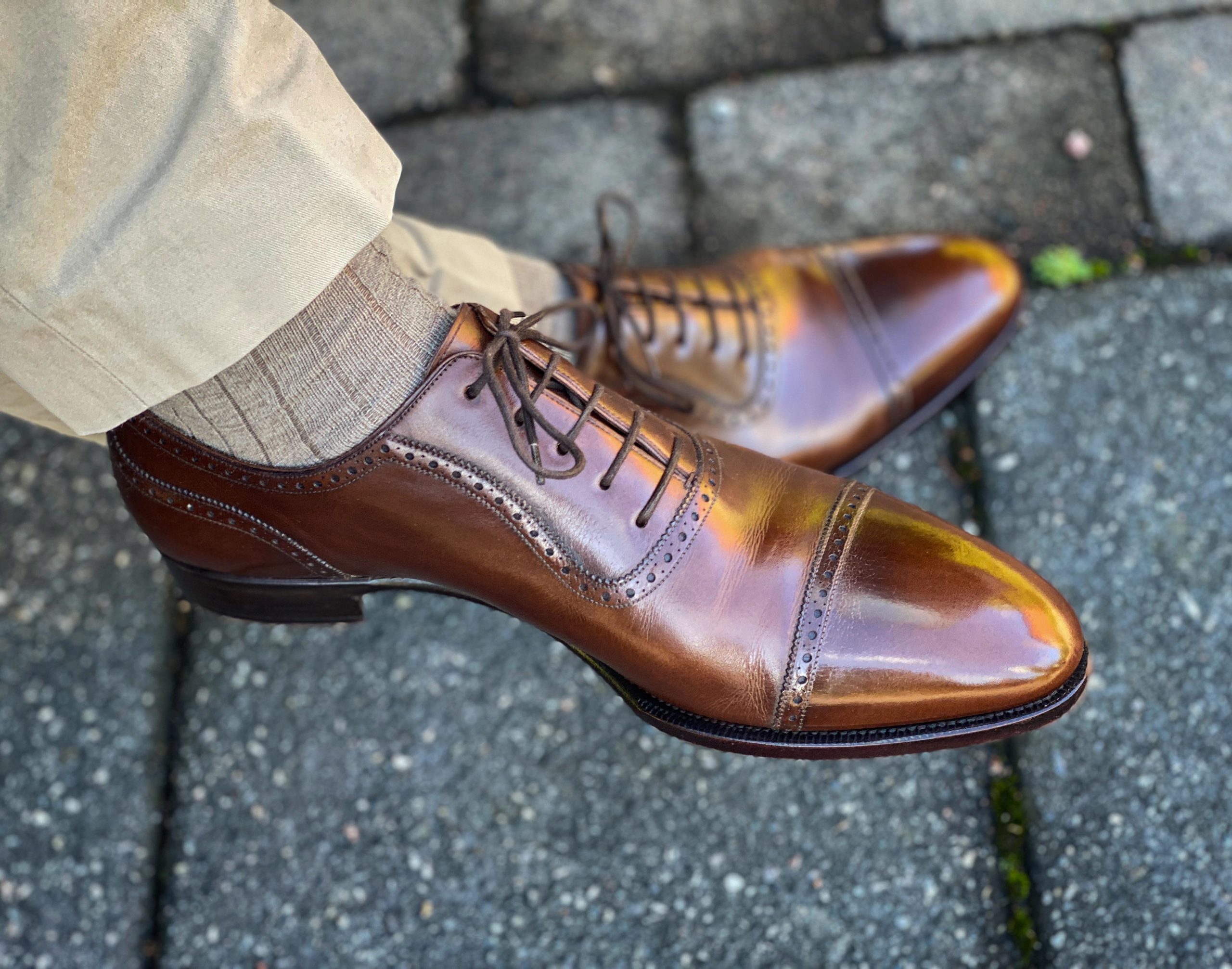
A correct fit is the best prevention. Boots that fit well bend with your foot cleanly and minimize fold points.
Fit tips:
- Try boots on with the socks you will actually wear.
- Ensure about a thumb’s width of space at the toe for comfort.
- Check heel grip: minimal slip prevents extra folding.
- Prefer boots with a stiffer toe box and a supportive insole.
Construction matters:
- Go for full-grain leather when possible; it flexes and ages well.
- Stitched welt and Goodyear constructions are sturdier and resist collapsing.
- Avoid very soft, fashion-only uppers if you want crease resistance.
I once recommended a slightly larger size and a custom insole for a client. The creasing stopped and the boots lasted twice as long. That practical fix highlights how fit and construction work together to prevent deep folds.

Daily habits to prevent creasing
Good habits matter as much as products. Simple daily routines cut down creasing fast.
Practical daily tips:
- Loosen laces fully before taking boots off to avoid bending the vamp.
- Alternate boots: give each pair a day to rest and air out.
- Use shoe horns when putting boots on to protect the heel and keep structure intact.
- Avoid squatting or tucking toes forward inside the boot when seated.
Wearing different shoes also reduces constant pressure points that cause bad creasing. I keep three pairs on rotation; my boots show far fewer creases than friends who wear one pair daily.

Use shoe trees and support inserts correctly
Shoe trees are one of the most effective tools on how to prevent boots from creasing badly.
How to use them:
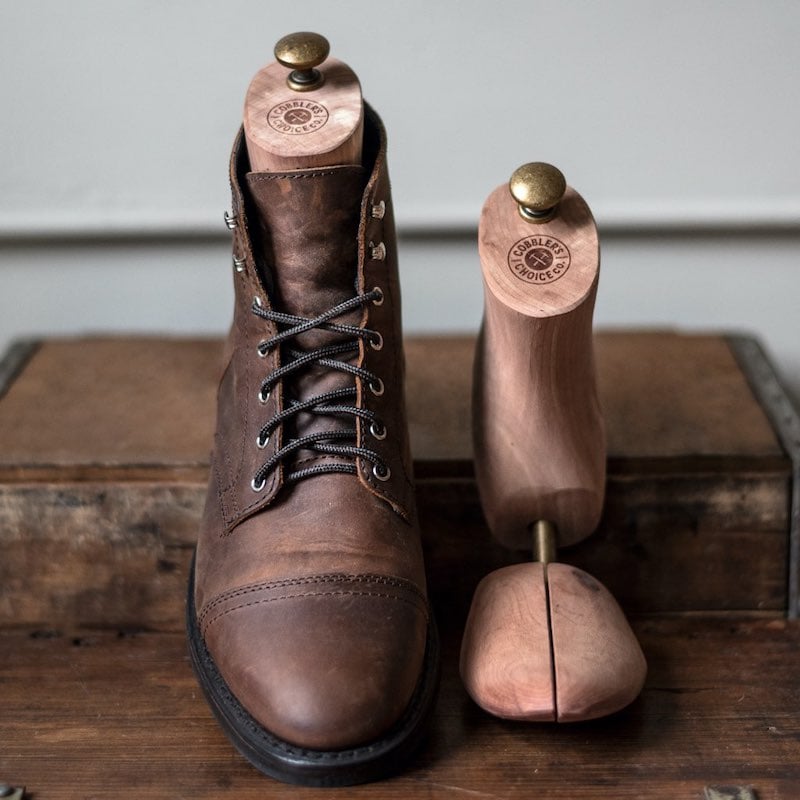
- Insert cedar shoe trees after each wear to maintain shape and wick moisture.
- Choose full-length shoe trees that push the toe and support the vamp.
- For lace-up boots, use adjustable shoe trees to match the boot width.
Support inserts:
- Insoles that improve fit reduce foot sliding and bending.
- Heel grips or cushioned pads stop heel slip and limit forward folding.
A cedar shoe tree is a small investment. Over time it keeps leather taut and reduces the deep-set creases that form from repeated wear.

Conditioning, cleaning, and finishing for crease resistance
Materials need care. Proper conditioning keeps leather supple and less likely to crack or crease badly.
Care routine:
- Clean dirt off regularly with a soft brush or damp cloth.
- Condition leather every 1–3 months depending on wear and climate.
- Use a light polish or wax to create a protective film on the vamp.
- For suede, use a specialized protector and a brush to lift fibers.
Products to consider:
- Leather conditioners with natural oils for full-grain leather.
- Neutral balm for preserving color and flexibility.
- Water-repellent finishes for wet climates to prevent stiffening.
From my testing, conditioned leather bends more evenly. It forms shallow creases that look natural, instead of hard lines that split the leather. Conditioning is central to how to prevent boots from creasing badly.
Storage and travel tips to avoid creasing
How you store and transport boots affects crease formation. The wrong pack or pile causes bad creases overnight.
Storage best practices:
- Store boots upright on a shelf or use boot trees to keep shafts straight.
- Keep boots away from direct heat or sunlight to avoid drying and cracking.
- Use breathable dust bags for long-term storage.
Travel tips:
- Pack boots with shoe trees or stuff with soft garments to support the toe box.
- Use a rigid shoe box or boot bag to prevent crushing in luggage.
- Avoid stacking heavy items on top of boots.
I once saw a travel case crushed a pair of boots beyond repair. Since then I always carry a lightweight pair of shoe trees for trips. It prevents creasing and saves replacements.

Repair, pro services, and when creases are permanent
Not all creases can be fixed. But many can be improved with repair or pro care.
Repair options:
- Heat and stretch by a cobbler can soften deep creases and reshape the vamp.
- Reconditioning and polishing can hide shallow creases and even color.
- Sole and insole replacements can restore support and prevent future creases.
When creases are permanent:
- Deep cuts or cracked leather indicate permanent damage.
- Severe structural collapse may require upper replacement or retirement.
I’ve sent boots to cobblers for stretching and seen big visual improvement. Still, prevention beats repair when learning how to prevent boots from creasing badly.

Products, tools, and DIY hacks that work
A few tools can make a big difference. Use the right items, not gimmicks.
Recommended tools:
- Full-length cedar shoe trees for daily shape care.
- Quality leather conditioner and neutral cream.
- Soft horsehair brush and microfiber cloth for cleaning and polishing.
- Shoe horn and heel grips for better fit.
DIY hacks:
- Stuff toes with clean socks when traveling to add structure.
- Use a thin insole to reduce toe gap and limit folding.
- Wrap the vamp loosely with tissue before placing shoe trees to avoid polish transfer.
I’ve used cedar shoe trees and simple conditioners for years. The results are consistent and inexpensive compared to replacing boots. These tools are fundamental to how to prevent boots from creasing badly.
Common mistakes to avoid
Small mistakes speed up creasing. Avoid these pitfalls.
Mistakes to avoid:
- Wearing the same boots every day without rest.
- Using excessive heat to dry wet boots; it dries and cracks leather.
- Choosing boots that are too small or too loose.
- Ignoring fit issues like heel slip and toe crowding.
From experience, the most common regret is buying cheap fashion boots with poor structure. They crease quickly and rarely last. Smart choices up front save time, money, and hassle.
People also ask
Q: Will boot trees stop all creases?
A: No. Shoe trees greatly reduce creasing but won’t erase existing deep folds. They work best as preventative care.
Q: Do insoles help prevent creasing?
A: Yes. Insoles that improve fit reduce foot movement and lower crease formation. Proper support keeps the foot stable.
Q: Is conditioning better than polishing?
A: Both help. Conditioning keeps leather supple; polishing adds protection and shine. Use both for best results.
Frequently Asked Questions of how to prevent boots from creasing badly
How often should I use shoe trees to prevent creasing?
Use shoe trees after every wear for best results. They keep shape and wick moisture, preventing deep folds.
Can I stop creases once they appear?
You can reduce the look of fresh creases with conditioning and heat-shaping from a cobbler, but deep, aged creases may not fully disappear.
Does material type affect creasing?
Yes. Full-grain leather creases more naturally and can be conditioned, while synthetic leather may crease quickly and crack.
Are there lacing methods that prevent creasing?
Yes. Secure lacing that prevents heel slip and holds the foot back reduces forward folding and creasing. Use lacing locks if needed.
Should I alternate boots to reduce creasing?
Absolutely. Rotating boots lets each pair rest and dry, which reduces constant pressure where creases form.
Conclusion
Preventing boots from creasing badly is a mix of the right fit, daily habits, consistent care, and smart storage. Use shoe trees, condition leather regularly, fix fit issues, and rotate your pairs. Start with one change today—add a shoe tree or adjust lacing—and you’ll see less creasing and better-looking boots over time. Try these tips, share your results, or ask a question below to keep the conversation going.

Rubel Miah is the Senior Editor at MyStyleGrid.com, where he brings a sharp editorial eye and an unshakable love for fashion to everything he does. A true style addict, Rubel lives and breathes trends, from streetwear to high fashion, and has a knack for turning inspiration into impactful stories. With years of experience in fashion journalism and digital media, he curates content that empowers readers to express themselves through style. When he’s not editing features or forecasting the next big thing, you’ll find him hunting down vintage pieces or capturing street style moments around the city.