The best hoof boots for trail riding balance secure fit, tough soles, comfort, and easy cleaning on varied ground.
A smooth arena ride can hide weak spots in a horse’s feet. Then a rocky trail, wet slope, or long gravel road brings them out fast. Hoof boots add a useful layer between the hoof and harsh ground. They can help barefoot horses, protect tender feet, and support horses that need extra comfort between trims. I look for fit first, then grip, sole strength, closure design, and ease of use. The right pair should feel like a steady trail shoe, not a loose bucket around the hoof.
Easyboot Trail Original, Pair of One

The Easyboot Trail Original is built for riders who want a simple boot for light to medium trail work. Its polyurethane sole gives the hoof a firm shield from sharp stone and rough gravel. The hook-and-loop closure also keeps the design easy to handle at the trailer or barn. I especially like this style for riders who do not want a complex system when time is short.
The boot aims to stay useful through the trim cycle, but fit still matters more than any marketing claim. Measure each hoof after a fresh trim and compare the result with the maker’s size chart. A snug, even fit helps limit twisting and loss on uneven ground. For a new pair, I suggest short walks before a long ride so both horse and rider can adjust.
Pros:
- Simple hook-and-loop closure
- Durable polyurethane sole for trail use
- Fast to put on and remove
- Useful for light to medium riding
- Helps shield barefoot hooves from sharp ground
- Sold as a pair for practical front- or hind-hoof use
Cons:
- Correct measuring is vital for a secure fit
- May not suit very muddy or deep footing as well as a specialized boot
- Not a substitute for proper trimming or veterinary care
My Recommendation
I recommend this Easyboot Trail Original pair for riders who want the best hoof boots for trail riding without a steep learning curve. It suits casual trail horses, barefoot horses with mild sensitivity, and owners who value quick fitting. The broad appeal comes from its plain design and strong sole. It is also a sensible choice for keeping in a tack room as a spare pair.
Buyers should still inspect the boot after each ride. Remove packed dirt, check the closure, and look for rub marks around the pastern. With the correct size and gradual use, this pair offers good value for short and moderate trail outings. Availability and size choices can change, so check the current Amazon listing before ordering.
Easyboot Trail Original, Pair of Four
This four-boot Easyboot Trail Original option makes sense for riders who want protection on all four feet. Some horses need more than front-hoof coverage, especially on long rides or hard, dry trails. The polyurethane sole creates a protective layer while the hook-and-loop closure keeps fitting fairly quick. Its familiar shape also makes it easier to keep a matching set in service.
A four-pack can save time when the horse needs even support across all feet. It can also offer a spare if one boot becomes damaged or misplaced, depending on the package and your use. I would test every boot at a walk, then at a slow trot, before heading into steep country. A boot that feels secure on one hoof may need a small adjustment on another.
Pros:
- Provides a four-hoof protection setup
- Durable polyurethane sole handles common trail wear
- Hook-and-loop closure is easy to learn
- Good option for longer recreational rides
- Matching boots create a neat, consistent setup
- Helpful for horses that need protection on both front and hind feet
Cons:
- Costs more than buying one pair
- Four boots take longer to clean after a muddy ride
- One incorrect hoof measurement can affect the whole setup
My Recommendation
This package is best for owners who want full hoof coverage rather than front boots alone. It may fit trail horses that travel over mixed rock, gravel, and packed dirt. I would also consider it for riders who take regular day rides and want a ready set for all four feet. Among the best hoof boots for trail riding, this option stands out for complete coverage and simple handling.
It delivers the most value when the horse truly needs four boots. If only the front feet require help, a smaller set may be more economical. Check the size chart for every hoof, not just one, and confirm the current package details before purchase.
Cavallo Trek Regular Sole, Size 2

The Cavallo Trek Regular Sole is a strong choice for horses that need a firm, protective hoof boot on the trail. The Trek line is known for a supportive shape and a sole made for outdoor use. Size 2 is a specific fit, so buyers should measure carefully rather than choose by breed or shoe size. The boot can help turn a sensitive barefoot hoof into a more confident trail hoof.
Its design favors protection and stability over a very soft, sock-like feel. That can be useful on rocky paths where the horse needs a dependable barrier underfoot. I recommend checking the boot’s fit around the heel and upper edge after several minutes of walking. If the horse shows rubbing, shorten the session and reassess before riding farther.
Pros:
- Protective regular sole for rugged ground
- Supportive shape for trail work
- Good choice for hoof sensitivity
- Useful on gravel and rocky paths
- Designed for repeat use rather than one-time events
- Easy to inspect and clean after a ride
Cons:
- Size 2 will not fit every hoof shape
- May feel bulkier than flexible jogging-style boots
- Requires careful fitting to prevent movement
My Recommendation
I would choose the Cavallo Trek Regular Sole for a horse that needs a sturdy, traditional trail boot. It is best for riders who value protection, structure, and a stable feel over the lightest possible design. It can work well for barefoot horses with tender soles and for moderate-distance trail rides. This is one of the best hoof boots for trail riding when firm support is the main goal.
Its value depends on fit and the horse’s hoof shape. A correct size can make the boot feel secure, while a poor size can create trouble quickly. Review the listed measurements, inspect the latest seller information, and introduce the boot on easy ground before using it in steep terrain.
Equine Fusion Active Jogging Shoe

The Equine Fusion Active Jogging Shoe takes a more flexible approach to hoof protection. Its shape is made for movement, which may appeal to horses that dislike stiff or heavy boots. This style can support natural hoof motion while adding protection on trails. It is listed for front feet, so buyers should confirm whether they need a matching pair or a different size for the hind feet.
Flexible boots often need a careful break-in period. I would begin with a short hand walk, then add a brief ride on level ground. Watch for twisting, lost boots, or hair rubbed flat around the pastern. When the fit is right, a flexible jogging shoe can feel less restrictive than a rigid boot and may suit active horses well.
Pros:
- Flexible design supports natural movement
- Useful for active horses and light jogging work
- Can feel less rigid than traditional hoof boots
- Offers a protective layer on trail surfaces
- Front-foot option for horses with sensitive forefeet
- Good match for riders who want a lighter feel
Cons:
- Requires close attention to fit and movement
- Front-foot listing may not cover all four hooves
- Flexible materials can collect grit if not cleaned well
My Recommendation
This Equine Fusion model is best for riders who want a more natural, flexible feel. I would consider it for active horses, barefoot horses that need front-hoof protection, and riders who dislike very stiff boot designs. It earns a place among the best hoof boots for trail riding because comfort and movement can matter as much as sole strength.
It is not my first pick for a horse that needs a very rigid shell or maximum containment. Fit trials and short rides are important. If the size matches the hoof and the boot stays centered, it can provide a comfortable blend of protection and freedom. Check current sizing and package details before ordering.
Cavallo Simple Regular Sole, Size 4

The Cavallo Simple Regular Sole is made for riders who prefer a straightforward hoof boot. Its regular sole gives useful protection on common trail surfaces, while the roomy shell can suit some broader hoof shapes. The design does not try to overwhelm the rider with extra parts. That makes it appealing for barn owners who want a familiar boot they can fit without a long setup.
A simple boot still needs a precise fit. Measure the hoof after trimming, confirm the length and width, and keep the boot centered when closing it. I would use this model first on a short, easy ride. Once the horse moves well and the boot stays in place, it can become a practical tool for regular trail protection.
Pros:
- Simple design for easier daily use
- Regular sole protects against rough ground
- Size 4 may suit larger hooves
- Useful for recreational trail riders
- Easy to remove for hoof checks
- Good option for riders who want fewer moving parts
Cons:
- May not fit narrow or unusual hoof shapes
- Can feel less flexible than jogging-style models
- Large boots may need extra care in deep mud
My Recommendation
I recommend the Cavallo Simple Regular Sole for riders who want reliable protection with a clean, familiar design. It is best for horses with a suitable larger hoof shape and for owners who value quick checks before and after a ride. The boot can be a good everyday choice for packed dirt, gravel, and light rocky trails. It belongs on a shortlist of the best hoof boots for trail riding for its practical design.
This model offers good value when the size fits well. It may not be ideal for every hoof or every type of terrain, so match the boot to the horse and trail. Keep the shell clean, check the closure, and monitor the hoof wall and pastern for any signs of rubbing.
Swiss Galoppers SG3 Boot Kit
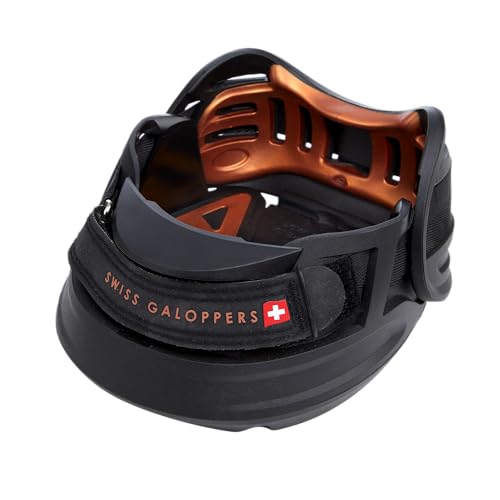
The Swiss Galoppers SG3 Boot Kit is aimed at riders who want a premium-style boot for repeated outdoor use. Its TPU construction is designed to handle year-round trail conditions, from dry paths to wet ground. The kit format can help riders start with the parts needed for a complete setup. Size SG3 covers a particular range, so careful measurement remains essential.
TPU offers a useful middle ground between hard protection and flexible movement. The boot should still receive a trial run before a long ride, because no material can correct a poor fit. I would pay attention to heel clearance, closure tension, and whether the boot stays aligned through turns. After wet rides, rinse away grit and let the boot dry fully.
Pros:
- Durable TPU construction
- Designed for all-year trail protection
- Kit format may simplify setup
- Useful for riders who log many trail miles
- Offers a balance of strength and flexibility
- Suitable for varied outdoor conditions when fitted well
Cons:
- Premium construction may cost more
- SG3 is limited to a specific hoof size range
- More parts may require extra care and cleaning
My Recommendation
I would point this Swiss Galoppers kit toward serious trail riders who use hoof boots often. It is best for owners who want durable material and a boot that can face changing weather. The TPU shell and kit approach make it a strong candidate among the best hoof boots for trail riding for frequent use. It may also suit riders who want one system for much of the year.
The investment makes the most sense when the horse rides often and the size is correct. Casual riders may prefer a simpler boot at a lower cost. Check the current kit contents, size range, and seller details before purchase, then give the horse a slow introduction.
Cavallo Trek Slim Sole, Size 3
The Cavallo Trek Slim Sole is designed for hooves that need a narrower internal fit than a regular-sole model may provide. Its protective sole helps reduce the impact of stones and hard trail surfaces. Size 3 is not a universal fit, and the slim shape makes measurement even more important. I see this as a focused option rather than a one-boot-fits-all answer.
A slim boot can reduce extra space around a narrower hoof. That may help limit movement when the horse turns on uneven ground. I would never force a wide hoof into a slim boot, since pressure and rub can follow. Use the trim shape, width, length, and heel area together when checking the fit.
Pros:
- Slim sole shape for narrower hooves
- Protective Trek sole for outdoor use
- Can reduce excess space in a suitable hoof
- Good option for rocky and gravel trails
- Supportive design for steady trail work
- Easy to inspect after each ride
Cons:
- Not suitable for broad hooves
- Size 3 requires careful measurement
- May feel too structured for horses that prefer soft, flexible boots
My Recommendation
The Cavallo Trek Slim Sole is best for horses with a narrow hoof profile that does not sit well in a regular boot. I would choose it for riders who need a secure, structured fit on rough trails. It earns attention among the best hoof boots for trail riding because a proper slim fit can help reduce shifting. The key is matching the boot to the hoof, not choosing it by appearance.
It offers strong value for the right horse but little value when the shape is wrong. Ask a qualified hoof professional to help if the measurements are unclear. Confirm the latest size details and introduce the boot on a short ride before testing it on steep or rocky terrain.
Easyboot Trail Original, Pair of Three
This Easyboot Trail Original option uses the same practical boot style in a three-boot package. That format may appeal to owners whose horse needs protection on three feet or who want one backup boot available. The polyurethane sole is made for light to medium trail riding. Its hook-and-loop closure keeps daily fitting simple and does not demand a long list of tools.
Three boots can also help when one hoof has a different need from the others. For example, a horse may need extra protection on one hind foot while using a pair in front. I would confirm the exact package before ordering and measure each hoof that will wear a boot. A test walk can reveal twisting or rubbing before a trail ride does.
Pros:
- Practical three-boot package
- Durable polyurethane sole
- Easy hook-and-loop closure
- Useful for mixed hoof protection needs
- Fast to remove for daily hoof care
- Suitable for light to medium trail use
Cons:
- Three-boot sets may not suit horses needing all four feet covered
- Requires careful package and size verification
- May need extra testing on deep or muddy trails
My Recommendation
I recommend this three-boot package for riders with an unusual hoof protection plan. It may suit a horse that needs one boot on a hind foot, one spare, or protection on three working feet. The easy closure and tough sole make it a useful entry into the best hoof boots for trail riding. It is less useful if your horse clearly needs four matching boots.
Think of it as a flexible set for a specific need. Before buying, count the boots required and compare all hoof measurements with the size chart. If the fit is sound, this package can offer practical value without forcing you to buy more boots than needed.
Equine Fusion Active Jogging Shoe, Alternate Size
This alternate-size Equine Fusion Active Jogging Shoe gives riders another sizing path within a flexible hoof boot design. That matters because two horses with the same breed and height can have very different feet. The flexible build aims to move with the hoof rather than lock it into a stiff shell. It can be helpful for front-foot protection during active trail work.
I would treat this boot as a fit-sensitive choice. The upper should sit comfortably, the sole should remain centered, and the boot should not rotate when the horse walks or trots. Start with a clean hoof and a short test session. Dirt trapped under a flexible boot can create pressure, so cleaning after each outing is part of safe use.
Pros:
- Flexible construction for active movement
- Alternate size may help more riders find a closer fit
- Useful for front-hoof protection
- Can feel light and natural in motion
- Suitable for gradual trail conditioning
- Easy to examine for grit and wear
Cons:
- Fit can change as the hoof grows between trims
- May not provide the rigid feel some horses need
- Deep mud may challenge any flexible jogging shoe
My Recommendation
This model is best for riders who want flexible protection and need to compare sizing options. I would consider it for active barefoot horses, front-foot soreness, and riders who prefer a less rigid boot. It is a thoughtful choice among the best hoof boots for trail riding when natural movement ranks high. The correct size remains the deciding factor.
It offers good value for the rider who will inspect and clean it often. It is not a set-and-forget product. Confirm the size, watch the horse’s stride, and stop if you see rubs, heat, or unusual movement. A hoof trimmer or veterinarian can help when soreness has an unclear cause.
Cavallo Simple Hoof Boot, Size 2

The Cavallo Simple Hoof Boot in Size 2 is a basic, protective option for horses that fit its measurements. Its black shell has a clean look and a practical shape for trail riding. The simple construction can make it less intimidating for a first-time boot user. It is suited to riders who want a direct way to protect a tender hoof from hard ground.
Like all hoof boots, this model works best when the hoof is freshly trimmed and measured. I would check both length and width, then look at the heel area once the boot is closed. A secure boot should not spin or fall away during a short test walk. Clean the inside after rides so small stones do not act like sandpaper.
Pros:
- Simple design for new hoof-boot users
- Protective shell for common trail surfaces
- Compact Size 2 option
- Easy to remove for hoof inspection
- Useful for barefoot horses with mild tenderness
- Black finish hides some everyday trail dust
Cons:
- Only fits a limited hoof size range
- May not suit horses needing a highly flexible boot
- Improper sizing can lead to movement or rubbing
My Recommendation
I recommend this Cavallo Simple boot for riders who want an uncomplicated option for a suitably sized hoof. It is best for casual trail rides, short conditioning sessions, and horses that need extra protection on firm ground. Its plain design makes it one of the easier best hoof boots for trail riding choices for a new owner. It does not replace careful fitting.
This boot can deliver solid value when used on the right horse and terrain. Riders who face deep mud, very steep trails, or high-speed work may need a more specialized design. Check the latest listing, measure after trimming, and build use slowly.
Best For Comparison
| Best for | Why |
|---|---|
| Simple daily trail use | Easyboot Trail Original offers a tough sole and quick hook-and-loop closure. |
| Narrow hoof shapes | Cavallo Trek Slim Sole gives a closer fit when a regular boot feels too wide. |
| Flexible movement | Equine Fusion Active Jogging Shoe is designed for a softer, more natural feel. |
How I Evaluate Hoof Boots for Trail Riding
Choosing a hoof boot is not like choosing a casual shoe from a shelf. A horse’s hoof changes with trim angle, growth, moisture, and workload. The best hoof boots for trail riding must match the hoof that wears them today. I start with measurements taken after a fresh trim, then compare the boot shape with the hoof wall, sole, heel, and frog.
I also consider where the horse travels. A dry gravel road asks for shock protection. A wet forest trail asks for grip and a closure that stays shut. A long mountain ride asks for comfort, low movement, and strong materials. No single boot wins on every trail, so the best choice depends on the horse, terrain, pace, and rider’s skill.
Fit Comes Before Features
A boot that fits poorly can cause more trouble than a bare hoof. It may twist, rub, trap grit, or fall off. Measure each hoof, even when the feet look alike. Follow the maker’s chart and check the return policy before buying when possible.
After fitting, walk the horse on a clean, level surface. Look for a centered boot and a relaxed stride. Then inspect the pastern and heel bulbs for redness or hair loss. Small signs matter. A short test can prevent a long and painful lesson on the trail.
Sole Design and Trail Grip
The sole is the horse’s contact point with the ground. A firm sole can reduce the sting from sharp rocks and help protect a thin sole. A flexible sole may give a more natural feel and can suit horses that dislike rigid boots. The right balance depends on the horse’s comfort and the path underfoot.
Grip also matters, but more grip does not make a horse immune to slipping. Riders must still slow down on wet roots, loose shale, mud, and steep slopes. Keep the sole clean so mud and stones do not change the tread. Replace boots that show deep wear or lose their shape.
Closures and Ease of Use
Trail riders often fit boots in a hurry. A closure should be easy to understand and strong enough to stay in place. Hook-and-loop systems can save time, while more complex systems may offer extra adjustment. I prefer a closure that I can check by touch while standing beside the horse.
Practice at home before the first trail ride. Put the boots on, walk the horse, remove them, and repeat. This builds calm habits for both horse and rider. It also reveals problems before you are miles from the trailer.
Boot Weight and Natural Movement
A heavy boot can change the way a horse lifts and places the foot. Some horses adapt quickly. Others need more time, especially if they have never worn hoof protection. Flexible models may feel closer to a natural step, while structured models may offer more support.
Introduce any boot in stages. Begin at a walk for a few minutes. Add a short trot only when the horse moves evenly. Never use a new boot for a full-day ride without testing it first.
Cleaning and Care
Care can extend boot life. Rinse away sand, clay, and manure after each ride. Check the sole, closure, seams, and inner surface. Let the boots dry before storing them in a cool place.
Do not ignore a bad smell, a split seam, or a sharp worn edge. These signs may point to trapped moisture or damage. A clean boot is kinder to the hoof and easier to fit. Good care also makes problems easier to spot early.
When Hoof Boots Make Sense
Hoof boots may help a barefoot horse on rocky trails, a horse with tender soles, or a horse transitioning from shoes. They can also serve as temporary protection after professional hoof care when a veterinarian or trimmer recommends them. They are not a cure for lameness.
If a horse stays sore, steps short, or changes gait, stop riding. Check the hoof and contact a qualified veterinarian or hoof-care professional. A boot should support sound movement, not hide a serious problem.
Common Buying Mistakes to Avoid
The first mistake is buying by hoof width alone. Length, heel shape, wall angle, and trim style also matter. The second mistake is skipping the test period. Even a well-known model can fail if it does not suit one horse’s feet.
Another mistake is using boots on dirty hooves. Mud and grit can create pressure points in minutes. Clean the hoof, seat the boot fully, and close it as directed. Finally, many riders wait too long to replace worn boots. A damaged sole or weak closure can turn a safe ride into a lost-boot problem.
FAQs Of Best Hoof Boots for Trail Riding
Are hoof boots good for trail riding?
Yes. Hoof boots can protect barefoot hooves from rocks, gravel, and hard ground. They work best when fitted correctly and introduced slowly. They should not cover up ongoing lameness or replace professional hoof care.
How do I measure for trail hoof boots?
Measure each hoof after a fresh trim. Record the widest part and the heel-to-toe length, then compare both numbers with the maker’s size chart. Do not rely on the horse’s breed, weight, or old shoe size.
Should a horse wear hoof boots on all four feet?
Not always. Some horses need only front boots, while others need protection on all four feet. Let the horse’s comfort, hoof condition, and terrain guide the choice. Test each boot before a long ride.
Can hoof boots stay on in mud?
Some boots handle wet ground better than others, but deep mud can pull at any boot. Use a secure fit and check the closure often. Clean the boot and hoof after the ride to remove trapped grit.
How long do hoof boots last?
Life span depends on mileage, terrain, weight, fit, and care. Rocky ground causes more wear than soft dirt. Inspect the sole, shell, seams, and closure after each ride, and replace any boot that no longer fits or protects well.
Final Verdict: Which Should You Buy?
For most riders, the Easyboot Trail Original is the best hoof boots for trail riding pick because it combines a tough sole, simple closure, and easy daily use. Choose Cavallo Trek Slim for narrow feet or Equine Fusion for flexible movement.
Measure after trimming, test slowly, and clean after every ride. The right hoof boot can make rough trails kinder, safer, and more comfortable for your horse.

Madison Clark is a footwear expert and the voice behind MyStyleGrid.com. She specializes in honest shoe reviews, style tips, and practical guides to help readers find the perfect pair for any occasion. With years of experience in blogging and content creation, Madison makes footwear knowledge simple, stylish, and easy to follow.