
Chelsea boots should fit snugly at the heel and instep, with room for your toes to move naturally.
Knowing how should chelsea boots fit can save you from sore heels, numb toes, and costly return trips. The right pair should feel secure without squeezing your foot, and it should stay comfortable when you walk, stand, or wear light socks. This guide explains the ideal fit, common mistakes, sizing tips, and ways to check a pair before you buy.
What Makes a Good Chelsea Boot Fit?
The best Chelsea boot fit feels firm but not tight. Your heel should stay mostly in place, while your toes should have enough space to spread and move. The boot should support your foot without pressing hard on the sides or top.
Chelsea boots often feel different from lace-up shoes because they use elastic side panels instead of laces. You cannot adjust the fit across the instep, so the shape and size must match your foot from the start.
When considering how should chelsea boots fit, focus on these key areas:
• Heel: Your heel may lift slightly at first, but it should not slide up and down with every step.
• Instep: The boot should feel secure across the top of your foot without creating pressure or pain.
• Toe box: Your toes should not touch the front, curl, or feel trapped.
• Width: Your foot should not bulge over the sole or feel squeezed at the little toe.
• Ankle: The shaft should sit close to your ankle without rubbing or cutting into your skin.
A small amount of heel movement is normal in new boots. Leather soles and stiff uppers need time to soften, and your foot may slide slightly before the boot breaks in. However, severe slipping usually means the boot is too large or the heel counter does not match your foot.

How Much Room Should Chelsea Boots Have?
Your Chelsea boots should leave about a thumb’s width of space between your longest toe and the front of the boot. This space helps your toes move and gives your foot room to swell during the day.
Do not judge toe room by pressing the front of the boot while your foot is inside it. Your toes may curl back without you noticing. Instead, stand up, place your full weight on both feet, and check how your toes feel.
Use this simple test:


-
Put on the socks you plan to wear with the boots.
-
Stand on a firm, level surface.
-
Make sure your heel is seated fully at the back.
-
Wiggle your toes and spread them slightly.
-
Walk for several minutes.
-
Check for pressure at the front, sides, and top of your foot.
Your longest toe may be your big toe, second toe, or another toe. Fit the boot to that toe, not simply to the big toe. A boot that feels fine while sitting can become painful after an hour of walking.
When asking how should chelsea boots fit, remember that extra space is not always better. Too much room can cause your foot to slide, create blisters, and make the boot feel clumsy.

Should Chelsea Boots Feel Tight at First?
Chelsea boots should feel snug when new, but they should never feel painful. The leather may soften, yet it will not reliably stretch enough to fix a boot that is too short or too narrow.
A new pair may feel firm in these areas:
• The elastic panels may hold your foot closely.
• The leather around the ankle may feel stiff.
• The heel counter may need time to soften.
• The sole may feel rigid under your foot.


These sensations are normal if they remain mild. They are not normal if you feel sharp pressure, tingling, numbness, burning, or pain after only a few minutes.
A useful rule is simple: leather can relax, but it cannot create more length. Some leather can stretch slightly across the width, especially with careful wear or professional stretching. Still, you should never buy a boot that is too short and hope it will become longer.
One fitting lesson stands out from helping people choose boots: many shoppers mistake tightness for support. A secure boot holds the foot in place. A tight boot restricts it. Those sensations may seem similar in the store, but they feel very different after a full day.

How Should Chelsea Boots Fit at the Heel?
The heel should feel secure, with only slight movement during the first few wears. A small amount of heel lift is common because your foot must move naturally as you walk.
If your heel lifts more than about a quarter to half an inch with every step, the boot may be too large. It may also have the wrong heel shape for your foot. Excess movement often leads to hot spots and blisters.
Try these checks:
• Walk up stairs and notice whether your heel pulls away from the footbed.
• Walk down a slope and check whether your toes slide forward.
• Bend your knee and rise onto your toes.
• Take several normal steps without gripping the floor with your toes.
Your heel should not feel locked like it is in a ski boot. It should feel held, not trapped. As the sole flexes and the leather molds to your foot, minor movement often decreases.
If a nearly perfect boot has slight heel slip, a thin insole or heel grip may help. Do not use thick inserts to rescue a boot that is clearly too large. They can crowd your toes and change the way you walk.
Understanding how should chelsea boots fit at the heel is especially important because many comfort problems begin there, not at the toes.


How Should Chelsea Boots Fit Across the Instep?
The instep is the top part of your foot between the toes and ankle. Chelsea boots should feel comfortably secure across this area, since the elastic panels help hold the boot in place.
You should not see deep pressure marks after a short fitting. You should also be able to flex your foot without feeling a hard edge pressing into the tendons on top.
People with high insteps may find some Chelsea boots too tight. People with low insteps may find that the same boots feel loose and allow too much foot movement. The boot’s last, or internal shape, affects this fit more than the printed size alone.
Check the instep by doing the following:
-
Put on both boots.
-
Walk for five to ten minutes.
-
Flex your ankles and climb a few steps.
-
Look for pressure from the elastic gussets or top seam.
-
Remove the boots and inspect your skin for strong red marks.
A light impression is not always a problem. A painful or lasting mark suggests that the boot does not suit your instep. Since Chelsea boots have limited adjustability, choosing another shape is usually better than forcing the fit.

How Should Chelsea Boots Fit in Width?
Chelsea boots should match the natural width of your foot. Your little toe should not press against the side, and the ball of your foot should rest comfortably over the widest part of the sole.
Many people buy longer boots to gain more width. This usually creates new problems. Your heel may slip, your foot may slide forward, and the boot may crease in the wrong place.
Check the width while standing. Feet spread under body weight, so a sitting fit can be misleading. If your foot feels cramped after five minutes, it will probably feel worse after several hours.
Look for these warning signs:


• Your little toe feels pressed inward.
• The sides of your foot bulge beyond the sole.
• The upper creases sharply across the ball of your foot.
• Your toes feel numb or cold.
• You feel pressure beneath the outside edge of your foot.
Different brands use different lasts. A slim, dress-style Chelsea boot may fit very differently from a wide work boot, even if both show the same size. If possible, measure both feet and fit the larger foot. Many people have one foot that is slightly longer or wider than the other.
How to Check Chelsea Boot Fit at Home
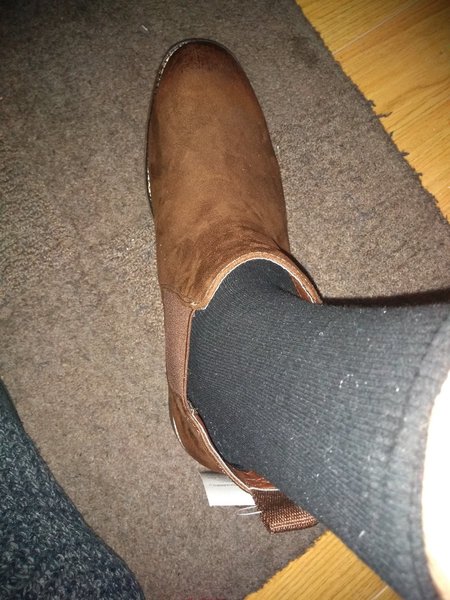
Trying boots at home gives you more time than a quick store visit. Wear them indoors on a clean floor so you can return them in good condition if they do not work.
Follow this practical fitting routine:
-
Try the boots late in the day. Feet often swell slightly after hours of standing and walking.
-
Wear your usual boot socks.
-
Put on both boots, even if one foot feels fine.
-
Walk on different surfaces for at least ten minutes.
-
Sit, stand, climb stairs, and bend your knees.
-
Check your toes, heels, arches, and ankles for discomfort.
-
Remove the boots and look for red marks or rubbed areas.
Pay attention to how your feet feel after several minutes. New boots may feel stiff, but they should not cause pain. Comfort should improve as you walk, not decline quickly.
If you shop online, check the brand’s size chart and return policy before ordering. Measure your feet in inches or centimeters and compare those measurements with the brand’s chart. Do not assume that your usual sneaker size will match your Chelsea boot size.
Chelsea Boot Fit for Different Foot Shapes
There is no single shape that works for every foot. The right fit depends on your arch, instep, heel width, toe shape, and overall foot volume.
Wide feet
Choose a wider last or a brand that offers wide sizes. Avoid narrow toe boxes, even if the boots look stylish. A pointed or almond toe can feel restrictive if your forefoot needs more space.
Narrow feet
Look for a close-fitting heel and a slimmer last. A thin insole may improve the fit, but it should not push your toes against the front. Heel grips can also reduce minor movement.
High arches and high insteps
Choose boots with flexible elastic panels and enough height over the instep. Forcing your foot into a low-volume boot can cause pressure and numbness.
Flat feet
Look for a supportive footbed and a stable sole. Some Chelsea boots have little arch support, so an appropriate insole may improve comfort. Make sure the insole does not make the boot too tight.
Different-sized feet
Fit the larger foot first. You can use a thin sock or slim insert on the smaller foot, but never choose a size that hurts the larger foot.
These examples show why the answer to how should chelsea boots fit cannot depend on size alone. Shape matters just as much as length.

Common Chelsea Boot Fit Mistakes
The most common mistake is buying boots that feel comfortable only while sitting. Your feet change when you stand, and they may swell during a long day.
Other mistakes include:
• Choosing a larger size to avoid toe pressure.
• Assuming leather will stretch in length.
• Wearing thin socks when you normally wear thick socks.
• Ignoring heel slip because the boots look good.
• Testing only one boot.
• Buying based on sneaker size without checking measurements.
• Wearing new boots for a full day before breaking them in.
• Using thick insoles to fix a poor fit.
A good pair should not need painful break-in sessions. Start with short periods at home. If a boot causes blisters every time you wear it, the problem may be the fit rather than the leather.
The sole also affects comfort. A flexible rubber sole may feel easy to walk in, while a stiff leather sole may need more time to bend. Neither sole type fixes a poor upper fit, so assess the whole boot.
How to Break In Chelsea Boots Safely
Breaking in a well-fitting pair should be gradual. The goal is to soften the boot, not force it to fit a foot shape it cannot support.
Try this approach:
-
Wear the boots indoors for 20 to 30 minutes.
-
Use normal socks, not unusually thick ones.
-
Apply a small amount of leather conditioner if the manufacturer allows it.
-
Walk on clean, flat surfaces at first.
-
Increase wear time slowly over several days.
-
Use blister pads at early hot spots.
Avoid soaking leather boots in water or heating them with a hair dryer. Excess moisture and heat can damage leather, weaken adhesives, and distort the shape.
If the boots still cause pain after several short wears, stop using them and reassess the size or shape. A professional shoe repair specialist may stretch a tight spot, but stretching has limits.
Chelsea Boot Fit for Men and Women
The basic rules for how should chelsea boots fit are the same for everyone. Your toes need space, your heel needs stability, and the boot must match your foot’s width and volume.
Many women’s Chelsea boots use narrower heels, slimmer shapes, or elevated soles. Many men’s styles have broader lasts and deeper toe boxes. These are general trends, not strict rules. Fit depends on the specific brand and model.
For dress Chelsea boots, focus on a clean line and secure heel. For work or outdoor Chelsea boots, allow enough room for thicker socks and natural foot movement. Do not size up too much, since a loose work boot can create fatigue and reduce stability.
If you use orthotics, bring them when trying on boots. Some Chelsea boots have removable footbeds, while others have very little internal space. An orthotic that works in a sneaker may not fit inside a low-volume boot.
Frequently Asked Questions About How Should Chelsea Boots Fit
Should Chelsea boots fit tight or loose?
Chelsea boots should fit snugly but not painfully tight. Your heel should stay mostly secure, while your toes need room to move and your foot should not slide inside the boot.
Should my toes touch the end of Chelsea boots?
No. Your toes should not touch the front when you stand or walk. Leave roughly a thumb’s width of space in front of your longest toe.
Is heel slip normal in Chelsea boots?
A small amount of heel slip is normal in new Chelsea boots. Excessive movement, rubbing, or a heel that lifts dramatically usually means the boot is too large or has the wrong shape.
Do Chelsea boots stretch?
Leather Chelsea boots may soften and stretch slightly across the width with wear. They will not normally stretch enough in length to fix a boot that is too short.
Should Chelsea boots be hard to put on?
Chelsea boots should feel secure but should not require extreme force to put on. Use the pull tabs, and make sure your heel passes the opening without crushing the elastic or damaging the boot.
Can I wear thick socks with Chelsea boots?
You can wear thick socks if the boots have enough internal room. Try the boots with the socks you plan to use, because thick fabric can create pressure across the instep and toes.
Should Chelsea boots feel comfortable right away?
A good pair may feel stiff but should not cause sharp pain or numbness. Comfort should improve with short, gradual wear as the leather and sole soften.
Conclusion
The answer to how should chelsea boots fit is simple: they should feel secure at the heel and instep, roomy at the toes, and comfortable across the width. A little stiffness is normal, but pain, numbness, strong pressure, or major heel slip are signs to choose another size or shape.
Try Chelsea boots while standing and walking, preferably later in the day and with your usual socks. Measure your feet, check the brand’s size guide, and give the boots a careful indoor test before wearing them outside. Use these steps to find a pair that looks sharp and feels good from morning to night, then explore more footwear guides or share your fitting experience in the comments.

Madison Clark is a footwear expert and the voice behind MyStyleGrid.com. She specializes in honest shoe reviews, style tips, and practical guides to help readers find the perfect pair for any occasion. With years of experience in blogging and content creation, Madison makes footwear knowledge simple, stylish, and easy to follow.