Boots cover many shaft heights, while booties are short boots that usually end at or near the ankle.
Understanding what is the difference between boots and booties makes shopping, styling, and choosing the right footwear much easier. The terms can overlap in fashion, but shaft height, coverage, purpose, and styling options usually separate them. This guide explains the difference in simple terms and offers practical tips for fit, comfort, weather, and everyday wear.
What Is the Difference Between Boots and Booties?
The simplest answer is that “boots” is the broad category, while “booties” are one type of boot. Boots may rise to the ankle, calf, knee, or even higher. Booties are shorter and usually stop at the ankle bone or just above it.
When asking what is the difference between boots and booties, focus first on the shaft. The shaft is the part of the footwear that covers the leg above the foot.
Here is a quick comparison:
| Feature | Boots | Booties |
|---|---|---|
| Meaning | A broad footwear category | A short boot style |
| Shaft height | Ankle to thigh | Usually ankle height |
| Leg coverage | Low to very high | Low |
| Common uses | Work, hiking, riding, winter, fashion | Casual wear, office outfits, events |
| Styling effect | Can create a long, bold line | Adds shape without covering much leg |
A pair of knee-high riding boots and a pair of ankle booties are both boots. However, the booties are defined by their short shaft.
The word “booties” can also have a different meaning for babies. In adult fashion, it usually means ankle boots or very short boots.

What Are Boots?
Boots are shoes that cover the foot and extend higher around the ankle or leg. They may be made for protection, work, outdoor activity, weather, or style.
Traditional boots often have a stronger sole than regular shoes. Many also use leather, rubber, suede, synthetic materials, or waterproof membranes. Their design depends on the job they need to perform.
Common types of boots include:
• Ankle boots: These end around the ankle and can look similar to booties.
• Chelsea boots: These have elastic side panels and a clean, slip-on shape.
• Hiking boots: These offer ankle support, grip, and protection on uneven ground.
• Work boots: These often use tough leather, protective toes, and firm soles.
• Rain boots: These use water-resistant rubber or similar materials.
• Cowboy boots: These have a taller shaft, a slanted heel, and a western design.
• Knee-high boots: These cover much of the lower leg.
• Over-the-knee boots: These extend above the knee for warmth or fashion.
The main point is that boots are not defined by one height or one purpose. The word describes a large family of footwear styles.

What Are Booties?
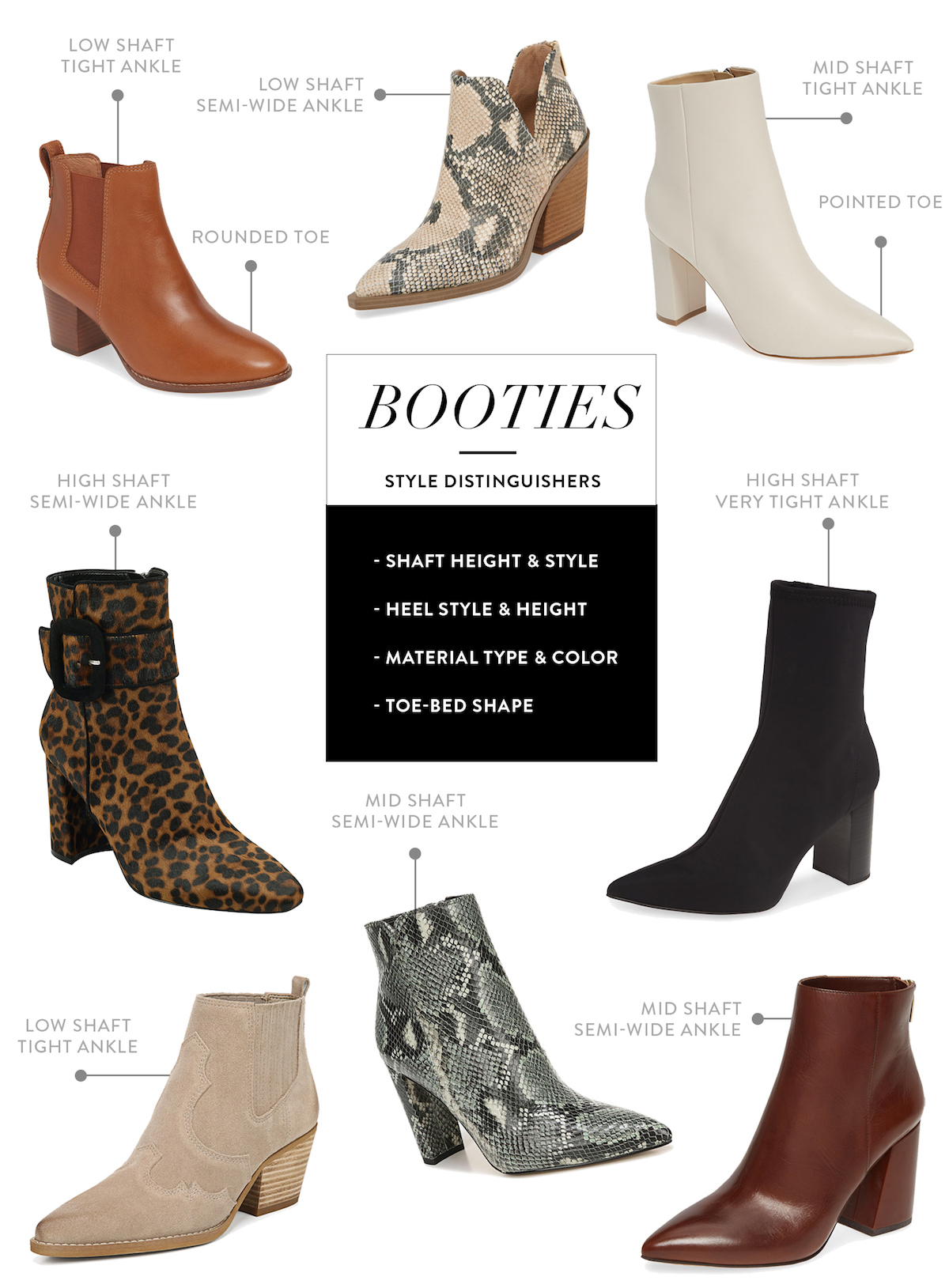
Booties are short boots that usually cover the foot and ankle. Most styles end at the ankle bone, while some rise a few inches above it.
Booties come in many shapes. Some have a low block heel. Others have a stiletto heel, flat sole, wedge, platform, or lug sole. They may also have laces, zippers, buckles, elastic panels, or a pull-on design.
Popular bootie styles include:
• Chelsea booties: Short, simple, and easy to slip on.
• Ankle booties: A general name for styles that sit at the ankle.
• Western booties: Short versions of cowboy-inspired boots.
• Sock booties: Stretchy styles that fit closely around the ankle.
• Peep-toe booties: Open at the toe and often worn in warmer weather.
• Combat booties: Lace-up styles with a strong, rugged sole.
• Heeled booties: Dressier options for work, dinners, or events.
Booties are popular because they feel like a bridge between shoes and boots. They give more coverage than pumps or sneakers but do not cover the calf like tall boots.

Key Differences Between Boots and Booties
What is the difference between boots and booties in everyday use? The biggest differences involve height, coverage, comfort, styling, and function.
1. Shaft height
Boots may have a shaft that reaches the ankle, calf, knee, or thigh. Booties usually have a shaft that ends at or slightly above the ankle.
This difference affects both appearance and performance. Tall boots offer more warmth and protection, while booties feel lighter and leave more of the leg visible.
2. Leg coverage
Tall boots cover the lower leg. Booties leave the calf open.
This matters in cold or wet weather. A tall waterproof boot can protect more of your leg from rain, snow, and mud. A bootie may protect your foot and ankle but leave your lower leg exposed.
3. Styling effect
Booties create a clear break at the ankle. This can make an outfit look sharp and modern. Tall boots create a long visual line that can look sleek with dresses, skirts, or slim pants.