Adding prescription lenses to sunglasses usually means having an optician replace the original lenses with custom lenses made for your prescription.
Learning how to add prescription to sunglasses is easier when you understand your frame, prescription, lens options, and fitting limits. This guide explains the safest methods, costs, common mistakes, and practical tips so you can turn your favorite sunglasses into comfortable prescription eyewear.
What Does It Mean to Add Prescription to Sunglasses?
Adding prescription to sunglasses means replacing the factory lenses with lenses that correct your vision. The new lenses can include distance, reading, astigmatism, bifocal, or progressive correction.
The frame stays the same in many cases, but an optical lab cuts new lenses to match its shape. The lenses may also include tint, UV protection, polarization, or a mirror coating.
You can add prescription to many sunglasses, including:
- Standard plastic sunglasses
- Metal frames
- Sports sunglasses
- Wraparound sunglasses
- Designer sunglasses
- Safety and work sunglasses
- Prescription-ready frames
However, not every frame can safely hold prescription lenses. Very curved frames, thin rimless designs, damaged frames, and low-quality sunglasses may present problems.
A qualified optician checks the frame before ordering lenses. This step matters because the frame must support the lens thickness, shape, and optical measurements.
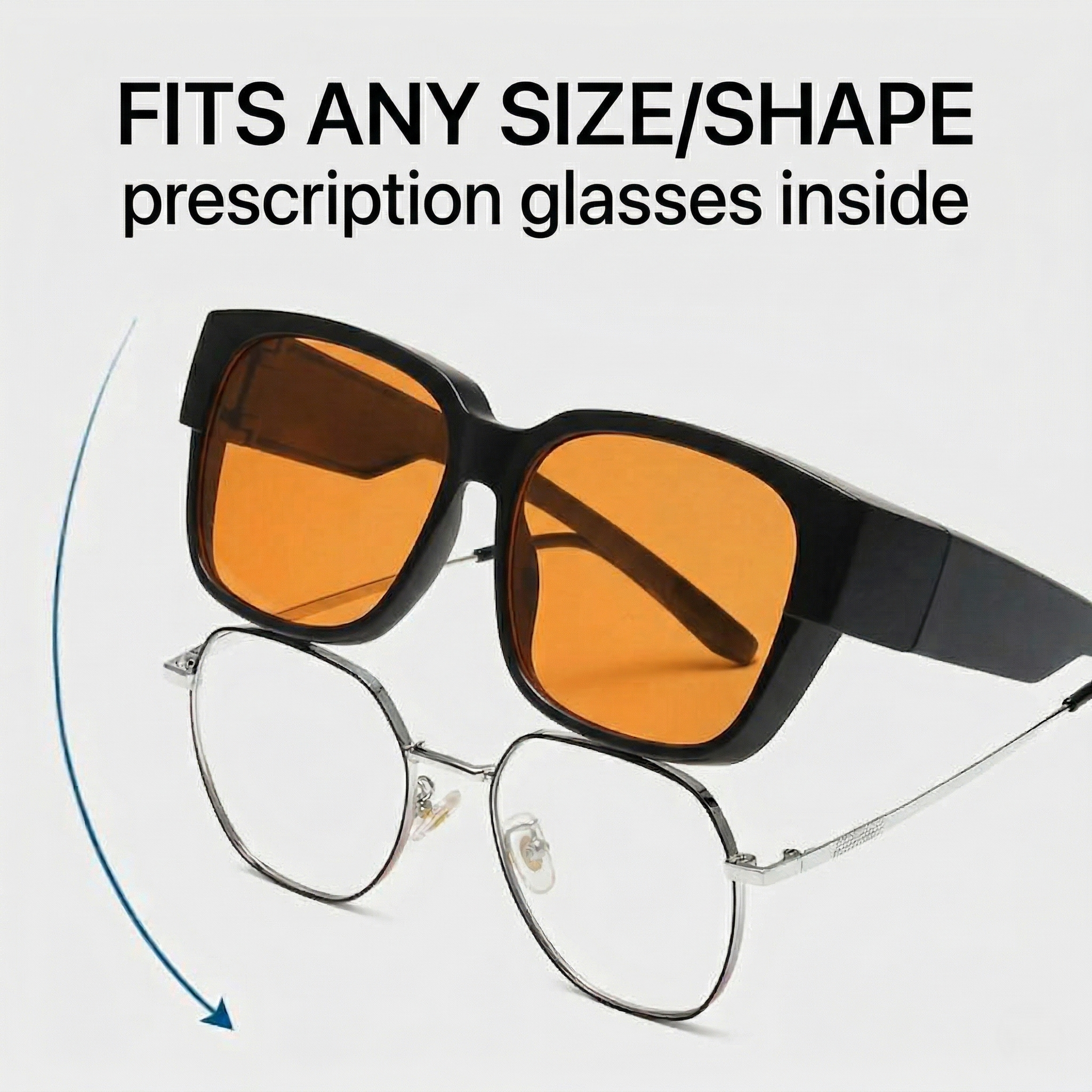
How to Add Prescription to Sunglasses
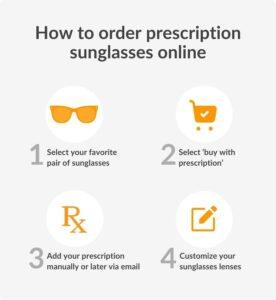
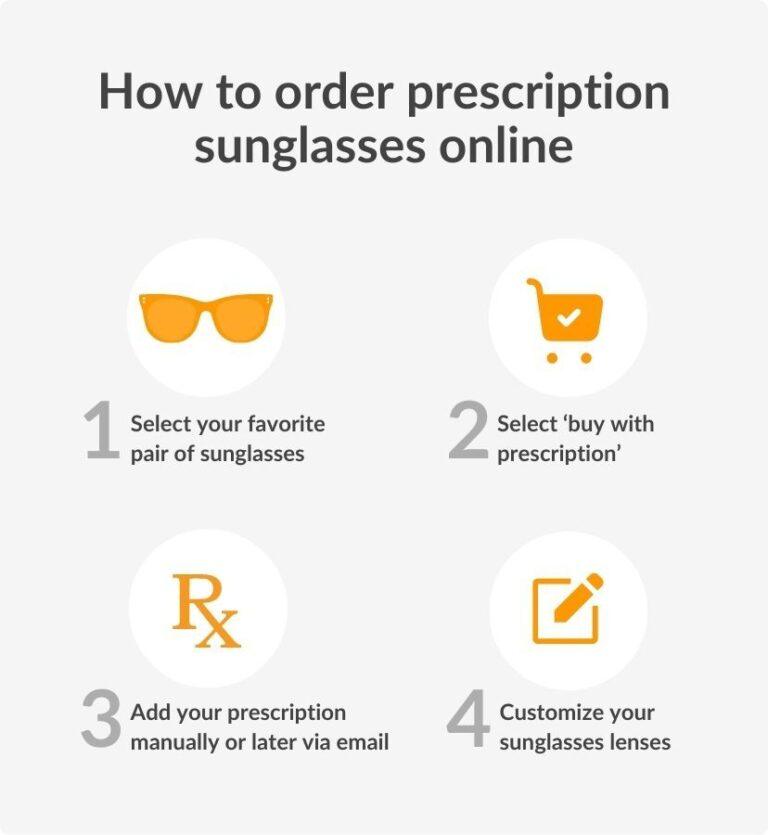
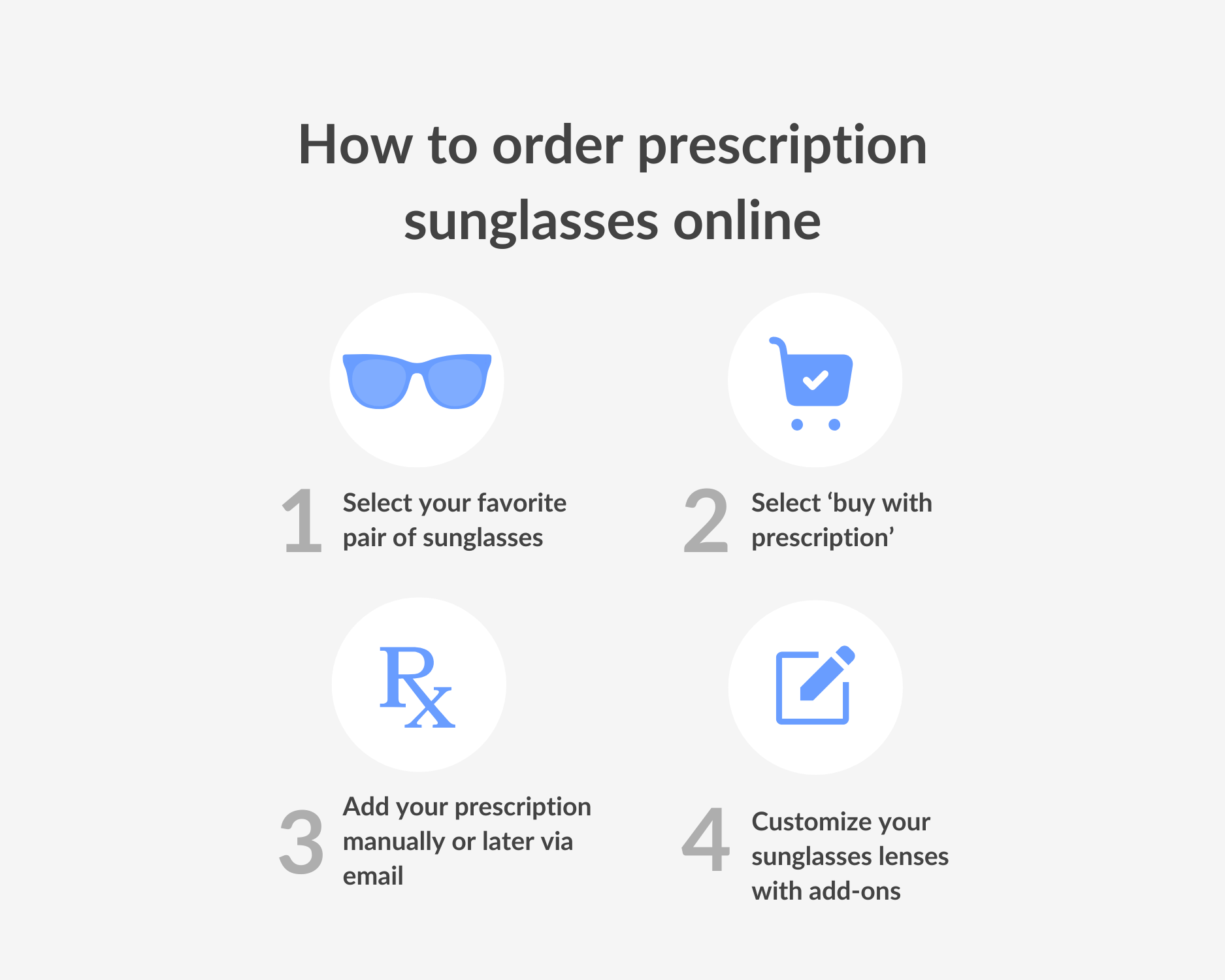
The most reliable way to add prescription to sunglasses is through an optician or a reputable prescription lens replacement service. The process usually follows several steps.
1. Get a current eye prescription
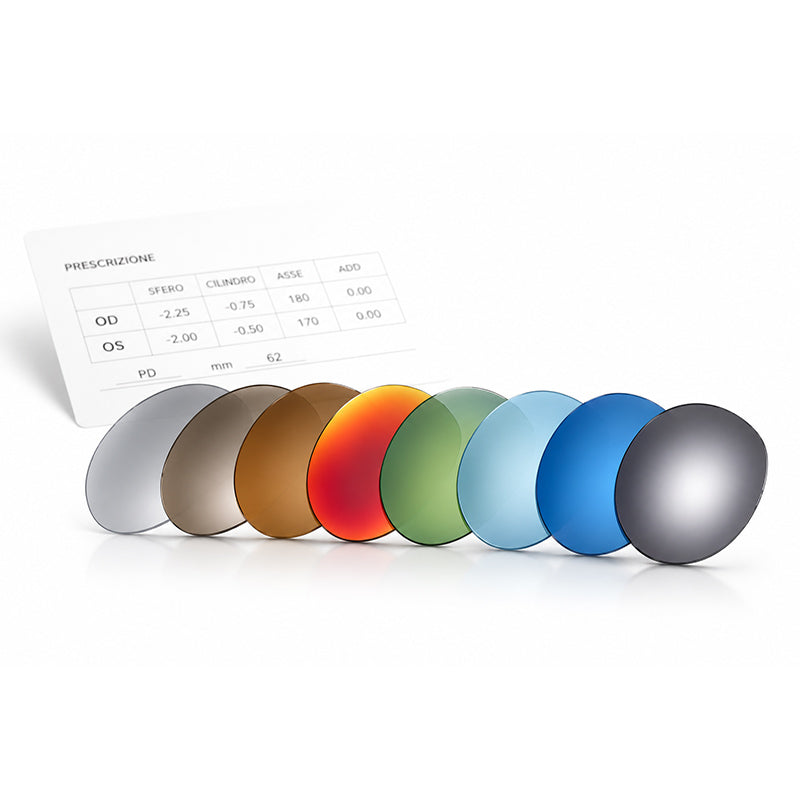
Start with a valid prescription from an eye doctor. Your prescription should include the details needed to make corrective lenses, such as:
- Sphere, often written as SPH
- Cylinder, often written as CYL
- Axis for astigmatism
- Add power for bifocals or progressives
- Pupillary distance, or PD
- Right-eye and left-eye measurements
A glasses prescription is not the same as a contact lens prescription. Contact lenses sit directly on your eyes, while sunglasses sit farther away, so do not use a contact lens prescription for this project.
Your prescription should also be reasonably current. Vision can change, and an outdated prescription may lead to blurred sight, headaches, or eye strain.
2. Check whether the frame is suitable
An optician will inspect the sunglasses for size, shape, curve, and condition. They may ask how the frame fits and whether it has enough space for the prescription lens.
The most important checks include:
- Frame width and lens height
- Bridge size
- Lens curve
- Frame material
- Rim strength
- Hinge condition
- Lens thickness limits
- Distance between the eyes and lenses
A flat or mildly curved frame is often easier to convert. Wraparound frames can still work, but they may require special lenses and more precise measurements.
3. Choose the lens material
Lens material affects weight, clarity, impact resistance, and appearance. Common choices include:
- CR-39 plastic: Offers clear vision and good tint quality at a lower cost.
- Polycarbonate: Light and impact resistant, making it useful for sports and active wear.
- Trivex: Lightweight, strong, and often known for good optical performance.
- High-index plastic: Helps reduce thickness for stronger prescriptions.
- Glass: Provides excellent clarity but is heavier and more likely to break.
For children, cyclists, runners, and people who work around tools, impact-resistant materials are often a smart choice. For a strong prescription, high-index lenses may create a slimmer and more attractive result.
4. Select the tint and lens features
Prescription sunglasses can have a fixed tint or a special lens treatment. Popular options include:
- Gray tint: Keeps colors close to natural and works well for general outdoor use.
- Brown or amber tint: Can improve contrast and make some scenes feel warmer.
- Green tint: Reduces glare while preserving fairly natural color.
- Gradient tint: Darker at the top and lighter at the bottom.
- Polarized lenses: Reduce reflected glare from roads, water, snow, and glass.
- Photochromic lenses: Darken in response to some outdoor light.
- Mirror coating: Reflects light and adds a cosmetic finish.
- UV protection: Helps block ultraviolet radiation.
A dark tint does not always mean strong UV protection. Ask for lenses that block 100% of UVA and UVB rays. This is a key safety feature, not just a style choice.
5. Confirm the measurements
Accurate measurements help the optical center of each lens line up with your eyes. Important measurements may include:
- Monocular PD for each eye
- Segment height for bifocals or progressives
- Frame pupillary distance
- Lens width and height
- Vertex distance
- Pantoscopic tilt
- Frame wrap angle
Basic single-vision lenses are more forgiving than progressive lenses. Progressive sunglasses require careful measurements because the reading and distance zones must sit in the correct position.
6. Order and install the lenses
The optician or lab cuts each lens to match the frame. The original lenses are removed, and the new prescription lenses are fitted into the frame.
A professional checks the finished sunglasses for:
- Prescription accuracy
- Lens alignment
- Frame damage
- Tint consistency
- Scratches or coating defects
- Comfort and fit
This process may take a few days or several weeks, depending on the frame, prescription, lens type, and lab.

Three Ways to Add Prescription to Sunglasses
There are three practical ways to get prescription sunglasses. The best option depends on your budget, frame, prescription, and comfort level.
Use an optical store
An optical store provides the most personal support. An optician can inspect your sunglasses, take measurements, explain lens options, and adjust the finished frame.
This method is especially useful if you have:
- A strong prescription
- Astigmatism
- Progressive lenses
- A wraparound frame
- A complex sports frame
- A history of trouble with glasses
The main drawback is price. Professional service often costs more than ordering online, but the extra support can prevent costly mistakes.
Use an online lens replacement service
Many online optical labs let you mail in your sunglasses. You upload or provide your prescription, select lenses, and send the frame to the company.
Before ordering, check:
- Whether the service accepts your frame type
- Whether it supports your prescription strength
- How it handles PD measurements
- Whether it replaces broken frames
- Its return and remake policy
- Its warranty for coatings and defects
- Its shipping and insurance terms
Read customer reviews carefully, but do not rely on reviews alone. A company may be excellent for simple frames and less suitable for curved or progressive sunglasses.
Buy a new pair of prescription sunglasses
Sometimes the simplest answer is to buy a new prescription-ready frame. This may be better if your old sunglasses are scratched, loose, bent, or difficult to fit.
A new pair lets you choose the frame size, lens shape, bridge fit, tint, and lens material from the start. It may also cost less than replacing lenses in an unsuitable designer or sports frame.
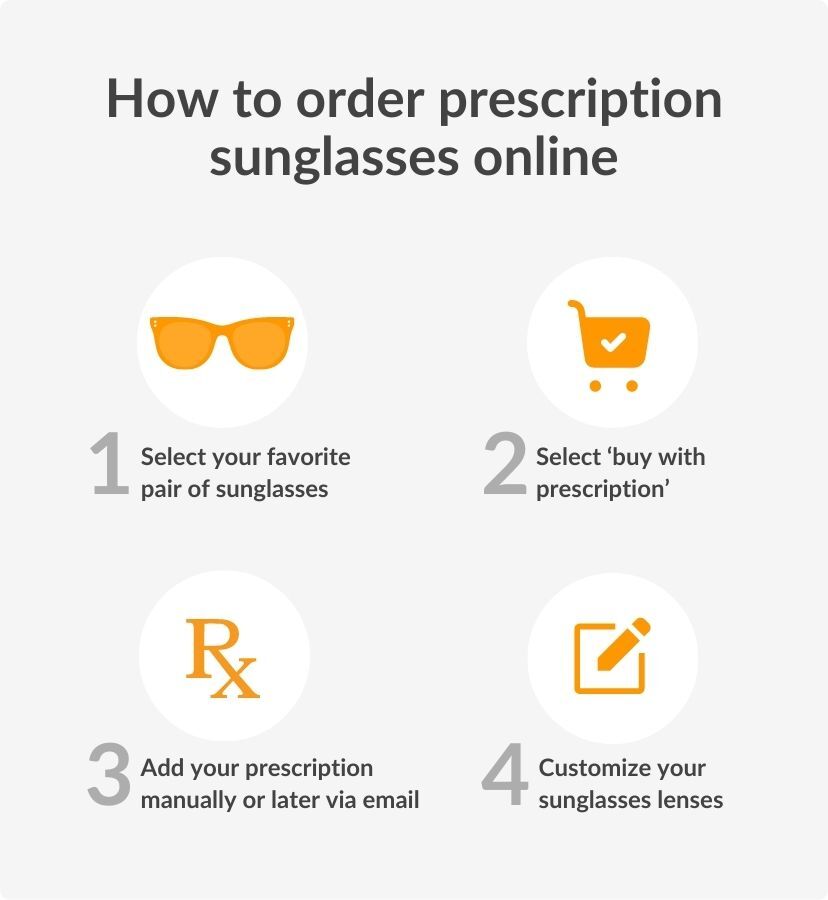
Can You Add Prescription to Any Sunglasses?
You cannot add prescription to every pair of sunglasses. A frame must be strong enough and shaped correctly for new lenses.
Frames that are often easier to convert include:
- Full-rim frames
- Flat or lightly curved frames
- Plastic frames with standard lens shapes
- Metal frames with secure rims
- Frames in good condition
Frames that may be difficult include:
- Rimless sunglasses
- Semi-rimless frames
- Very narrow lenses
- Deep wraparound designs
- Frames with severe lens curvature
- Cracked or brittle frames
- Frames with unusual mounting systems
Strong prescriptions can make some lens shapes too thick or heavy. In other cases, the lens curve may create unwanted distortion. An optician can explain whether your preferred frame is realistic.
Do not assume that an expensive frame is automatically suitable. Designer frames can still have curves, thin rims, or construction features that make lens replacement difficult.
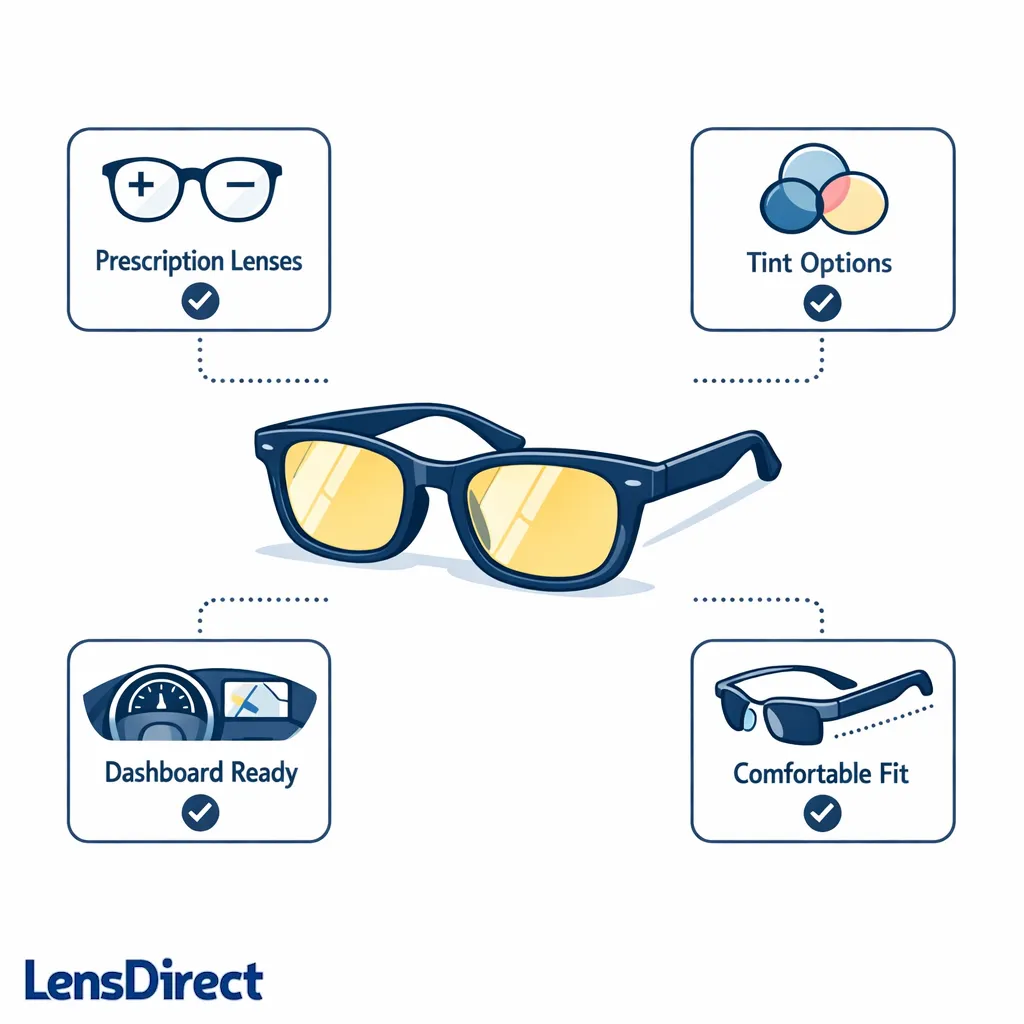
How Much Does It Cost to Add Prescription to Sunglasses?
The cost to add prescription to sunglasses can range from about $75 to more than $400. The final price depends on the prescription, frame, lens material, coatings, and service provider.
Typical price factors include:
- Basic single-vision lenses
- Progressive or bifocal lenses
- High-index material
- Polarization
- Photochromic treatment
- Mirror coating
- Premium anti-reflective coating
- Complex wraparound lens design
- Shipping and frame inspection
- Remake or replacement coverage
Basic prescription sunglasses may cost less than replacing lenses in a premium sports or designer frame. A strong prescription can also require high-index lenses, which raise the price.
Ask for a complete quote before sending your frame. Confirm whether the quote includes lens installation, tint, UV protection, shipping, tax, and adjustments.
A low price is not always a bargain. If measurements are wrong or the lab cannot fit the lenses properly, you may pay again for a remake.
Prescription Sunglasses Lens Options Explained
Choosing the right lens features can make a major difference in comfort. The best option depends on how and where you use your sunglasses.
Polarized prescription lenses
Polarized lenses reduce horizontal glare. They are especially helpful near:
- Water
- Snow
- Wet pavement
- Car hoods
- Large windows
- Bright roads
Polarization can make driving and outdoor activities more comfortable. However, it may make some digital screens harder to read, especially when the screen uses a particular orientation.
Polarized lenses also do not replace UV protection. Make sure the lenses include both polarization and full ultraviolet protection.
Photochromic prescription lenses
Photochromic lenses become darker outdoors and clearer indoors. They are convenient for people who move between locations during the day.
They may not darken fully inside a car because many windshields block the ultraviolet light that activates the lens. They can also respond more slowly in cold weather.
If you need strong sun protection while driving, fixed-tint prescription sunglasses are usually more dependable.
Gradient prescription lenses
Gradient lenses are dark at the top and lighter at the bottom. They work well for driving because they shade the eyes from sunlight above while keeping the dashboard easier to see.
They may not be the best choice for beach trips, skiing, or long periods in intense sunlight. A uniform tint often gives more consistent protection.
Mirror-coated prescription lenses
Mirror coatings reflect some light away from the eyes. They are popular for fashion, snow sports, boating, and bright outdoor settings.
The coating can scratch if cleaned with rough fabric or stored without protection. Use a clean microfiber cloth and a case to protect the finish.
Progressive prescription sunglasses
Progressive sunglasses provide distance, intermediate, and near vision in one lens. They can be useful if you need one pair for driving, walking, and reading menus outdoors.
Progressives require accurate measurements and a suitable frame height. A small or shallow frame may not provide enough room for comfortable vision zones.
How to Add Prescription to Wraparound Sunglasses
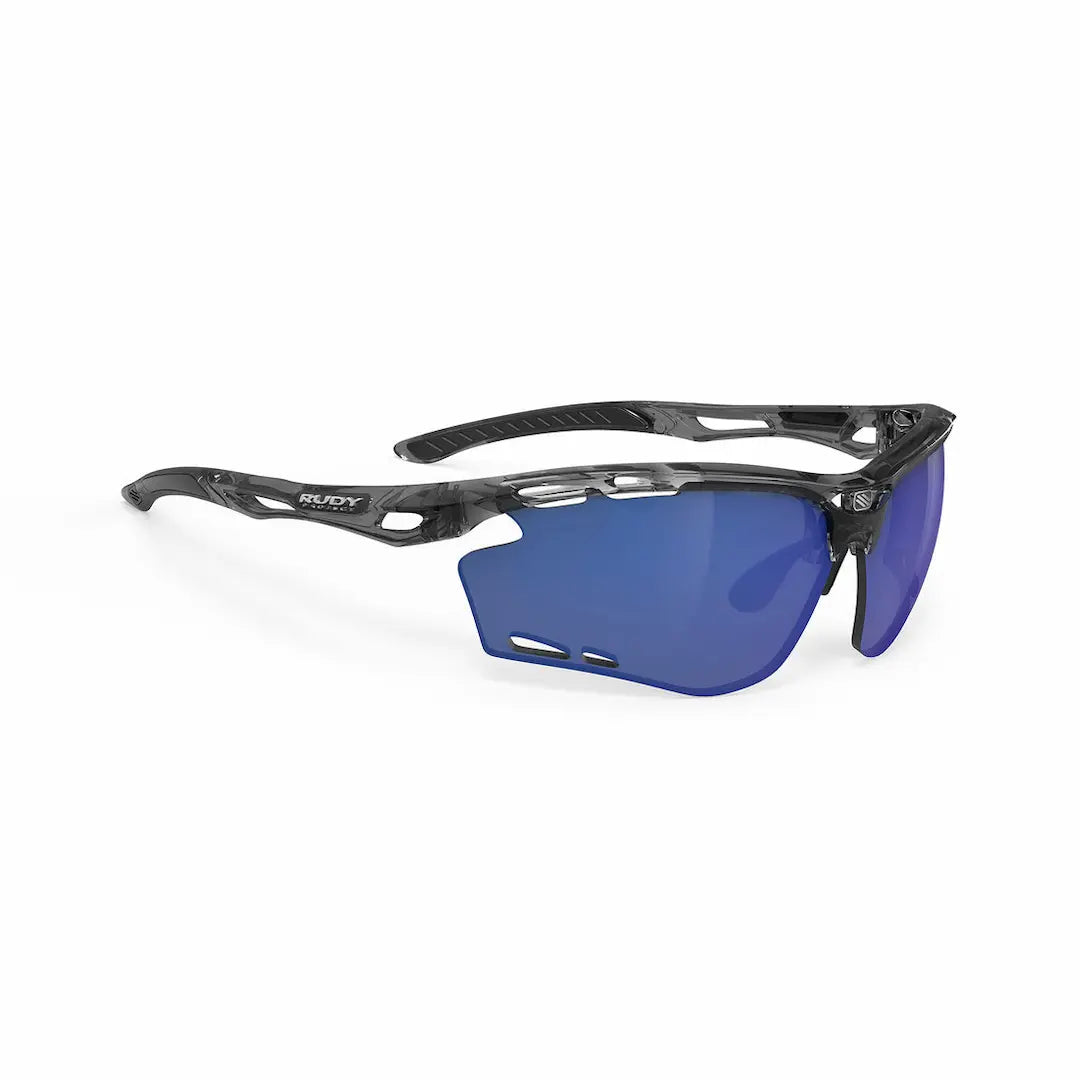
Adding prescription to wraparound sunglasses is possible, but it requires more care than converting a flat frame. The curve changes how light travels through the lens and may affect optical clarity.
A lab may need the frame’s base curve and wrap measurements. Some prescription labs use special compensated designs to reduce distortion across the curved lens.
Before ordering, ask:
- Does the lab make prescription lenses for this curve?
- What prescription range can it support?
- Will the finished lenses preserve the original wrap?
- Are extra measurements required?
- Is there a remake policy if the vision feels distorted?
Wraparound sunglasses are valuable for cycling, skiing, fishing, and other activities where side light can enter. Still, a poorly fitted prescription lens can cause blur, dizziness, or eye fatigue.
An experienced optician can help decide whether to keep the wraparound frame or choose a prescription sports frame made for your specific prescription.
How to Add Prescription to Sunglasses at Home
You should not try to cut or grind prescription lenses at home. Optical lenses need precise equipment, measurements, and finishing tools.
Home methods can damage the frame or produce lenses that are unsafe to wear. Even a small measurement error can move the optical center away from your eyes.
You can safely do a few preparation tasks at home:
- Clean and inspect the frame
- Find the frame size printed on the temple
- Locate your current prescription
- Measure the frame width
- Take clear photos for an online lab
- Compare professional quotes
- Choose a protective case
Avoid buying generic magnifying lenses and trying to force them into your sunglasses. These lenses do not correct your exact prescription and may cause discomfort.
Clip-on prescription lenses are another temporary option. They can work for simple reading needs, but they may add weight, slip out of place, or reduce the original sunglasses’ appearance.

Common Mistakes to Avoid
Knowing how to add prescription to sunglasses also means knowing what can go wrong. Most problems come from poor measurements, unsuitable frames, or unclear product choices.
Using an old prescription
An old prescription may no longer match your vision. Schedule an eye exam if your vision has changed or if you have new headaches, squinting, or trouble seeing road signs.
Forgetting the PD
Pupillary distance helps position the lenses in front of your eyes. If the PD is missing or inaccurate, the glasses may feel uncomfortable even when the prescription numbers are correct.
Choosing a frame that is too curved
Highly curved sunglasses can create optical challenges. Always ask whether the lab supports the frame’s base curve before paying.
Ignoring lens thickness
A strong prescription in a large frame can result in thick, heavy lenses. A smaller frame and high-index material may create a lighter result.
Assuming dark lenses protect the eyes
Tint affects brightness, not necessarily UV protection. Confirm that the lenses provide full UVA and UVB protection.
Skipping polarization details
Polarized lenses are useful for glare, but they can interact with phones, car displays, and some instrument panels. Think about where you will wear the sunglasses most.
Sending a valuable frame without protection
Use a hard case and secure packaging. Take photos of the frame before shipping, and check whether the service covers damage during transit.
In my experience, the most frustrating mistakes happen when people order attractive lenses first and ask about measurements later. The better approach is to confirm frame compatibility and prescription details before choosing color or coatings.
How to Check the Finished Prescription Sunglasses
When your prescription sunglasses arrive, inspect them before wearing them for a long drive or outdoor activity.
Check the following:
- Both lenses are secure
- The frame is not twisted
- The tint looks even
- There are no scratches
- The lenses do not rattle
- The frame sits level
- Your eyes feel comfortable
- Distance vision is clear
- Near vision works if included
- There is no strong distortion
It is normal to need a short adjustment period with a new prescription, especially with progressive lenses. However, severe dizziness, double vision, nausea, or persistent blur is not something to ignore.
Return to the optician or contact the lab if the sunglasses feel wrong. Do not bend the frame yourself, since a small change in angle can affect the optical measurements.
Prescription Sunglasses for Driving
Prescription sunglasses can make driving safer and more comfortable by reducing bright light and glare. Gray or brown lenses are common choices because they provide useful brightness control without major color changes.
Avoid lenses that are too dark for low-light conditions. Remove sunglasses when driving at night, in tunnels, during storms, or in other dim settings.
Polarized lenses can reduce glare from wet roads, but they may make some dashboard screens harder to read. Test your sunglasses in a safe setting before relying on them for a long trip.
A good driving pair should provide:
- Clear distance vision
- Full UV protection
- A stable fit
- Moderate, even tint
- Minimal distortion
- A frame that does not block peripheral vision
If you need progressive lenses, make sure the frame provides enough vertical space. Your optician can help position the distance zone for a natural driving posture.
How to Care for Prescription Sunglasses
Good care protects both the prescription lenses and the frame.
Use these habits:
- Rinse lenses with clean, lukewarm water.
- Apply a lens-safe cleaner.
- Dry with a clean microfiber cloth.
- Store sunglasses in a hard case.
- Keep them away from extreme heat.
- Place them with the lenses facing upward.
- Use both hands when taking them off.
- Have loose frames adjusted by an optician.
Do not clean lenses with paper towels, clothing, tissues, or household glass cleaner. These materials can create fine scratches or damage lens coatings.
Avoid leaving sunglasses on a hot car dashboard. High heat can warp plastic frames and damage coatings. Even a strong prescription lens is only useful when it remains clear and properly aligned.
Frequently Asked Questions About How to Add Prescription to Sunglasses
Can any sunglasses be made into prescription sunglasses?
No. Many full-rim and lightly curved frames can accept prescription lenses, but rimless, damaged, and highly curved frames may not. An optician or lens replacement lab should inspect the frame first.
Is it cheaper to replace sunglass lenses or buy new prescription sunglasses?
Replacing lenses may cost less when you already own a high-quality, well-fitting frame. Buying a new pair can be more affordable when the old frame is damaged or requires complex custom lenses.
Can prescription sunglasses be polarized?
Yes. Polarized prescription lenses are available in several materials, tints, and lens designs. They reduce reflected glare but may make some phone, car, or digital screens harder to see.
Do prescription sunglasses protect against UV rays?
They can, but tint alone does not guarantee UV protection. Choose lenses labeled to block 100% of UVA and UVB radiation.
Can you add prescription to wraparound sunglasses?
Often, yes, but wraparound frames require special measurements and compatible lens designs. Ask the lab about the frame’s curve, prescription limits, and distortion control before ordering.
How long does it take to add prescription to sunglasses?
Simple lens replacement may take several days to a couple of weeks. Complex prescriptions, progressive lenses, specialty sports frames, and custom coatings may take longer.
Can you put prescription lenses in designer sunglasses?
Many designer frames can be converted if they are in good condition and have a suitable shape. The brand does not guarantee compatibility, so have the frame checked before ordering.
[CodeImg is intentionally omitted from the FAQ section.]
Conclusion
Adding prescription to sunglasses is usually a straightforward process when you start with a current eye prescription and a suitable frame. Choose a trusted optician or reputable lens replacement service, confirm your PD and frame measurements, and select lens features that match your daily needs.
Polarization can reduce glare, UV protection helps shield your eyes, and the right lens material can improve comfort and durability. Avoid DIY lens cutting, rushed measurements, and frames that cannot safely support your prescription.
Take your favorite sunglasses to an optical professional for an assessment, compare a complete quote, and choose lenses that provide both clear vision and reliable outdoor protection.

Rubel Miah is the Senior Editor at MyStyleGrid.com, where he brings a sharp editorial eye and an unshakable love for fashion to everything he does. A true style addict, Rubel lives and breathes trends, from streetwear to high fashion, and has a knack for turning inspiration into impactful stories. With years of experience in fashion journalism and digital media, he curates content that empowers readers to express themselves through style. When he’s not editing features or forecasting the next big thing, you’ll find him hunting down vintage pieces or capturing street style moments around the city.