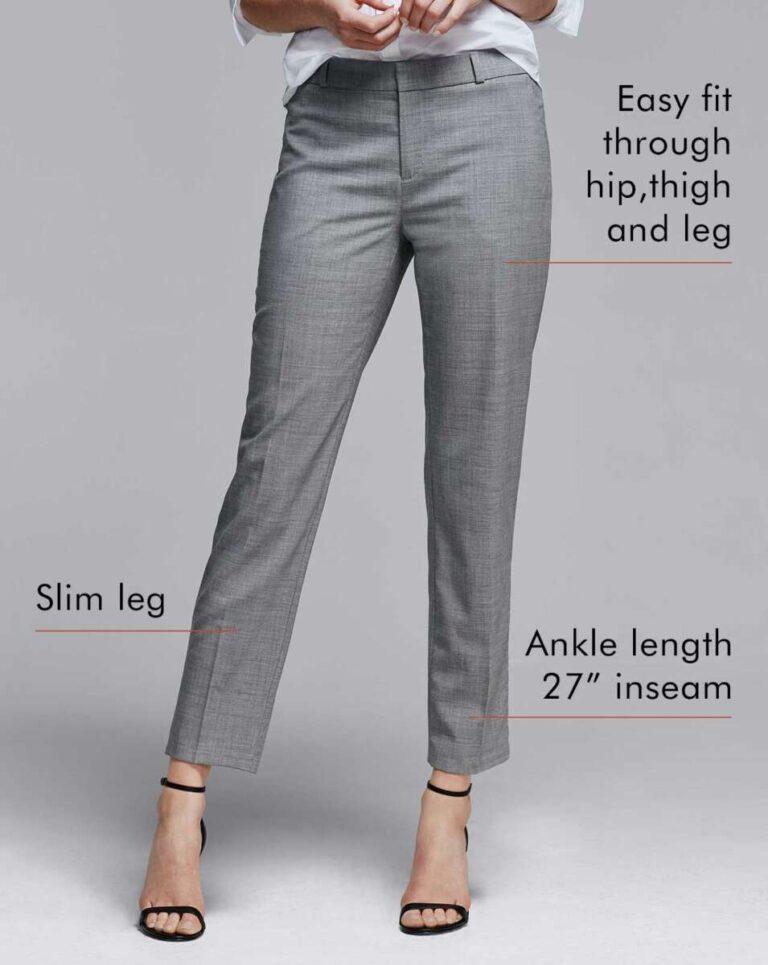
Women's dress pants should fit smoothly at the waist, seat, hips, and thighs without pulling, sagging, or restricting movement.
Knowing how should women's dress pants fit can make shopping much easier. The right pair should look polished while still letting you sit, walk, and bend with ease. This guide explains each fit point, common mistakes, useful measurements, and when tailoring can make a good pair feel custom-made.
What a Proper Fit Looks Like
The best dress pants follow your shape without squeezing it. They should create a clean line from the waist to the hem, with no strong wrinkles or gaps.
When checking how should women's dress pants fit, look for these signs:
• The waistband sits flat against your body.
• The front closure lies smooth and stays closed.
• The pockets do not gape or pull open.
• The seat covers your body without sagging.
• The thighs allow movement without tight drag lines.
• The legs hang straight or follow the cut of the pants.
• The hem hits at a flattering point for the shoe you plan to wear.
Dress pants do not need to feel as loose as pajamas. They should feel secure, much like a well-fitted jacket. You should notice the quality of the fabric and cut, not constant pressure at your waist or hips.
One useful test is to wear the pants for five minutes in the fitting room. Stand, sit, walk, and reach forward. A pair that looks perfect while standing may feel too tight once you sit.
How Should Women's Dress Pants Fit at the Waist?
The waistband should rest comfortably at your natural waist or at the intended rise. It should touch your body without digging in, rolling, or sliding down.


You should be able to place one or two fingers between your waist and the waistband. This is not a strict rule, but it offers a helpful starting point. The right amount of room depends on the fabric, rise, and design.
A waistband that is too tight may cause:
• Deep red marks after wearing the pants
• Horizontal wrinkles across the front
• A button that strains or pulls
• Discomfort when sitting
• A visible bulge above the waistband
A waistband that is too loose may cause:
• Gaping at the back
• Pants that slide down while walking
• Excess fabric at the front
• A belt that bunches the waistband
• A messy line under a tucked-in shirt
When considering how should women's dress pants fit, remember that the waistband should not carry all the stress. If the hips or seat are too small, the waistband may pull even when its measurement seems correct.
High-rise pants should sit near the narrowest part of your torso or at the rise stated by the brand. Mid-rise pants usually sit below the natural waist. The label alone does not guarantee where the pants will sit because rises vary between brands.


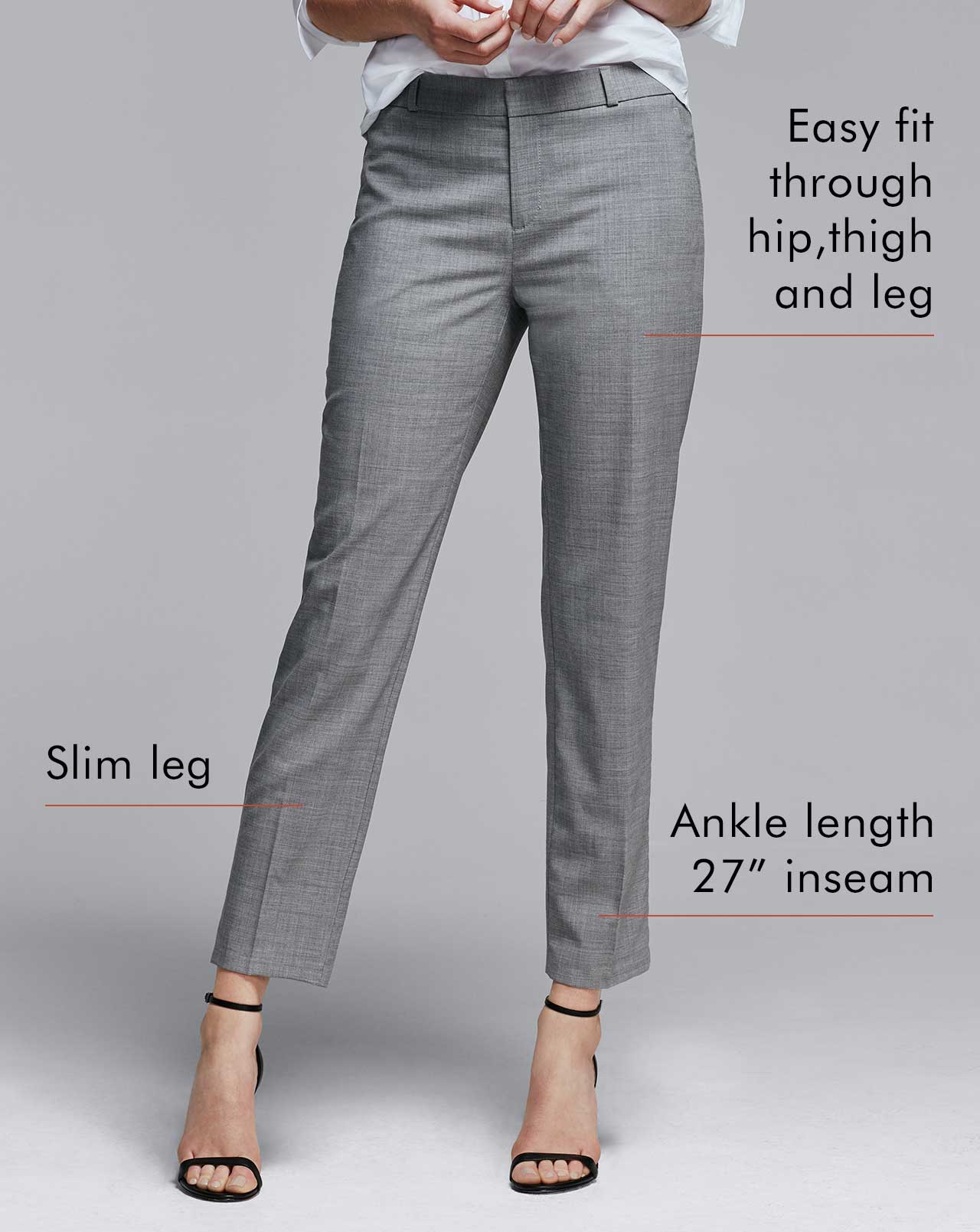
How Should Dress Pants Fit at the Hips and Seat?
The hips and seat should have enough room for your body to move without creating folds. The fabric should skim this area rather than cling tightly or hang away from it.
Check the side seams first. They should fall straight from the waistband toward the hem. If a side seam swings toward the front, the pants may be too tight across the hips. If it swings toward the back, the cut may be too full or the pants may need adjustment.
Look at the back of the pants as you stand and sit. A good fit has:
• No deep horizontal pulls under the waistband
• No sagging fabric below the seat
• No pocket openings that spread
• No tight crease across the fullest part of the hips
• A smooth center-back seam
Back pockets can make fit easier to judge. If they pull open, the pants may be too small across the seat. If they look very loose and wrinkled, the pants may have too much fabric in that area.
A common fitting challenge occurs when the waist is smaller than the hips. Many women size up to fit the hips, then deal with a large waistband. This is not a personal failure. It is a normal body-shape difference, and a tailor can often fix the waistband.

How Should Women's Dress Pants Fit Through the Thighs?
The thigh area should allow you to walk and sit without resistance. You should not feel the fabric pulling every time you take a step.
Stand naturally and pinch a small amount of fabric at the inner thigh. You need enough room for movement, but you do not need several inches of extra cloth. The amount varies by the pant style and fabric stretch.
Watch for these signs of a tight thigh:


• Diagonal wrinkles that point toward the crotch
• Fabric pulling across the upper leg
• A crotch seam that feels strained
• Restricted movement when sitting
• Shiny areas caused by fabric tension
Very loose thighs can also affect the shape. Extra cloth may create wrinkles, make the legs look wider, or cause the pants to twist.
When learning how should women's dress pants fit, test the pants with your usual undergarments. Thick shapewear or layered clothing can change the fit. Try to recreate the outfit you expect to wear.

How Should Dress Pants Fit at the Crotch and Rise?
The rise is the distance from the crotch seam to the top of the waistband. It affects comfort, coverage, and the way the pants sit on your body.
The crotch should sit close to the body without pressing into it. You should not see a sagging pouch below the crotch, and you should not feel a sharp pull when you sit.
A rise that is too short may cause:
• A waistband that slides down
• Pulling across the front
• Tightness in the crotch
• A wedged feeling when sitting


A rise that is too long may cause:
• Excess fabric below the waistband
• A dropped crotch appearance
• Wrinkles near the zipper
• A waistband that sits higher than expected
The right rise depends on your torso length, hip shape, and preferred level of coverage. Two people with the same waist size may need different rises.
Sit in the pants for at least one minute. If the crotch becomes uncomfortable right away, do not assume the pants will “break in.” Fabric may soften, but a poor rise usually remains a poor rise.
How Should Women's Dress Pants Fit in the Front?
The front should look smooth when you stand and sit. The zipper should lie flat, and the closure should not pull to one side.
Small wrinkles can appear when you move. That is normal. The problem is constant tension that creates strong lines around the zipper, pockets, or upper thighs.
Check the front from several angles:
• Stand straight with your arms relaxed.
• Turn to the side.
• Sit with both feet on the floor.
• Take a few normal steps.
• Bend slightly as if picking up a file or bag.
If the front pockets gape, the pants may be too tight across the hips. If the zipper ripples, the front may be too small, the fabric may be too light, or the construction may be poor.
A flat-front style often creates a sleek look, but it can show fit problems quickly. Pleated pants may offer more room, though pleats should not flare open when you stand.

How Should Dress Pants Fit in the Leg?
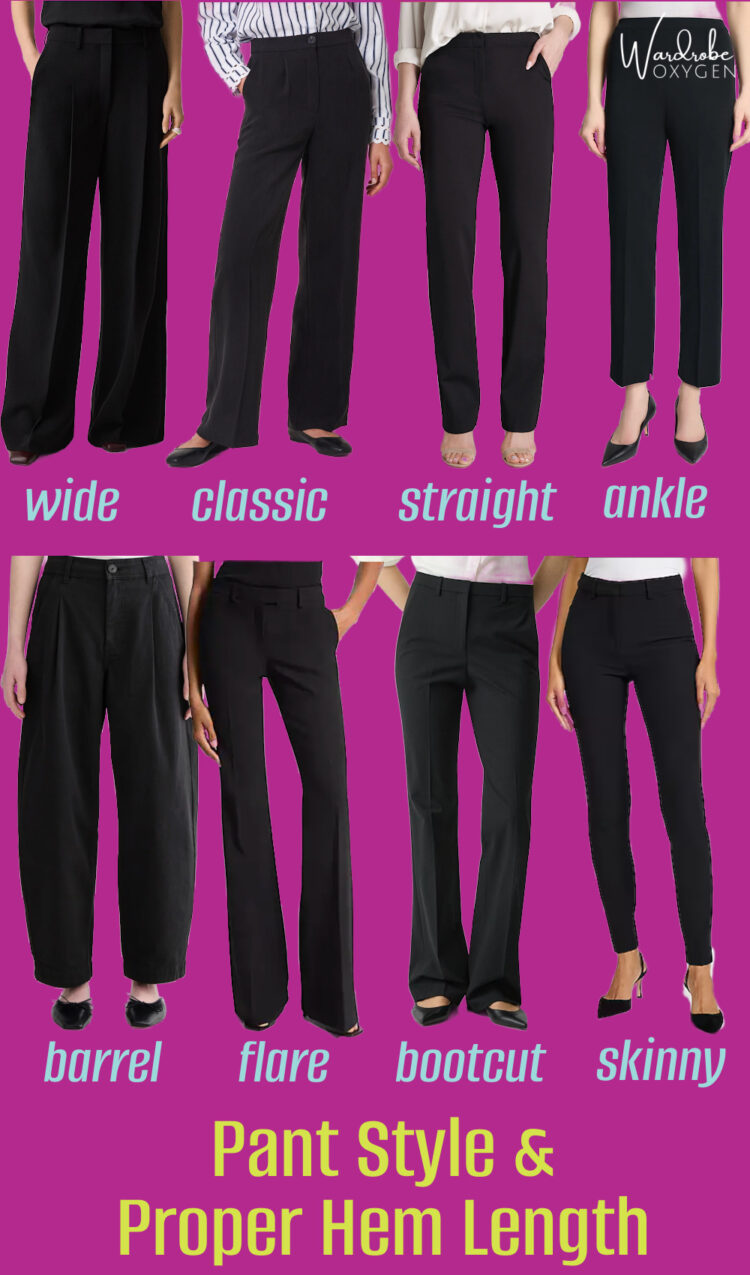
The leg shape should match the style you want. Straight-leg, wide-leg, bootcut, flare, and tapered pants each create a different line.
The leg should hang smoothly without twisting. Look at the crease if the pants have one. It should run down the front of the leg rather than turning toward the inner or outer seam.
Here is how common styles usually fit:
• Straight-leg pants keep a similar width from the thigh to the hem.
• Tapered pants narrow toward the ankle.
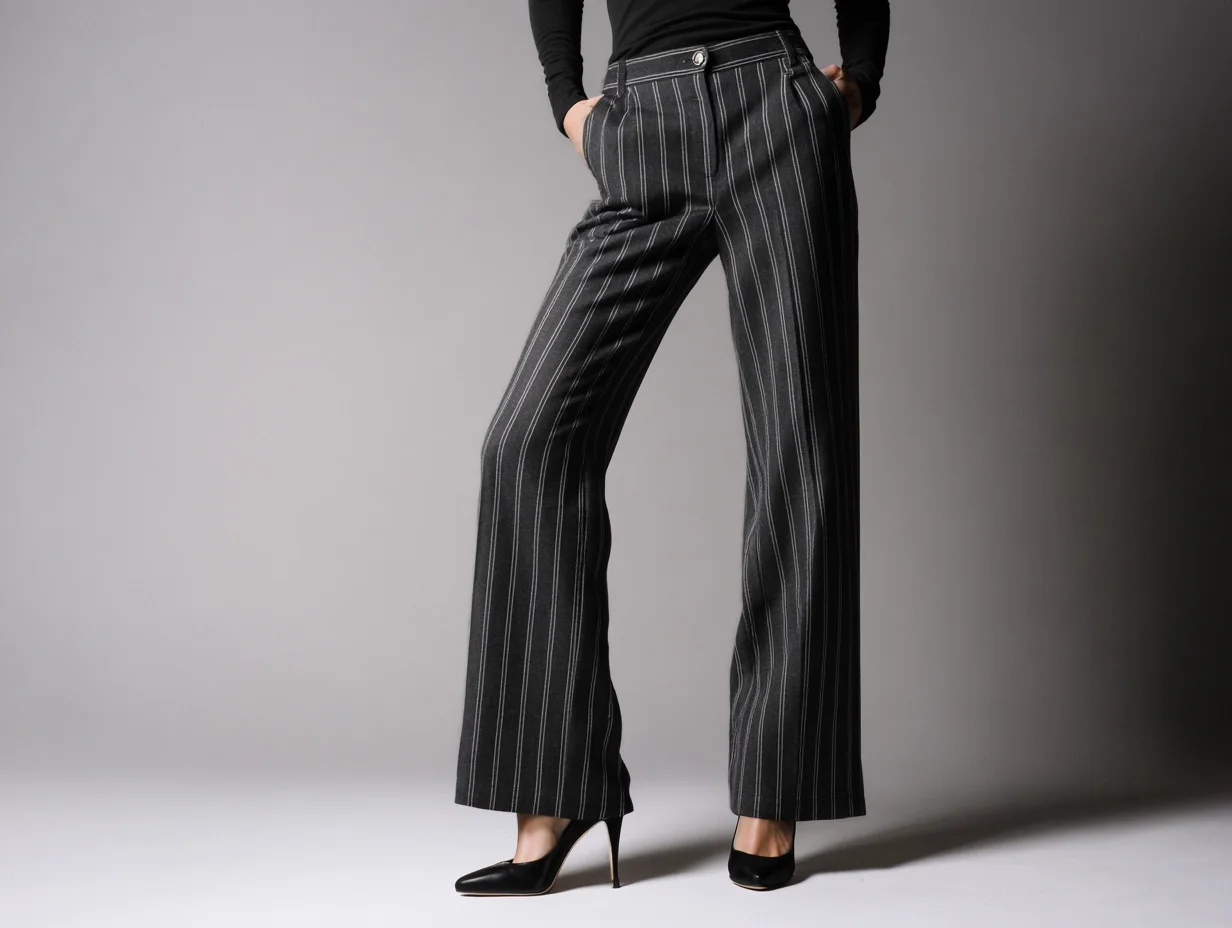
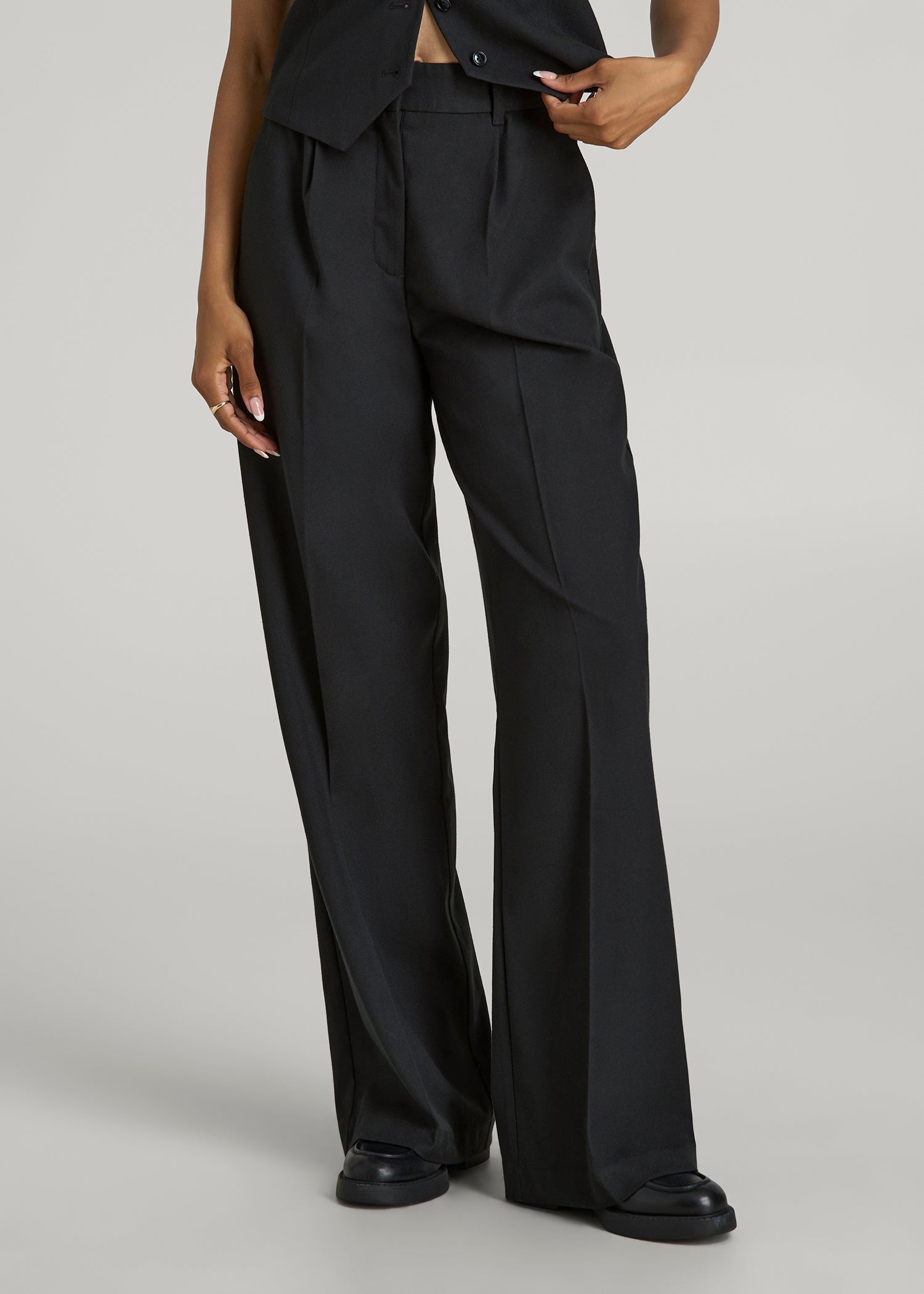
• Wide-leg pants have room from the hip through the hem.
• Bootcut pants widen slightly below the knee.
• Flared pants widen more clearly from the knee down.
Do not judge the size only by the ankle or hem. A wide-leg pair may feel roomy by design, while a tapered pair may fit close without feeling tight.
When deciding how should women's dress pants fit, focus on balance. The leg should suit your body and outfit without creating drag lines or making you adjust the pants every few steps.
How Should the Hem of Dress Pants Fit?
The hem should work with both the pant style and your shoes. There is no single correct length for every pair of dress pants.
Traditional trouser hems often create a slight break over the shoe. A break is the small fold where the fabric meets the top of the shoe. A modern straight or slim pant may have little or no break.
Common hem choices include:
• Full length, which reaches the top of the shoe
• Ankle length, which ends near the ankle bone
• Cropped length, which ends higher on the lower leg
• Long wide-leg length, which nearly touches the floor without dragging
Wear the shoes you plan to use most often when checking the hem. A pair hemmed for flats may look too short with heels. A pair hemmed for heels may drag with sneakers.
The back hem should not sweep the floor. Long pants can collect dirt, wear through at the heel, and create a safety risk on stairs.

Fabric, Stretch, and Fit
Fabric changes how dress pants fit throughout the day. Wool blends, cotton blends, polyester, rayon, linen, and stretch fibers all behave differently.
A small amount of elastane or spandex can improve comfort. It does not mean the pants should fit extremely tight. Stretch fabric can hide tension in the fitting room, then become loose after hours of wear.
Consider these fabric details:
• Wool blends often hold a sharp shape and resist wrinkles.
• Polyester blends can offer durability and easy care.
• Rayon blends may feel soft but can need careful washing.
• Linen blends feel cool but may wrinkle more.
• Stretch fabrics allow movement but may relax with wear.
Try sitting for several minutes in stretch pants. If the waistband feels perfect at first but becomes loose after movement, the fabric may need a firmer fit at the waist.
Care labels matter, too. Some pants shrink slightly with improper washing. Others lose their shape in a hot dryer. Follow the label so the original fit remains stable.

How to Check Dress Pants in a Fitting Room
A careful fitting process can prevent most return trips. You do not need special tools, but you do need to move.
Use this simple checklist:
-
Put on the shoes and top you expect to wear.
-
Fasten the pants fully without holding your stomach in.
-
Check the waistband while standing naturally.
-
Turn sideways and inspect the rise and seat.
-
Sit in a chair and notice pressure points.
-
Walk at a normal pace.
-
Bend slightly and reach forward.
-
Check the pockets, zipper, and center crease.
-
Look at the hem with your planned shoes.
-
Take a photo from the front, side, and back if store rules allow it.
Do not judge pants while twisting your body into a pose. The goal is to see how they work during real life.
In my experience with clothing fit, the most useful lesson is simple: comfort reveals problems faster than the mirror. A pair may look elegant for ten seconds, but if you spend the day pulling at the waistband, it is not the right fit.
Common Fit Problems and What They Mean
Fit problems often point to a specific area that needs attention. Learning to read wrinkles can help you choose a better size or cut.
Waistband gapes at the back
This usually means the waist is larger than your back measurement. Try a smaller size if the hips still fit, or choose pants with a contoured waistband. A tailor can also remove extra fabric from the center back.
Pockets pull open
Gaping pockets often signal tightness across the hips or seat. Try a larger size, a curvier cut, or a style with different pocket placement.
Horizontal wrinkles across the hips
These wrinkles usually mean the pants need more room. Do not rely on pressing to solve the issue. A larger size or fuller cut may work better.
Excess fabric below the seat
This can mean the rise is too long or the seat has more fabric than you need. A tailor may adjust the back rise, but major changes can be expensive.
Pants twist around the legs
Twisting may come from poor construction, an incorrect fit, or a body-shape mismatch. Check whether the side seams and creases stay straight as you walk.
Waistband rolls or folds
A rolling waistband may be too tight, too soft, or poorly shaped for your body. A wider waistband or a structured fabric can provide better support.
Fabric pulls at the zipper
This often means the front is too tight. It can also result from a zipper that is too short or poorly sewn, so inspect the garment before assuming the size is wrong.
Should Dress Pants Fit Tightly or Loosely?
Dress pants should fit close enough to look neat but loose enough for normal movement. The ideal fit is between tight and oversized.
Tight pants are not automatically more polished. They can show every pull line and become uncomfortable during a long workday. Very loose pants can look untidy and may overwhelm your shape.
Use the “movement and recovery” test:
• Movement: Can you sit, walk, and bend without strain?
• Recovery: After movement, does the fabric return to a smooth shape?
If the fabric stays stretched or the seams feel stressed, the pants are likely too small. If the fabric falls into deep folds even when you stand still, they may be too large.
This balance is central to how should women's dress pants fit. A professional fit supports your day instead of demanding constant attention.
When to Size Up, Size Down, or Tailor
Sizing labels are not consistent across brands. A size number is only a starting point, not a measurement of your body or value.
Size up when:
• The waistband strains when fastened.
• The pockets pull open.
• The seat feels tight.
• You cannot sit comfortably.
Size down when:
• The waistband slides down.
• The seat sags.
• You see excess fabric at the front.
• The pants twist because the cut is too large.
Choose tailoring when the main size fits but one area needs a small change. Common alterations include shortening the hem, taking in the waist, adjusting the seat, and refining the leg opening.
Do not buy pants that are several sizes too large with the hope that tailoring will solve everything. Major changes can affect pockets, pleats, balance, and the original shape of the garment.
A good tailor should pin the pants while you wear the shoes and undergarments you plan to use. This produces a more accurate result.
How Body Shape Affects Dress Pants Fit
Body shape can influence which cuts feel easiest, but it does not limit what you can wear. The goal is to find a pattern that respects your proportions.
If you have fuller hips compared with your waist, look for:
• Curvy cuts
• Contoured waistbands
• Stretch blends
• Flat-front designs with enough hip room
If you have a straighter shape, you may prefer:
• Mid-rise styles
• Waistbands with structure
• Pleats for added room
• Straight or wide-leg cuts
If you carry more fullness at the stomach, consider:
• A smooth, supportive waistband
• A higher rise
• Front closures that lie flat
• Fabrics with enough weight to drape well
If you have a long or short torso, compare the rise carefully. The same labeled rise may sit very differently on different bodies.
These are starting points, not strict rules. Personal comfort, workplace needs, and style preference matter just as much as body proportions.
Dress Pants for Work, Events, and Everyday Wear
The right fit can vary by setting. Work pants often need comfort for long sitting, while event pants may prioritize a sharp line.
For work, choose pants that allow:
• Comfortable sitting for several hours
• Easy movement between meetings
• A smooth waistband under blouses
• Fabric that resists wrinkling
For formal events, check the fit while standing and walking. A small amount of structure can look refined, but the pants should not restrict your stride.
For travel, consider stretch, wrinkle resistance, and a waistband that remains comfortable while seated. A fabric that looks polished but feels stiff may not serve you well on a long day.
I once learned this lesson from a beautifully cut pair that looked perfect in a short try-on. After a full day, the waistband felt rigid and the fabric creased behind the knees. The better choice would have been a slightly softer blend with the same clean shape.
Care Tips That Preserve the Fit
Even well-fitting pants can change if they are washed or stored poorly.
Follow these care habits:
• Read the care label before washing.
• Avoid high heat unless the label allows it.
• Hang trousers by the waistband or use a proper trouser hanger.
• Give wool and structured pants time to air out.
• Do not stretch the waistband while pulling the pants on.
• Press with the correct heat setting.
• Repair loose seams before they become larger problems.
If pants feel tighter after washing, check whether they shrank or whether the fabric has become less flexible. If they feel looser, the fibers may have relaxed from heat, moisture, or repeated wear.
Proper care helps the pants keep their shape, which supports a consistent answer to how should women's dress pants fit over time.
Frequently Asked Questions About How Should Women's Dress Pants Fit
Should dress pants be tight around the waist?
No. The waistband should feel secure but should not dig in, roll, or leave painful marks. You should be able to sit and breathe comfortably without the button or zipper straining.
How much room should be in women's dress pants?
There should be enough room for normal movement without excess folds. The correct amount depends on the cut, fabric, rise, and your body shape, but the seat, thighs, and crotch should never feel restricted.
Should dress pants have a crease in the front?
Many tailored trousers have a front crease, and it should usually fall straight down the leg. A crease that twists or breaks sharply can signal poor construction or an incorrect fit.
Should you size up in dress pants?
Size up if the waist, hips, seat, or thighs feel tight or if the pockets gape. If the larger size fits the hips but leaves a loose waist, tailoring or a curvy cut may provide a better solution.
How should wide-leg dress pants fit?
Wide-leg pants should fit smoothly at the waist and hips, then fall away from the body with a clean line. They should not drag on the floor or create heavy folds around the crotch and seat.
Can a tailor fix dress pants that are too tight?
A tailor can sometimes let out seams if extra fabric is available, but the options are limited. It is usually easier to alter pants that are slightly large than pants that are significantly too small.
Conclusion
The answer to how should women's dress pants fit is clear: they should sit smoothly at the waist, cover the seat, allow movement through the hips and thighs, and hang cleanly to the hem. Check the fit while standing, sitting, walking, and wearing your planned shoes.
Do not let a size label make the decision for you. Choose the cut that supports your body, then use tailoring for small adjustments when needed. Try these checks on your next pair of pants, and share your best fitting tip or explore more practical style guides for a wardrobe that works harder for you.
Madison Clark is a footwear expert and the voice behind MyStyleGrid.com. She specializes in honest shoe reviews, style tips, and practical guides to help readers find the perfect pair for any occasion. With years of experience in blogging and content creation, Madison makes footwear knowledge simple, stylish, and easy to follow.