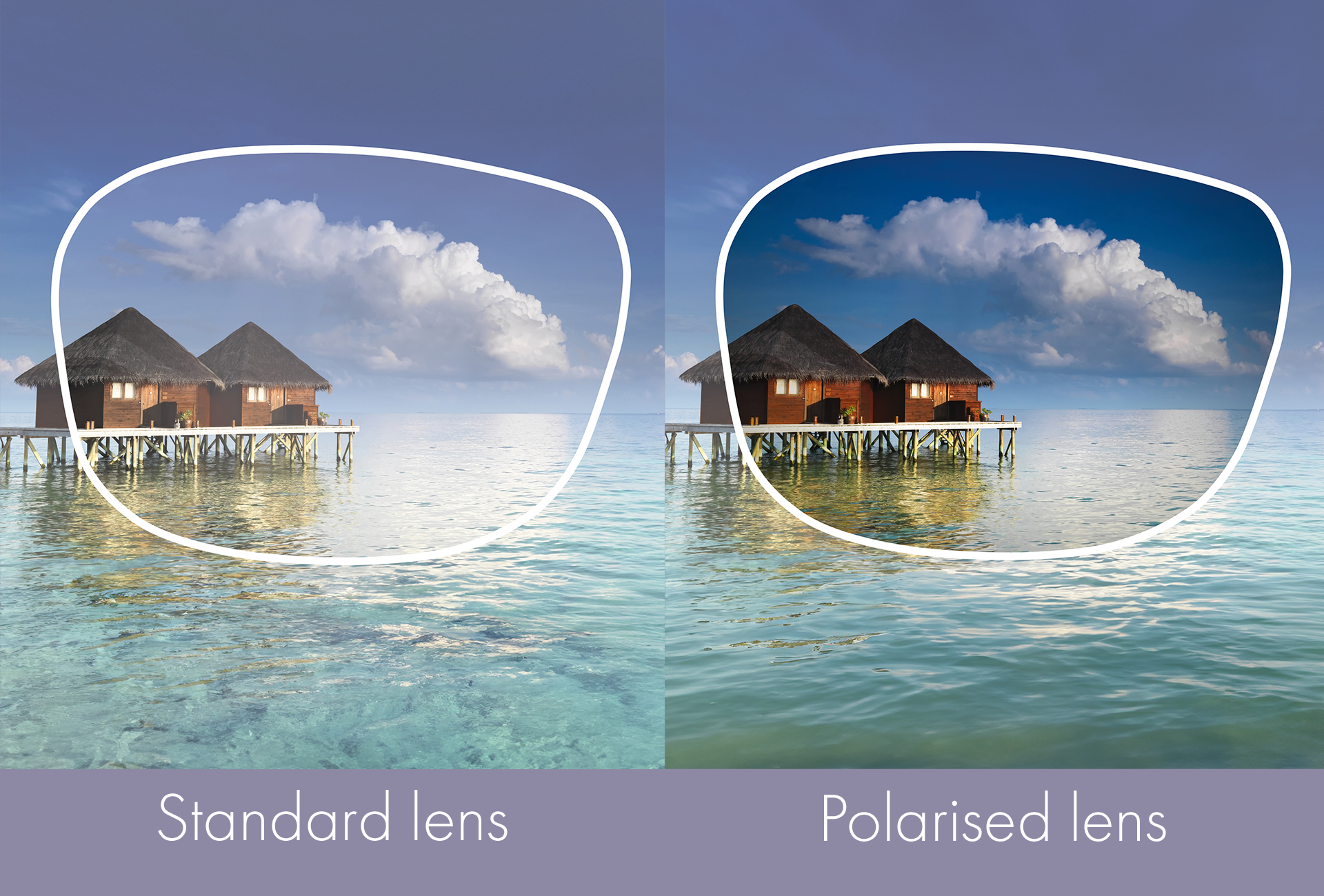
Polarised lenses filter reflected light, reducing glare and improving visual comfort in bright outdoor settings.
If you have ever squinted on a sunny road, lake, or beach, you have felt the problem these lenses solve. This guide explains what is a polarised lens, how it works, where it helps, and when it may not be the best choice.
What Is a Polarised Lens?
A polarised lens is an optical lens with a special filter that blocks much of the intense, reflected light known as glare. This filter is often placed between layers of lens material in sunglasses, sports eyewear, and some prescription lenses.
To understand what is a polarised lens, picture sunlight bouncing off a flat surface. Light spreads in many directions, but reflected light from water, snow, glass, and pavement often travels in a more organized, horizontal pattern. A polarizing filter blocks much of this horizontal light before it reaches your eyes.
The result is a clearer and more comfortable view. Colors may also look richer because the lens reduces the bright haze that can wash out detail.
Polarised lenses do not simply make everything darker. Regular tinted lenses reduce light across the whole view. Polarised lenses selectively reduce a major source of glare while allowing useful light to pass through.
How Do Polarised Lenses Work?
The easiest way to understand what is a polarised lens is to compare its filter to a narrow gate. The gate allows some light waves through but blocks light waves moving in a certain direction.
Sunlight is usually unpolarized. After it reflects from a smooth, shiny surface, much of it becomes horizontally polarized. This reflected light can enter your eyes as harsh glare. The polarizing filter is designed to block much of that glare.
A simple example
Imagine driving after a light rain. The wet road reflects sunlight toward your windshield. This reflection can create bright patches that hide lane markings, cars, or road edges.
Polarized sunglasses can reduce some of that reflected brightness. They cannot remove every bright spot, but they may make the scene easier to see and less tiring.
Polarized versus tinted lenses
The main difference is how each lens controls light:
• Tinted lenses reduce the overall amount of light that enters the eye.
• Polarised lenses reduce light from certain directions, especially reflected glare.
• Photochromic lenses become darker when exposed to ultraviolet light, but they are not always polarized.
• Mirrored lenses reflect some light away from the eye, but they are not automatically polarized.
A lens can combine several features. For example, sunglasses may be polarized, mirrored, tinted, and rated for full ultraviolet protection.

What Are the Main Benefits of Polarised Lenses?
Knowing what is a polarised lens helps you understand why these lenses are popular for outdoor use. Their value is not just cosmetic. They can improve comfort and make details easier to notice in bright conditions.
Reduced glare
Glare can make you squint and can hide important details. Polarized sunglasses are especially useful around:
• Water
• Wet pavement
• Snow and ice
• Car hoods and windshields
• Glass buildings
• Light-colored sand
• Ski slopes
Reducing glare may make outdoor activities feel more relaxed. Many people notice less eye strain during long drives or days near the water.
Better visual comfort
Bright reflected light can cause discomfort even when your eyes are healthy. Polarized lenses reduce this visual stress by controlling the direction of incoming light.
They do not treat eye disease or replace medical care. However, they can be a practical comfort tool for people who spend time outdoors.
Improved contrast and detail
When glare is reduced, objects may look more defined. Road markings, fishing lines, rocks under shallow water, and changes in snow texture can become easier to see.
This benefit depends on the light, surface, lens quality, and fit. Polarization is not a guarantee of perfect vision in every setting.
More natural color
Strong glare can create a pale veil across your view. Removing some of that veil may make colors seem deeper and more natural.
The effect is often noticeable on blue water, green grass, and bright landscapes. The lens tint still affects the final color, so different sunglasses can produce different results.
Are Polarised Lenses Good for Driving?
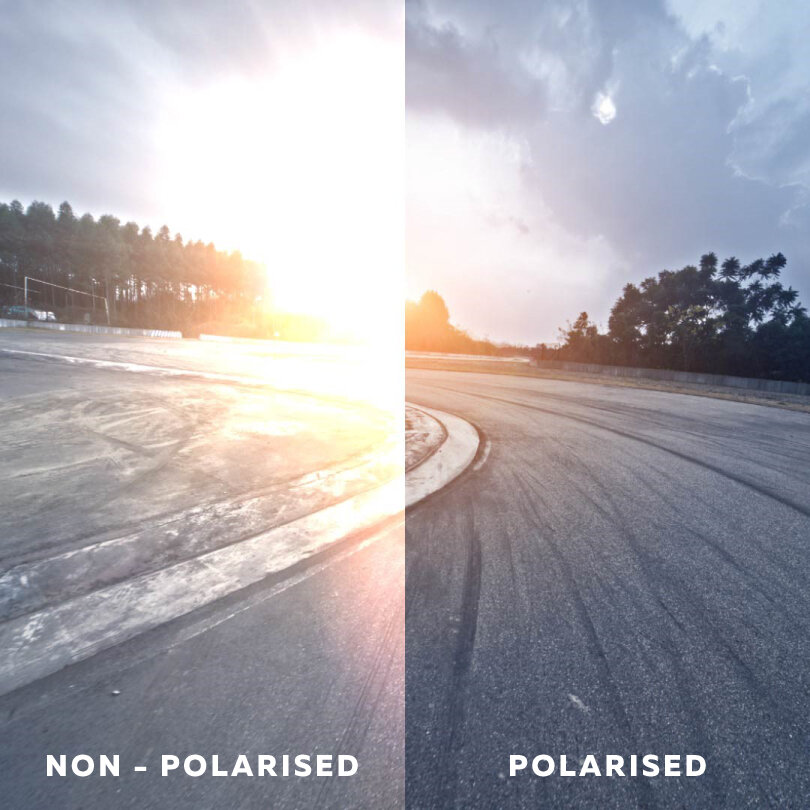
For many drivers, polarized lenses can reduce glare from roads, dashboards, and nearby vehicles. This may improve comfort during daytime driving, especially when the pavement is wet or the sun is low.
However, what is a polarised lens able to do while driving has limits. Polarization cannot remove glare from every angle, and it does not make nighttime driving safer. You should never wear dark sunglasses at night unless a qualified eye-care professional specifically recommends them.
Some vehicle displays use liquid crystal technology. Polarized sunglasses may make these screens appear dim, distorted, or completely dark at certain angles. This can affect dashboard displays, gas pumps, smartphones, and navigation screens.
Before buying polarized sunglasses for driving, test them with your car’s displays. Also check that the frames fit securely and do not block side vision.