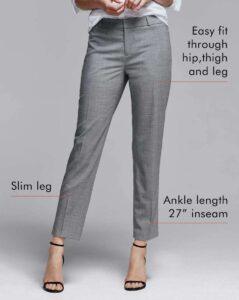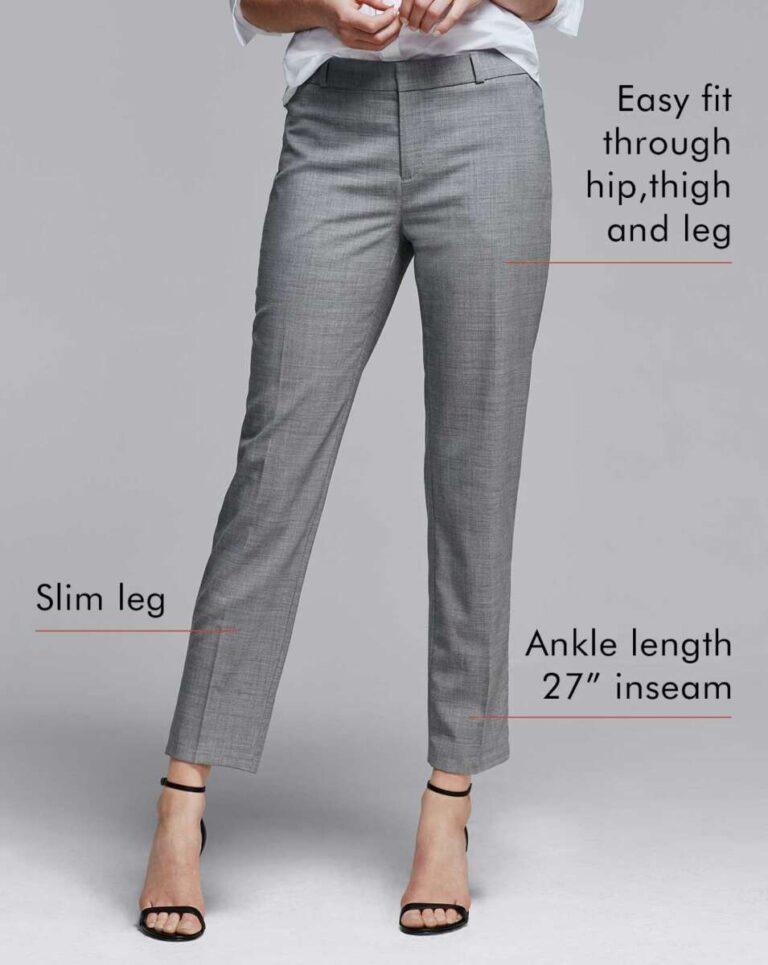
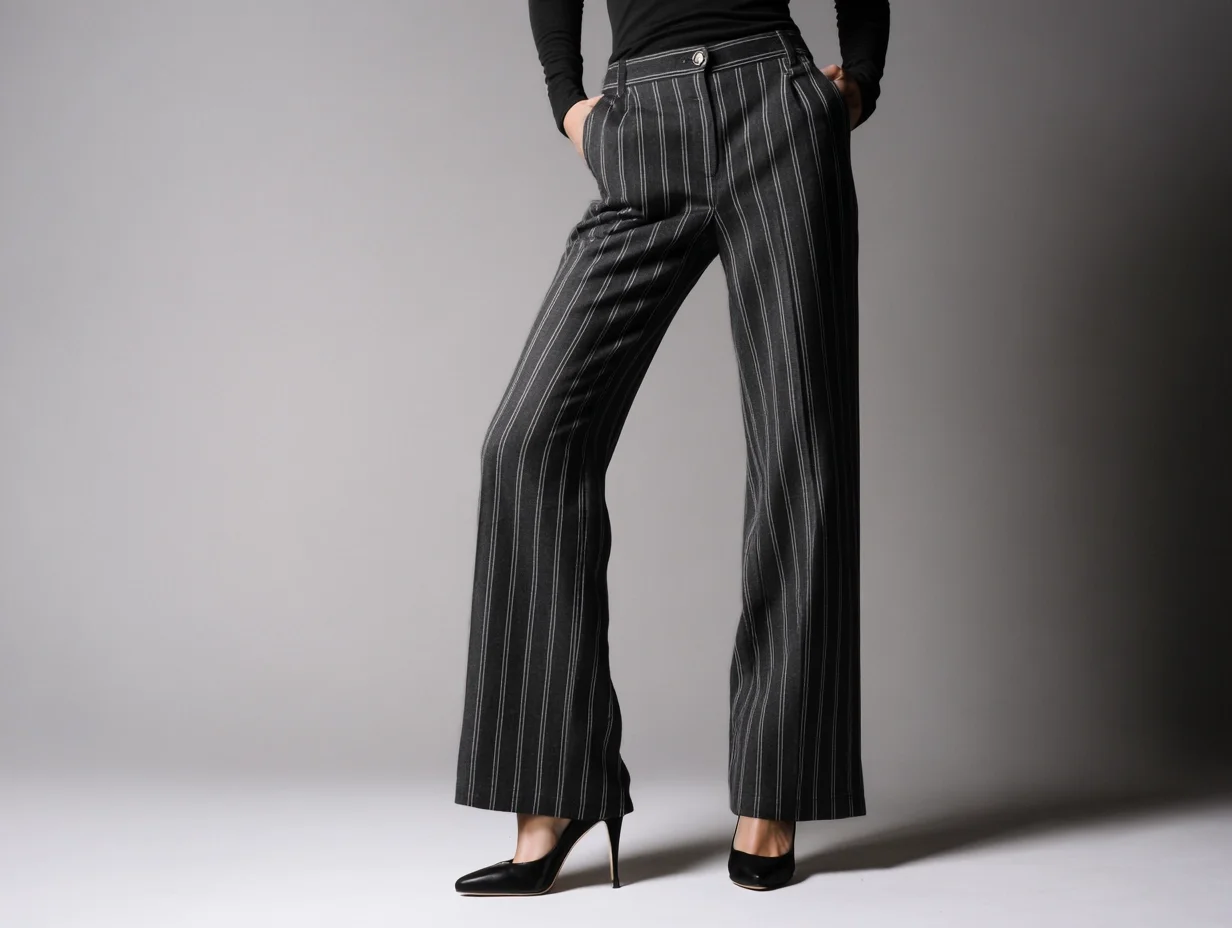
Women's dress pants should fit smoothly at the waist, seat, hips, and thighs without pulling, sagging, or restricting movement.
Knowing how should women's dress pants fit can make shopping much easier. The right pair should look polished while still letting you sit, walk, and bend with ease. This guide explains each fit point, common mistakes, useful measurements, and when tailoring can make a good pair feel custom-made.
What a Proper Fit Looks Like
The best dress pants follow your shape without squeezing it. They should create a clean line from the waist to the hem, with no strong wrinkles or gaps.
When checking how should women's dress pants fit, look for these signs:
• The waistband sits flat against your body.
• The front closure lies smooth and stays closed.
• The pockets do not gape or pull open.
• The seat covers your body without sagging.
• The thighs allow movement without tight drag lines.
• The legs hang straight or follow the cut of the pants.
• The hem hits at a flattering point for the shoe you plan to wear.
Dress pants do not need to feel as loose as pajamas. They should feel secure, much like a well-fitted jacket. You should notice the quality of the fabric and cut, not constant pressure at your waist or hips.
One useful test is to wear the pants for five minutes in the fitting room. Stand, sit, walk, and reach forward. A pair that looks perfect while standing may feel too tight once you sit.
How Should Women's Dress Pants Fit at the Waist?
The waistband should rest comfortably at your natural waist or at the intended rise. It should touch your body without digging in, rolling, or sliding down.
You should be able to place one or two fingers between your waist and the waistband. This is not a strict rule, but it offers a helpful starting point. The right amount of room depends on the fabric, rise, and design.
A waistband that is too tight may cause:
• Deep red marks after wearing the pants
• Horizontal wrinkles across the front
• A button that strains or pulls
• Discomfort when sitting
• A visible bulge above the waistband
A waistband that is too loose may cause:
• Gaping at the back
• Pants that slide down while walking
• Excess fabric at the front
• A belt that bunches the waistband
• A messy line under a tucked-in shirt
When considering how should women's dress pants fit, remember that the waistband should not carry all the stress. If the hips or seat are too small, the waistband may pull even when its measurement seems correct.
High-rise pants should sit near the narrowest part of your torso or at the rise stated by the brand. Mid-rise pants usually sit below the natural waist. The label alone does not guarantee where the pants will sit because rises vary between brands.
How Should Dress Pants Fit at the Hips and Seat?
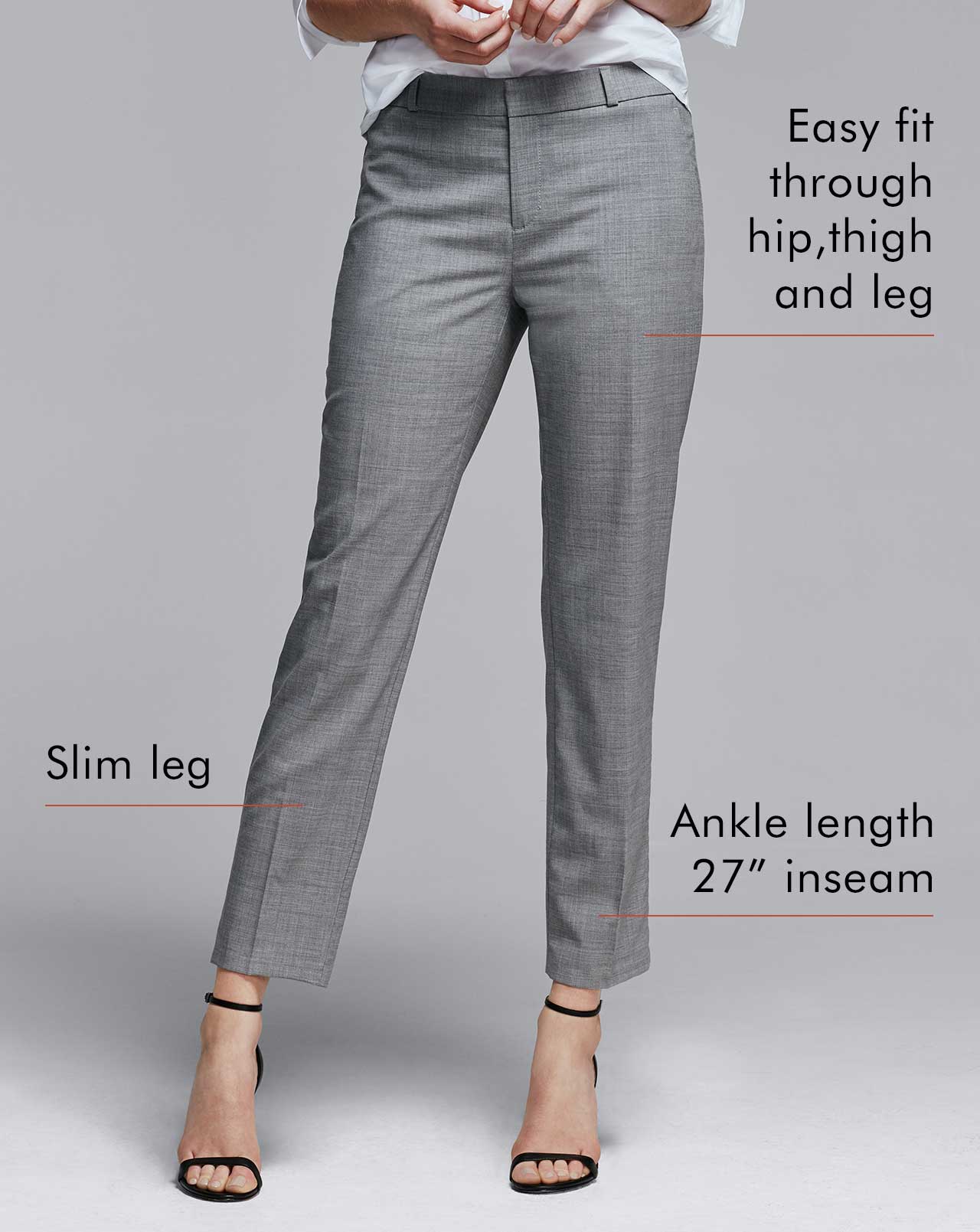
The hips and seat should have enough room for your body to move without creating folds. The fabric should skim this area rather than cling tightly or hang away from it.
Check the side seams first. They should fall straight from the waistband toward the hem. If a side seam swings toward the front, the pants may be too tight across the hips. If it swings toward the back, the cut may be too full or the pants may need adjustment.
Look at the back of the pants as you stand and sit. A good fit has:
• No deep horizontal pulls under the waistband
• No sagging fabric below the seat
• No pocket openings that spread
• No tight crease across the fullest part of the hips
• A smooth center-back seam
Back pockets can make fit easier to judge. If they pull open, the pants may be too small across the seat. If they look very loose and wrinkled, the pants may have too much fabric in that area.