Choose dress pants by fit first, then fabric, rise, color, and quality for a polished look that feels comfortable all day.
Learning how to buy dress pants is less about chasing a brand and more about reading the details. The right pair should match your body, lifestyle, dress code, and shoes without pulling, sagging, or restricting movement. This guide breaks down each step so you can shop with confidence, avoid common sizing mistakes, and build a useful trouser wardrobe.
Know What Makes Dress Pants Different
Dress pants are trousers made for polished outfits. They may be worn with a dress shirt, blazer, sweater, suit jacket, or refined knit top. Unlike jeans or casual chinos, dress pants usually have a smoother finish, cleaner lines, and a more structured shape.
Before learning how to buy dress pants, understand the main types:
• Suit pants are made from the same fabric as a suit jacket. They should be worn with that jacket because the pieces are designed as a set.
• Separate dress trousers are sold alone. They work well with blazers, sweaters, button-down shirts, and business-casual outfits.
• Flat-front pants have a smooth front and a modern, streamlined look.
• Pleated pants have folds at the waist. They can offer more room through the hips and thighs, but the pleat must lie flat.
• Tuxedo trousers are formal pants with a satin stripe or other eveningwear details.
The best pair depends on where you plan to wear it. Office pants may need wrinkle resistance and a dark color. Wedding pants may need a finer fabric. Travel pants should offer comfort, stretch, and easy care.
Start With the Right Fit
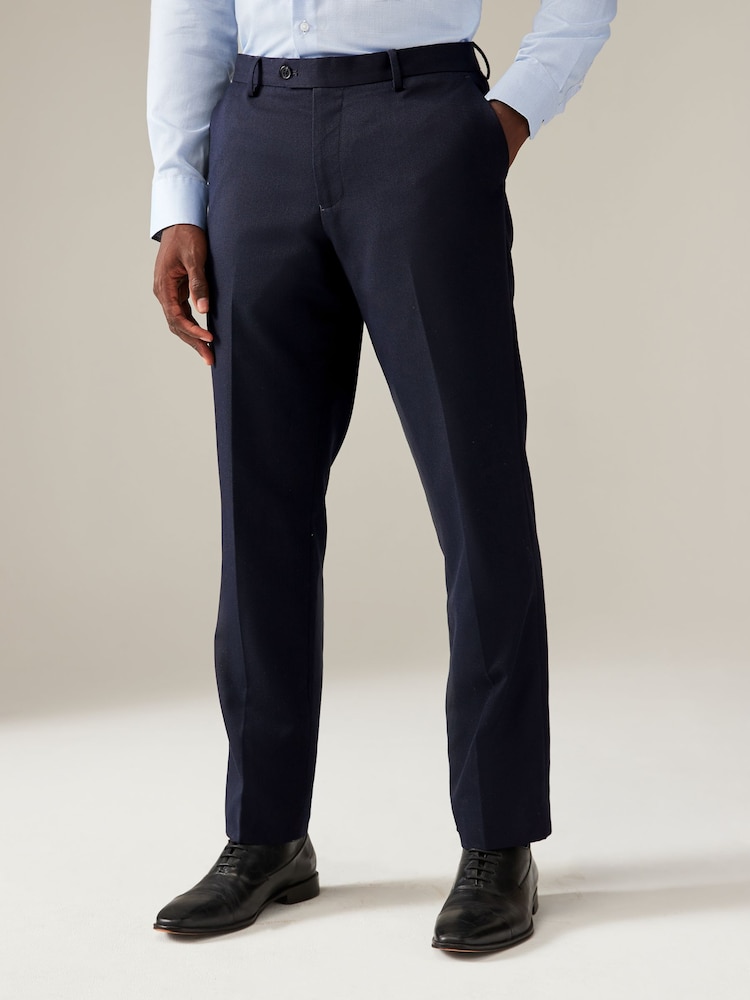
Fit is the most important part of how to buy dress pants. A costly pair will still look poor if the waist is tight, the seat is loose, or the leg opening is too wide.
Use these checkpoints when trying on pants:
• Waist: The waistband should sit securely without squeezing. You should be able to slide one or two fingers inside it, but you should not need a belt to stop the pants from falling.
• Seat: The fabric should lie smoothly across your rear. Horizontal wrinkles often mean the seat is too tight. Extra folds or sagging can mean the seat is too large.
• Rise: The rise is the distance from the waistband to the crotch. A low rise sits closer to the hips, while a medium or high rise sits nearer the natural waist. Choose the rise that lets you sit, bend, and walk with ease.
• Thighs: The cloth should skim your thighs without clinging. If the pockets spread open, the pants may be too tight.
• Knees: The knee area should allow movement without creating sharp pull lines.
• Legs: The trouser leg should look clean from the hip to the ankle. It should not twist or balloon around your legs.
• Hem: The bottom should meet your shoes with a small, intentional break unless you prefer a no-break or cropped style.
A useful fitting-room test is to sit down, walk several steps, and bend your knees. Dress pants should feel comfortable in motion, not just while you stand in front of a mirror.
Measure Yourself Before Shopping
Knowing your measurements makes how to buy dress pants much easier, especially when shopping online. Clothing sizes are not fully consistent across brands, so measurements are often more useful than a size label.
Take these measurements while wearing thin clothing:
-
Measure your natural waist. Wrap the tape around the area where your body naturally bends, without pulling it tight.
-
Measure your seat. Keep the tape level around the fullest part of your hips and rear.
-
Measure your inseam. Measure from the crotch seam to the spot where you want the pants to end. A trusted pair of trousers can also help you compare inseam length.
-
Measure your thigh if you often find pants tight in that area.
-
Record your preferred rise. Compare a comfortable pair with a new pair by measuring from the crotch seam to the top of the waistband.
Do not measure over a bulky shirt or thick sweater. Also, do not assume your jeans size equals your dress pant size. Dress pants may use a different cut, fabric, and sizing system.
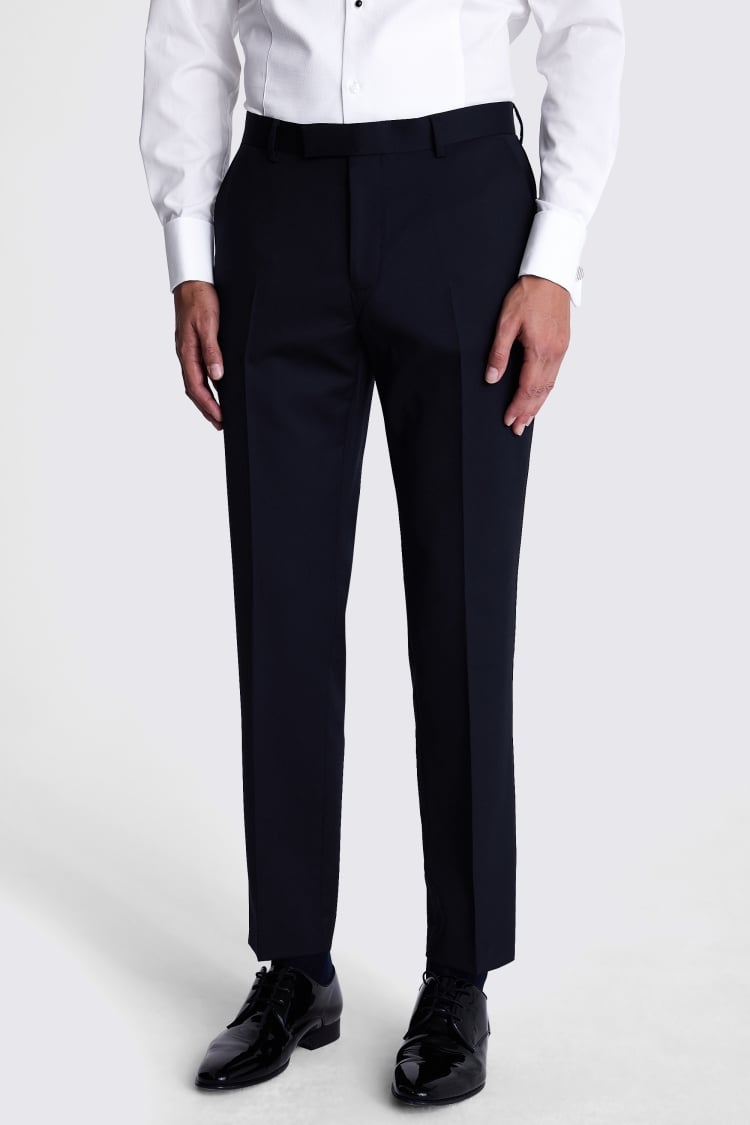
Choose the Best Trouser Rise
Rise changes both comfort and appearance. It also affects where the pants sit on your body.
Low-rise pants sit below the natural waist. They can create a modern look, but they may feel restrictive when you sit. They can also expose your shirt if you wear a tucked-in top.
Mid-rise pants are the most versatile choice for many people. They usually sit between the hips and natural waist and work well for business, events, and daily wear.
High-rise pants sit closer to the natural waist. They can lengthen the appearance of the legs and provide a secure fit. They are also useful when you prefer to tuck in shirts or wear classic tailoring.
When deciding how to buy dress pants, focus on comfort rather than fashion alone. The waistband should remain in place when you walk. If you keep pulling the pants up or adjusting your shirt, the rise may not suit your body.
Pick a Fabric for the Season and Setting
Fabric affects comfort, appearance, care, and price. It is one of the most important details to consider when learning how to buy dress pants.
Wool
Wool is a classic choice for dress pants. It breathes well, drapes smoothly, and resists wrinkles better than many casual fabrics. Lightweight wool works in warmer weather, while flannel or heavier wool suits cool seasons.
Look for terms such as worsted wool, tropical wool, and flannel. Worsted wool has a smooth finish. Tropical wool is light and breathable. Flannel has a soft, brushed surface and provides more warmth.
Cotton
Cotton dress pants feel soft and easy to wear. They often look less formal than wool, which makes them useful for business-casual outfits. Cotton can wrinkle more easily, so check the care label before buying.
Linen
Linen is cool and breathable for hot weather. Its natural wrinkles are part of its appeal, but it may look too relaxed for a formal office or evening event.