The best barefoot sandals for hiking balance ground feel, grip, secure fit, and comfort on changing trails.
A hot trail, wet creek, or rocky path can make normal shoes feel stiff and heavy. Barefoot sandals solve that problem with a thin, flexible sole and an open design that lets your feet move and breathe. I tested the key features that matter most for hiking: traction, strap security, foot protection, water use, weight, and long-walk comfort. The right pair should feel like a light shield, not a hard cage around your feet. This guide compares seven Xero Shoes options so you can choose with confidence.
Xero Shoes Women’s Z-Trek Sandals

The women’s Z-Trek is a simple, light sandal for hikers who want a close-to-barefoot feel. Its thin sole bends easily, so your foot can flex instead of fighting a stiff platform. The open upper also helps air move around the foot on warm days. I like this design for paved paths, dry woodland trails, and easy mountain walks.
The sandal uses adjustable straps to help hold the foot in place. That matters when a trail turns, climbs, or drops without warning. The sole gives useful contact with the ground, but it does not replace a rugged hiking boot on sharp talus or deep mud. For daily outdoor use, travel, and light hikes, the Z-Trek feels quick and natural.
Pros:
- Very light for long walks and travel
- Flexible sole supports natural foot movement
- Adjustable straps allow a closer fit
- Open design improves airflow in hot weather
- Low profile helps users feel the trail
- Easy to pack in a day-hike bag
Cons:
- Limited protection from sharp rocks and roots
- May require a break-in period for new users
- Less suitable for cold or rough alpine routes
Xero Shoes Women’s Z-Trail EV Sandal

The Z-Trail EV gives more underfoot structure than the Z-Trek while keeping the flexible feel that defines barefoot footwear. I see it as the better choice for hikers who want comfort on mixed terrain. The sole has a layered build that adds cushioning without turning the sandal into a thick, heavy shoe. That balance helps on longer walks where a very thin sandal may feel tiring.
The Lake Blue and Asphalt colorway also works well for travel and casual wear. The straps can be adjusted to reduce heel lift and side movement. Still, fit matters more than color, so measure your foot and follow the brand’s size guide before ordering. Among the Best Barefoot Sandals for Hiking, this model is one of the most balanced options for beginners and regular trail users.
Pros:
- More cushioning than an ultra-thin sandal
- Flexible design keeps walking motion natural
- Useful choice for mixed trail surfaces
- Adjustable fit helps reduce unwanted movement
- Open upper keeps feet cooler than closed shoes
- Versatile look works beyond the trail
Cons:
- Thicker sole gives less direct ground feel
- Straps may need adjustment during first few wears
- Not a full substitute for a heavy-duty hiking shoe
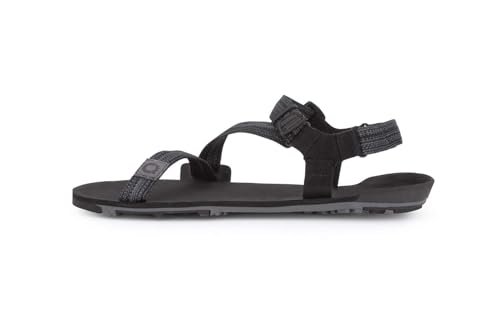
Xero Shoes Men’s Z-Trail EV Sandals

The men’s Z-Trail EV is built for hikers who want a sandal with a little more support underfoot. Its flexible sole helps the foot move, yet it feels more forgiving than a very minimal model. I found that this kind of design works well for long park trails, camp use, and warm-weather travel. The Multi-Black color is also easy to pair with outdoor clothing.
Its adjustable straps help create a secure fit around the heel and forefoot. That is useful when carrying a day pack or walking on uneven ground. The sandal still leaves the toes exposed, so you need to choose your route with care. It is best on dry or moderate trails, not on routes where loose rocks can strike the front of the foot.
Pros:
- Good fit for men who want extra underfoot comfort
- Flexible sole supports a natural walking pattern
- Adjustable straps help keep the sandal stable
- Black color hides trail dust well
- Works for hiking, travel, camp, and daily wear
- Light design reduces the drag of heavy footwear
Cons:
- Open toe leaves the foot exposed to impacts
- May feel less minimal to experienced barefoot users
- Needs careful fitting to prevent heel movement
Xero Shoes Women’s Z-Trek Blue Sandals

This Porcelain Blue Z-Trek is a good match for hikers who want a simple sandal with a light, flexible build. It has the same basic appeal as other Z-Trek versions: low weight, open airflow, and a sole that bends with the foot. The blue color gives it a clean look for summer walks and trips. I would use it for trail strolls, beach paths, and camp chores.
The thin profile helps improve trail awareness. You can feel changes in the surface and adjust your step, which is one reason many people enjoy barefoot-style footwear. However, new users should start with short walks and slowly add distance. The sandal offers freedom, but that freedom also asks your feet and lower legs to work in a new way.
Pros:
- Light and easy to wear for daily outdoor use
- Flexible sole allows natural foot motion
- Breathable design suits warm-weather hiking
- Adjustable straps support a customized fit
- Low stack height improves surface awareness
- Attractive blue color works for casual travel
Cons:
- Less cushioning for very long hard-surface walks
- Exposed toes need extra care on rocky trails
- New barefoot users should build distance slowly
Xero Shoes Women’s Z-Trek Yellow Sandals

The Spectra Yellow Z-Trek offers the same flexible, barefoot-style platform in a bright color that is easy to spot. That can be helpful at camp, on group trips, or when you want footwear that stands out. The sandal feels light on the foot and leaves plenty of room for air. It is a practical option for warm, dry hikes and casual outdoor use.
As with other minimal sandals, the fit depends on careful strap adjustment. A loose strap can allow sliding, while an overly tight strap may create pressure points. I recommend walking around indoors first and checking the heel, arch, and toe area. If the fit feels right, this model can deliver a strong mix of freedom, style, and packable comfort.
Pros:
- Bright color improves visibility around camp
- Very easy to pack for travel and hiking
- Open construction helps reduce heat buildup
- Flexible sole lets the foot bend naturally
- Adjustable straps help fine-tune the fit
- Useful for dry trails and casual summer wear
Cons:
- Bright color may show dirt more quickly
- Minimal coverage offers little toe protection
- Not ideal for cold, wet, or brush-heavy trails
Xero Shoes Women’s Genesis Sandals

The Genesis is the most stripped-down choice in this group. Its simple sandal design gives hikers a strong barefoot sensation and keeps weight very low. The Stone color looks quiet and works well with travel clothes. I recommend it for experienced minimalist users, short walks, camp use, and easy trails.
This model does not try to act like a boot. That is its strength and its limit. The thin build allows excellent foot movement, but it gives less cushion and less protection than the Z-Trail EV. If you value natural movement above all else, the Genesis may feel like a second skin; if you need comfort from thick padding, choose a more structured model.
Pros:
- Extremely light and easy to carry
- Strong ground feel for experienced users
- Simple design has fewer parts to manage
- Excellent airflow in hot weather
- Good option for camp and travel
- Flexible build encourages natural foot motion
Cons:
- Very little cushioning for hard ground
- Limited protection from stones and roots
- Less forgiving for people new to barefoot shoes
Xero Shoes Women’s Aqua Cloud Sandals

The Aqua Cloud is the water-focused option in this review. Its design suits creek crossings, lake trips, paddle days, and wet camp areas where regular shoes feel slow to dry. The Morel and Sunset Coral color mix gives it a relaxed outdoor look. I like this type of sandal for hikers who move between land and water during one outing.
Its barefoot shape keeps the sole flexible and the foot close to the ground. That can help you feel submerged rocks and uneven surfaces, but you should still step with care. Water sandals cannot remove every risk from slippery rocks, sharp shells, or strong current. For light water use and warm-weather trails, the Aqua Cloud is one of the most useful Best Barefoot Sandals for Hiking alternatives.
Pros:
- Well suited to creek, lake, and beach use
- Open design helps water drain and air circulate
- Flexible sole supports natural movement
- Useful for travel near pools and shorelines
- Light enough for a small day pack
- Color combination looks suitable for summer
Cons:
- Wet surfaces can still be slippery
- Limited protection from sharp underwater objects
- Not the best choice for cold-weather hiking
My Recommendation
After comparing these models, I would start with the women’s or men’s Z-Trail EV for most hikers. It gives more comfort and protection than the most minimal options while keeping the flexible feel people seek in barefoot footwear. The Z-Trek is better for light hikers who prefer a thinner, simpler sandal. The Genesis suits experienced barefoot users, while the Aqua Cloud fits water-heavy trips.
The best barefoot sandals for hiking should match the trail, your experience, and your need for protection. No open sandal can provide the same shield as a hiking boot. However, these Xero Shoes models can feel much freer, cooler, and lighter on easy to moderate routes. Check the latest size choices, colors, and pricing before ordering, since Amazon availability can change.
| Best for | Why |
|---|---|
| Longer mixed-surface hikes | The Z-Trail EV adds comfort while keeping a flexible barefoot feel. |
| Minimalist trail users | The Genesis and Z-Trek offer low weight and strong ground awareness. |
| Water trails and beach trips | The Aqua Cloud fits creek walks, shore use, and warm wet conditions. |
How I Choose Barefoot Sandals for Hiking
Barefoot sandals are not all alike. Some focus on a thin sole and direct trail feel. Others add more layers for comfort on long walks. I look at the whole design instead of judging a sandal by thickness alone.
First, I check the sole. A useful hiking sole should bend at the forefoot and offer enough grip for the intended surface. A thin sole may feel great on a soft path, but sharp gravel can quickly expose its limits. A thicker sole may reduce ground feel, yet it can make a long walk more pleasant.
Next, I study the straps. Hiking creates more foot movement than casual walking. A good strap system should hold the heel and midfoot without rubbing. It should also allow small adjustments as your feet warm up or swell during the day.
I also consider exposure. Barefoot sandals keep toes cool, but open toes can meet rocks, branches, and loose debris. For that reason, I prefer them for maintained trails, dry routes, camp areas, and water walks. On rough routes, I would choose closed footwear with stronger protection.
Why Trail Feel Matters
Trail feel is the sense of the ground beneath your foot. It helps you notice rocks, slopes, roots, and changes in texture. That feedback can encourage shorter steps and more careful placement.
Still, trail feel is not the same as grip. A sandal may let you feel the ground while its tread struggles on wet rock. I always separate those two features when judging the Best Barefoot Sandals for Hiking. Good feedback helps movement, but a reliable outsole helps confidence.
New users should take a slow path into barefoot hiking. Start with a short walk on a smooth surface. Then add distance and roughness over several outings. Your calves, feet, and ankles may need time to adapt.
Fit and Sizing Tips
Fit can make or break a minimalist sandal. Your heel should stay in place without a hard pull from the rear strap. Your toes should not hang over the front or touch the edge while walking downhill.
Measure both feet near the end of the day. Feet often expand after hours of standing or walking. Use the larger measurement when comparing it with the brand size chart.
Wear the socks you plan to use on the trail. Many hikers wear barefoot sandals without socks, but thin toe socks can change the fit. Test the sandal indoors before taking it far from home.
Watch for three warning signs: sliding, hot spots, and pressure. Sliding may mean the straps need adjustment. A hot spot may signal rubbing or a poor foot position. Pressure can mean the strap is too tight or the sandal shape does not suit your foot.
Are Barefoot Sandals Good for Hiking?
They can be good for the right hike and the right user. Barefoot sandals work well on warm, dry, moderate routes where low weight and airflow matter. They also work well for camp, travel, beach paths, and short creek walks.
They are less useful in deep mud, cold rain, heavy brush, snow, and rough rock fields. Open toes leave your feet vulnerable. Thin soles can also make long days on sharp ground less comfortable.
I treat barefoot sandals as a trail tool, not a universal shoe. The route should decide the footwear. If the trail needs toe protection, ankle coverage, or strong insulation, a closed hiking shoe is the safer choice.
How to Break In Barefoot Hiking Sandals
Do not begin with a ten-mile hike. Wear the sandals at home for 20 to 30 minutes. Walk on smooth ground and check for rubbing around the heel and strap points.
Next, take a short neighborhood walk. Add a few minutes each time if your feet feel normal. Stop if you develop sharp pain, strong soreness, or a lasting hot spot.
Keep your first trail walk easy. Choose a route with firm ground and little elevation. This gives you time to learn how the straps respond when you climb, descend, and turn.
Breaking in your feet matters as much as breaking in the sandals. Minimal shoes ask more from small foot muscles and lower-leg muscles. A patient start helps prevent a fun trail day from becoming a painful recovery day.
Grip, Water, and Trail Safety
Grip changes with the surface. Dry dirt often feels simple, while wet stone can become difficult in any footwear. Even the best barefoot sandals for hiking need careful steps on slick ground.
Use shorter steps near water. Keep your center of weight over your feet instead of leaning far forward. Test a surface with one foot before placing your full weight on it.
Rinse sandals after exposure to salt water, mud, or fine sand. Grit can collect near straps and create rubbing. Let the sandals dry in a cool, shaded place instead of leaving them on hot pavement.
Carry a backup plan on remote hikes. That might mean socks, a light closed shoe, or a way to treat a hot spot. Barefoot sandals are light, so taking a backup adds little weight compared with ending a hike early.
Barefoot Sandals Compared With Hiking Shoes
Hiking shoes offer more coverage and often more cushioning. They can handle colder weather, rougher ground, and loose debris with less concern. They also tend to feel heavier and less flexible.
Barefoot sandals offer airflow and freedom. They let the toes spread and the foot bend with fewer limits. They also expose the foot and may feel harsh on long rocky routes.
The best choice depends on your route. For a hot desert road, smooth forest path, or beach trail, sandals may feel perfect. For a steep scree route or thorny backcountry track, shoes usually make more sense.
Care Tips for Longer Use
Clean the sandals after each muddy or sandy trip. Use cool water and a soft brush to remove grit. Avoid harsh cleaners that may weaken materials or affect the straps.
Inspect the sole before every long hike. Look for heavy wear, damaged edges, or loose strap points. A small issue at home is easier to solve than a broken sandal miles from the trailhead.
Store them flat in a dry, cool place. Do not leave them in a hot car for long periods. Heat can affect adhesives, shape, and strap life.
Rotate footwear if you hike often. Giving one pair time to dry and rest can help reduce odor and moisture buildup. It also lets you spot wear before it becomes a safety issue.
FAQs Of Best Barefoot Sandals for Hiking
What are the best barefoot sandals for hiking beginners?
The Z-Trail EV is the easiest starting point for many beginners because it offers more cushioning than the Genesis or Z-Trek. Begin with short walks and increase distance slowly.
Can I wear barefoot sandals on rocky trails?
You can, but use care. Thin soles provide limited protection from sharp rocks, and open toes leave the front of the foot exposed. Choose smooth or moderate trails when possible.
Should barefoot hiking sandals feel tight?
They should feel secure, not tight. Your heel and midfoot should stay in place, while your toes should move freely. Recheck the straps after walking for several minutes.
Are these sandals suitable for water hiking?
The Aqua Cloud is the best fit for water-focused use. Even so, wet rocks can be slick, and sandals cannot protect against every sharp object below the water.
How long does it take to adjust to barefoot sandals?
It varies by person. Some users adjust in a few outings, while others need several weeks. Start with short walks and stop when pain feels sharp or unusual.
Final Verdict: Which Should You Buy?
I recommend the Z-Trail EV for most hikers because it blends flexibility, comfort, and useful support. The Z-Trek suits lighter hikes, while Genesis fits experienced minimalist users. Choose Aqua Cloud for water routes.
The best barefoot sandals for hiking should match your feet and trail. Start slowly, check the fit, and review current Amazon availability before buying.

Madison Clark is a footwear expert and the voice behind MyStyleGrid.com. She specializes in honest shoe reviews, style tips, and practical guides to help readers find the perfect pair for any occasion. With years of experience in blogging and content creation, Madison makes footwear knowledge simple, stylish, and easy to follow.