Yes, Puma shoes can be excellent for running when the model matches your feet, pace, distance, and running surface.
Are Puma shoes good for running? In many cases, yes. Puma makes road, track, trail, daily training, and racing shoes with modern foam, strong grip, and a range of fits. The best choice depends less on the Puma logo and more on comfort, support, cushioning, and how the shoe feels during your usual runs.
This guide explains which Puma running shoes suit different runners, what their strengths and limits are, and how to choose the right pair without wasting money.

Are Puma shoes good for running?
Puma running shoes are good for many runners because they combine responsive cushioning, light weight, and durable outsoles. Several models use Nitro foam, a nitrogen-injected foam designed to provide a soft yet energetic ride. Many also use PUMAGRIP rubber, which offers reliable traction on wet and dry roads.
The brand makes shoes for many running styles. You can find simple daily trainers, highly cushioned shoes, carbon-plated racers, and trail shoes. This range makes Puma a useful option for beginners, casual runners, marathoners, and speed-focused athletes.
Still, no shoe is perfect for every foot. A Puma shoe may feel smooth and stable for one runner but too narrow, firm, or flexible for another. Fit and comfort should guide your decision.
A good running shoe should:
• Feel comfortable from the first few minutes
• Hold your heel without slipping
• Leave enough space for your toes to spread
• Bend or roll naturally as you run
• Match your training surface and weekly mileage
• Feel stable at both slow and fast paces
The most important lesson is simple: a good shoe should support your run without demanding constant attention. It should feel like a helpful teammate, not a problem you must manage.
What makes Puma running shoes different?
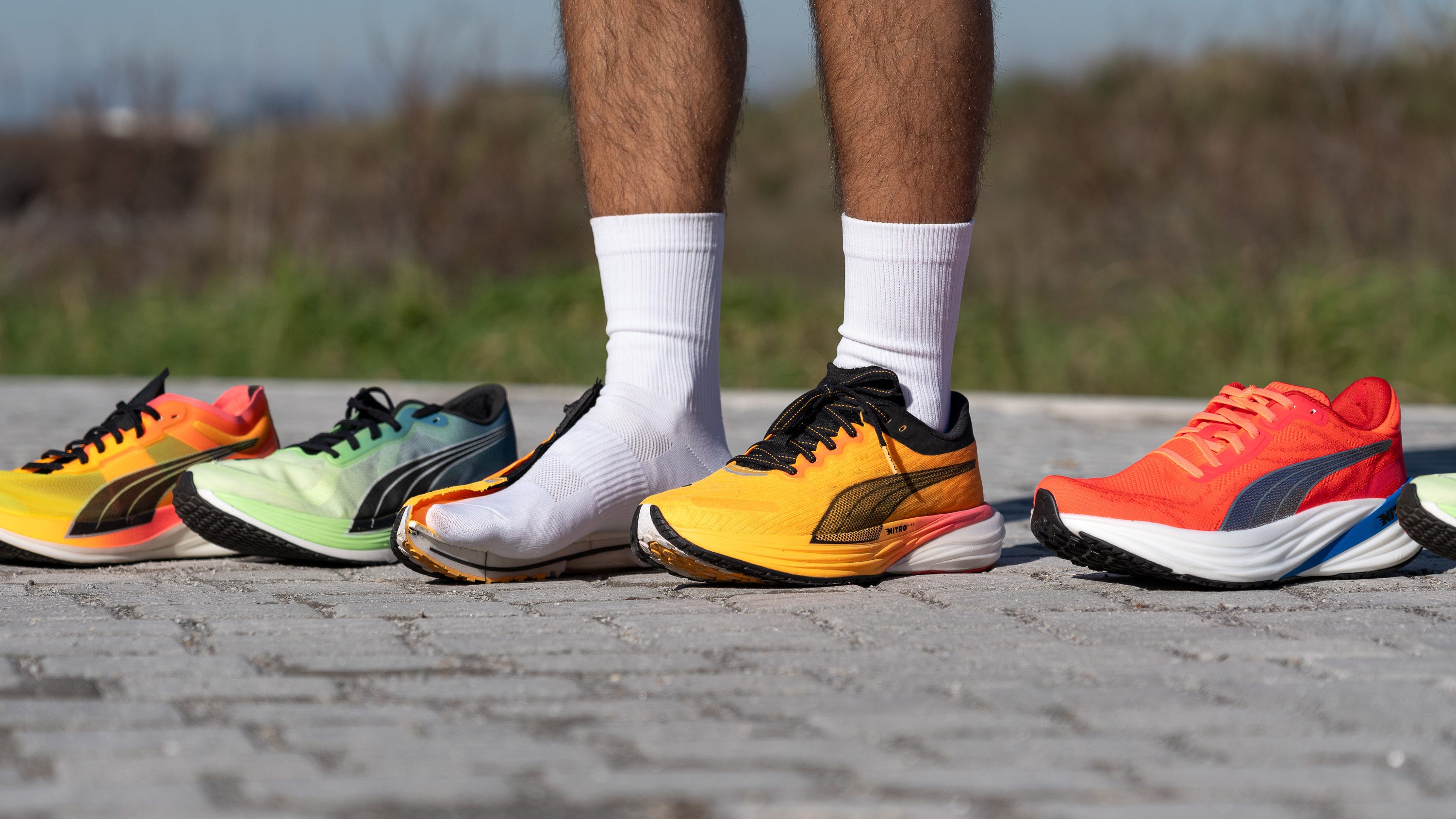
Puma has improved its running range in recent years. Its main performance features include Nitro foam, PUMAGRIP rubber, engineered mesh, lightweight uppers, and racing-focused plate systems.
Nitro foam cushioning
Nitro foam is used in many of Puma’s newer running shoes. It is designed to balance softness, energy return, and weight. In practical terms, it can make a shoe feel lively without making it overly hard.
Some Nitro shoes feel firm and fast. Others feel softer and more protective. The exact experience depends on the amount of foam, the shoe shape, and the intended use.
PUMAGRIP outsole rubber
PUMAGRIP is one of Puma’s strongest features. Good outsole rubber matters because poor grip can make a run feel unsafe, especially on painted lines, damp pavement, or smooth indoor floors.
PUMAGRIP is not a guarantee of perfect traction on every surface. Mud, ice, loose gravel, and deep sand require specialized footwear. For normal road running, however, Puma’s rubber compounds often provide dependable grip.
Lightweight construction
Many Puma running shoes are lighter than traditional stability or maximum-cushioning shoes. A lighter shoe may feel easier during intervals, races, and long runs when your legs become tired.
Weight is not everything. A very light shoe may offer less cushioning or less structure. The ideal balance depends on whether you value speed, comfort, or protection most.
Race-ready technology
Puma offers carbon-plated and advanced racing shoes for runners who want a faster feel. These shoes can improve running efficiency for some athletes, but they are not necessary for daily training.
A plated shoe may feel awkward at slow speeds. It can also be less forgiving if you have weak calves, limited ankle movement, or poor running form. Use racing shoes for their intended purpose rather than wearing them for every easy run.

Best Puma running shoes for different runners
The answer to “are Puma shoes good for running” changes based on the model. Here is how the main types compare.
Puma Velocity Nitro
The Velocity Nitro line is aimed at everyday road running. It usually offers a balanced mix of cushioning, flexibility, and response.
This type of shoe can work well for:
• Beginners
• Easy runs
• Short and medium-distance training
• Treadmill workouts
• Runners who want one versatile pair
It may not provide enough cushioning for runners who prefer a very soft ride or need extra comfort for long-distance training.
Puma Deviate Nitro
The Deviate Nitro is built for faster training and racing. Many versions include a plate or stiffening element that helps create a quick, rolling sensation.
It may suit runners who want:
• Tempo runs
• Intervals
• Long runs with faster sections
• Half-marathon training
• One shoe for both training and racing
The shoe can feel less natural at a slow pace. New users should introduce it gradually instead of wearing it for a long run on the first day.
Puma ForeverRun Nitro
The ForeverRun Nitro focuses on stability and support. It is designed for runners who want a more guided and secure ride.
This model may help runners who:
• Prefer a stable platform
• Feel their feet roll inward during fatigue
• Want more structure than a neutral shoe
• Spend many hours standing or walking
A stability shoe is not automatically better for everyone. If a neutral shoe feels comfortable and stable, you may not need extra support.
Puma Fast-R Nitro Elite
The Fast-R Nitro Elite is a high-performance racing shoe. It is made for runners who want maximum speed, low weight, and an aggressive ride.
It can be useful for races and key speed sessions. It is not usually the best choice for beginners, daily walking, recovery runs, or runners who prefer a soft and relaxed shoe.
Puma Voyage and trail models
Puma trail shoes are designed for dirt paths, parks, and uneven ground. They usually have deeper lugs and tougher uppers than road shoes.
Choose a trail model when you regularly run on:
• Dirt
• Roots
• Rocks
• Wet grass
• Loose gravel
Road shoes can lose grip and wear quickly on rough trails. Trail shoes may feel stiff or heavy on smooth pavement, so surface matters.

Benefits of running in Puma shoes
Puma shoes can offer several useful benefits. These benefits depend on the specific model, but they explain why many runners choose the brand.
Responsive cushioning
Puma’s modern foam can feel energetic underfoot. This is useful when you want a shoe that does more than simply absorb impact.
A responsive shoe may make easy runs feel more engaging. It can also help during faster workouts when you want to move from one step to the next with less delay.
Strong traction
Reliable grip can improve confidence. You may notice this most when turning, running downhill, or moving over wet pavement.
Good traction does not replace careful footing. It simply gives the outsole a better chance of staying connected to the ground.
Good value across several categories
Puma often offers shoes at different prices. This gives runners options without forcing everyone into a premium racing model.
A mid-priced daily trainer may be a smarter purchase than an expensive shoe that does not match your stride. The best value comes from choosing the right purpose, not from choosing the most advanced technology.
Options for neutral and stability runners
Puma makes both neutral and more supportive shoes. This helps runners with different comfort needs find a suitable design within the same brand.
However, shoe labels are only a starting point. Your own comfort during movement matters more than a category name.
Stylish everyday use
Many Puma running shoes look suitable for casual wear. This can be useful if you want one pair for short walks, errands, and occasional runs.
Be careful with this approach if you run often. A shoe used every day may wear faster and lose its cushioning sooner.

Limitations of Puma running shoes
Puma shoes are not perfect for every runner. Understanding the drawbacks can prevent disappointment.
The fit can feel narrow
Some Puma models have a snug shape through the midfoot or toe box. This can feel secure for narrow feet but uncomfortable for wide feet.
Your toes should not touch the front of the shoe. They should have room to spread, especially because feet often swell during long runs.
Model differences are significant
One Puma shoe may feel soft and flexible, while another may feel firm and stiff. Do not assume that liking one Puma model means you will like every model.
Read the intended use before buying. A racing shoe and a daily trainer are built for different jobs.
Some shoes need a short adjustment period
Stiff, plated, or highly structured shoes may feel unusual at first. A brief break-in period can help, but severe pain is not normal.
If a shoe causes rubbing, numbness, sharp pain, or repeated blisters, stop using it. Do not hope that serious discomfort will disappear with time.
High-stack shoes may feel less stable
Shoes with thick cushioning can feel comfortable but less connected to the ground. This may be noticeable on sharp turns, uneven sidewalks, or sloped roads.
A stable platform is often more useful than the softest possible foam. Try to find the middle ground that suits your movement.

Are Puma shoes good for beginners?
Puma shoes can be very good for beginners, especially simple neutral daily trainers such as the Velocity Nitro line. New runners usually benefit from comfort, predictable cushioning, and a stable feel rather than advanced racing features.
Beginners should avoid choosing a shoe only because it looks fast. Carbon plates, very firm foam, and aggressive shapes can feel demanding before your legs and feet are ready.
When choosing your first pair, focus on:
• A comfortable fit
• Moderate cushioning
• A secure heel
• Enough toe room
• A smooth step from heel to toe
• A price that fits your budget
Start with short, easy runs. If the shoe feels comfortable after several sessions, increase your distance slowly. A gradual training plan protects your body more effectively than an expensive shoe alone.

Are Puma shoes good for long-distance running?
Some Puma shoes are suitable for long-distance running, including marathon training. The best option is usually a well-cushioned daily trainer that feels comfortable after an hour or more.
Long-distance runners should pay attention to heat, swelling, and pressure points. A shoe that feels perfect for a 20-minute run may feel too tight during a two-hour session.
For long runs, look for:
• Enough cushioning for your body weight and pace
• A roomy toe box
• A breathable upper
• A secure heel fit
• Reliable outsole grip
• Comfort late in the run
Do not test a new shoe for the first time on race day. Use it for shorter runs, then medium runs, and finally a long training run. This approach reveals problems before they become race-day injuries.
Research on running shoes does not show that one brand prevents all injuries. Training load, sleep, strength, running form, past injuries, and recovery also matter. A comfortable shoe is valuable, but it is only one part of safe training.

Are Puma shoes good for flat feet or overpronation?
Puma makes both neutral shoes and models with added stability. Runners with flat feet or overpronation may prefer a supportive model, but flat feet alone do not prove that you need stability shoes.
Pronation is a normal movement. The concern is whether your movement causes pain, repeated injury, or poor comfort. Many people with flat arches run well in neutral shoes.
If you are unsure, compare a neutral Puma shoe with a stability model. Walk and jog in both. Choose the pair that feels stable without pressing hard against your arch.
A physical therapist or qualified running specialist can provide better advice when you have ongoing pain. A shoe cannot correct every movement problem, and forcing your foot into too much support may create new discomfort.
How should Puma running shoes fit?
The right fit is more important than the brand. Try shoes later in the day, when your feet are often slightly larger. Wear the socks you normally use for running.
Use this fitting checklist:
-
Leave about a thumb’s width between your longest toe and the shoe’s front.
-
Make sure your toes can move and spread.
-
Check that the heel stays in place when you walk or jog.
-
Look for smooth pressure across the top of your foot.
-
Walk, jog, and turn before deciding.
-
Compare both feet, since one foot may be larger.
Do not buy a shoe that feels tight because you expect it to stretch. Running shoes may soften, but they rarely become much longer or wider.
A common mistake is choosing a smaller size for a “locked-in” feel. Secure fit should come from the heel and midfoot, not from squeezing the toes.
How long do Puma running shoes last?
Many running shoes last roughly 300 to 500 miles, but this is only a general estimate. Your weight, running style, surface, weather, rotation, and shoe design all affect durability.
Replace your Puma running shoes when you notice:
• Flattened or uneven cushioning
• New aches after normal runs
• Smooth or damaged outsole rubber
• Creasing that affects stability
• A loose or worn upper
• Less comfort than before
Do not wait for a hole to appear. The foam may lose its useful response before the upper looks damaged.
If possible, rotate two pairs. This allows the foam and upper to recover between runs and helps you notice when one pair feels different from the other.
Practical lessons for choosing Puma running shoes
The most useful shoe-buying lesson is to shop for your real running habits, not your idealized goals. If you run three easy miles several times a week, you probably need a comfortable daily trainer, not an elite racing shoe.
Another common mistake is trusting online reviews more than your own feet. Reviews can explain foam, fit, and durability, but they cannot tell you exactly how a shoe will feel on your body.
Use this simple process:
-
Decide where you run: road, treadmill, track, or trail.
-
Decide how you run: easy pace, speed work, racing, or mixed training.
-
Choose neutral or supportive construction based on comfort and professional advice.
-
Check the width and toe room carefully.
-
Test the shoes indoors before removing tags.
-
Run short sessions before using them for long distances.
-
Return them if they cause pain or repeated rubbing.
The right shoe should make your normal training feel easier to manage. It should not force you to change your stride or tolerate pain.
Puma vs. other running shoe brands
Puma competes well with major running brands in cushioning, traction, and performance technology. Its Nitro foam and PUMAGRIP outsole give it a strong position in both daily trainers and racing shoes.
The difference often comes down to fit and ride preference. Some runners prefer the softer feel of another brand. Others like Puma because its shoes feel more responsive, secure, or lightweight.
Compare shoes by purpose rather than popularity:
• Daily training: Choose comfort and durability.
• Long runs: Choose cushioning and room for foot swelling.
• Speed work: Choose a light, responsive shoe.
• Racing: Choose a fast shoe that you have already tested.
• Trail running: Choose grip, protection, and upper durability.
There is no universal winner. The best running shoe is the one that fits well, feels good, and supports your actual training.
Frequently asked questions about whether Puma shoes are good for running
Are Puma shoes good for running every day?
Yes, several Puma daily trainers are suitable for regular use. Choose a comfortable, durable model rather than a stiff racing shoe for daily mileage.
Are Puma running shoes good for walking?
Yes, many Puma running shoes work well for walking and daily activities. A lightweight daily trainer may feel comfortable, but trail and racing models may be less suitable for casual walking.
Are Puma shoes good for marathon training?
Some Puma shoes are well suited to marathon training, especially cushioned daily trainers and select plated models. Test the shoe on long training runs before using it in a marathon.
Are Puma running shoes good for wide feet?
It depends on the model and version. Some Puma shoes have a snug fit, so runners with wide feet should check the available width, try the shoes on, and make sure the toes are not compressed.
Do Puma running shoes help prevent injuries?
No running shoe can guarantee injury prevention. A comfortable Puma shoe may help reduce irritation, but sensible training, strength work, recovery, and gradual mileage increases are also important.
Are Puma running shoes good for beginners?
Yes, Puma offers beginner-friendly daily trainers with balanced cushioning and a smooth ride. Beginners should avoid advanced racing shoes until they have built basic strength and running consistency.
How do I know if my Puma shoes fit correctly?
Your heel should stay secure, your toes should move freely, and you should have roughly a thumb’s width of space at the front. Any numbness, sharp pain, or repeated rubbing means the fit is not right.
Conclusion
So, are Puma shoes good for running? Yes, they can be an excellent choice when you select the right model for your feet, pace, distance, and running surface. Puma offers responsive foam, reliable grip, daily trainers, stability shoes, trail options, and fast racing models.
Focus on comfort, fit, purpose, and real-world testing. Start with short runs, watch for pressure or pain, and replace shoes when cushioning and grip begin to fade.
Try on a few Puma models, compare them with your current shoes, and choose the pair that makes you want to run.

Rubel Miah is the Senior Editor at MyStyleGrid.com, where he brings a sharp editorial eye and an unshakable love for fashion to everything he does. A true style addict, Rubel lives and breathes trends, from streetwear to high fashion, and has a knack for turning inspiration into impactful stories. With years of experience in fashion journalism and digital media, he curates content that empowers readers to express themselves through style. When he’s not editing features or forecasting the next big thing, you’ll find him hunting down vintage pieces or capturing street style moments around the city.