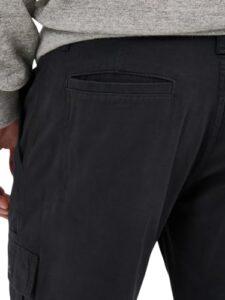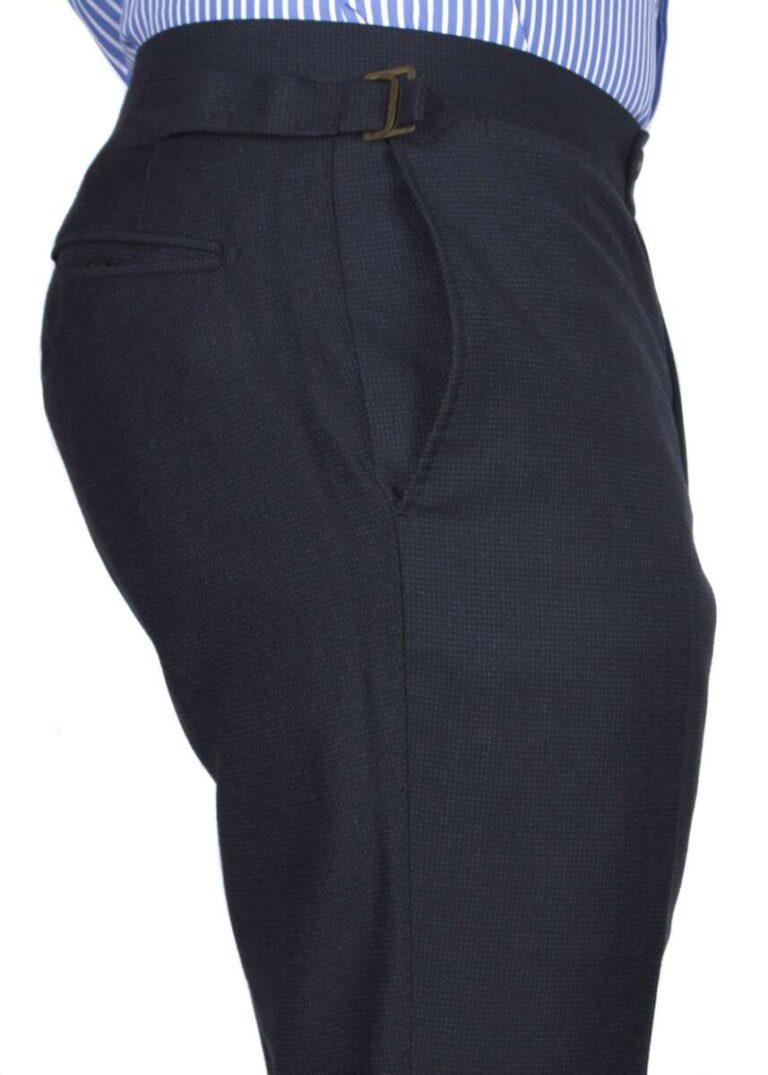
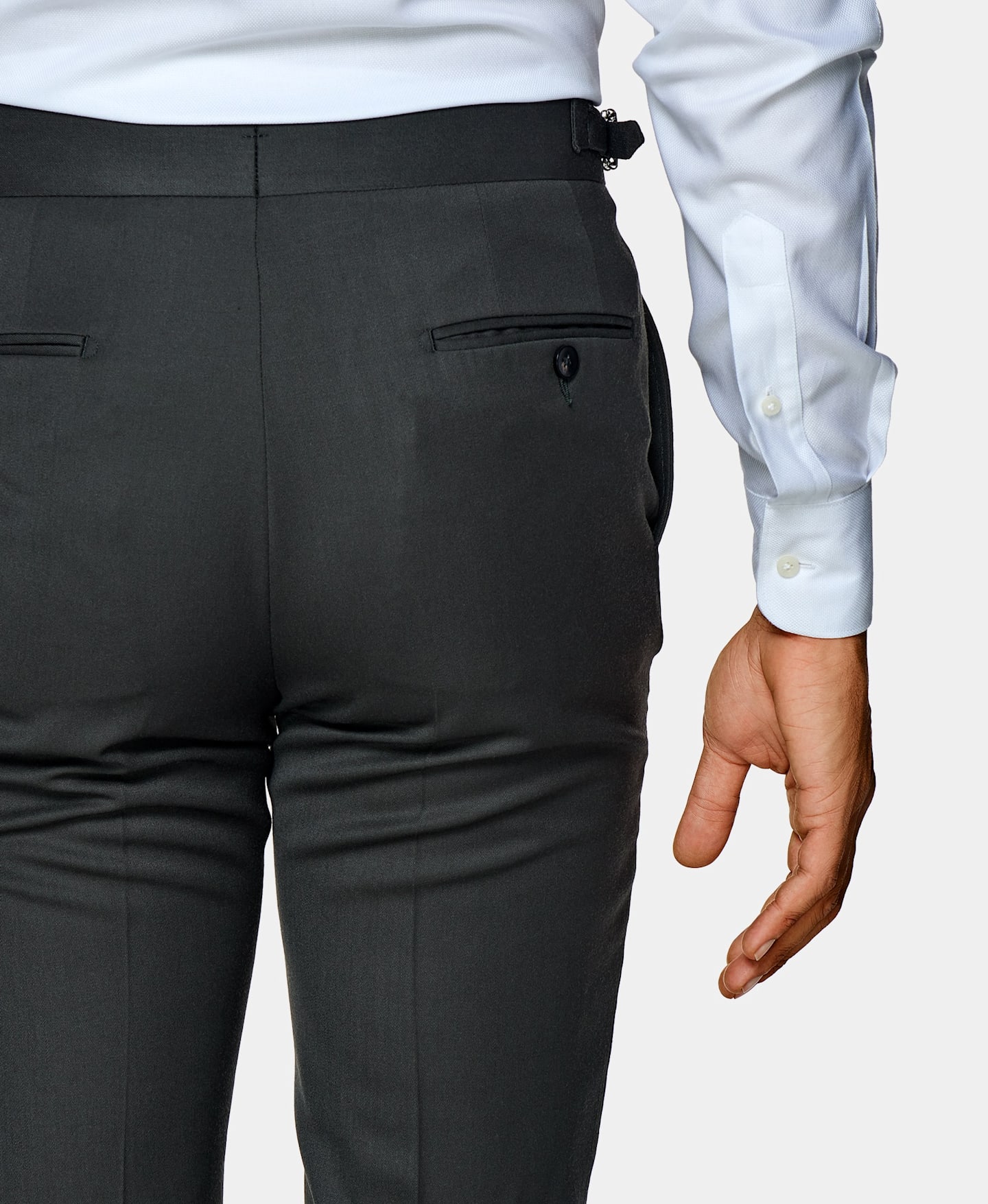
Suit trousers should feel close and neat, but never tight enough to restrict movement or strain the fabric.
Knowing whether are suit trousers meant to be tight can make the difference between looking sharp and feeling uncomfortable all day. Good tailoring follows the shape of your body without clinging to it. In this guide, you will learn how suit trousers should fit, how to spot common problems, and when alterations can fix the issue.

Are suit trousers meant to be tight?
Are suit trousers meant to be tight? No. They should have a close, clean fit while still giving you room to sit, walk, bend, and move naturally.
Think of suit trousers as a frame around your legs. The frame should look neat, but it should not press into the picture. Trousers that are too loose can look messy, while trousers that are too tight may pull, crease, and feel restrictive.
A well-fitted pair should:
- Sit securely at the waist without needing a tight belt
- Follow the shape of your seat and thighs
- Fall smoothly over your legs
- Allow comfortable movement
- Keep the fabric from pulling across the front or back
- Rest cleanly over your shoes
The goal is not a painted-on look. The goal is balance. Suit trousers should look structured, polished, and comfortable at the same time.

How suit trousers should fit
The best way to judge fit is to check each area separately. A pair may fit well at the waist but feel too tight in the thighs. Another pair may fit the legs but sag at the seat.
Waist
The waistband should sit comfortably around your natural waist or slightly below it, depending on the trouser style. You should be able to slide one or two fingers between your waist and the waistband.
If you need to hold your breath to fasten the button, the trousers are too tight. If the waistband gaps when you stand or slides down as you walk, they are too loose.
Do not rely on a belt to solve a poor waist fit. A belt can secure trousers, but it cannot correct major problems with the rise, seat, or thigh.
Seat
The seat is the area around your buttocks and upper hips. It should lie smoothly against your body without sagging or pulling.
Watch for these signs:
- Horizontal wrinkles under the seat may mean the trousers are too tight
- Excess fabric below the seat may mean they are too loose
- A center-back gap may show that the waist or seat needs adjustment
- Pocket openings that flare may signal strain
A tailor can often let out or take in the seat slightly. However, major changes may affect the balance of the entire garment.
Thighs
Your thighs need enough room for normal movement. Stand, sit, and take a few steps when trying on suit trousers.
If the fabric pulls across your upper legs, the trousers are too tight. If you can pinch a large fold of extra fabric at the thigh, they may be too loose.
Slim-fit trousers can still have room through the thigh. Slim does not mean skin-tight. It means the leg line is narrower than a classic or relaxed cut.
Knees and calves
The trousers should move with your knees without creating sharp tension lines. Sit in a chair and check whether the fabric pulls tightly around your knees.
A narrow leg opening can look modern, but it should not trap your calves. If you feel pressure when you cross your legs, consider a different cut or a slightly wider leg opening.
Length and break
The hem should meet your shoes in a deliberate way. Common options include:
- No break, where the fabric barely touches the shoe
- Slight break, where a small fold appears above the shoe
- Full break, where a deeper fold forms near the hem
A slight break works well for many business suits. A no-break style can look modern and clean, but it requires accurate trouser length and a neat shoe shape.
Signs your suit trousers are too tight
Many people ask are suit trousers meant to be tight because modern suits often use slim cuts. The answer becomes clearer when you inspect the fabric.
Look for these warning signs:
- The front pockets open or stick out
- The fly pulls or refuses to lie flat
- Horizontal lines appear across the hips or thighs
- The waistband digs into your stomach
- The back seam feels under strain
- The fabric shines at high-pressure areas
- You cannot sit without feeling strong pressure
- The trousers pull down at the back when you sit
- The button feels as though it may pop open
- The lining twists or feels tight around your legs
Some wrinkles are normal. Trousers are not flat sheets, and fabric must move with your body. The concern is repeated tension that remains when you stand in a relaxed position.
A useful test is the movement test. Walk, sit, stand, climb a few steps, and place your hands in your pockets. If the trousers feel restrictive during these simple actions, they are too tight for practical wear.

Signs your suit trousers are too loose
A loose fit can also weaken the look of a suit. Are suit trousers meant to be tight does not mean you should choose the smallest size, but it also does not mean extra fabric is harmless.
Check for these signs:
- The waistband slides down without a belt
- Fabric bunches at the hips
- The seat looks saggy
- Deep folds form behind the knees
- The trouser legs twist as you walk
- The pockets hang away from the body
- The hem stacks heavily over the shoes
- The belt creates large folds around the waist
A little ease helps comfort, but too much ease makes the trousers lose their shape. The right fit should create a smooth line from the waist to the hem.
Ready-to-wear trousers often fit imperfectly because bodies vary. You may have a smaller waist and larger thighs, or a longer rise and shorter legs. This is normal. It does not mean your body is difficult to fit.
Slim fit, tailored fit, and classic fit
The cut of the trousers affects how close they should feel. Before deciding are suit trousers meant to be tight, identify the style on the label.
Slim fit
Slim-fit trousers have a narrower leg and less fabric through the seat and thigh. They should still allow you to sit and walk with ease.
Slim fit is not the same as tight fit. If the fabric pulls or the pockets flare, the trousers are too small even if the style is labeled slim.
Tailored fit
Tailored-fit trousers sit closer to the body than classic trousers but usually offer more room than slim trousers. This cut gives a clean shape without looking restrictive.
It is a useful choice for many offices, weddings, interviews, and formal events.
Classic fit
Classic-fit trousers have more room through the thigh, seat, and leg. They may feel more comfortable for long workdays or people who prefer a traditional silhouette.
Classic does not have to mean baggy. A good tailor can keep the shape neat while preserving extra movement.
Athletic fit
Athletic-fit trousers are made for larger thighs and seats with a smaller waist. They can reduce the pulling that often occurs when someone sizes up to fit their legs.
If standard trousers fit your waist but feel tight in the thighs, athletic fit may be a better starting point than simply buying a larger size.

Can a tailor fix tight suit trousers?
Sometimes. Tailoring works best when the trousers are slightly wrong, not dramatically undersized.
A tailor may be able to:
- Let out the waistband
- Add room at the seat
- Open the thighs if extra seam allowance exists
- Adjust the taper
- Change the trouser length
- Narrow a loose leg
- Correct a small waistband gap
Most trousers have extra fabric inside the seams, but the amount varies. Some low-cost trousers have very little allowance. A tailor must inspect the inside before promising an alteration.
Length changes are usually simple. Waist adjustments are often possible within limits. Increasing the thigh or seat can be harder because it may change the balance of the garment.
Do not assume every tight area can be fixed. If the trousers are too small across the hips, rise, and thighs, replacing them is often better than forcing an alteration.
How much room should suit trousers have?
There is no single measurement that suits every person or every cut. Comfort, fabric, posture, and personal style all matter.
As a practical guide, you should be able to:
- Place one or two fingers inside the waistband
- Sit without pressure at the stomach
- Pinch a small amount of fabric at the thigh
- Walk without the crotch pulling
- Cross your legs without strong tension
- Use the pockets without distorting the trousers
- Bend slightly without feeling the back seam strain
The trousers should not fall away from your body, but they should not cling to every contour either.
Fabric also affects comfort. Wool with a small amount of natural stretch may feel easier to move in than a rigid fabric. Stretch can help, but it should not hide a poor fit. A very tight pair with stretch may feel comfortable in a fitting room and uncomfortable after several hours.

How to test suit trousers before buying
Use a simple fitting routine rather than judging the trousers only in front of a mirror.
- Fasten the trousers while standing normally.
- Check that the waistband feels secure but not painful.
- Look for pulling around the fly, hips, and thighs.
- Sit down for at least a minute.
- Stand up and check whether the trousers shifted.
- Walk several steps at a normal pace.
- Put your hands in the pockets.
- Look at the back and side view.
- Check the trouser break with the shoes you plan to wear.
- Ask whether you could wear them for four or five hours.
A common fitting mistake is choosing trousers that look perfect while standing still. Real life includes chairs, stairs, cars, and crowded events. A suit should survive those moments without making you think about your clothes.
Another mistake is buying trousers based only on the waist size. Two pairs with the same labeled waist can have very different rises, thighs, and leg shapes. Try the garment on and judge the full pattern.
Common mistakes to avoid
Are suit trousers meant to be tight is often asked after someone follows a fashion image too literally. A narrow silhouette can look stylish, but copying a photo without considering body shape can lead to poor comfort and fit.
Avoid these mistakes:
- Choosing a smaller size to appear slimmer
- Using a belt to hide an oversized waist
- Ignoring pockets that flare open
- Judging fit while standing only
- Wearing trousers without the intended dress shoes
- Assuming stretch fabric makes any fit acceptable
- Forgetting to check the back view
- Buying a full suit without checking the trousers separately
- Requesting extreme tapering from a tailor
- Treating discomfort as proof of a fashionable fit
I have seen one fitting lesson repeated often: people notice loose fabric quickly, but they tend to excuse tight fabric because they like the sharper outline. That choice often fails later, when sitting at dinner or wearing the suit through a long workday.
A polished suit should make you look composed, not trapped.
What experts look for in a professional suit fitting
Professional tailors usually assess the whole garment rather than one measurement. They check the relationship between the waist, rise, seat, thigh, knee, hem, and jacket.
The rise is especially important. It is the distance from the waistband to the crotch. A rise that is too short can create pulling at the front and back, even when the waist size is correct. A rise that is too long can create excess fabric and a low, untidy appearance.
Tailors also consider posture. Someone who stands with a pronounced curve in the lower back may need a different adjustment from someone with a straighter posture. This is one reason online size charts cannot replace a real fitting.
Industry sizing is not perfectly consistent either. Clothing sizes differ between brands, countries, and manufacturers. The Federal Trade Commission requires care-label information in the United States, but brands still control their own size dimensions. Treat the label as a starting point, not a guarantee.
Frequently Asked Questions About Are Suit Trousers Meant to Be Tight
Should suit trousers fit tightly around the thighs?
No. Suit trousers should follow the thighs without squeezing them or creating strong horizontal wrinkles. You need enough room to walk, sit, and bend comfortably.
How tight should the waist of suit trousers be?
The waistband should stay in place without a belt and allow about one or two fingers of space. It should not dig into your stomach or leave deep marks after wear.
Should suit trousers feel tight when sitting?
They may feel slightly closer when you sit, but they should not cause pain or strong pressure. If the fly, waistband, seat, or thighs pull sharply, the trousers are too tight.
Can tight suit trousers be altered?
A tailor may let out the waist, seat, or thighs if the garment has enough extra seam allowance. If the trousers are very small across several areas, buying a larger or differently cut pair is usually the better choice.
Are slim-fit suit trousers supposed to be tight?
Slim-fit trousers are designed to sit closer to the body, but they should not be skin-tight. Pockets that flare, fabric that pulls, and restricted movement are signs that the size or cut is wrong.
Should you size up if suit trousers are tight?
Size up only if the larger size fits your body better overall. If the waist becomes too loose, choose an athletic cut or have the waistband adjusted instead of accepting a poor fit.
How much fabric should be at the back of suit trousers?
There should be enough fabric for a smooth seat and easy movement, but not enough to create sagging. The back seam should lie flat when you stand naturally.
Conclusion
Are suit trousers meant to be tight? They should be close, clean, and shaped to your body, but never restrictive. Check the waist, seat, thighs, rise, pockets, and movement before judging the fit.
Choose comfort as well as appearance. Try the trousers while sitting and walking, then use a skilled tailor for small corrections. If the fabric pulls in several areas, start with a better cut or size rather than forcing the garment to work.
Use these fitting checks the next time you shop, and share your favorite suit-fitting tip or explore more guides on building a comfortable, polished wardrobe.

Rubel Miah is the Senior Editor at MyStyleGrid.com, where he brings a sharp editorial eye and an unshakable love for fashion to everything he does. A true style addict, Rubel lives and breathes trends, from streetwear to high fashion, and has a knack for turning inspiration into impactful stories. With years of experience in fashion journalism and digital media, he curates content that empowers readers to express themselves through style. When he’s not editing features or forecasting the next big thing, you’ll find him hunting down vintage pieces or capturing street style moments around the city.