Teva sandals can work for light hikes, but they are not ideal for every trail or condition.
The answer to “are Teva sandals good for hiking” depends on the trail, weather, distance, and the sandal model you choose. Teva sandals offer comfort, quick drying, and easy foot movement, but hiking shoes provide better protection and grip on rough ground. This guide explains where Teva sandals shine, where they fall short, and how to use them safely on the trail.

Are Teva sandals good for hiking?
Teva sandals can be good for hiking when you use them on the right terrain. They work well for easy day hikes, warm-weather walks, river trails, beach paths, and routes with shallow water crossings.
They are less suitable for steep, rocky, muddy, or cold trails. Open footwear leaves your toes and sides of your feet more exposed. It also gives less support than a hiking shoe or boot.
The best way to think about Teva sandals is as a tool for a specific job. They are like a light rain jacket. A rain jacket is useful in a shower, but it cannot replace a winter coat in deep snow.
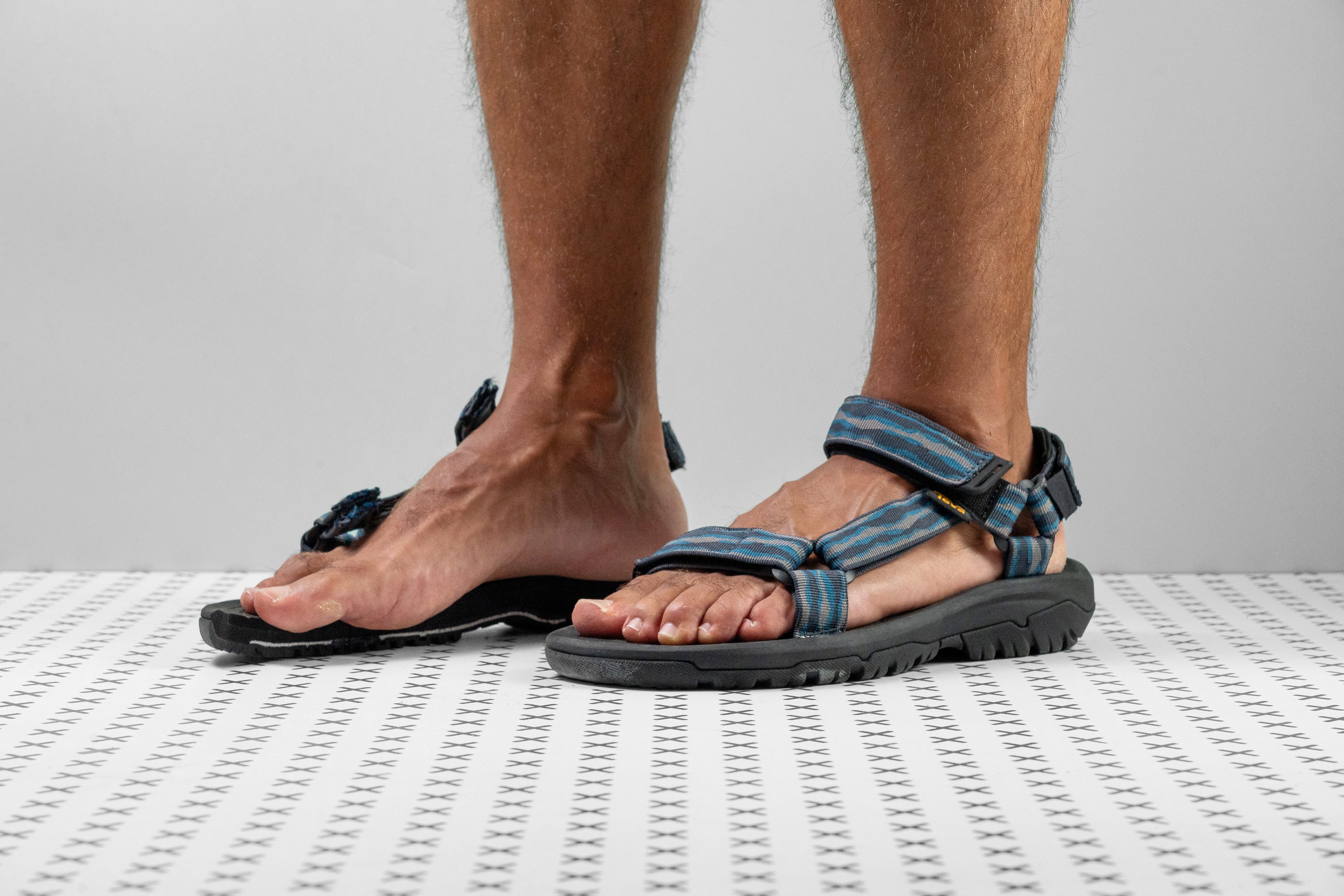
Teva makes several sandal styles. Some have thick soles, strong rubber outsoles, and adjustable straps. Others are made more for casual use. The model matters as much as the brand.
For hiking, look for features such as:
• A firm, textured outsole for better traction
• Adjustable straps that hold the heel and forefoot in place
• A molded footbed that supports the arch
• A cushioned midsole for long walks
• Durable webbing that dries fast
• A closed or protected toe area, if available
Teva sandals are not a universal replacement for hiking footwear. Still, they can be a smart choice for short, dry, warm-weather hikes.
Benefits of hiking in Teva sandals
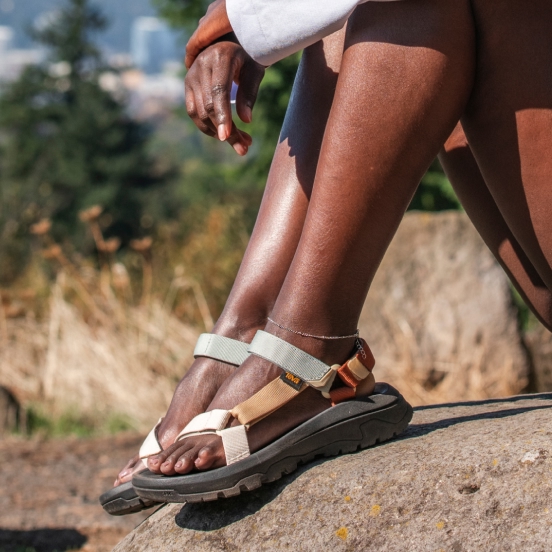
Teva sandals have several useful traits for outdoor walking. These benefits explain why many hikers pack them for summer trips and water-based adventures.
Breathability
Open sandals allow air to move around your feet. This can reduce the hot, damp feeling that often develops inside closed shoes.
Breathability is helpful on warm trails. It may also lower the chance of blisters caused by sweat and friction. However, breathable footwear does not prevent all blisters. A poor fit can still cause rubbing.
Fast drying
Many Teva sandals use synthetic straps and materials that dry faster than leather boots or padded hiking shoes. This makes them useful for creek crossings, wet grass, and canoe trips.
Wet feet can become uncomfortable very quickly. On a warm day, sandals may dry during the hike. In cool weather, though, wet feet can lose heat and become unsafe.
Good comfort for casual trails
Teva sandals often feel comfortable right away. Their footbeds provide cushioning, while the straps let you adjust the fit.
They can work well on:
• Paved nature paths
• Boardwalks
• Flat forest trails
• Campground walks
• Short canyon routes with gentle footing
Comfort still depends on fit. A sandal that feels good for 20 minutes may cause pain after three hours.
Useful for water hikes
Water-friendly sandals are popular for trips near lakes, rivers, and coastal areas. They let water escape instead of trapping it inside a shoe.
They also provide more protection than bare feet. The sole can shield you from small stones, shells, and rough ground.
Even so, fast-moving water presents a serious risk. Sandals should never create a false sense of safety near strong currents, slippery rocks, or deep crossings.
Easy to put on and remove
Teva sandals are convenient at camp and during travel. You can remove them quickly before entering a tent or vehicle.
Many hikers also use them as a second pair of shoes. After a long day in boots, sandals can give your feet more air and room.
The limitations of Teva sandals on trails
Understanding the weaknesses of Teva sandals is just as important as knowing their benefits. Many hiking injuries happen when people use footwear that does not match the trail.
Limited toe protection
Most Teva sandals leave the toes open. A rock, branch, or loose object can strike your foot.
Open toes also make it easier to stub a toe. This matters on rocky trails, root-filled paths, and uneven descents.
If you want sandal comfort with more protection, consider a hiking sandal with a closed toe. Even then, a closed-toe sandal does not protect the foot as fully as a hiking shoe.
Less ankle support
Most Teva sandals do not support the ankle like a mid-height hiking boot. This may matter when carrying a heavy backpack or walking across loose ground.
Ankle support does not prevent every sprain. Balance, strength, and careful foot placement matter too. Still, a stable shoe can help some hikers feel more secure.
People with a history of ankle injuries should be especially careful. A physical therapist or medical professional can offer advice based on your needs.
Traction varies by model
Not all Teva sandals have the same outsole. Some have enough grip for packed dirt. Others may feel less secure on wet stone or loose gravel.
A shallow tread can collect mud and lose traction. Smooth soles can also slide on algae-covered rocks.
Before a hike, inspect the bottom of the sandal. If the tread looks worn or rounded, replace the sandals or choose another pair.
Debris can enter easily
Sand, pebbles, pine needles, and dirt can collect under the straps or footbed. This can lead to pressure points and hot spots.
Stopping to clean your feet may solve the problem. On long hikes, repeated debris can become a major comfort issue.
Gaiters can help with some debris, but they do not turn open sandals into fully enclosed footwear.
Poor choice for cold conditions
Sandals offer little insulation. Cold wind, snow, and icy water can quickly chill your feet.
Cold exposure can reduce comfort and foot control. In severe conditions, it can contribute to frostbite.
For winter hikes, use insulated footwear designed for the temperature and terrain. Teva sandals belong mainly in warm-weather conditions.

Which Teva sandals are best for hiking?
The best Teva sandals for hiking should offer secure fit, strong traction, and enough cushioning for the planned distance. Do not choose only by color, price, or casual comfort.
Look for these features:
Adjustable straps
Multiple adjustment points help you control movement. The heel should stay in place when you walk downhill.
The straps should feel snug but not tight. You should not see deep marks on your skin after wearing them.
A secure heel
A heel strap is important for hiking. Slip-on sandals can move too much on uneven ground.
To test the fit, walk up and down a slope. Your heel should not lift far from the footbed.
A durable outsole
Choose an outsole with visible tread. Deeper, well-spaced lugs usually perform better on dirt, gravel, and light mud than a nearly flat sole.
No outsole grips every surface. Rubber can still slip on smooth, wet rock.
A supportive footbed
A supportive footbed should feel stable rather than soft and squishy. Too much softness may feel pleasant at first but can reduce control over long distances.
Your arch should rest comfortably on the footbed. If you feel pressure in one spot, try another model.
The right amount of cushioning
Cushioning helps reduce fatigue on hard paths. It does not replace a good fit or proper traction.
For short hikes, moderate cushioning may be enough. For longer walks, your choice should match your body weight, pack weight, and walking style.

Teva sandals versus hiking shoes
The question “are Teva sandals good for hiking” becomes easier when you compare them with standard hiking shoes.
| Feature | Teva sandals | Hiking shoes |
|---|---|---|
| Breathability | Usually excellent | Varies by material |
| Water drainage | Often very good | Varies by design |
| Toe protection | Limited on open models | Usually better |
| Ankle coverage | Usually low | Low to high |
| Debris protection | Limited | Better |
| Warm-weather comfort | Often excellent | Can feel warmer |
| Rough-trail performance | Limited to moderate | Moderate to high |
| Weight | Usually light | Light to heavy |
| Drying speed | Often fast | Can be slow |
Teva sandals may be the better choice for a hot, easy trail with water crossings. Hiking shoes are usually safer for rocky routes, long distances, steep slopes, and heavy loads.
Some hikers use both. They wear hiking shoes on the main trail and switch to sandals at camp or near the water.

When should you avoid Teva sandals?
Avoid Teva sandals when the trail demands strong protection, insulation, or maximum stability.
Choose closed hiking footwear for:
• Sharp rocks and talus
• Thick brush
• Trails with many exposed roots
• Long hikes with a heavy pack
• Cold or snowy weather
• Steep routes with loose ground
• Areas with venomous insects or sharp plants
• Trails where falling objects are possible
You should also avoid sandals if they cause foot pain. Fashion and brand loyalty should never outweigh comfort and safety.
A sandal may be fine for one person and unsuitable for another. Foot shape, balance, experience, and past injuries all affect the decision.

How to prepare Teva sandals for a hike
A short preparation routine can prevent many problems. Test your sandals before taking them on a long trail.
-
Wear them around your home first.
-
Walk on pavement, grass, and a gentle slope.
-
Check for rubbing near the straps.
-
Adjust the heel and forefoot straps.
-
Walk for at least an hour before a major trip.
-
Inspect the outsole for wear.
-
Pack blister care and an alternative footwear option when possible.
Do not start a 10-mile hike in brand-new sandals. This is one of the most common footwear mistakes. Even comfortable sandals need time to match your walking style.
I recommend testing the exact pair on a short local trail. A simple test hike can reveal heel movement, strap rubbing, or poor grip before those problems become serious.
Apply a small amount of anti-chafing balm to areas that rub. Do not use a product that makes the footbed dangerously slippery.
Tips for hiking safely in Teva sandals
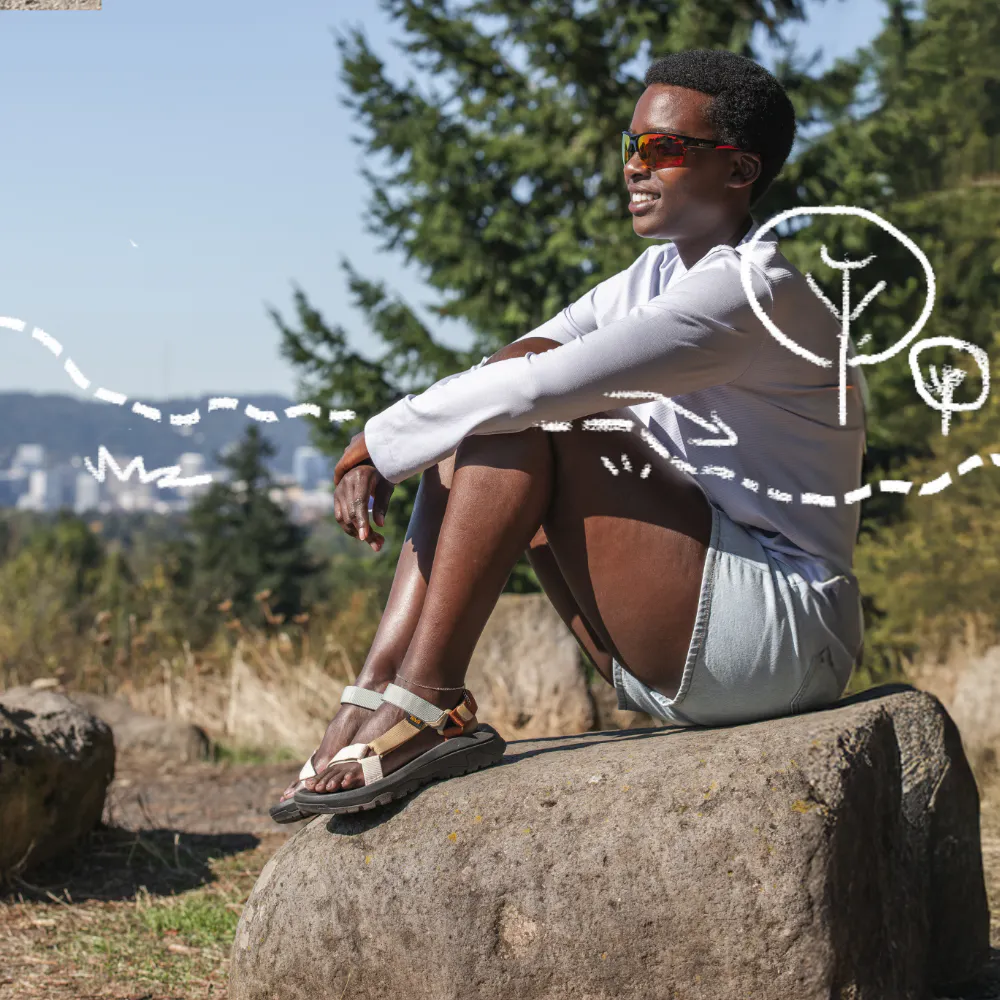
Good technique matters when hiking in open footwear. Short steps and careful foot placement can improve control.
Use these practical tips:
• Slow down on wet rock and loose gravel.
• Keep your toes relaxed instead of gripping the footbed.
• Step around sharp objects when possible.
• Clean out sand and stones as soon as they cause discomfort.
• Use trekking poles on steep or unstable trails.
• Carry water, food, sun protection, and basic first aid.
• Check the weather before leaving.
• Tell someone where you are going.
• Turn back if the trail becomes too technical for your footwear.
Trekking poles can reduce some stress on the legs and improve balance. They do not remove the risk of slipping, so they should support careful movement rather than replace it.
If your feet become numb, painful, or badly blistered, stop and address the problem. Continuing can turn a small injury into a problem that affects the rest of your trip.
How to care for Teva sandals after hiking
Proper care can extend the life of your sandals and protect your feet.
Rinse away dirt, salt, and grit with clean water. Use a soft brush for the outsole and straps. Avoid harsh chemicals that may damage adhesives or synthetic materials.
Let the sandals dry in a cool, shaded place. Strong direct heat can warp materials or weaken glue.
Check the following after each hike:
• Loose stitching
• Cracked straps
• A separated sole
• Flattened cushioning
• Worn tread
• Damaged buckles
Replace sandals when the tread no longer grips or when the footbed has lost its shape. A low price is not a good deal if the footwear increases your chance of slipping.
Frequently Asked Questions of are teva sandals good for hiking
Are Teva sandals good for long hikes?
Teva sandals can work for long hikes if the trail is easy, warm, and familiar to you. For rough terrain or a heavy backpack, hiking shoes usually offer better protection and stability.
Can you wear Teva sandals on rocky trails?
You can wear some Teva sandals on mild rocky trails, but use extra care. Open toes, loose stones, and limited traction make technical rock routes a poor match for most sandal models.
Are Teva sandals good for water hiking?
Yes, Teva sandals can be useful for shallow water crossings and wet trails. Check the current, depth, and rock surface first, because sandals do not prevent slips in fast or deep water.
Do Teva sandals prevent blisters?
Teva sandals may reduce heat and moisture, but they do not guarantee blister prevention. Proper sizing, strap adjustment, moisture control, and gradual use are still important.
Can you wear Teva sandals while backpacking?
You can use them for light backpacking on smooth, warm trails. A heavier pack or uneven terrain calls for footwear with stronger protection, traction, and support.
Are closed-toe Teva sandals better for hiking?
Closed-toe models can protect your toes from some rocks and roots. They may be better for hiking than open models, but they still may not match a hiking shoe on steep or technical trails.
How should Teva sandals fit for hiking?
Your heel should stay secure, and your toes should not hang over the front. The straps should hold your foot firmly without causing pressure, numbness, or rubbing.
Conclusion
Teva sandals can be good for hiking when the route is warm, short, and fairly smooth. They offer breathability, quick drying, light weight, and useful comfort near water.
They are not the best choice for steep, rocky, cold, muddy, or technical trails. Before you go, check the outsole, adjust the straps, test the sandals on a short walk, and match your footwear to the trail.
Choose comfort, protection, and traction over brand loyalty. If you have a favorite Teva model or trail experience, share it in the comments and help other hikers make a safer choice.

Madison Clark is a footwear expert and the voice behind MyStyleGrid.com. She specializes in honest shoe reviews, style tips, and practical guides to help readers find the perfect pair for any occasion. With years of experience in blogging and content creation, Madison makes footwear knowledge simple, stylish, and easy to follow.