The best boots for diesel mechanics combine oil grip, tough leather, comfort, and protection for long shop days.
A diesel mechanic may spend one hour under a truck, then stand on hard concrete for the next eight. Oil, water, metal parts, heat, and sharp scraps can turn a normal shoe into a weak link. I looked at the listed work boots for grip, fit, support, durability, and daily shop use. I also included the listed garage items, since a few are tools or workwear rather than boots. That distinction matters when you build a safe work setup.
EVER BOOTS Tank Work Boots
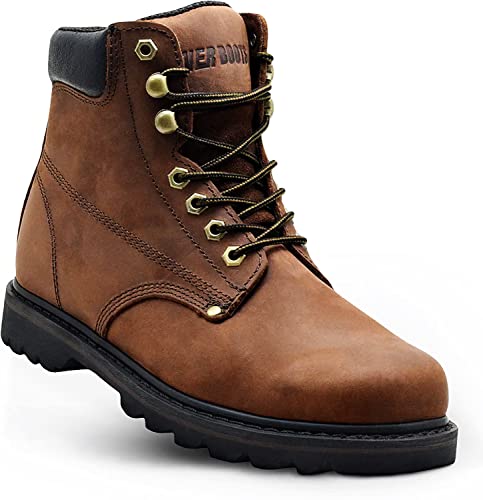
The EVER BOOTS Tank is a practical soft-toe work boot with full-grain leather and a rubber sole. Its classic lace-up shape gives a diesel mechanic room to adjust the fit around the ankle and instep. The dark brown leather also hides shop dust and light grease better than a light boot. For general repair work, it offers a useful mix of low cost, support, and work-ready design.
I like this style for mechanics who need a boot for shop floors, yard work, and basic construction tasks. The rubber outsole should help on many common surfaces, but no outsole stays slip-proof when covered in fresh oil. This is a soft-toe model, so it does not replace a safety-toe boot where the employer requires impact protection. Check the size chart, job rules, and current product details before buying.
Pros:
- Full-grain leather helps resist daily wear
- Rubber sole suits many shop and yard surfaces
- Lace-up design allows a more personal fit
- Soft toe feels less bulky during kneeling work
- Dark color hides dirt and light stains
- Useful for mechanics who need one general work boot
Cons:
- Soft toe does not protect against heavy impact
- Leather needs cleaning and conditioning
- Fresh oil can still make the outsole slick
My Recommendation
I recommend the Tank for diesel mechanics who work in a general repair bay and do not need a safety toe. It makes sense for people who value a traditional leather boot and a flexible fit. It is also a sound choice for a first work boot when the budget is tight. Among the best boots for diesel mechanics, this model stands out as a simple, useful everyday option.
Georgia Boot Farm and Ranch Lacer
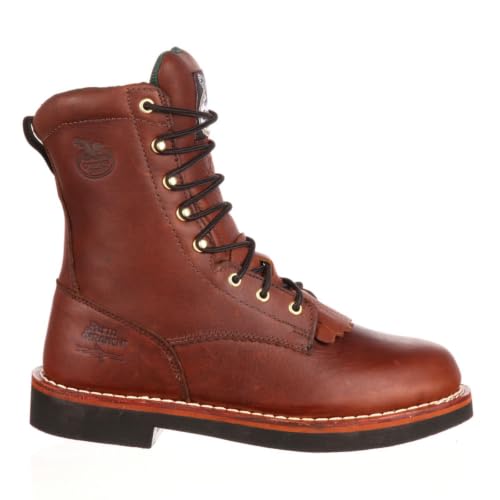
The Georgia Boot Farm and Ranch Lacer brings a rugged laced design to this list. Its Barracuda Walnut finish has a work-focused look that fits a farm, fleet yard, or service shop. The higher boot shape can give the ankle more coverage than a low work shoe. That extra height may help keep dirt and small debris out during outdoor service calls.
This boot is best for a mechanic who moves between concrete, gravel, grass, and truck yards. I would pay close attention to the listed size and width because the supplied listing shows a specific 7.5 medium size. A comfortable boot should hold the heel without crushing the toes. As with any leather boot, break-in time, care, and actual fit can affect comfort more than the product photo suggests.
Pros:
- Higher cut gives added ankle coverage
- Lace system supports a secure fit
- Ranch style works well for outdoor service work
- Walnut color hides common yard dust
- Good choice for mixed shop and field duties
- Sturdy shape can feel supportive on uneven ground
Cons:
- Listed size may not suit every buyer
- May feel warm during hot summer shop work
- Break-in can take time with firm leather
My Recommendation
I suggest the Georgia Boot Farm and Ranch Lacer for diesel mechanics who service equipment outside or travel across rough ground. It is less suited to someone who wants a light, quick-slip-on boot for an indoor bay. The ankle coverage and traditional fit are its main strengths. If your work includes field calls, this model deserves a place among the best boots for diesel mechanics, provided the size fits and your workplace accepts its safety design.
SUREWAY Slip-On Work Boots

The SUREWAY slip-on boot targets workers who want fast entry and a clean, simple look. The listing describes full-grain leather, anti-static construction, and water- and slip-resistant features. Its soft-toe design keeps the front of the boot less rigid than a steel-toe model. That can feel comfortable when a mechanic spends much of the day kneeling, climbing, and walking.
Slip-on boots can save time, but they must fit well at the heel and instep. A loose boot can move inside the shoe and cause rubbing during a long shift. The words “slip resistant” do not mean safe on every fluid, so I would still wipe spills fast and use careful footing. The anti-static feature may matter in some work areas, but buyers should confirm the exact site requirement and current product specifications.
Pros:
- Slip-on design makes changing boots quick
- Full-grain leather supports long-term wear
- Water-resistant feature helps with light wet conditions
- Slip-resistant outsole is useful on many work surfaces
- Anti-static design may suit specific industrial areas
- Soft toe offers a less rigid walking feel
Cons:
- Soft toe lacks crush and impact protection
- Slip-on fit offers less adjustment than laces
- Oil and diesel can still reduce traction
My Recommendation
The SUREWAY is a good match for a diesel mechanic who values speed, easy removal, and a soft-toe feel. It works especially well for technicians who move in and out of a service truck many times each day. I would not choose it for a job that demands a certified protective toe unless the exact model meets that rule. For the right shop, it is one of the more convenient best boots for diesel mechanics.
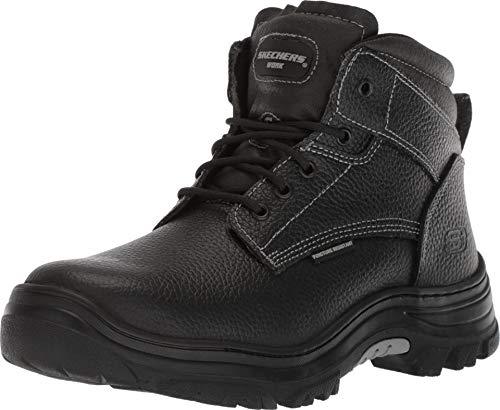
EverBoots Leather Construction Boots

The EverBoots leather construction boot is aimed at demanding daily work. Its black leather look gives it a neat appearance, while the taller shape can add ankle coverage. A construction-style boot often suits mechanics who split time between the bay, loading area, and job site. The lace-up build also lets the wearer set tension where it feels most secure.
Black leather can be easy to match with work clothes and may hide some shop marks. Still, leather is not self-cleaning; diesel, grease, and water can shorten its life when left on the surface. I suggest wiping the boot after each shift and letting it dry away from direct heat. Because the listing does not, by itself, prove a safety-toe rating, confirm protection details before using it in a regulated workplace.
Pros:
- Black leather gives a clean work-ready appearance
- Higher cut supports the ankle area
- Laces allow a close, adjustable fit
- Construction style suits mixed-duty work
- Leather can last well with routine care
- Useful for mechanics who also work outdoors
Cons:
- May need a break-in period
- Black leather can show dried salt or dust
- Safety rating must be confirmed for the job
My Recommendation
I recommend this EverBoots model for mechanics who want a black leather boot for construction, fleet, and general service work. It is a better fit for buyers who prefer a traditional lace-up boot over a slip-on. Careful cleaning will help protect the leather from shop grime. If the fit is right and the job does not require a specific toe rating, it is a strong contender among the best boots for diesel mechanics.
EVER BOOTS Steel Toe Moc Toe Boots

The EVER BOOTS moc toe model is the most protection-focused boot in this group because its title identifies a steel toe. The wedge sole and moc toe shape give it a classic work-boot profile. That look fits a mechanic who wants sturdy footwear that can move from a service bay to a work site. The oil slip-resistant description is helpful, though real traction always depends on the floor, fluid, and outsole condition.
A steel toe can protect against some impact and compression risks, but buyers should verify the exact safety standard and certification for their workplace. Steel can also feel heavier than a soft toe during a long shift. I would wear the boots with good work socks and check for pressure at the toe box before committing to all-day use. Keep the outsole clean, since a thick layer of oil can defeat even a well-designed tread.
Pros:
- Steel toe adds impact protection when properly rated
- Wedge outsole gives a stable work-boot platform
- Moc toe design offers a roomy visual profile
- Oil slip-resistant feature suits many shop tasks
- Traditional shape works with heavy work clothes
- Good choice for mechanics around loose metal parts
Cons:
- Steel toe may add weight and stiffness
- Toe protection details need workplace verification
- Wedge soles can collect mud and shop debris
My Recommendation
This is my top boot choice for a diesel mechanic who needs a steel toe and likes a classic moc toe shape. It fits repair bays where dropped tools, parts, and equipment create a real toe hazard. It may not suit someone who wants the lightest boot or works in a very hot setting. For protective daily use, it is one of the strongest choices among these best boots for diesel mechanics.
Power Driven Diesel Engine Boot Kit

The Power Driven Diesel Engine Boot Kit is an automotive part, not footwear. The listing identifies it as a kit for Ford Super Duty trucks from 2003 through 2007. A correct engine boot kit may help restore a damaged connection or seal, depending on the exact vehicle system and part application. It belongs in a diesel repair parts list, not a boot comparison.
Fitment is the key issue here. I would confirm the truck year, engine, component location, and part number before ordering. A wrong boot can waste time and may lead to a leak, poor connection, or repeat repair. Follow the service manual and use normal shop safety steps, including eye protection, stable support, and a cool engine before work.
Pros:
- Targets a specific Ford Super Duty application
- Useful for diesel repair and restoration work
- May help replace a worn engine boot
- Compact part can fit a mobile mechanic’s stock
- Vehicle-specific listing can simplify parts research
- Supports planned maintenance when correctly matched
Cons:
- Not footwear or personal protective equipment
- Limited fitment may exclude other truck years
- Exact engine compatibility must be checked
My Recommendation
I recommend this kit only to a mechanic working on the stated Ford Super Duty range and only after confirming fitment. It may be useful for a targeted repair, but it cannot compete with the best boots for diesel mechanics. Keep vehicle parts separate from your footwear search. For foot safety, choose a properly fitting work boot with the toe and sole features your job requires.
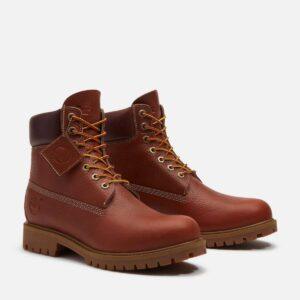
EverBoots Brown Leather Work Boots

This brown EverBoots model offers the familiar leather work-boot look that many mechanics prefer. The listing presents it as a construction boot, so it should appeal to buyers who need footwear for both shop and job-site use. Brown leather can develop a useful worn-in look while hiding ordinary dust and soil. The higher profile may also give more coverage than a sneaker-style work shoe.
For diesel work, I look for a boot that stays comfortable when the shift runs long. A stable lace fit, enough toe room, and a sole that grips clean concrete all matter. I would inspect the tread often and clean fuel or oil from the surface as soon as possible. Since the supplied title does not identify a safety toe, confirm that detail before buying for a workplace with formal protective-footwear rules.
Pros:
- Brown leather gives a classic rugged appearance
- Construction design suits varied work settings
- Laces help tune the fit around the foot
- Higher boot shape offers useful coverage
- Leather can handle routine use with care
- Works well for shop and outdoor service tasks
Cons:
- May require time to soften and break in
- Not listed as a steel-toe boot in the title
- Leather care is needed after wet or dirty work
My Recommendation
I recommend the brown EverBoots for a general diesel mechanic who wants an affordable leather boot for regular work. It is a sensible choice for a clean shop, fleet yard, or light construction setting. Buyers who face falling-object risks should select a clearly rated safety-toe model instead. For everyday comfort and classic style, it remains a reasonable entry among the best boots for diesel mechanics.
Best Features at a Glance
| Best for | Why |
|---|---|
| Steel-toe protection | EVER BOOTS Moc Toe uses a steel-toe design for jobs with impact risks, subject to rating verification. |
| Fast on-and-off wear | SUREWAY slip-on boots save time for mechanics who enter and leave trucks or bays often. |
| Outdoor field service | Georgia Boot Farm and Ranch Lacer offers a taller, lace-up profile for mixed ground and yard work. |
How I Judge Boots for Diesel Mechanics
The best boots for diesel mechanics must solve more than one problem. A mechanic needs grip, but also needs a boot that stays comfortable while crouching under a chassis. Leather can help with abrasion, yet it still needs care after contact with fuel and oil. I judge each boot by how well it balances protection, movement, fit, and service life.
Toe protection comes first when a job includes heavy parts or dropped tools. A soft toe may feel lighter, but it does not offer the same protection as a properly rated safety toe. Look for clear information about the toe type and workplace standard. In the United States, employers may require protective footwear that meets a recognized standard, so never rely on a product photo alone.
Traction is just as important. Diesel mechanics often walk on smooth concrete where a small spill can act like ice. A rubber or slip-resistant sole may help, but “slip resistant” is not a promise of perfect grip on every fluid. I still clean spills, walk with care, and replace boots when the tread becomes smooth.
Fit controls comfort more than brand names do. The heel should stay in place, while the toes should move without touching the front. Try boots with the socks you use at work, and check them late in the day when feet are larger. A boot that feels fine for five minutes may create hot spots after eight hours.
What Diesel Mechanics Should Look For
Start with the job, not the color. A shop mechanic may want a flexible soft-toe boot, while a heavy-truck technician may need a safety toe. A field mechanic may need more ankle coverage and better resistance to wet ground. The best boots for diesel mechanics change with the task, climate, and employer rule.
Leather remains popular because it can handle scrapes and daily wear. Full-grain leather often feels firm at first, then shapes to the foot with use. It can also resist light moisture when treated, but it is not the same as a waterproof membrane. Keep leather away from direct heaters, since strong heat can dry and crack it.
Consider the sole pattern too. Deep lugs can help outdoors, yet they may feel awkward on a smooth shop floor and can hold metal chips. A flatter wedge sole may walk well on concrete but may not suit deep mud. Diesel mechanics who split time between the road and the bay should choose a middle ground.
Height affects comfort and protection. A low boot is easy to move in and may feel cooler. A taller boot can support the ankle area and keep gravel out, but it may weigh more. If you kneel often, check whether the upper creases without pressing the shin.
Do not ignore the inside of the boot. A removable insole makes cleaning and replacement easier. Moisture control also matters because damp socks create blisters. I like to rotate two pairs when possible, giving each pair time to dry fully between shifts.
Boot Care Tips for a Busy Shop
Good care can add months to a work boot. At the end of a shift, brush away dry dirt before it becomes packed into the seams. Wipe off diesel, grease, and hydraulic fluid with a suitable cleaner that will not damage the material. Let the boot air dry at room temperature.
Do not put wet leather against a heater or leave it in a hot truck all day. Heat can shrink leather and weaken adhesives. Use paper or a boot insert to help the upper keep its shape. Once dry, apply a conditioner that matches the leather finish.
Check the outsole every week. Look for worn tread, loose sections, cuts, and damage near the heel. Replace boots when the sole no longer grips or when the upper can no longer protect the foot. A cheap pair that has lost traction is not a good value.
Clean socks matter too. Choose work socks that fit without bunching and that move moisture away from the skin. Change them during a long, wet shift if needed. Small habits prevent the hot spots that can turn into painful blisters.
Are Soft-Toe Boots Safe for Diesel Work?
Soft-toe boots can be safe for tasks without a falling-object or crush hazard. They often feel lighter and bend more easily than steel-toe boots. That makes them useful for light repair, driving, inspection, and work that requires frequent kneeling. They are not a universal answer.
If heavy parts can fall, roll, or crush the foot, choose a protective toe that meets the workplace rule. Ask your supervisor what standard applies before you buy. The product title should state the toe type, but I still check the full specification. Footwear choice should follow the risk, not just comfort.
How Should Work Boots Fit?
Your heel should stay mostly in place when you walk. A small amount of movement can occur during break-in, but repeated rubbing is a warning sign. Your toes should have room to spread and should not hit the front when you walk downhill or climb steps.
Try boots late in the day with your normal work socks. Feet often swell after hours of standing. Lace the boot firmly over the midfoot, but do not cut off circulation. If one foot is larger, fit the larger foot and use an insole or sock change to fine-tune the other.
Can Diesel Mechanics Wear Slip-On Boots?
Yes, slip-on boots can work well when they fit securely. They are convenient for technicians who climb in and out of vehicles or remove boots before entering a clean area. A proper heel hold is essential because slip-on boots offer less adjustment than lace-up styles.
Choose a slip-on only when it stays stable during squats, steps, and ladder use. If the heel lifts too much, the boot may cause rubbing and fatigue. For uneven outdoor work, a lace-up boot may provide a more secure feel.
How Do I Clean Oil From Work Boots?
Remove excess oil with a cloth as soon as possible. Use a cleaner made for the boot material and test it on a hidden spot first. Do not soak leather unless the care instructions allow it, and never use an open flame or strong heat to dry the boot.
After cleaning, let the boot dry at room temperature. Condition leather when it feels dry or stiff. If the outsole remains slick after cleaning, replace the boot or reserve it for non-slip work away from hazards.
FAQs Of Best Boots for Diesel Mechanics
What are the best boots for diesel mechanics?
The best choice depends on the job. The EVER BOOTS steel-toe moc toe model is the strongest listed option for impact protection. The SUREWAY slip-on is better for quick changes, while the Tank suits general soft-toe shop work.
Should diesel mechanics choose steel-toe boots?
Choose a steel toe when heavy parts, tools, or equipment may strike or crush the foot. Confirm that the boot meets your employer’s required safety standard. A soft toe may be enough for low-risk tasks, but it offers less protection.
Are oil-resistant boots fully slip-proof?
No. Oil-resistant or slip-resistant soles can improve traction, but no boot grips every oily surface. Clean spills quickly, walk carefully, and replace worn soles.
How often should a mechanic replace work boots?
Replace them when the tread is worn, the sole separates, the upper cracks, or the boot no longer supports the foot. Time alone does not decide replacement. A heavily used boot may need replacement sooner than a lightly used pair.
Are the listed garage products boots?
No. The HORUSDY siphon pump, mechanic T-shirt, and Power Driven Diesel Engine Boot Kit are not boots. They may support garage work, but they do not protect the feet and should not replace proper footwear.
Final Verdict: Which Should You Buy?
For most diesel mechanics, I would buy the EVER BOOTS steel-toe moc toe model first. It offers the clearest protection focus, a work-ready sole, and a classic fit. For soft-toe work, the EVER BOOTS Tank is the better value.
The best boots for diesel mechanics should match your hazards, fit, and floor. Verify the safety rating, keep the tread clean, and replace worn footwear before it fails.

Madison Clark is a footwear expert and the voice behind MyStyleGrid.com. She specializes in honest shoe reviews, style tips, and practical guides to help readers find the perfect pair for any occasion. With years of experience in blogging and content creation, Madison makes footwear knowledge simple, stylish, and easy to follow.