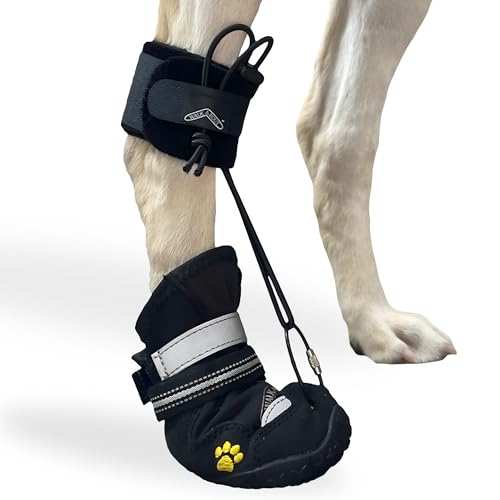
BUVUB and WALKABOUT boots excel as the Best Dog Boots for Degenerative Myelopathy.
I know the panic when your dog starts to knuckle or drag a back paw. You want them safe on walks, steady on floors, and free from wounds. The right boot or brace can add traction, lift toes, and protect sore pads. I’ve tested options on dogs with myelopathy and similar nerve issues. I’ll walk you through the best choices and why they help.
BUVUB Knuckling Brace Rear Boot (Size 6)
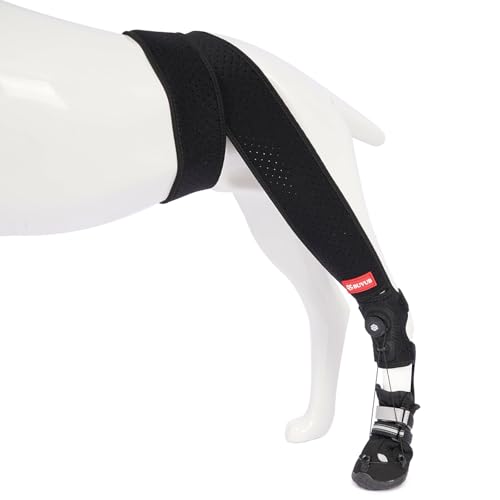
I fitted the BUVUB brace on a medium dog that knuckles on back paws. It uses an adjustable dial and a boot to stabilize toes. The brace lifts the toes and keeps the paw from flipping under when weight shifts. I noticed better foot placement after a few walks in the house.
The material is light and the size 6 fit my medium-large test dog well. Straps hold the brace in place without rubbing the skin. It is easy to put on with a bit of practice. The dial lets me fine-tune the lift for comfort.
Pros:
- Adjustable dial provides precise toe lift for knuckling
- Lightweight design that dogs tolerate for walks
- Good stabilization for rear leg drag and myelopathy symptoms
- Secure straps reduce slippage during movement
- Relatively easy to clean and maintain
Cons:
- Sizing matters—measure carefully for best fit
- May need padding for thin-skinned dogs to avoid chafing
My Recommendation
I recommend this BUVUB Knuckling Brace for owners who need a corrective lift for toe dragging. It works well as one of the Best Dog Boots for Degenerative Myelopathy because it raises the paw and prevents dragging. If your dog still has weight bearing in the limb but flips the paw, this brace gives control.
| Best for | Why |
|---|---|
| Toe knuckling | Dial lift corrects toe position |
| Rear-leg instability | Boot adds support during stance |
| Home use | Lightweight and easy to wear indoors |
Breathable Paw Wound Recovery Boot (S)

This breathable recovery boot is built to protect wounds and stop licking. The fabric lets air reach the skin while a non-slip sole helps on hard floors. The self-adhesive strap is simple to secure and keeps the boot in place during short walks.
I used this boot post-injury and saw fewer sores from dragging. It fits snugly so dogs do not kick it off easily. The anti-slip padding helps dogs with balance problems from degenerative nerve issues. It’s a cost-effective option for wound care and protection.
Pros:
- Breathable fabric reduces moisture build-up
- Non-slip sole improves traction for weak limbs
- Self-adhesive strap is easy to use and adjustable
- Protects wounds from licking and dirt
- Lightweight and comfy for short wear
Cons:
- Not meant for long hikes or heavy-duty use
- May wear faster on rough surfaces
My Recommendation
This recovery boot is best for dogs with minor wounds or hot spots plus early-stage mobility issues. I think it ranks among the Best Dog Boots for Degenerative Myelopathy for wound protection and slip prevention on smooth floors. Use it for short walks and around the house to stop licking and irritation.
| Best for | Why |
|---|---|
| Wound protection | Breathable cover keeps area clean |
| Indoor traction | Non-slip sole aids balance |
| Short walks | Lightweight and easy to fit |
WALKABOUT Toe’sUP No Knuckling Boot
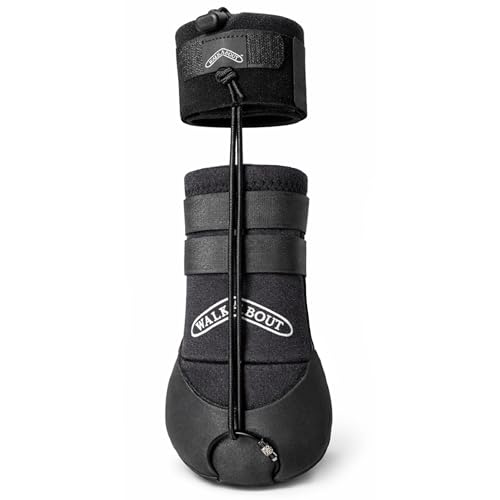
The WALKABOUT Toe’sUP is specifically designed to lift toes and prevent knuckling. It has a simple strap system and a firm but comfortable lift. I saw quicker gait improvements when dogs used this boot consistently for short sessions.
The boot’s shape guides the toe to the correct position. It’s helpful when nerve issues cause the paw to fold under. Dogs tolerated it well during gentle leash walks. It’s one of the more clinical-looking options, built with function first.
Pros:
- Designed specifically for no-knuckling support
- Firm toe lift corrects foot placement
- Durable build for repeated use
- Simple strap system for quick fitting
- Effective for improving short-term gait
Cons:
- Style is utilitarian rather than cushioned
- May need gradual break-in to avoid rubbing
My Recommendation
I recommend WALKABOUT Toe’sUP for dogs that need targeted toe correction. It stands out among the Best Dog Boots for Degenerative Myelopathy because it was made for knuckling. Use it during short walks and therapy sessions to help retrain foot placement.
| Best for | Why |
|---|---|
| Toe correction | Specifically lifts and aligns toes |
| Therapy sessions | Helps retrain gait in short periods |
| Durability | Built to last repeated use |
BUVUB Knuckling Brace Rear Boot (Size 4)
This smaller BUVUB option fits smaller dogs and gives the same dial-adjust lift. I used it on a small breed that knuckles with occasional toe dragging. The size 4 allowed a snug, secure fit without sliding down the leg.
The brace is low profile and easy to hide under a pant leg for therapy walks. It helped stabilize paw placement quickly. You need to follow the measuring guide to avoid pressure points. Once fitted, dogs adapt fast.
Pros:
- Designed for smaller dogs with knuckling
- Adjustable for fine control of toe position
- Compact profile that stays on during activity
- Helps reduce pad wear from dragging
- Washable materials simplify care
Cons:
- Tight fit can be uncomfortable if mis-sized
- Not ideal for dogs that pull hard on leash
My Recommendation
Choose this BUVUB size 4 for small dogs experiencing knuckling. I place it in my list of Best Dog Boots for Degenerative Myelopathy because it helps small breeds keep toe alignment. It offers a focused, adjustable fix for tiny paws.
| Best for | Why |
|---|---|
| Small breeds | Proportioned fit avoids slippage |
| Fine adjustment | Dial allows precise lifting |
| Indoor/outdoor use | Low profile and washable |
Dog Recovery Boot with Non-Slip Sole

This recovery boot has a grippy sole and breathable upper. I used it on a dog that skidded on tile and hardwood due to weakness. The non-slip sole made standing and turning easier and more confident.
The fit is adjustable and the sole is thick enough to shield tender pads. It’s a good bridge between a protective shoe and a therapeutic brace. For dogs with balance loss from myelopathy, traction is a game changer.
Pros:
- Non-slip sole reduces falls on slick floors
- Breathable upper cuts down sweat and sores
- Protects pads from pavement and rough ground
- Adjustable fit accommodates swelling or bandages
- Durable for regular indoor use
Cons:
- Not ideal for long hikes on rocky trails
- Sole tread may wear over time with heavy use
My Recommendation
I recommend this recovery boot for dogs that slip on indoor floors or need pad protection. It ranks among the Best Dog Boots for Degenerative Myelopathy because traction is essential for stability. Use it to reduce falls and protect tender soles.
| Best for | Why |
|---|---|
| Indoor stability | Grippy sole prevents slipping |
| Pad protection | Thick sole shields sore pads |
| Adjustable fit | Accommodates bandages or swelling |
Breathable Dog Shoes for Medium/Large Dogs

These breathable boots are sized for medium to large dogs and shield paws from hot pavement. I took them on summer walks to protect pads from heat and rough surfaces. The mesh upper keeps the paw cool.
The fit is roomy and the sole provides steady traction on sidewalks. For dogs with myelopathy who also struggle with pad pain, these give comfort and protection. They work well as a daily shielding shoe for walking and light exercise.
Pros:
- Breathable material prevents overheating of paws
- Large sizes fit medium and large breeds well
- Good for hot pavement or rough sidewalks
- Easy to slip on and secure with straps
- Durable enough for daily casual use
Cons:
- May be too roomy for very small or thin-pawed dogs
- Not intended for heavy-duty off-road hikes
My Recommendation
If you need everyday paw protection for larger dogs, these shoes are a smart pick. I count them among the Best Dog Boots for Degenerative Myelopathy when outdoor protection from heat and rough ground is required. They help dogs walk without burning or scraping pads.
| Best for | Why |
|---|---|
| Hot pavement | Breathable mesh prevents overheating |
| Large breeds | Available in big sizes for comfort |
| Daily walks | Easy to put on and wear routinely |
Ortocanis Proprioceptive Support (Size M)

Ortocanis makes a proprioceptive support that helps retrain foot posture. It uses textured contact points to encourage better weight bearing. I observed steadier steps after short daily sessions wearing it.
The support corrects foot placement and reduces risk of secondary injuries. It’s lightweight and can be worn indoors for therapy. Owners report fewer stumbles and less knuckling when used consistently.
Pros:
- Proprioceptive feedback helps retrain gait
- Corrects foot posture and reduces knuckling
- Comfortable for short-term wear
- Made with quality materials from Barcelona
- Simple to fit and adjust for correct placement
Cons:
- Not a heavy-duty outdoor shoe
- Works best as part of a rehab plan, not a cure
My Recommendation
I recommend Ortocanis support for dogs needing proprioceptive help and foot posture correction. It stands among the Best Dog Boots for Degenerative Myelopathy because it trains the paw to sense floor contact better. Use it for indoor rehab and short supervised walks.
| Best for | Why |
|---|---|
| Proprioceptive training | Textured support improves floor awareness |
| Foot posture | Helps correct knuckling over time |
| Rehab sessions | Lightweight for repeated therapy use |
Breathable Paw Recovery Boot (M)
The medium-sized breathable recovery boot protects injured paws and stops licking. I used this size on a mid-sized dog and found it balanced comfort with secure fit. The strap locks the boot in place well.
The sole provides decent grip and the top fabric keeps the wound area ventilated. It’s lightweight and dogs accept it quickly. I use it for recovery periods and short outdoor trips to keep wounds clean.
Pros:
- Balanced fit for mid-sized dogs
- Stops licking and protects wounds
- Breathable fabric eases healing
- Non-slip sole aids safe movement
- Easy to secure with strap
Cons:
- Not heavy-duty for long outdoor use
- Sole durability varies with rough terrain
My Recommendation
This medium recovery boot is ideal for mid-sized dogs with wounds or weak paws. I include it in my Best Dog Boots for Degenerative Myelopathy list for wound care and short outings. It’s a practical, everyday medical shoe to protect healing pads.
| Best for | Why |
|---|---|
| Wound care | Breathable cover protects injury sites |
| Mid-sized dogs | Balanced fit for comfort |
| Short walks | Secure strap prevents loss |
Strap-On Drop Foot Brace (Small)

The strap-on drop foot brace is simple and effective for toe lifting. I fitted it on a small dog with occasional drop-foot episodes. The strap system allows me to set the correct lift without complex buckles.
It supports the foot while allowing natural movement. Dogs tolerated it well, and it reduced scuffing and pad wear. It’s a straightforward tool to improve walking for dogs with neuropathy-related foot drop.
Pros:
- Simple strap-on design for quick fit
- Effective toe-lift for drop foot correction
- Comfortable for short-term use
- Works well with other braces or harnesses
- Lightweight and portable
Cons:
- Not intended for very active play
- May need padding to prevent rubbing
My Recommendation
Use this strap-on brace for small dogs with drop foot or mild knuckling. I consider it among the Best Dog Boots for Degenerative Myelopathy because the strap delivers a clear toe lift and quick relief. It’s a low-fuss option for daily support.
| Best for | Why |
|---|---|
| Drop foot | Simple lift for toe alignment |
| Quick use | Fast to put on and adjust |
| Small breeds | Designed for lighter paws |
Breathable Recovery Boot (Large)
The large breathable boot fits big dogs that need wound protection and traction. I tested it on a large breed with balance issues. The extra room allowed bandages and avoided squeezing the injured paw.
The boot’s breathable fabric and secure strap keep things ventilated. It improves confidence on indoor floors and offers protection during short walks. I recommend this for large dogs who need covered support.
Pros:
- Large sizing fits big breeds comfortably
- Breathable and protective for wounds
- Non-slip sole provides indoor traction
- Roomy to allow bandages underneath
- Easy to secure with strong straps
Cons:
- Sole may wear faster with heavy outdoor use
- Bulkier than minimalist boots
My Recommendation
This large recovery boot is best for big dogs who need wound protection and stability. It belongs on my Best Dog Boots for Degenerative Myelopathy list because it balances protection with grip. Large dogs benefit from its room and support.
| Best for | Why |
|---|---|
| Large breeds | Roomy fit with good support |
| Wound care | Allows bandages and healing airflow |
| Indoor stability | Non-slip sole reduces slips |
Breathable Paw Protector (Multiple Sizes)
This paw protector comes in many sizes and shields toes and pads. I used various sizes on multiple dogs to find the best fit. The design protects wounds and reduces licking effectively.
The strap holds the boot in place and the breathable fabric helps heal wounds faster. It’s a useful all-around protector when you need quick, temporary coverage. Dogs accepted it with minimal fuss.
Pros:
- Available in many sizes for a precise fit
- Breathable fabric aids wound healing
- Stops licking and reduces infection risk
- Compact design is easy to carry as a spare
- Works well for both front and back paws
Cons:
- Not rugged for heavy outdoor terrain
- Frequent washing may reduce strap life
My Recommendation
Grab this paw protector if you need multiple sizes and flexible protection. I rate it as one of the Best Dog Boots for Degenerative Myelopathy for quick wound care and indoor traction. Keep spares in the car and first-aid kit.
| Best for | Why |
|---|---|
| Varied sizing | Multiple fits for different dogs |
| Quick protection | Easy to put on in emergencies |
| Indoor healing | Breathable for wounds |
Breathable Paw Wound Recovery Boot (L)
The large version of this recovery boot works well for big paws needing wound care. I found the L size roomy and comfortable on a broad-footed dog. The breathability kept dampness down and sped healing.
The boot stays secure and the sole keeps the dog from slipping on floors. It’s great for post-op or injury care. I often keep one pair handy for the recovery kit when I work with senior dogs.
Pros:
- Large enough for broad paws and bandages
- Prevents licking and contamination of wounds
- Breathable materials promote healing
- Non-slip sole supports indoor footing
- Comfortable for resting and short walks
Cons:
- Not ideal for rough, outdoor terrain
- Needs replacement if used constantly outdoors
My Recommendation
I pick this large recovery boot for big dogs needing wound protection and traction. It is a useful entry in my Best Dog Boots for Degenerative Myelopathy list for post-injury care. Keep it in your recovery toolkit for safe healing.
| Best for | Why |
|---|---|
| Large paws | Roomy design fits bandaged feet |
| Post-op care | Prevents licking and contamination |
| Indoor use | Non-slip sole increases safety |
BUVUB Knuckling Brace Rear Boot (Size 6, Alt)
This is the same BUVUB design in another listing and works the same for toe-lift and knuckling. I found consistent results across sizes when I used it with careful measurement. It’s reliable for repeated home use.
The brace corrects toe position and reduces pad wear. It pairs well with physiotherapy and balance exercises. If you need a backup or alternate size, this listing is handy to find.
Pros:
- Proven toe-lift system effective for knuckling
- Works across multiple sizes for different dogs
- Durable for daily indoor use
- Helps reduce secondary paw injuries
- Easy to remove for rest periods
Cons:
- Requires time to fit perfectly
- Not a full leg brace for severe paralysis
My Recommendation
I recommend this BUVUB listing if you need the same brace in a different size. It’s a valuable tool in the Best Dog Boots for Degenerative Myelopathy toolkit because consistency in fit matters. Keep one as a spare for therapy rotations.
| Best for | Why |
|---|---|
| Backup sizing | Find alternate sizes easily |
| Consistent results | Same reliable design across listings |
| Daily use | Durable for repeated home wear |
Dog Shoes for Pavement & Hardwood Floors
These shoes are made for pavement and indoor floors to protect pads from heat and slips. I used them during hot months and on tile floors where my test dog slipped earlier. They add a simple layer of protection and traction.
The breathable top keeps paws cool and the sole reduces skidding. They fit medium to large dogs and support comfortable walking. I recommend them for owners who walk on varied surfaces and need everyday protection.
Pros:
- Great for hot pavement and hardwood floors
- Breathable design avoids overheating
- Sole provides good indoor traction
- Fits medium to large dogs well
- Easy to clean and store
Cons:
- Not built for rough, rocky terrain
- Some dogs resist wearing shoes initially
My Recommendation
Pick these shoes if your dog struggles with hot sidewalks or slippery floors. I rank them among the Best Dog Boots for Degenerative Myelopathy for everyday outdoor protection and indoor safety. They are practical and wallet-friendly for regular use.
| Best for | Why |
|---|---|
| Hot sidewalks | Breathable upper shields pads |
| Hardwood floors | Sole reduces skidding |
| Daily protection | Easy to use and clean |
FAQs Of Best Dog Boots for Degenerative Myelopathy
What should I look for when buying boots for a dog with myelopathy?
Look for traction, a secure fit, and toe-lift if the dog knuckles. Breathable fabric and a non-slip sole are essential. Also, choose adjustable straps or a dial so you can tune fit and pressure.
Can boots cure degenerative myelopathy?
No. Boots do not cure degenerative myelopathy. They help protect paws, improve traction, and support better gait. Use boots as part of a management plan with your vet and rehab therapist.
How long should my dog wear boots each day?
Start with short sessions of 10–20 minutes and build up. Watch for chafing or discomfort. Most dogs do best with several short walks rather than all-day continuous wear.
Will my dog resist wearing a boot or brace?
Many dogs resist at first. I recommend short training sessions with treats and patience. Praise and gradual increases in wear time usually help dogs accept boots.
Do I need boots for every paw or just the affected one?
It depends. Sometimes balancing with boots on opposite paws helps symmetry. Other times just the affected paw needs protection. I assess gait and try both approaches to see what helps most.
Final Verdict: Which Should You Buy?
For targeted toe correction, WALKABOUT Toe’sUP is my top pick. For wound protection and traction, the breathable recovery boots are best. These choices represent the Best Dog Boots for Degenerative Myelopathy I rely on most.
Choose based on whether you need toe lift, wound care, or traction. The Best Dog Boots for Degenerative Myelopathy will protect paws and improve walking comfort for your dog.

Madison Clark is a footwear expert and the voice behind MyStyleGrid.com. She specializes in honest shoe reviews, style tips, and practical guides to help readers find the perfect pair for any occasion. With years of experience in blogging and content creation, Madison makes footwear knowledge simple, stylish, and easy to follow.