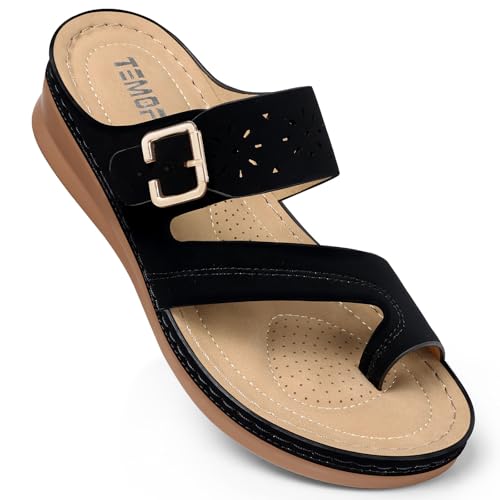
The best sandals for bunions and hammertoes offer roomy toes, soft straps, stable soles, and gentle support.
A sunny walk should not feel like a test of endurance. Yet bunions and hammertoes can make each step feel tight, hot, and sore. The wrong sandal presses the big-toe joint, rubs raised toes, and leaves your feet tired before the day begins. I looked for options that create space, reduce pressure, and support normal walking without feeling bulky. This guide covers sandals, toe correctors, and separators that may help you build a more comfortable foot-care routine in 2026.
Welnove Hammertoe Corrector

The Welnove Hammertoe Corrector is made for people who need more toe guidance than a sandal alone can provide. Its design aims to help hold curled or bent toes in a straighter position. The clear color is discreet under many types of footwear. I like this type of support for short periods at home or inside a roomy sandal.
This is not a shoe, so it cannot replace a well-made pair of walking sandals. Still, it can complement open footwear by helping reduce toe crowding during rest or light activity. The product includes three sizes, which is useful because an overly tight corrector may create more pressure. People with diabetes, poor circulation, numbness, wounds, or severe pain should ask a foot specialist before using any toe device.
Pros:
- Designed to help guide curled toes
- Clear color offers a low-profile look
- Three sizes improve the chance of a better fit
- Can support a home foot-care routine
- May fit inside some roomy sandals
- Useful for people with mild toe crowding
Cons:
- It does not provide arch support or heel cushioning
- A poor size may feel tight or rub the skin
- It may not suit rigid or advanced hammertoes
Ecetana Women’s Bunion Slides

These Ecetana Women’s Bunion Slides focus on simple, easy summer wear. A slide format can feel less confining than a closed shoe because the toes have more air and visual space. The open front may also reduce contact over a bunion or a raised hammertoe. I would consider them for errands, indoor use, poolside walking, and relaxed daily wear.
Slides work best when they do not force the foot to grip with the toes. That is why I would check the upper, footbed, and sole before wearing them for long walks. A sandal that feels soft at first may still lack enough structure for a full day on hard pavement. Use the size chart carefully, and make sure the foot does not slide beyond the sole.
Pros:
- Open design can reduce heat and toe pressure
- Easy slip-on style saves time
- Suitable for casual summer outfits
- Useful for quick errands and indoor wear
- Provides more toe exposure than closed footwear
- May work well for people who dislike tight straps
Cons:
- Slip-on sandals may feel less secure on steep ground
- They may not offer enough support for long walks
- The open upper may not hold the foot firmly for every user
Ecetana Bunion Slides for Casual Wear

This second Ecetana slide option has the same basic appeal: a relaxed shape, open toe area, and a casual look. It is the kind of sandal I would keep near the door for short trips. People with bunions often need to avoid narrow uppers that press the side of the big-toe joint. A broad, open sandal can remove one common source of friction.
I would still treat this pair as a comfort-first casual sandal rather than a medical device. It may help create a less crowded environment, but it cannot reverse a bunion or permanently straighten a fixed hammertoe. Before a long day, wear it around the house and check for rubbing, heel movement, or toe gripping. If the footbed feels too flat, an alternative with more arch support may be better.
Pros:
- Roomier open front may help reduce toe contact
- Simple style suits everyday summer clothing
- Easy to put on and remove
- Helpful for short errands and relaxed travel
- May feel cooler than closed shoes
- Good option for users who want a basic slide
Cons:
- Casual slides may not provide strong heel control
- Flat support may not suit every arch type
- They may be less suitable for uneven trails or fast walking
Toe Separators for Large Feet

These toe separators are sized for larger feet, including women’s sizes 13 and above and men’s sizes 11.5 and above. The separator design places space between the toes and may help reduce rubbing from close contact. That can be useful for someone whose bunion or hammertoe becomes sore after wearing shoes. I see them as a gentle alignment aid for rest, stretching, or short periods of light use.
Fit matters more than the product label. A separator should sit between the toes without causing numbness, color change, sharp pain, or skin damage. Start with a short session and increase time only if the foot responds well. These inserts do not turn any sandal into a supportive walking shoe, so pair them with footwear that has a wide toe box and a stable sole.
Pros:
- Made for larger shoe sizes
- Helps create space between crowded toes
- May reduce toe-on-toe rubbing
- Can support gentle home stretching
- Useful for people who cannot fit small separators
- May complement roomy sandals
Cons:
- Large sizing may be too loose for smaller feet
- It may not fit comfortably in narrow sandals
- Separators cannot correct a fixed toe deformity
Toe Separators for Medium Feet
This medium size is listed for women’s sizes 9 to 12.5 and men’s sizes 7 to 11. It offers the same basic goal as the large version: add a small amount of space between the toes and support a more comfortable position. I would look at this pair for users who find standard separators too small. It can be especially useful after a day in tight shoes, when the toes feel crowded.
Toe spacers are not a cure for bunions. A bunion changes the alignment around the big-toe joint, while a hammertoe may involve a bent joint and tight soft tissue. However, reducing pressure and friction can make daily life easier for some people. I recommend wearing them while seated first, then checking the skin before and after each use.
Pros:
- Fits a broad range of medium-to-large feet
- May create helpful space between toes
- Can reduce friction in crowded areas
- Useful for recovery after wearing dress shoes
- Works well with a simple home routine
- Easy to pack for travel
Cons:
- May feel bulky inside a close-fitting sandal
- Not designed to replace professional treatment
- Some users may need a smaller or larger size
Bunion Sandals With Arch Support

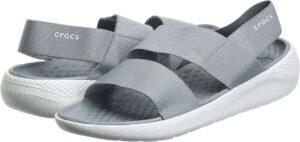
These women’s bunion sandals are the most direct match for shoppers searching for the best sandals for bunions and hammertoes. The design highlights a breathable upper, arch support, a soft sole, and a platform-style base. Those features can help spread pressure across the foot instead of placing all the load under the front toes. The open format also gives the bunion area more room than many closed shoes.
I would choose this style for summer travel, casual walking, or days when a standard flat sandal feels too hard. The key is to check whether the straps sit beside the bunion rather than directly across the sore joint. A cushioned sole feels pleasant, but stability still matters; the heel should stay in place while you walk. Keep expectations realistic, because a sandal can improve comfort without correcting the underlying bone shape.
Pros:
- Designed specifically around bunion comfort
- Arch support may reduce foot fatigue
- Soft sole can cushion everyday steps
- Breathable construction suits warm weather
- Platform shape may add a little underfoot protection
- Useful for travel and casual outdoor use
Cons:
- Platform soles may feel less natural to some users
- Fit can vary by foot width and bunion size
- Not a substitute for evaluation of severe foot pain
Toe Separators for Smaller Feet
This small version is listed for women’s sizes 6.5 to 9 and men’s sizes 6 to 7. It may suit feet that feel overwhelmed by full-size toe spacers. A smaller separator can sit more neatly between the toes and may be easier to use during rest. I would consider it for people with mild crowding who want a compact option.
Small does not mean weak, and it does not mean every foot will find it comfortable. The toe space, joint stiffness, and skin sensitivity all affect the result. Begin with five to ten minutes while sitting, then remove it if you notice tingling or pressure. I also recommend keeping the device clean and dry to limit skin irritation.
Pros:
- Designed for smaller shoe sizes
- Compact shape may feel less bulky
- Can help separate crowded toes
- Easy to use while relaxing at home
- May reduce rubbing between adjacent toes
- Simple addition to a foot comfort plan
Cons:
- May not fit medium or wide larger feet
- It can feel uncomfortable on stiff toes
- Requires gradual use and careful skin checks
Niupiour Four-Pack Bunion Correctors

The Niupiour set includes four bunion toe correctors, giving users extra pieces for regular rotation. A multi-pack can be handy when one device needs washing or when you want to keep a pair in different rooms. The toe separator style aims to reduce contact around the big toe. It may help people who want a basic, low-cost way to test whether toe spacing improves comfort.
I like the value of a multi-pack, but I would not mistake quantity for a custom fit. The corrector should support the toe without forcing it into a painful angle. It is best for gentle use with open, roomy footwear or while resting. If the bunion is red, swollen, suddenly painful, or limiting your walking, seek medical advice instead of relying on an over-the-counter device.
Pros:
- Four pieces provide useful backup
- May help separate the big toe
- Good value for people who want multiple units
- Convenient for home, travel, and work bags
- Can support a gradual comfort routine
- Works well with wide, open sandals
Cons:
- One shape may not fit every foot
- It may shift during active walking
- Does not offer full foot or arch support
YogaToes GEMS Toe Stretcher

YogaToes GEMS uses a gel toe-stretcher concept for people who want more separation between several toes at once. The soft gel design may feel gentler than a rigid plastic insert. It is sold as a pair, so both feet can receive the same routine. I see it as a stretching and comfort tool for quiet time, not as a sandal insert for active walking.
This product can be helpful after hours in pointed shoes or narrow footwear, when the toes feel compressed. Start slowly because a full toe stretch may feel strong if the joints are stiff. Never push through sharp pain, numbness, or lasting soreness. Users with a foot injury or a medical condition should ask a qualified clinician whether this style is appropriate.
Pros:
- Gel construction may feel soft between the toes
- Separates several toes at the same time
- Pair format supports both feet
- Useful during seated relaxation
- May ease the feeling of post-shoe compression
- Recognizable option for a home stretching routine
Cons:
- Not intended for normal walking in sandals
- Full separation may feel intense at first
- May not suit rigid hammertoes or limited toe movement
What Makes a Sandal Good for Bunions?
Bunions and hammertoes need space first. A sandal with a narrow front can press the big-toe joint and rub the top of a bent toe. That pressure may lead to soreness, blisters, and a shorter walking day. The best sandals for bunions and hammertoes should let the toes rest in a natural, relaxed position.
A wide toe box is one of the most important features. The front should be wide and tall, not only long. This gives a bunion room on the inner side and gives a hammertoe room above the toe. A rounded or square front often works better than a pointed front.
Soft, adjustable straps also matter. Look for straps that can move away from the bunion. Velcro, stretch panels, and flexible buckles can help you fine-tune the fit as the foot changes during the day. Avoid a strap that cuts across a sore bump or presses the toe joints down.
The footbed should feel supportive without creating a hard lump. Moderate arch support may help some people feel less tired, while a cushioned heel can soften contact with hard floors. However, comfort is personal. A high arch bump that feels helpful to one person may feel irritating to another.
The sole must bend in the right place. A sandal that twists like a towel offers little control. A stable sole can help the foot feel more secure, especially on sidewalks. At the same time, an overly stiff platform may change your walking pattern and feel awkward.
Bunion Sandals Versus Hammertoe Sandals
Bunions affect the joint at the base of the big toe. The visible bump sits along the inner side of the foot. Hammertoes affect one or more smaller toes, which may curl or bend at a joint. Both conditions can react badly to narrow footwear, but the pressure points are not always the same.
For bunions, I focus on side-to-side room. The sandal should not squeeze the big toe toward the other toes. The upper must also avoid direct pressure on the bump. For hammertoes, I check the height above the toes. A low strap can press down on the raised joint and cause a painful spot.
Some sandals can serve both needs if they have a broad, open front and adjustable straps. Others may help a bunion but still press a curled toe. That is why I do not judge a sandal by the word “orthopedic” alone. I check the shape, the adjustability, the sole, and the actual contact points.
How I Evaluate the Best Sandals for Bunions And Hammertoes
I start with fit because even a soft sandal fails if it squeezes the foot. I look for enough room at the front, a secure heel, and straps that do not rub. I also consider how the sandal may feel after several hours, since feet often swell in warm weather.
Next, I review support. A good casual sandal should not collapse under the foot. It should provide a steady base for normal steps. I do not assume that a thick sole equals good support; shape and stability matter more than height.
I also examine the intended use. A slide may be excellent for a quick errand but less ideal for a long city walk. A toe separator may work during rest but not while moving. Matching the product to the task prevents many comfort problems.
Finally, I consider sizing and care. Foot problems often make small errors feel much larger. I recommend measuring both feet, using the larger measurement, and checking the seller’s chart. If the toes touch the end or the heel hangs over the back, the size or shape is not right.
Fit Tips for Sensitive Feet
Shop later in the day when feet are often at their largest. Measure while standing, and wear the socks you plan to use. If you wear no socks, measure that way. Compare both feet because many people have one foot that is slightly longer or wider.
Your toes should not press against the front. Leave a little space beyond the longest toe. The widest part of the foot should sit inside the widest part of the sandal. If the foot spills over the edge, the sandal is too narrow even if the length seems correct.
Walk on a clean indoor floor before removing tags. Take several steps and notice whether your toes grip the footbed. Toe gripping can signal poor security or an uncomfortable shape. Check for red marks after ten to fifteen minutes.
Do not stretch a painful sandal and hope it improves. Some materials soften, but a strap that hits a bunion may keep causing trouble. A sandal should feel comfortable at the start, not only after a painful break-in period.
Are Toe Separators Safe?
Many healthy adults can use soft toe separators for short periods, but comfort and circulation come first. A separator should not cause numbness, tingling, sharp pain, skin breaks, or a change in toe color. Remove it if any of these signs appear.
People with diabetes, neuropathy, poor blood flow, arthritis, open sores, or recent foot surgery need extra caution. Reduced feeling can make it hard to notice pressure damage. A podiatrist or other qualified health professional can help choose a safe option.
Toe separators may reduce friction or provide a temporary feeling of space. They do not rebuild a bunion or guarantee that a hammertoe will straighten. Fixed deformities may need a different plan, especially when pain or loss of function continues.
Keep gel devices clean and dry. Follow the care instructions, and replace them if the material cracks or becomes sticky. Clean skin and a gradual start can lower the chance of irritation.
How to Wear Sandals With a Bunion
Start with short walks. Wear the sandals around the house for fifteen to twenty minutes. Check the bunion and the toes when you take them off. If the skin looks calm and the foot feels stable, slowly add more time.
Avoid walking long distances in a new pair on the first day. Bring a backup shoe on trips. A small blister can become a large problem when you still have miles to walk.
Use straps to secure the foot without squeezing it. Your foot should stay in place, but you should not need to curl your toes to hold the sandal. If you keep gripping the sole, try a sandal with a better heel strap or a more supportive footbed.
Do not wear any sandal through worsening pain. Pain is useful information, not a challenge to overcome. A product can be well made and still be wrong for your foot shape.
My Recommendation
For shoppers who want the most direct match, I would start with the women’s bunion sandals with arch support. They combine an open front, a soft sole, and support features that fit common daily needs. They are the strongest choice here for casual walking, travel, and summer errands.
The Ecetana slides are better for quick, easy wear. They may suit people who dislike tight straps and need a simple sandal for indoor use or short trips. The Welnove corrector and toe separators are useful add-ons for users who want gentle toe spacing while resting, but they should not replace proper footwear.
The best sandals for bunions and hammertoes are not the same for every person. Choose based on the location of your pressure, the flexibility of your toes, and the amount of walking you do. Availability, colors, and sizes can change, so check the current Amazon listing before ordering.
| Best for | Why |
|---|---|
| Daily summer walking | Bunion sandals with arch support offer open space, cushioning, and a steadier base. |
| Quick errands and indoor wear | Ecetana slides are simple to put on and may feel less restrictive. |
| Home toe comfort | Toe separators and gel stretchers may reduce crowding during short rest sessions. |
Buying Guide: Features That Matter Most
A wide and tall toe box
This is the first feature I check. Width protects the bunion, while height protects a hammertoe. The toes should have room to spread without touching hard edges or tight seams.
Adjustable straps
Adjustability helps when feet swell. It also lets you move pressure away from a bunion. A fixed strap may look neat, but it can be a poor choice for a changing or sensitive foot.
A stable outsole
A stable outsole can make walking feel safer. Look for a sole that resists unwanted twisting and has enough grip for the surface you use. Smooth soles can be risky on wet floors.
Cushioning
Cushioning softens impact, but too much softness can make the foot feel unstable. I prefer balanced cushioning with a stable base. The ideal feel is supportive, not sponge-like.
Heel security
A slide may work for a short trip, but a heel strap usually offers better control. Secure sandals can reduce toe gripping. This is helpful for people whose hammertoes become sore when the toes work too hard.
Breathable materials
Heat and moisture can increase rubbing. An open sandal helps air reach the foot, while soft materials reduce friction. Still, inspect seams and edges because even breathable footwear can irritate sensitive skin.
A realistic medical claim
No sandal can cure a bunion. No over-the-counter separator can promise to reverse every hammertoe. I trust products more when I view them as comfort tools rather than instant fixes. Persistent pain deserves a professional assessment.
Common Mistakes to Avoid
The most common mistake is buying a larger size instead of a wider shape. Extra length does not always create more room around the bunion. It may cause the foot to slide forward and make the toes grip.
Another mistake is choosing a very soft, flat sandal for every activity. A soft footbed can feel nice, but long walks may require more structure. If your feet ache after short walks, consider better arch support and heel control.
Many shoppers also ignore strap placement. A sandal may have a wide front but still press across the exact spot that hurts. Try the sandal indoors and look for red marks after walking.
Some people wear toe separators for too long on the first day. More time does not always mean better results. A slow routine is safer and easier to judge.
Finally, do not ignore a sudden change. Sudden swelling, warmth, redness, drainage, or severe pain may signal a problem that needs medical care. Footwear can protect comfort, but it cannot diagnose the cause.
FAQs Of Best Sandals for Bunions And Hammertoes
What are the best sandals for bunions and hammertoes?
The best sandals usually have a wide, tall toe box, soft adjustable straps, a stable sole, and enough cushioning. The women’s bunion sandals with arch support are the strongest all-around option in this guide. Fit remains more important than the product name.
Can sandals make bunions worse?
Yes, narrow or poorly fitted sandals can increase pressure and rubbing. High heels and pointed fronts may also push the toes into a crowded position. Choose a roomy front and stop wearing the sandal if pain increases.
Are toe separators a cure for hammertoes?
No. Toe separators may reduce rubbing and provide temporary comfort, but they do not guarantee correction. A fixed hammertoe or ongoing pain should be assessed by a foot professional.
Should I wear a heel strap?
A heel strap can improve stability and reduce toe gripping. It is often helpful for longer walks or uneven ground. A slide may still work for short, easy use if it stays secure.
How long should I wear a new sandal at first?
Start with about fifteen to twenty minutes indoors. Check for redness, rubbing, numbness, and foot fatigue. Increase wear time slowly only when the sandal feels comfortable and stable.
Final Verdict: Which Should You Buy?
The women’s bunion sandals with arch support are my top pick for daily summer use. They offer the best balance of open toe space, cushioning, and support among these choices.
For quick wear, choose Ecetana slides. For home toe spacing, consider a correctly sized separator. The best sandals for bunions and hammertoes should feel roomy, stable, and kind to sore feet.

Madison Clark is a footwear expert and the voice behind MyStyleGrid.com. She specializes in honest shoe reviews, style tips, and practical guides to help readers find the perfect pair for any occasion. With years of experience in blogging and content creation, Madison makes footwear knowledge simple, stylish, and easy to follow.