The best sandals for high arches and plantar fasciitis combine firm support, soft cushioning, and a stable, comfortable fit.
If heel pain makes a short walk feel like a long hike, the right sandal can bring real relief. High arches often need help spreading pressure across the foot, while plantar fasciitis needs gentle support under the heel and arch. I looked closely at supportive sandals, recovery slides, flip-flops, and simple arch inserts to find practical options for daily wear. The picks below suit different needs, from errands and travel to post-workout recovery. Remember that footwear can help manage discomfort, but sharp or lasting pain deserves advice from a podiatrist.
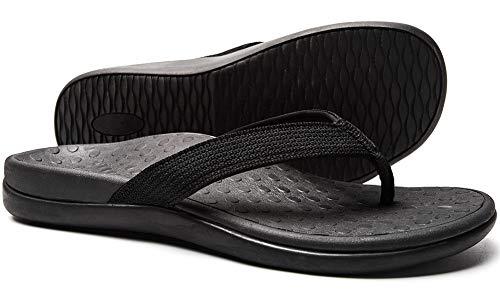
LLSOARSS Orthotic Flip Flops for Heel Pain
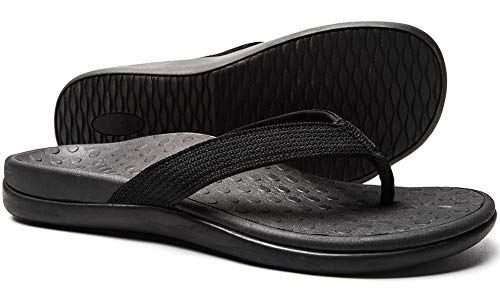
The LLSOARSS orthotic flip-flop is a useful choice for shoppers who want open footwear with more support than a flat rubber thong. Its contoured footbed aims to cradle the arch and reduce the “hard floor” feeling that many people notice with plantar fasciitis. The raised heel area may also help keep the foot from sitting completely flat. I like this design for warm days, quick errands, and relaxed walks.
The broad sole gives the foot more room to settle than a very thin beach sandal. The toe post still creates the familiar flip-flop feel, but the supportive footbed makes it more suitable for everyday use. It is not a medical device, and the best fit will depend on your arch shape and walking style. Start with short wear sessions so your feet can adjust to the firmer contour.
Pros:
- Contoured footbed gives the arch more structure
- Open design works well in warm weather
- Useful for quick errands and casual walks
- Supportive sole feels steadier than flat flip-flops
- Simple style suits home, pool, and vacation use
- May reduce pressure from completely flat footwear
Cons:
- Toe-post design may not suit sensitive toes
- Flip-flops offer less heel security than strapped sandals
- The arch shape may feel too firm for some feet
KuaiLu Women’s Orthopedic Walking Sandals

For shoppers who need more coverage than a flip-flop, these KuaiLu women’s orthopedic sandals are a strong everyday option. The design focuses on arch support, a cushioned base, and a more secure walking feel. That combination matters when plantar fasciitis flares during long periods of standing. I would consider this pair for grocery trips, sightseeing, casual workdays, and summer travel.
A sandal with multiple points of contact can help the foot feel less loose than it does in a slide. The beige color also blends easily with jeans, shorts, and simple summer clothes. As with any support shoe, comfort depends on the shape of the footbed and the way the straps hold your foot. Check the size chart, and avoid sizing up so far that your heel slides off the back.
Pros:
- More secure feel than a loose open flip-flop
- Arch support helps distribute pressure through the foot
- Cushioned base suits daily walking
- Versatile beige color works with many outfits
- Good option for errands, travel, and casual wear
- Open construction allows airflow in warm weather
Cons:
- May require a short break-in period
- Not as protective as a closed walking shoe
- Support may not match a custom orthotic
KuaiLu Women’s Recovery Arch Support Slides

Recovery slides work best when you want quick relief after activity, work, or a long day on your feet. This KuaiLu pair uses a slip-on format, so I can put it on without bending down to manage straps. The arch support gives the middle of the foot a defined place to rest. That feature can feel welcome after hours in stiff shoes or on hard floors.
The green color adds a sporty touch, and the roomy slide shape makes it easy to wear around the house or outside for short trips. I would not treat a recovery slide as a running shoe because the open heel can move during fast walking. It is better for gentle use, relaxed standing, and post-exercise comfort. People with high arches should pay attention to whether the arch meets the foot without creating a sharp pressure point.
Pros:
- Slip-on design makes daily use fast and easy
- Defined arch area supports the middle of the foot
- Helpful after exercise or long work shifts
- Roomy shape can feel comfortable during rest
- Sporty style suits casual outfits
- Easy to use indoors and for short outdoor trips
Cons:
- Open heel gives less stability on uneven ground
- Not the best choice for long, fast walks
- Arch height may not fit every high-arch shape
Dr.Foot Gel Arch Pads and Shoe Inserts

Dr.Foot gel arch pads are not sandals, but they can improve sandals and shoes that lack support. The self-adhesive design lets you place a cushion beneath the arch instead of replacing the whole shoe. This may help when a favorite pair feels too flat or when a sandal has enough room for an added pad. The package includes five pairs, which is convenient if you want to test placement in several shoes.
These pads can also help shoppers who struggle to find a sandal that matches a very specific arch height. Placement matters more than many people expect. I would position the pad where the arch feels supported, not where it pushes hard against the inner foot. Clean and dry the shoe first, and wear the insert for a short time before using it all day.
Pros:
- Works with many shoes and some roomy sandals
- Self-adhesive backing helps keep the pad in place
- Gel material adds soft contact under the arch
- Five pairs offer useful replacement value
- Good way to test added support at low cost
- Can help refresh footwear that feels too flat
Cons:
- Incorrect placement can cause pressure or rubbing
- May not fit narrow sandals or thin footbeds
- Adhesive can lose grip with sweat or repeated use
KuaiLu Women’s Orthotic Flip-Flop Sandals
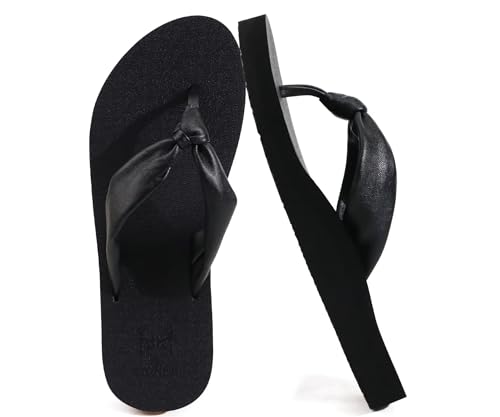
These KuaiLu orthotic flip-flops are aimed at people who want the easy feel of a thong sandal with more structure below the foot. The yoga-mat-style cushion suggests a soft, flexible feel for casual use. Its arch area is designed to offer more help than a flat foam sole. I see this pair as a practical summer option for home, poolside walks, and light errands.
Soft cushioning can make the first few steps feel kinder, especially on tile or concrete. Still, softness alone does not solve plantar fasciitis, so I look for a balance between cushion and support. The flip-flop format can be convenient, but it may encourage toe gripping if the sandal slips. Keep walks short at first and choose a more secure sandal for extended sightseeing or uneven paths.
Pros:
- Combines a casual flip-flop shape with arch support
- Cushioned footbed feels gentle on hard surfaces
- Light design suits warm-weather use
- Easy to pack for vacations and pool visits
- Useful for indoor wear and quick errands
- Offers an alternative to thin, unsupportive thongs
Cons:
- Flip-flop shape may cause toe gripping
- Less secure than a sandal with heel and ankle straps
- May not provide enough support for severe symptoms
KuaiLu Women’s Arch Support Slide Sandals

This KuaiLu slide is a simple pick for people who want supportive footwear without a complicated design. The open toe and slip-on build make it useful for daily routines, such as taking out the trash, walking around the house, or visiting a nearby store. The built-in arch area may reduce the hollow feeling that comes from flat slides. It can also be a handy spare pair for travel.
I would focus on the fit across the top of the foot. A slide should stay on without forcing your toes to clutch the sole. If the strap feels loose, the foot may move too much; if it feels tight, it can create pressure. For many users, this style works best for easy walking and standing rather than demanding hikes.
Pros:
- Fast slip-on design saves time
- Built-in arch support is more helpful than a flat slide
- Open toe allows airflow in warm weather
- Convenient for home, errands, and casual travel
- Simple shape makes it easy to clean and store
- Good backup sandal for daily comfort
Cons:
- Open heel limits walking security
- Fit across the upper may vary by foot width
- Not ideal for wet, steep, or uneven surfaces
ZAIWOO Adjustable Wearable Arch Support Inserts

ZAIWOO wearable arch support inserts offer a different solution for people who cannot find the right sandal footbed. The adjustable-height design is useful because high arches vary from person to person. One foot may also need a slightly different level of support than the other. Instead of committing to one fixed shape, you can try the lower or higher setting.
This style may work with open footwear when the sandal has enough room and the insert can sit securely. I would test it at home first, since a wearable insert can change how the foot meets the sole. It should feel like a gentle bridge beneath the arch, not a hard lump. The best results usually come from slow adjustment and a sandal that already fits well.
Pros:
- Two height settings allow more personal adjustment
- Useful for people with unusually high arches
- Can support footwear that lacks built-in contour
- May help compare support levels before buying orthotics
- Portable design can move between suitable shoes
- Offers a flexible option for different foot needs
Cons:
- May not stay secure in every sandal
- Requires careful placement and adjustment
- Can feel bulky in narrow footwear
Reusable Gel Arch Support Inserts for Women

These reusable gel arch inserts are a practical add-on for anyone who owns sandals that feel almost right. The adhesive base is designed to keep the cushion near the arch, while the gel surface adds a softer point of contact. They may help reduce the strain of a completely flat footbed. I especially like this concept for people who want to improve several pairs without buying new footwear.
Because these inserts are reusable, cleaning and storage matter. Follow the care directions, allow them to dry, and check the adhesive before each use. They cannot correct every cause of heel pain, and they should not replace professional care when symptoms persist. Use them as a comfort tool, not as proof that a sandal fits correctly.
Pros:
- Reusable design may reduce long-term replacement cost
- Gel adds a soft cushion under the arch
- Can improve selected sandals and casual shoes
- Adhesive backing helps limit unwanted movement
- Useful for testing arch support before a larger purchase
- Compact size makes storage and travel simple
Cons:
- May not adhere well to dusty or textured footbeds
- Can feel warm during extended wear
- Placement must match the natural arch position
My Recommendation
After comparing these options, I would start with the KuaiLu women’s orthopedic walking sandals for most people who need the best sandals for high arches and plantar fasciitis. They offer a more secure walking design than a basic flip-flop, plus a supportive footbed for daily use. If you want fast, casual relief at home, the KuaiLu recovery slides are the easier choice. If your current footwear is comfortable but too flat, Dr.Foot or ZAIWOO inserts may solve the problem without replacing every pair.
People with high arches should not chase the tallest arch bump. A support point that is too high can feel like a stone under the foot. I look for even contact, a cushioned heel, a stable sole, and enough room for the toes to spread. For plantar fasciitis, I also prefer sandals that reduce the need to grip with the toes and that keep the heel from sliding.
| Best for | Why |
|---|---|
| Daily walking and errands | KuaiLu orthopedic walking sandals provide a more secure, supportive fit. |
| Post-workout or home recovery | KuaiLu recovery slides offer quick slip-on comfort and a defined arch. |
| Customizing existing footwear | Dr.Foot, ZAIWOO, and reusable gel inserts add support where needed. |
Fit remains the most important test. Stand in the sandal and check that your heel sits fully on the sole. Your toes should not hang over the front, and the arch should feel supported rather than poked. Walk on a safe indoor floor for several minutes before wearing the pair outside. Amazon availability, colors, and sizes can change, so check the current listing before ordering.
How I Evaluate Sandals for High Arches and Plantar Fasciitis
Choosing supportive sandals takes more than looking for the word “orthopedic.” I first check the footbed shape. A useful sandal should provide some support beneath the arch while keeping the heel level and cushioned. It should also let the toes rest in a natural position. A sandal can look soft and still force the foot to work too hard.
I then consider stability. Flip-flops are easy to wear, but they can make the toes grip to keep the shoe attached. That action may place extra stress on the sole of the foot. Slides offer quick comfort but have an open heel. Sandals with more coverage usually feel safer for longer walks.
Finally, I look at the practical details that affect real use. Can you adjust the fit? Does the sole bend too much? Does the sandal feel secure on smooth ground? Does it have enough space for the foot without letting it swim inside? These small checks often separate a useful pair from a sandal that only feels good for five minutes.
What High Arches Need From a Sandal
A high arch does not always mean a strong arch. In many cases, the raised shape carries more load at the heel and the ball of the foot. The middle of the foot may not spread pressure well. This can make hard, flat sandals feel tiring even when the foot looks healthy.
The best sandals for high arches often use a contoured footbed to meet the arch. The contour should support the foot across a broad area. A small, sharp bump is less useful than smooth contact. Cushioning under the heel and forefoot can also make each step feel less harsh.
High arches also benefit from a stable base. A very flexible sandal may fold under the foot and offer little control. I do not want a board-stiff sole, either. The goal is a balanced sole that bends near the front while still supporting the middle and heel.
What Plantar Fasciitis Needs From Footwear
Plantar fasciitis often causes pain near the heel, especially during the first steps after rest. Footwear cannot heal every case, but a supportive pair may reduce daily irritation. The main features I seek are arch support, heel cushioning, a stable sole, and a fit that does not make the toes grip.
A flat sandal may feel light, yet it can leave the foot working without help. A very soft sandal may also fail if it collapses under body weight. Support and comfort must work together. Think of the footbed as a small path: it should guide the foot without creating a steep hill.
It also helps to rotate footwear. Wearing one pair all day can expose the same areas to pressure again and again. Keep a supportive sandal for home, a secure pair for walking, and a comfortable shoe for longer outings. This simple plan may make it easier to manage changing foot comfort.
Important Features to Check Before Buying
Arch shape: Look for a broad, smooth contour. The arch should meet your foot near its natural center. If you have a very high arch, adjustable inserts may offer more control than a fixed footbed.
Heel cushioning: A cushioned heel can soften contact with hard floors. It should not feel unstable or overly squishy. Too much softness may allow the foot to sink and roll.
Sole stability: Hold the sandal and gently bend it. Some flex near the toes is useful. If the whole sandal folds in half with little effort, it may not give enough support for long walks.
Toe room: Your toes need room to spread. They should not hang over the edge or press against the upper. Extra length is not the same as good width, so check both.
Heel security: A heel strap or a well-fitting upper can make walking feel safer. A loose sandal may cause toe gripping. That is one reason I favor more secure walking sandals for long days.
Weight: Lightweight footwear is pleasant, but ultra-light does not always mean supportive. A modestly structured sole can be worth the extra weight if it reduces foot fatigue.
Materials: Soft straps may reduce rubbing. A breathable upper helps in hot weather. Smooth footbeds are often easier to clean, while textured surfaces may help keep the foot in place.
How to Find the Right Fit
Measure both feet near the end of the day, when feet may be slightly larger. Use the larger measurement when choosing a size. Compare that measurement with the brand’s chart instead of relying only on your usual number. Sizes can vary across brands and styles.
When the sandal arrives, try it on indoors. Place your heel in the back and stand normally. Check that the arch support meets the arch without pressing into one small spot. Walk slowly and watch for slipping, rubbing, or toe gripping.
Do not ignore a strong pressure point. Support should feel noticeable, but it should not feel painful. If the sandal causes numbness, sharp pain, blisters, or new pain in the knee or hip, stop using it. A different size or shape may be needed.
Breaking In Supportive Sandals
Even comfortable sandals may feel different at first. Wear them for 15 to 30 minutes indoors on the first day. Increase the time slowly if your feet feel fine. This gives your muscles and the skin on your feet time to adjust.
Do not take a new pair on a long vacation walk right away. Pack a familiar backup pair. Check your feet after each early session, especially around the heel, straps, and toe post. Small red areas can become painful blisters if you ignore them.
People with plantar fasciitis often notice symptoms after activity, not during it. Pay attention later in the day and the next morning. If pain rises, reduce wear time and reassess the fit. The best sandals for high arches and plantar fasciitis should support your routine, not force you to push through pain.
Are Flip-Flops Good for Plantar Fasciitis?
Basic flat flip-flops are usually not my first choice for plantar fasciitis. They often lack arch support, heel cushioning, and a secure fit. The wearer may grip the toe post to keep the sandal in place. That can make each step less natural.
Orthotic flip-flops are different because they add a contoured footbed and more structure. Still, they remain open footwear with a toe post. I would use them for short walks and casual use before trusting them for a full day of sightseeing.
If flip-flops cause slipping or toe fatigue, switch to a sandal with an adjustable upper or heel strap. A secure fit can be more helpful than a soft footbed alone. Comfort should continue after the first few minutes, not disappear once you start walking.
Slides Versus Strapped Sandals
Slides are convenient. You can put them on quickly, and they work well around the house, at the gym, or after exercise. Their main weakness is heel movement. If the front strap does not hold the foot well, you may grip with your toes.
Strapped sandals usually offer better control. They can be adjusted across the foot and may include ankle or heel support. This makes them a better choice for long walks, travel, and uneven paths. The trade-off is that straps may rub if they do not fit correctly.
I would choose slides for recovery and short, easy use. I would choose strapped sandals for active days. The best sandals for high arches and plantar fasciitis depend on where you plan to wear them.
Can Arch Inserts Improve Flat Sandals?
Arch inserts can help if the sandal has enough room and a surface that allows the insert to stay in place. Adhesive gel pads may work well in roomy shoes or sandals with a flat, clean footbed. They are less useful in narrow styles or sandals with deep grooves.
Start with one pair and test placement. The insert should sit under the arch, not behind it or under the heel. If it slides, folds, or creates a hard edge, remove it. An insert that moves can cause more irritation than the original flat sandal.
Inserts are also useful for comparing support levels. If a low pad feels right but a taller pad feels harsh, that gives you helpful information when shopping for a new sandal. When pain remains strong, ask a qualified foot-care professional for a full assessment.
Care Tips for Supportive Sandals
Clean sandals according to the material. Wipe smooth surfaces with a damp cloth, and let them air dry away from high heat. Direct heat can warp foam and weaken adhesives. Never store damp sandals in a closed bag for a long time.
Inspect the sole from time to time. Uneven wear near the heel or outer edge may change how the foot lands. Look for worn tread, loose straps, cracks, and a footbed that has flattened. Replace sandals when the support no longer feels even.
Keep inserts clean and dry. If an adhesive pad starts to curl, it can rub the foot. Replace it rather than trying to force it back into place. Good care helps preserve comfort, but no sandal lasts forever.
When to Seek Professional Help
See a health professional if heel pain lasts for several weeks, gets worse, or affects normal walking. Severe swelling, numbness, weakness, or pain after an injury also needs prompt attention. Footwear may support recovery, but it cannot identify every cause of foot pain.
A podiatrist or physical therapist can assess your gait, arch shape, and footwear needs. They may suggest stretching, strengthening, activity changes, or custom support. This matters because high arches, plantar fasciitis, tendon problems, and nerve issues can feel similar.
Use supportive sandals as one part of a broader plan. Gentle calf stretches, rest after heavy activity, and a gradual return to walking may help. Follow personal medical advice if you have diabetes, circulation problems, or another condition that affects your feet.
FAQs Of Best Sandals for High Arches and Plantar Fasciitis
What are the best sandals for high arches and plantar fasciitis?
The best pair should have a smooth arch contour, heel cushioning, a stable sole, and a secure fit. For most daily use, I prefer a supportive walking sandal over a flat flip-flop. Your foot shape and pain level still determine the final choice.
Should sandals for plantar fasciitis have arch support?
Yes, many people find arch support helpful because it can spread pressure across the foot. The support should feel broad and comfortable. A sharp or overly high bump may cause more pressure.
Are recovery slides suitable for high arches?
They can work for short walks, home use, and post-workout recovery. Choose a slide that meets the arch without forcing the foot outward. For long walks, a more secure sandal is usually better.
Can I wear flip-flops if I have plantar fasciitis?
You can try an orthotic flip-flop with arch support and cushioning. Avoid wearing it for long walks until you know how your feet respond. Stop if you notice toe gripping, heel pain, or slipping.
How long does it take to get used to arch-support sandals?
Many people need several short sessions before wearing them all day. Begin with 15 to 30 minutes indoors. Increase wear time only when your feet feel comfortable during and after use.
Final Verdict: Which Should You Buy?
For most shoppers, the KuaiLu orthopedic walking sandals are the best overall pick because they balance support, cushioning, and walking stability. Recovery slides suit home use, while LLSOARSS and KuaiLu flip-flops fit casual summer needs.
The best sandals for high arches and plantar fasciitis should feel steady, not painful. Check the fit, start slowly, and seek professional advice for lasting heel pain.

Madison Clark is a footwear expert and the voice behind MyStyleGrid.com. She specializes in honest shoe reviews, style tips, and practical guides to help readers find the perfect pair for any occasion. With years of experience in blogging and content creation, Madison makes footwear knowledge simple, stylish, and easy to follow.