The best sandals for orthotic inserts combine a roomy footbed, firm arch support, secure straps, and enough depth.
You leave home feeling fine, then foot pain creeps in after a short walk. A flat sandal can make that pain worse, while a tight shoe may crush your insert. The right sandal gives your orthotic room to work without making your feet feel trapped. I looked at slim inserts, cushioned pads, high-heel supports, and one ready-made orthotic slide to help you find a better match. As of 2026, these are useful options for shoppers who want comfort, support, and easy summer wear.
Pedag Holiday Thin Orthotic Inserts

The Pedag Holiday is a thin, three-quarter-length orthotic insert made for shoes with limited space. Its shorter design leaves the toe area open, which can help it fit inside some sandals and low-profile shoes. I like this format for people who need arch support but do not want a full insole under every toe. The tan finish also looks less distracting in open footwear.
This insert aims to add support without changing the feel of the sandal too much. It may work best in a sandal with a smooth footbed and a firm upper that keeps the insert in place. Because it is slim, it is easier to test than a thick sports insole. Still, fit matters, and I would check the sandal’s width and footbed shape before buying.
Pros:
- Thin profile suits low-volume sandals
- Three-quarter length leaves more toe space
- Provides added arch support
- Tan color blends with many shoes
- Useful for dress sandals and casual shoes
- Less bulky than a full-length insole
Cons:
- May move inside sandals without a secure upper
- Not the best choice for people who need thick cushioning
- May feel too firm for sensitive feet
My Recommendation
The Pedag Holiday is best for shoppers who need a slim orthotic insert for sandals that cannot accept a thick insole. It makes a good starting point for dress shoes, flat sandals, and other narrow footwear. I would choose it for mild to moderate support needs, especially when toe room matters. Among the best sandals for orthotic inserts, this insert is valuable because it lets you keep a more open shoe design. Check the size carefully, and use it only in a sandal that can hold it flat and steady.
Pigskin Self-Adhesive Sandal Inserts
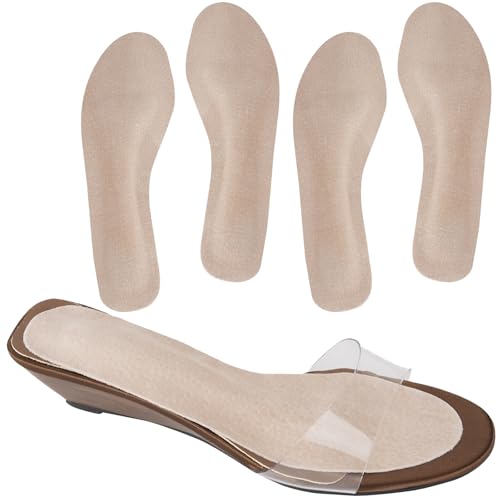
These pigskin sandal inserts focus on comfort, grip, and shock absorption. The self-adhesive backing helps the pads stay in place on a clean, dry footbed. That feature can be helpful in sandals, where a loose insert may slide with each step. The set includes several pieces, so you can use them in more than one pair or replace a worn pad.
I see this product as a comfort aid rather than a full medical orthotic. It can soften a hard sandal base and reduce rubbing under common pressure spots. The low shape may also suit dress sandals and high-heel styles that cannot accept a standard insole. However, people with a strong arch-support need may require a more structured insert or a sandal built around orthotic support.
Pros:
- Self-adhesive backing helps reduce sliding
- Softens hard sandal footbeds
- May reduce pressure under the heel or forefoot
- Useful in sandals, heels, and other open shoes
- Four-count pack gives extra pieces for rotation
- Low design does not cover the whole footbed
Cons:
- Does not replace a firm prescription orthotic
- Adhesive may not bond well to dusty or textured footbeds
- Removal may leave residue on some materials
My Recommendation
I recommend these inserts for people who want quick cushioning in sandals rather than major arch correction. They are especially useful for hard soles, high heels, and sandals that cause heel or forefoot pressure. Clean the footbed first, place each pad with care, and press it down firmly. For shoppers comparing the best sandals for orthotic inserts, these pads work well when the sandal already fits correctly but needs a softer step. Their multi-pack design also offers good value for several pairs of shoes.
Footminders Catwalk Slim Arch Supports

The Footminders Catwalk is made for people who want support in high heels, pumps, sandals, and boots. Its slim shape targets the arch without filling the full toe box. That can make a big difference in dress footwear, where a thick insole often will not fit. The listed women’s medium size suits women’s sizes 9 to 10½, so shoppers should confirm the size before ordering.
This design may help reduce the strain that comes from spending time in raised shoes. It gives the arch a more supported platform while keeping the front of the shoe relatively open. I would pair it with a sandal that has a stable heel, a secure strap, and enough room beneath the arch. It should not be treated as a cure for foot problems, but it can make some dress shoes more comfortable.
Pros:
- Designed for slim dress footwear
- Works with many high heels and sandals
- Supports the arch without covering the full foot
- Helps preserve toe room in narrow shoes
- Useful for events, work, and occasional formal wear
- More discreet than a full-length insole
Cons:
- Size range must match the wearer carefully
- May not provide enough cushioning for long walks
- Can feel noticeable during the first few wears
My Recommendation
The Catwalk is best for women who want arch support in heels or fashionable sandals. I would pick it for dinners, weddings, office wear, and other times when a sporty orthotic is not practical. It is not my first choice for wide feet or long hikes, but it fills a clear gap in the market. For the best sandals for orthotic inserts, this product makes sense when style and a slim fit matter as much as support. Break it in for short periods before wearing it all day.
Pedag Holiday Sheepskin Orthotic Inserts
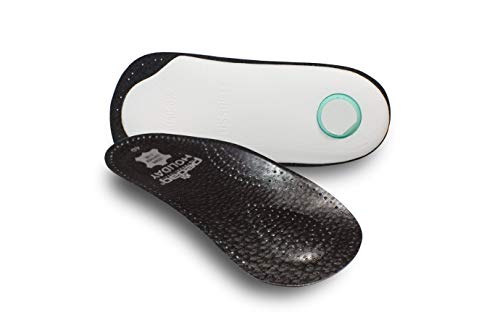
The Pedag Holiday Sheepskin insert combines a three-quarter length shape with a soft upper surface. It includes arch support, a metatarsal pad, and heel cushioning in a compact format. The shorter length helps it fit low-profile shoes that cannot handle a full insole. Its black finish is a practical choice for dark sandals and closed footwear.
The sheepskin surface may feel smoother than a bare synthetic footbed, especially during long periods of standing. The metatarsal area can also give the front of the foot a little more support. I would look for a sandal with a flat, clean base and a strap that crosses the middle of the foot. Since this is a structured insert, it may need a short break-in period before it feels natural.
Pros:
- Soft sheepskin surface adds comfort
- Three-quarter length saves toe space
- Includes arch support and metatarsal support
- Heel cushion helps soften each step
- Fits many low-profile shoes
- Black color works well in darker footwear
Cons:
- May be too structured for people who prefer a soft pad
- Can shift in sandals without a firm strap
- Requires careful sizing for a proper fit
My Recommendation
This Pedag insert is best for anyone who wants several support zones in one slim product. It suits people who feel pressure at the arch, heel, and ball of the foot, yet still need an insert for a low shoe. I especially like it for work sandals and smart casual footwear. In a search for the best sandals for orthotic inserts, it stands out when soft surface comfort and targeted support both matter. It offers strong everyday value when used in a sandal with enough depth.
Dr. Scholl’s Heel and Arch Inserts

Dr. Scholl’s Heel and Arch inserts use a three-quarter length design for women’s sizes 6 to 10. This shape gives the heel and arch support while leaving more room at the front of the shoe. It can be a useful choice for sandals that have a removable footbed or enough open space. The familiar brand also makes it easy for new orthotic users to find and compare.
I would consider this insert for daily comfort when heel and arch fatigue are the main concerns. The compact length can fit better than a full insole, but the sandal still needs a stable base. It is important to avoid placing it over a curved or uneven surface, since that can create pressure points. If pain is sharp, ongoing, or linked to an injury, a health professional should guide the choice of support.
Pros:
- Three-quarter length fits more shoes
- Targets heel and arch comfort
- Designed for women’s sizes 6 to 10
- Leaves the toe area less crowded
- Suitable for daily wear in supportive sandals
- Easy option for first-time orthotic users
Cons:
- May not fit very shallow sandals
- Size range does not cover every foot
- May not match the correction of a custom orthotic
My Recommendation
Dr. Scholl’s is best for women who want a simple heel-and-arch insert from a widely known foot-care brand. It is a practical pick for everyday sandals, casual shoes, and light standing tasks. I would choose it when I want moderate support without a full-length insole. It belongs on a list of the best sandals for orthotic inserts because its three-quarter shape can solve the common problem of limited toe space. The value is strongest when the sandal has a firm, level footbed.
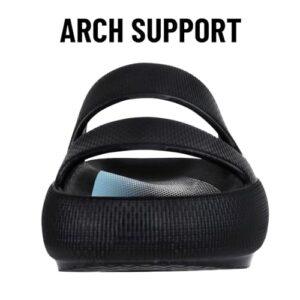
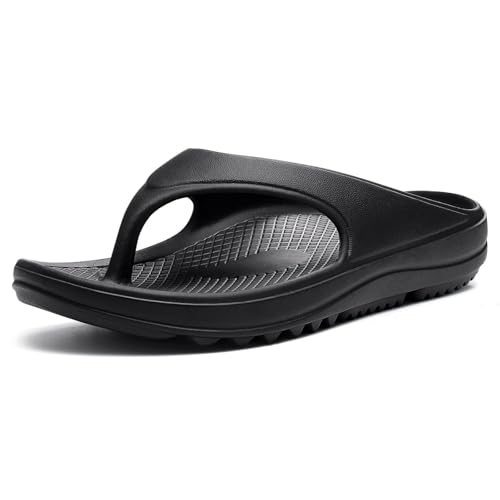
KuaiLu Women’s Orthotic Slide Sandals

The KuaiLu slide takes a different approach from the insert-only products above. Instead of adding support to an existing sandal, it provides a sandal with a built-in orthotic-style footbed. The slip-on format makes it easy to wear around the house, at the pool, or on casual outings. This listed option is khaki in women’s size 9, so fit and color availability deserve close attention.
A ready-made orthotic slide can feel more secure than a loose insert because the footbed and upper work together. The broad upper may help hold the foot in place, while the raised arch area offers a supportive feel. I would not use a slide for demanding hikes or sports, since slip-on sandals usually offer less control than strapped shoes. For errands and relaxed daily wear, though, this style can be a simple answer.
Pros:
- Built-in arch support needs no separate insert
- Easy slip-on design saves time
- Useful for home, errands, and casual wear
- Khaki color pairs with many summer outfits
- Open design allows airflow
- One-piece setup avoids insert movement
Cons:
- Listed size and color may have limited availability
- Slides offer less foot control than secured sandals
- Built-in support may not suit every arch shape
My Recommendation
The KuaiLu slide is best for shoppers who want an orthotic-style sandal without fitting an insert into another shoe. It suits casual use, indoor wear, short errands, and warm-weather relaxation. I would choose it for convenience and easy access, not for long-distance walking or uneven trails. Among the best sandals for orthotic inserts, it is the simplest option because the support comes built into the sandal. Check the size chart and return policy before ordering, since foot shape can vary widely.
How I Chose the Best Sandals for Orthotic Inserts
Choosing a supportive sandal takes more than looking for the word “orthotic.” I first check whether the sandal has enough room for an insert. A good insert cannot help if the footbed is too shallow, too curved, or too narrow. The upper also needs to hold the foot steady, much like a seat belt holds a passenger in place.
I also look at the type of support. A soft pad can reduce pressure, but it may not guide the foot in the same way as a firm arch insert. A three-quarter insole can save toe room, while a built-in footbed can prevent movement. These are different tools for different needs, so I do not rank them by cushioning alone.
Finally, I consider daily use. A sandal for a wedding has different needs from a sandal for a grocery trip. Weight, ease of cleaning, strap security, width, and break-in time all affect comfort. I also favor products with clear sizing, because even the best sandals for orthotic inserts can fail when the size is wrong.
What Makes a Sandal Orthotic-Friendly?
An orthotic-friendly sandal should have a mostly flat and stable footbed. The footbed should offer enough depth for the insert without pushing the toes over the front edge. A removable insole is helpful, but it is not required if the sandal has extra room. The key is a level surface that lets the insert sit flat.
Straps matter just as much. A sandal with a heel strap and a middle strap usually gives better control than a loose flip-flop. Adjustable straps can help fine-tune the fit after you add an insert. If the sandal slips, your foot may grip with the toes, which can create new strain.
Look for a sole that bends in the right place. A little flex at the toes is normal, but a sandal that folds in the middle may not offer enough support. A firm heel area can also help keep the foot aligned. The best sandals for orthotic inserts should feel stable before you add any extra support.
Full-Length Versus Three-Quarter Inserts
Full-length insoles cover the entire foot and often add cushioning from heel to toe. They work well in shoes with a removable liner and a roomy interior. In open sandals, however, they may show at the toes or make the shoe too tight. They can also raise the foot enough to affect strap fit.
Three-quarter inserts stop before the toes. That design leaves the front of the sandal open and often works better in dress shoes. It can also make fitting easier when the sandal has a fixed toe area. The trade-off is less cushioning under the forefoot.
Neither shape is always better. I prefer a three-quarter model for low-profile sandals and a full-length model for roomy walking shoes. The right choice depends on the sandal, your foot shape, and the support your clinician recommends.
How to Fit Orthotic Inserts in Sandals
Start with a clean, dry footbed. Remove the original liner if the sandal has one, then place the insert inside without pressing it down. Check the heel, arch, and toe position while standing. Your heel should not hang off the back, and your toes should not spill over the front.
Walk indoors for a few minutes. Notice if the insert slides, pinches, or creates a hard edge. If the sandal has adjustable straps, loosen them before placing your foot inside, then tighten them until the foot feels secure. Do not force a thick insert into a shallow sandal.
Wear the setup for short periods at first. I often suggest 30 to 60 minutes, followed by a rest, when someone is new to structured support. A small change in pressure can feel strange at first, but sharp pain is a reason to stop. If the problem continues, get professional advice instead of trying to “push through” it.
Common Mistakes to Avoid
The biggest mistake is buying a supportive insert before checking the sandal. A narrow sandal may compress the insert and the foot. A soft, flexible sole may also cancel out some of the support. Start with the shoe, then choose the insert.
Another mistake is using adhesive pads on a dirty or oily footbed. The pad may lift at the edges and become a trip risk. Clean the surface as the material allows, let it dry, and press the pad into place. Test it at home before wearing it outside.