The best sandals for sciatica nerve pain offer firm arch support, gentle cushioning, and stable walking comfort.
If a short walk leaves your lower back, hip, or leg aching, your sandals may be part of the problem. Flat soles and loose flip-flops can let your feet roll inward and send extra stress up your legs. I reviewed these supportive options for arch comfort, foot stability, grip, and daily use. They cannot cure sciatica, but the right pair may help reduce strain while you walk, stand, or relax at home.
BYRIVER Acupressure Massage Sandals

The BYRIVER Acupressure Foot Massage Sandals take a very different path from normal comfort sandals. Their footbeds use raised massage points that press against the soles as you stand or walk. That firm contact may feel stimulating after a long day on your feet. It can also help you notice how much pressure you place through each foot.
I see this pair as a short-session therapy tool rather than a soft walking sandal. The spiky surface may suit people who enjoy strong foot massage and want a way to loosen tired feet at home. Start with only a few minutes, since the pressure can feel intense. Anyone with nerve loss, open sores, poor circulation, diabetes, or very sensitive feet should ask a health professional before using acupressure sandals.
Pros:
- Raised points provide a strong massage effect
- May soothe tired feet after standing
- Useful for short indoor therapy sessions
- Helps users become more aware of foot pressure
- Light design makes storage simple
- Can be used as part of a foot-care routine
Cons:
- Spikes may feel too hard for sensitive feet
- Not ideal for long walks or all-day wear
- May not provide the soft cushioning some users need
- People with reduced sensation need extra caution
MEGNYA Orthotic Flip Flops for Women

The MEGNYA orthotic flip-flops are made for women who want an easy sandal with more structure than a flat beach flip-flop. The contoured footbed gives the arch a place to rest and helps spread pressure across the foot. A cushioned base may make errands, porch time, and casual walks feel easier. The non-slip outsole is also helpful when floors or sidewalks are less than perfect.
This pair may be a practical choice for people who need a simple summer sandal but dislike rigid medical-looking footwear. The light brown color works with casual clothes, and the open design keeps feet cool. Still, a thong strap does not hold the foot as securely as a sandal with adjustable straps. I would introduce them slowly and stop if the arch or toe area feels sore.
Pros:
- Contoured arch support adds structure
- Soft footbed may reduce harsh impact
- Non-slip sole supports steady casual steps
- Open design helps keep feet cool
- Easy to slip on for quick errands
- Casual look suits everyday summer wear
Cons:
- Thong design may irritate some toes
- Less secure than an adjustable sport sandal
- Arch height may not suit every foot shape
- Flip-flops are not the best choice for long hikes
MEGNYA Ergonomic Cloud Arch Flip Flops

The MEGNYA Ergonomic Cloud Arch flip-flops focus on a soft, cushioned feel under the foot. Their raised arch area is designed to give the midfoot more support than a thin, flat sole. That design can feel pleasant for relaxed home use, short walks, and daily chores. The broad footbed may also give the foot a more planted feeling.
I would consider this model when comfort is the first goal and you prefer a soft sandal underfoot. It may suit users who spend time indoors or need a quick pair for casual outdoor use. However, cloud-like softness does not replace good fit or stable support. If your sciatica gets worse with walking, use these only for brief periods and discuss the pain with a qualified clinician.
Pros:
- Soft footbed creates a cushioned walking feel
- Ergonomic arch area adds midfoot support
- Light design works well around the home
- Easy slip-on shape saves time
- May reduce the feel of hard indoor floors
- Comfortable option for relaxed summer wear
Cons:
- Thong strap may not work for every foot
- Soft foam can feel less stable for some users
- Not designed for demanding trails or sports
- Very high arches may need a different footbed
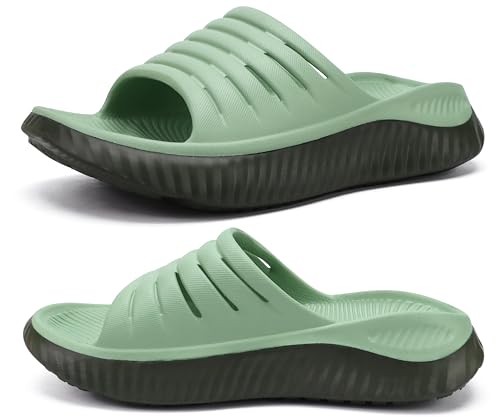
Pure Stride Therapeutic Orthotic Slides

The Pure Stride Therapeutic Slides are the most structured choice in this group. They use an orthotic-style footbed aimed at supporting the arch and cushioning common pressure zones. The slide format makes them simple to put on, while the wide upper can feel less restrictive than a narrow strap. They are designed for people who want more support for plantar foot discomfort, heel pain, and daily standing.
For many users, this is the strongest candidate among these options for the best sandals for sciatica nerve pain. A stable footbed may help reduce unnecessary foot motion, which can make walking feel more controlled. The sandal will not remove pressure from a pinched nerve, and it may feel firm at first. Wear it for short sessions while your feet adjust, then increase use only if it feels comfortable.
Pros:
- Orthotic footbed gives firm arch support
- Slide design is quick and easy to wear
- May help spread pressure under the foot
- Useful for people with plantar foot discomfort
- Wide upper may feel comfortable during home use
- Suitable for short periods of standing and walking
Cons:
- Firm support may require a break-in period
- Open slide design offers less heel hold
- May feel too rigid for users who prefer soft foam
- Size conversion requires careful checking
How Sciatica Can Affect Your Feet and Walking
Sciatica describes pain linked to irritation or pressure on the sciatic nerve. This nerve travels from the lower back through the hip and down each leg. Pain may feel sharp, burning, dull, or electric. Some people also notice tingling, numbness, or weakness in the leg or foot.
Footwear cannot fix the source of nerve pain. The cause may involve a disc problem, narrowing around the spine, or another condition that needs proper care. Still, sandals can change how your feet meet the ground. A shoe that bends too much, slips off, or lacks support may make each step feel less steady.
I look for sandals that help the foot stay calm and balanced. A supportive sole acts like a quiet bridge between your body and the floor. It should cushion impact without making the foot wobble. It should also hold the foot well enough that you do not grip with your toes.
That last point matters with flip-flops. When a sandal keeps slipping, many people curl their toes to hold it in place. This can change the way they walk and may add tension to the calves and legs. A thong sandal can still work for short, easy use, but it is not always the best choice for long walks.
What to Look for in the Best Sandals for Sciatica
Arch support
Good arch support helps the foot keep a more natural shape during weight-bearing. It should match your arch instead of pressing into one small spot. Too little support may leave the foot feeling tired. Too much support may create a new sore area.
There is no single arch shape that works for everyone. A low arch, medium arch, and high arch each need a different feel. I suggest checking the footbed from the side and reading the size notes before ordering. If you use custom orthotics, confirm that the sandal has enough room.
Stable cushioning
Cushioning can soften the feel of tile, concrete, and pavement. But very soft foam may compress unevenly and make balance harder. The best sandals for sciatica nerve pain often combine padding with a stable base. Think of a firm mattress rather than a loose pillow.
Press the footbed with your thumb if you can inspect the sandal in person. It should offer some give, but it should not collapse at once. Online shoppers can look for clear details about the sole, footbed, and intended use. Customer photos may also show how the foam changes after wear.
Heel and foot security
A sandal should stay with your foot without forcing you to grip it. Adjustable straps are useful because they let you change the fit during the day. A heel strap can help during walks or on uneven ground. Slides may work well indoors but can move around during fast steps.
The right fit leaves enough space for the toes to spread. Your heel should not hang over the back edge. Your toes should not push against the front. Swelling can increase in warm weather, so try sandals later in the day when your feet are at their largest.
Outsole grip
Traction is easy to overlook until the ground is wet. A textured rubber or rubber-like outsole can help with everyday stability. This matters even more when back or leg pain affects your balance. Avoid worn soles with smooth patches or uneven wear.
Grip does not mean a sandal is safe for every surface. Pool decks, loose gravel, and steep trails require footwear built for those settings. Use casual sandals for casual tasks. A stable walking shoe may be better for longer routes.
Weight and flexibility
Heavy sandals can make each step feel like work. Very flexible sandals may bend in the middle and give the foot little support. I prefer a pair that bends near the toes but does not fold in half. That balance can support a smoother stride.
Your personal strength and pain level should guide the choice. Someone with mild discomfort may enjoy a flexible flip-flop for short use. Someone with weakness or poor balance may need a more secure sandal. When in doubt, choose stability over style.
How I Evaluated These Sandals
I judged each pair by the features that matter most for foot and lower-body comfort. These include arch shape, cushioning, sole stability, strap design, grip, and ease of use. I also considered the limits of each sandal. A product can feel pleasant but still be the wrong tool for long walks.
I paid close attention to the difference between massage and support. The BYRIVER pair offers strong sensory input, but it is not a traditional comfort sandal. The two MEGNYA pairs focus more on soft, casual wear. Pure Stride takes the firmest orthotic approach.
I also considered how a person with sciatica may move. Pain can make someone shorten a step, shift weight, or avoid one side. A sandal should not add another problem by slipping or forcing toe grip. It should feel predictable under the foot.
Online product details can change, including colors, sizes, materials, and stock. Check the current listing before buying. Read the return policy as well, since arch support is personal and fit can vary between brands.
Comparing the Main Comfort Features
| Feature | What it may help with | Best match |
|---|---|---|
| Strong foot stimulation | Tired feet and short massage sessions | BYRIVER |
| Soft casual cushioning | Home use and light summer walking | MEGNYA Cloud Arch |
| Everyday arch support | Casual errands and foot comfort | MEGNYA Orthotic |
| Firm orthotic structure | Arch and heel support needs | Pure Stride |
Tips for Wearing Sandals With Sciatica
Start slowly with any new pair. Wear the sandals for 15 to 30 minutes at home first. Notice your feet, calves, hips, and lower back during use. A new ache can mean the sandal needs more break-in time, a different size, or a different design.
Do not judge a sandal only by the first five minutes. Some firm footbeds need a short adjustment period. At the same time, do not push through sharp pain, numbness, or a clear increase in leg symptoms. Comfort should improve with use, not steadily decline.
Keep your steps short at first. Avoid long shopping trips, steep hills, and uneven paths until you know how the sandal behaves. If the sandal slips, your toes may clench without you noticing. That is a sign to choose a more secure style.
Replace sandals when the footbed flattens or the outsole wears unevenly. A worn sole can change your alignment. Check the heel and the area under the ball of the foot for deep grooves. If one side wears much faster than the other, ask a podiatrist or physical therapist to assess your gait.
Flip-Flops, Slides, or Massage Sandals?
Flip-flops
Flip-flops are cool, light, and easy to pack. They work well for quick trips, showers, and relaxed indoor use. Their main weakness is foot security. Many designs offer little arch support and make the wearer grip with the toes.
An orthotic flip-flop can be better than a flat one, but it still has the thong strap. Use it for short, gentle activities if it feels stable. It may not be the right pick for a full day of sightseeing.
Slides
Slides are simple and often have more room across the top of the foot. They can be a good home sandal for people who want firm arch support. The trade-off is a loose heel. A slide may move when you walk fast or climb stairs.
Pure Stride is the most supportive slide in this review. It may suit someone who wants an orthotic feel without laces. Keep the pace slow until you know that the upper holds your foot well.
Massage sandals
Massage sandals use bumps or pressure points to stimulate the sole. Some people find this soothing after standing. Others find the pressure too strong. They are best viewed as a therapy accessory, not as a replacement for a stable walking sandal.
BYRIVER belongs in this category. Use it with care and for short sessions. Numb feet may not sense excess pressure, so people with reduced sensation should avoid self-testing without professional advice.
Common Buying Mistakes to Avoid
The first mistake is choosing a sandal only because it looks soft. Softness can feel good at first, but support and stability matter too. The second mistake is buying the wrong size because sandals seem more forgiving. A poor fit can cause sliding, toe grip, and extra strain.
Another mistake is wearing a new pair all day on the first outing. Even a high-quality footbed may feel different from your usual shoes. Give your body time to adapt. Keep your old comfortable pair nearby until you know the new sandals work.
Some shoppers also expect a sandal to treat sciatica. That is not a realistic promise. The best sandals for sciatica nerve pain may improve walking comfort, but they do not remove nerve compression or replace medical care.
Finally, do not ignore warning signs. Seek prompt medical care for new or worsening leg weakness, loss of bladder or bowel control, or numbness around the inner thighs and groin. These symptoms can signal a serious problem. Regular pain that lasts or limits your life also deserves a professional evaluation.
| Best for | Why |
|---|---|
| Short foot massage sessions | BYRIVER uses raised points for strong sole stimulation. |
| Soft casual home wear | MEGNYA Cloud Arch offers a cushioned feel with light arch support. |
| Firm orthotic support | Pure Stride gives the most structured footbed for daily standing. |
My Recommendation
For most people seeking the best sandals for sciatica nerve pain, I would start with the Pure Stride Therapeutic Slides. Their firm orthotic design offers the clearest mix of arch support, pressure control, and easy daily use. They are best for adults who need a structured sandal for home wear, short errands, or standing tasks and who do not mind a brief adjustment period.
The MEGNYA Orthotic Flip Flops are better for women who want a lighter summer style with moderate support. The MEGNYA Cloud Arch pair suits users who value soft cushioning and relaxed indoor comfort. I would choose BYRIVER only for short massage sessions, not as an all-day walking sandal. Availability, sizing, and current pricing can change, so check the live listing before ordering.
How to Get a Better Fit Online
Measure both feet while standing. Feet often differ slightly in length, and the larger foot should guide your size choice. Compare your measurements with the brand chart rather than relying only on your usual shoe size. This small step can prevent many fit problems.
Look at the sandal’s width as well as its length. A narrow foot may slide in a wide footbed, while a wide foot may spill over the edge. The arch should sit under your natural arch, not behind it. If the sandal has straps, adjust them so the foot stays still without pressure points.
Read recent reviews with care. Focus on repeated comments about sizing, arch height, grip, and durability. One person’s “too firm” may be another person’s “supportive.” Your foot shape and pain pattern matter more than a single rating.
When the package arrives, test the sandals on a clean indoor floor. Walk, stand, and turn slowly. Check whether the footbed feels even and whether the sandal stays in place. Keep the packaging until you are sure the fit works.
Can Better Footwear Prevent Sciatica Flare-Ups?
Footwear is only one part of the picture. Sitting for long periods, lifting with poor form, weak core muscles, and limited hip movement may also affect back symptoms. Supportive sandals cannot correct all of these factors. They may simply make daily movement less irritating.
A balanced routine often helps more than one product. Gentle movement, regular position changes, and exercises recommended by a professional can support recovery. Avoid stretches that make nerve pain shoot farther down the leg. More pain is not proof that an exercise is working.
Watch your walking pattern. If you limp, lean to one side, or avoid putting weight on one foot, a sandal may not solve the issue. A physical therapist can look at your gait and suggest exercises or footwear changes. That personal review is especially useful when pain continues for several weeks.
I think of sandals as a comfort tool, not a cure. The right pair can make a hard floor feel kinder and may help you walk with less fear. The wrong pair can act like a loose tile under your foot. Choose steady support, then pair it with sensible care for your back.
When to Ask a Doctor About Sciatica
Many cases of sciatica improve with time and appropriate care. However, ongoing or severe pain should not be ignored. Make an appointment if pain limits sleep, work, walking, or normal tasks. A clinician can help identify the cause instead of treating only the foot sensation.
Get urgent help for sudden leg weakness or severe numbness. Loss of bladder or bowel control is also an emergency warning sign. Numbness in the saddle area needs prompt attention. These symptoms are not problems that a sandal can safely manage.
People with diabetes, neuropathy, poor circulation, or foot wounds should take extra care with any massage or supportive sandal. Reduced sensation can hide rubbing and pressure. A foot-care professional can recommend safer materials and a better fit.
FAQs Of Best Sandals for Sciatica Nerve Pain
Can sandals really help sciatica nerve pain?
Sandals cannot cure sciatica or remove pressure from the sciatic nerve. A supportive pair may improve comfort by reducing foot strain and helping you walk more steadily. Choose arch support, stable cushioning, and a secure fit. Stop using them if your leg symptoms worsen.
Are flip-flops bad for people with sciatica?
Flat, loose flip-flops can make some people grip with their toes or change their stride. That may increase discomfort in the feet and legs. An orthotic flip-flop may work for short use if it feels stable. It is usually less secure than a sandal with adjustable straps.
Which sandal is best for all-day walking?
Among these choices, Pure Stride is the strongest option for structured support. Even so, it is wise to test it slowly before wearing it all day. For long walks, a secure walking shoe with a heel hold may work better than an open slide.
Should I choose a soft or firm footbed?
A soft footbed can cushion hard floors, while a firm footbed can provide better control. The best choice depends on your foot shape, balance, and comfort needs. Many people do well with moderate cushioning and firm arch support. Avoid a footbed that causes sharp pressure.
Can I use acupressure sandals if my feet feel numb?
Use caution. Numbness can make it hard to feel excessive pressure or skin damage. Ask a health professional before using spiky massage sandals. Never use them over open sores, blisters, or irritated skin.
Final Verdict: Which Should You Buy?
Pure Stride is my top pick for the best sandals for sciatica nerve pain because it offers the firmest arch support and stable orthotic feel. Choose MEGNYA for softer casual comfort, and BYRIVER for brief massage sessions.
Supportive sandals may ease daily strain, but they do not replace medical care. Start slowly, check the fit, and choose the pair that helps you walk with calm, steady steps.
Madison Clark is a footwear expert and the voice behind MyStyleGrid.com. She specializes in honest shoe reviews, style tips, and practical guides to help readers find the perfect pair for any occasion. With years of experience in blogging and content creation, Madison makes footwear knowledge simple, stylish, and easy to follow.