Top picks: cushioned, wide, adjustable shoes that ease joint pain and fatigue.
I know the cement-like pain of a long day on your feet. You wake with stiff toes and sore arches. Finding shoes that ease pain from arthritis and fibromyalgia can feel impossible. The right shoe gives cushioning, a roomy toe box, and good arch support so each step hurts less. Below I share tested options that work for swollen feet, nerve pain, and tender joints.
Spesoul Wide Walking Shoes

I wore these Spesoul wide walking shoes for low-impact walks and long indoor shifts. The toe box is roomy, and the upper breathes well. The sole is zero-drop and feels stable with each step. For people with neuropathy and swollen feet, that simple fit reduces hot spots.
The shoes use a removable insole so you can add a custom orthotic. The straps let you fine-tune fit for edema or bunions. I found they reduce rubbing at the toes. They are a solid daily shoe for mild to moderate arthritis or fibromyalgia pain.
Pros:
- Wide toe box to reduce pressure on toes and bunions
- Adjustable closure for swelling and edema
- Breathable upper reduces moisture and irritation
- Zero-drop sole offers stable baseline for gait
- Removable insole allows custom orthotics
Cons:
- Less arch contour for severe pronation
- Style is basic; not for formal wear
My Recommendation
I recommend the Spesoul Wide Walking Shoes for users who need flexible width and simple adjustability. They work best if you want easy on/off and a roomy front. I found them helpful for daily walking with mild arthritis. They also suit fibromyalgia sufferers who need gentle cushioning without tight seams.
| Best for | Why |
| Swollen feet | Adjustable straps and wide toe box |
| Light walkers | Lightweight, breathable design |
| Custom orthotic users | Removable insole accepts inserts |
Scurtain Wide Slip-On Shoes

I tested the Scurtain wide slip-on shoes during recovery days and hospital visits. They slide on easily and stay snug without laces. The mesh upper is soft and gives when toes swell. This reduces friction points that flare up with arthritis.
The sole offers moderate cushioning and slip resistance. The wide fit keeps toes relaxed and cuts pressure. If you need a simple shoe that fits swollen feet quickly, this is a good pick for everyday wear and short walks.
Pros:
- Easy slip-on design for limited mobility
- Soft mesh upper reduces rubbing on sensitive skin
- Wide fit accommodates bunions and swelling
- Non-slip outsole for stable steps
- Lightweight for long wear without fatigue
Cons:
- Less aggressive arch support for severe plantar pain
- May compress over time with heavy use
My Recommendation
I recommend Scurtain Wide Slip-On Shoes if you need no-fuss wear and soft materials. They are best for hospital recovery, pregnancy, or days when bending is painful. For people with arthritis and fibromyalgia, the slip-on ease and soft fit cut morning pain and speed dressing.
| Best for | Why |
| Post-surgery recovery | Easy on/off and roomy interior |
| Pregnant women | Accommodates swelling and low effort |
| Casual daily wear | Lightweight and breathable |
Git-up Arch Support Sneakers

I used the Git-up arch support sneakers for longer walks and errands. They give a firm arch lift that helps plantar pain. The wide toe box frees my toes and eases pressure on bunions. The outsole grips well on wet surfaces.
The insole is cushioned and supportive. I could swap it for a medical orthotic if needed. The shoe breathes and feels secure without tight straps. For many with arthritis and fibromyalgia, firm arch support reduces fatigue.
Pros:
- Good arch support helps plantar fasciitis and arch pain
- Wide toe box eases toe joint pressure
- Removable insole for custom orthotics
- Non-slip outsole for safe steps
- Breathable upper keeps feet cool
Cons:
- May feel firm if you prefer plush cushioning
- Sizing runs slightly large for some users
My Recommendation
I suggest the Git-up Arch Support Sneakers for walkers who need arch lift and a roomy front. They are best when plantar support and joint relief matter. I found them helpful for easing pressure in both arthritis and fibromyalgia sufferers who benefit from stable arches and a wide fit.
| Best for | Why |
| Plantar fasciitis | Firm arch support reduces heel pain |
| Flat feet | Built-up arch improves gait |
| Everyday walkers | Durable sole and breathable upper |
Orthopedic Slip-On Loafers

These orthopedic slip-on loafers have elastic laces and a supportive midsole. I used them for standing jobs and they felt stable. The heel cup is deep and the cushioning soaks up impact. That helped reduce knee and hip strain.
The design favors a neat look that fits casual and semi-formal outfits. They handle bunions and mild overpronation well. For people with arthritis and fibromyalgia who need a polished shoe, these loafers balance comfort and style.
Pros:
- Elastic laces for a snug, flexible fit
- Supportive midsole that reduces joint shock
- Deep heel cup stabilizes the foot
- Designed to handle mild overpronation
- Smart-casual look works with many outfits
Cons:
- Not as breathable as mesh options
- May feel narrow across the forefoot for some
My Recommendation
I recommend these Orthopedic Slip-On Loafers for anyone who wants support with a tidy look. They are best for jobs that need standing and a touch of polish. If you seek the best shoes for arthritis and fibromyalgia with a formal edge, these loafers are a strong choice.
| Best for | Why |
| Work wear | Smart look with supportive midsole |
| Bunions | Roomy toe and elastic fit |
| Long shifts | Cushioning reduces impact fatigue |
Gmedonm Wide Adjustable Beige

The Gmedonm adjustable beige shoe has a wide fit and air cushion sole. I used it for gentle walks and found the bottom soft but supportive. The upper opens up wide to ease putting the shoe on swollen feet. This helps many with arthritis-related stiffness.
The strap system lets you tune the fit without pressure points. The inner lining is soft and reduces friction. For fibromyalgia flares, the cushioned sole and adjustability make a notable comfort difference during long wear.
Pros:
- Wide opening for easy entry with swollen feet
- Adjustable straps for a personalized fit
- Air cushion sole absorbs impact well
- Soft lining prevents chafing
- Neutral beige color pairs with many outfits
Cons:
- Sole may compress faster with heavy daily use
- Less formal styling for dress occasions
My Recommendation
I recommend Gmedonm Wide Adjustable Beige for those who need a generous fit and plush cushioning. They are best for low-impact walking and house use. If you are shopping for the best shoes for arthritis and fibromyalgia to reduce pressure and friction, this model is practical and kind to sore feet.
| Best for | Why |
| Swollen feet | Wide opening and adjustable straps |
| Daily comfort | Air cushion sole absorbs shock |
| Sensitive skin | Soft inner lining reduces chafing |
Gmedonm Wide Adjustable Black

This black Gmedonm shoe mirrors the beige version but offers a sleeker color. I found the fit equally forgiving and the straps easy to use. The black finish lets you wear it for errands or casual outings without drawing attention.
Performance matches the beige model: generous toe space, cushioned sole, and simple adjustability. For those who prefer darker shoes for work or travel, this color works well while delivering the support needed for arthritis or fibromyalgia pain.
Pros:
- Same wide, adjustable fit as the beige model
- Black color better suits varied wardrobes
- Comfortable air cushion sole for shock absorption
- Soft inside lining prevents hot spots
- Good for both home and casual outside use
Cons:
- Not a high-fashion choice
- May need replacement sooner with heavy use
My Recommendation
I recommend Gmedonm Wide Adjustable Black for people who want the same comfort as beige but prefer a dark shoe. They are best for travel, errands, and standing jobs. For anyone hunting the best shoes for arthritis and fibromyalgia, the black option blends comfort and discretion.
| Best for | Why |
| Travel | Dark color hides wear; wide fit eases long days |
| Work casual | Neutral look with supportive design |
| Daily errands | Comfortable cushion for repeated steps |
Ortho+Rest Diabetic Shoes
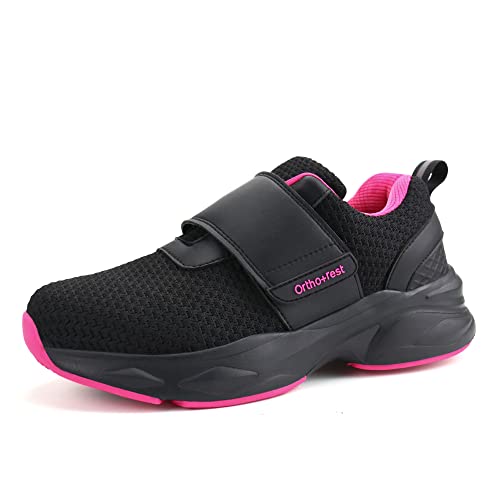
Ortho+Rest diabetic shoes focus on easy closure and protective fit. I liked the roomy interior and low-pressure seams. The closure system locks in a secure fit without digging into swollen areas. That feature matters when joints are tender.
The midsole cushions and the sole is stable for short to medium walks. The shoe reduces shear and friction on the foot. For those with diabetes who also have arthritis or fibromyalgia, the protective design is reassuring.
Pros:
- Protective interior for sensitive feet
- Adjustable closure avoids pressure points
- Removable footbed allows medical orthotics
- Good shock absorption for daily walking
- Stable outsole for safer gait
Cons:
- Bulky look compared to athletic sneakers
- May be heavier than minimalist shoes
My Recommendation
I recommend Ortho+Rest Diabetic Shoes when protection and an easy closure are top priorities. They are best for people with diabetes, neuropathy, or very sensitive skin. If you’re looking for the best shoes for arthritis and fibromyalgia that also protect fragile skin, this is a trusted option.
| Best for | Why |
| Diabetic feet | Protective seams and roomy interior |
| Sensitive skin | Low-friction lining reduces sores |
| Orthotic users | Removable footbed accepts inserts |
Besroad Extra Wide Shoes

I tried the Besroad extra wide shoes for long home wear. The extra width helps when feet swell late in the day. The upper material stretches slightly and avoids sharp seams. This simple design keeps toes relaxed and painless.
The footbed cushions fairly well and the sole gives mild support. I liked how my toes could breathe and move. If you need a roomy shoe that won’t dig in during flares, these extra wide Besroad shoes are a solid, budget-friendly pick.
Pros:
- True extra-wide fit for roomy comfort
- Stretchy upper reduces pinching
- Budget price for generous space
- Removable insole for custom inserts
- Lightweight for long daily wear
Cons:
- Less structured support for severe overpronation
- Basic styling and materials
My Recommendation
I recommend Besroad Extra Wide Shoes if you need lots of room at a low cost. They are best for home use and casual outings. For those looking for the best shoes for arthritis and fibromyalgia on a budget, these give comfort without breaking the bank.
| Best for | Why |
| Budget shoppers | Extra width at low price |
| Swollen feet | Stretchy upper eases pressure |
| Casual wear | Lightweight and comfortable |
Easy Put-On Diabetic Shoes

These easy put-on diabetic shoes are a great daily option for people with limited hand strength. I found the opening wide and the closure simple to operate. The interior is lined to prevent rubbing on sensitive skin. That helps when joints in the hands or feet limit dressing.
Cushioning is soft and forgiving. The outsole grips well for short walks. For arthritis and fibromyalgia, the combination of easy entry and foot protection is a real time-saver and pain reliever.
Pros:
- Wide opening for easy entry
- Adjustable closure for changing foot size
- Soft lining reduces friction
- Removable footbed supports orthotics
- Good grip for daily walks
Cons:
- Looks utilitarian rather than stylish
- Limited color options
My Recommendation
I recommend these Easy Put-On Diabetic Shoes for users who need minimal effort to wear shoes. They are best for people with limited hand use or morning stiffness. If you want the best shoes for arthritis and fibromyalgia that simplify dressing and protect the foot, this model fits well.
| Best for | Why |
| Limited mobility | Wide opening and easy closure |
| Diabetic care | Protective interior and roomy fit |
| Daily errands | Stable sole and cushioning |
Extra-Wide Comfort Unisex Shoes

The extra-wide comfort unisex shoe is built for long standing and wide feet. I used them at a long event and felt less fatigue. The cushioning spreads pressure across the foot and the roomy box prevents toe crowding. This reduces joint pain after hours on hard floors.
They work well for nurses, teachers, and anyone who stands a lot. The unisex fit lends itself to many foot shapes. If you need a shoe that fights daily soreness from arthritis or fibromyalgia, this extra-wide option is a strong candidate.
Pros:
- True extra-wide fit for maximum comfort
- Cushioned sole reduces impact on joints
- Designed for long standing and walking
- Unisex fit suits many foot shapes
- Durable outsole for repeated wear
Cons:
- May look bulky compared to slim sneakers
- Weight is slightly higher due to cushioning
My Recommendation
I recommend the Extra-Wide Comfort Unisex Shoes for people whose work demands long standing. They are best for nurses, teachers, and retail workers. If you are choosing the best shoes for arthritis and fibromyalgia to handle long hours on your feet, this shoe eases pressure and lowers fatigue.
| Best for | Why |
| Long shifts | Cushioning and wide fit reduce soreness |
| Unisex fit | Adapts to many foot shapes |
| Heavy standing | Durable outsole and shock absorption |
FAQs Of best shoes for arthritis and fibromyalgia
How do I choose shoes for arthritis and fibromyalgia?
Pick shoes with a wide toe box, good cushioning, and removable insoles. Look for adjustable closures and stable soles. These features reduce pressure and inflammation on joints.
Can shoes reduce fibromyalgia pain?
Yes. Shoes that lower impact and support the arch can reduce pain spread. They don’t cure fibromyalgia, but they ease foot and lower limb pain and improve daily comfort.
Are orthotics necessary with these shoes?
Not always. Many of these shoes accept custom orthotics. If you have specific alignment needs, a podiatric orthotic can help. I often add an orthotic for severe pronation or heel pain.
What should I avoid when buying shoes for sensitive feet?
Avoid tight toe boxes, hard seams, and thin soles that transmit shock. Steer clear of high heels and narrow dress shoes. Comfort and fit beat fashion in pain management.
How do I test a shoe at home for arthritis comfort?
Wear the shoe for 15–30 minutes while walking and standing on hard and soft surfaces. Check for rubbing, hot spots, or pressure. Test with the socks you usually wear.
Final Verdict: Which Should You Buy?
If you need roomy, adjustable comfort, pick the Spesoul or Gmedonm models. For arch support, the Git-up sneakers stand out. For easy entry and protection, choose Ortho+Rest or the Slip-On loafers.
Overall, these options cover the main needs for the best shoes for arthritis and fibromyalgia: wide fit, cushioning, and adjustability. Choose the one that fits your daily routine and wear it in with care.

Madison Clark is a footwear expert and the voice behind MyStyleGrid.com. She specializes in honest shoe reviews, style tips, and practical guides to help readers find the perfect pair for any occasion. With years of experience in blogging and content creation, Madison makes footwear knowledge simple, stylish, and easy to follow.