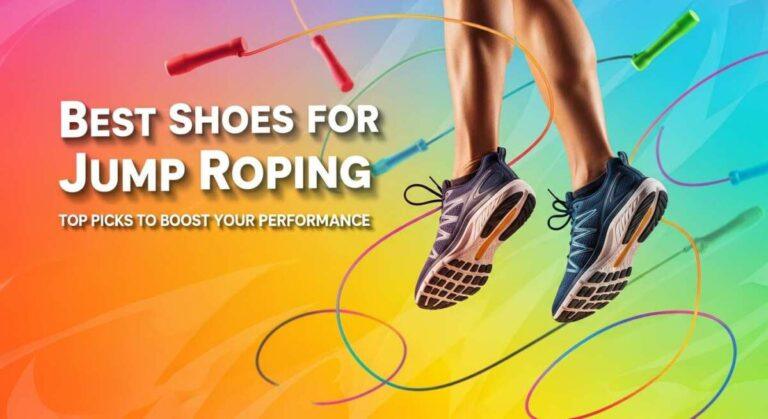
Hey there! If you’re here, chances are you’re serious about jump roping — whether for fun, cardio, or athletic training. Good on you. But before you skip into the air with full energy, one thing matters a lot more than most beginners realize: your shoes.
I learned this the hard way. When I first started jump roping daily, I wore regular gym sneakers. Soon, my shins felt achy and my knees got sore after long sessions. It felt like I was punishing my joints. Then I switched to shoes made for jump training — and everything changed. Jumps felt softer. My landings felt smoother. I could rope longer without pain. I wish I had known about this earlier. That’s why I wrote this guide — to help you avoid the mistakes I made, and to help you pick shoes that support, not strain, your body.
In this guide, we’ll walk through what makes good jump-rope shoes, explore top options out there (from plyometric shoes to bounce shoes for kids), and help you choose the right pair. So let’s jump right in.
What to Look for When Choosing Jump Rope Shoes
Before diving into products, let’s talk about what you should check when you pick shoes for jump roping. Good shoes make a big difference for comfort, safety, and performance.
Cushioning & Shock Absorption
Jumping — especially repeated jumps in rope workouts — puts a lot of stress on your feet, ankles, knees, and hips. Good cushioning helps absorb shock from each landing. That means less impact on your joints, less soreness, and fewer injuries.
If you jump on hard floors or concrete, cushioning becomes even more important. Look for shoes with a cushioned midsole or shock-absorbing sole.
Support and Stability
When you land, you want your foot to stay stable. Unstable landings can lead to ankle twists or knee strain. A good shoe for jump roping provides firm support around the heel and midfoot.
If possible, choose shoes with a snug fit and a stable outsole.
Lightweight and Flexibility
Jump rope moves are quick — fast feet, fast jumps, often directional changes. Heavy shoes slow you down. Flexible soles let your foot bend naturally, which helps with jump rhythm and reduces fatigue.
So lighter, flexible footwear is often better than heavy, stiff shoes.
Traction and Grip
If you jump on wood floors, gym mats, concrete or any surface that may be slippery — grip matters. Good traction helps you stay balanced on take-off and landing.
Rubber soles or specially designed traction patterns are helpful for grip.
Breathability and Comfort
If you plan to jump rope for a long time, shoes should be breathable. Sweaty feet and heat buildup make the session uncomfortable. A good upper (mesh or ventilated material) helps keep air flowing.
Key Concepts to Understand
Before we show you good shoes, let’s clarify a few key ideas. This helps you pick with awareness — not just by what looks good.
Plyometric Training
Plyometric training is all about quick, explosive movements: jumps, hops, and fast footwork. These drills build power, strength, and speed. Jump roping often overlaps with plyometrics — especially if you do high-intensity rope workouts, double-unders, or want to increase your vertical push.
When you jump rope with the right shoes, you get much of the same benefit as doing plyometric drills — but with less strain on your joints.
Vertical Jump & Jump Power
Vertical jump (your ability to jump high from a standstill or with a run-up) is often a goal for athletes or fitness fans. Shoes that help with shock absorption, stability, and foot mechanics can enhance jump power over time — especially when combined with proper training.
Even for pure jump ropers, improved jump mechanics often feel smoother, more controlled, and less jarring.
Jump Rope Training
Jump rope training is not just fun — it’s a serious full-body workout. It develops cardio fitness, coordination, agility, and timing. When done correctly and with the right footwear, it becomes a joint-friendly, high-efficiency exercise.
Good shoes help you maintain form, avoid injuries, and enjoy the session even when it gets intense.
Top Shoe Recommendations for Jump Roping & Jump Training
Here are some of the best shoes / footwear setups around for jump roping and plyometric training. I picked them because they reflect different needs: from heavy-duty vertical-jump training to fun bounce shoes for kids.
Jump99 Ultra Strength Plyometric Training Shoes

Key Feature & What It Offers
The Jump99 Ultra Strength shoes are built specifically for explosive jump training. They feature a cushioned midsole, a high-traction outsole, and a design that supports powerful take-offs and soft landings. Many users pick them for improving vertical jump, speed, or general plyometric workouts. According to the brand, these shoes aim to “maximize athletic potential.”
Short Details / Summary
If you are serious about jump training or intense rope workouts, these shoes help your feet absorb impact while you explode upward. They give you a stable base for take-offs and landings, and keep joints safer than typical sneakers.
Pros & Cons
Pros:
-
Excellent shock absorption and cushioning — less impact on knees and ankles.
-
Built for explosive movement — good for plyometric work, vertical jump training, or intensive jump roping sessions.
-
Stable outsole and good traction — helps prevent slips.
Cons:
-
They may feel quite specialized; maybe overkill if you just do light jump rope casually.
-
Higher price point than simple sneakers.
-
Might need a break-in period to feel fully comfortable.
Recommendation:
If you plan to do regular jump rope workouts, plyometric drills, or want to build explosive power (for sports or fitness), this pair is a great investment. Choose Jump99 if you treat jump roping as serious training — not just casual cardio.
Jump99 J99 Flex Ultra Strength Plyometric Training Shoes

Key Feature & What It Offers
The J99 Flex version adds a bit more flexibility and a slightly more forgiving feel compared to the standard Ultra Strength model. It’s still geared toward jump training, but with a bit more agility and lighter feel — which can be helpful if you mix jumping with footwork, agility drills, or multipurpose training.
Short Details / Summary
Think of J99 Flex as a hybrid: robust enough for plyometrics, but flexible enough for varied workouts. It may suit someone who wants jump-training shoes but also wants them to feel usable beyond just jumps — for footwork, quick drills, or jump rope workouts.
Pros & Cons
Pros:
-
Balanced cushioning + flexibility — good for mixed workouts (jump rope + agility + plyometrics).
-
Good traction and stability — confidence for take-offs and landings.
-
More versatile than a strictly “jump only” shoe.
Cons:
-
Still more expensive than standard sneakers.
-
Might feel a bit stiff at first.
-
As with any specialized shoe — may not be ideal for everyday casual wear.
Recommendation:
If you want a sensible balance — strong enough for jump rope and plyometric training, yet flexible enough for varied workouts — J99 Flex is a smart choice. Especially good if you do more than just vertical jumps (e.g. agility work, rope footwork, or calisthenics).
Jumpsoles Jump & Speed Training System 5.0

Key Feature & What It Offers
This is a little different: the Jumpsoles Jump & Speed Training System 5.0 is not a “shoe” in the typical sense. Rather, it’s a platform you attach to your own shoes. It raises your heel and forces you to jump off the balls of your feet, which puts more load on your calves and can build explosive jump power. Long popular among basketball and volleyball athletes for vertical-jump training.
Short Details / Summary
Jumpsoles effectively turn your regular shoes into a jump-training system. They force your body to work harder on each jump, which can lead to stronger calves and more explosive take-offs over time.
Pros & Cons
Pros:
-
Can significantly amplify calf and lower-leg strength over time, which may help vertical jump.
-
Inexpensive compared to buying a whole new pair of specialized shoes (since it attaches to existing shoes).
-
Lightweight and portable — easy to use at home or gym.
Cons:
-
Many experts caution they may overemphasize calf work — but jumping involves hips, quads, hamstrings too. So results may be limited.
-
Higher risk of ankle stress or slipping — because the heel is elevated and balance is different.
-
Less suitable for casual jump roping sessions or long cardio workouts — more like a targeted training tool.
Recommendation:
Use Jumpsoles if your goal is specifically to train vertical jump power or calf strength as part of a plyometric program. But treat them as a training tool — not casual footwear. Also, always warm up, and be very cautious about ankle stability.
New Bounce Jumping Shoes for Kids

Key Feature & What It Offers
New Bounce Jumping Shoes for Kids (also known as kangaroo or moon shoes) are designed for kids and teens. They have a bouncy frame, rubber grips, adjustable straps, and a flexible base. The idea is to make jumping fun — while giving a low-impact workout, improving balance, building leg strength, and burning calories.
Short Details / Summary
If your child loves jumping, or if you want to introduce them to a fun, active way to exercise, these shoes offer a playful but beneficial option. They turn jumping into a light plyometric exercise and can help build coordination and leg strength.
Pros & Cons
Pros:
-
Fun and motivating for kids — jumping becomes more playful.
-
Helps build leg strength, coordination, and balance in a low-impact way.
-
Adjustable fit and rubber grips — safer than barefoot bouncing or rough shoes.
Cons:
-
Not ideal for serious training or adult jump-rope workouts.
-
Requires adult supervision and ideally safety gear (helmet, pads) — manufacturers themselves suggest this.
-
Bounce shoes may feel unstable at first — learning curve for balance.
Recommendation:
Great for kids (ages typically 5–12 or within recommended size/weight limits) who want fun, active play or gentle exercise. Not recommended for heavy jump-rope training or athletic performance.
Comparison Table: Quick Look at the Top Picks
| Product / Shoe | Best For | Cushioning & Shock Absorption | Stability & Traction | Best Use Case | Pros / Cons Summary |
|---|---|---|---|---|---|
| Jump99 Ultra Strength Plyometric Training Shoes | Serious jump-rope, plyometric training, vertical jump, HIIT | High cushioning, shock-absorbent sole | High traction, stable outsole | Explosive jump training, heavy rope sessions | ⭐ Pros: great cushioning, stable, impact-safe ⚠ Cons: pricey, specialized, break-in needed |
| Jump99 J99 Flex Ultra Strength Plyometric Shoes | Mixed training: jump rope, agility, plyometrics | Good cushioning with flexible sole | Good grip, stable | Mixed workouts requiring mobility + jump power | ⭐ Pros: versatile, balanced ⚠ Cons: still pricey, may feel stiff first |
| Jumpsoles Jump & Speed Training System 5.0 | Calf-strength, vertical jump training, power work | N/A (uses existing shoes) | Varies — depends on your shoes & surface | Vertical jump drills, strength training | ⭐ Pros: cheap, effective for calf work ⚠ Cons: limited benefits, ankle stress, risky on uneven surface |
| New Bounce Jumping Shoes for Kids | Kids’ exercise, fun, balance, play | Moderate cushioning (bounce effect) | Rubber grips for traction | Kids’ play, light exercise, coordination | ⭐ Pros: fun, leg strength, balance ⚠ Cons: not for serious training, requires supervision |
How to Use Jump Shoes Safely & Effectively
Choosing good shoes is half the battle. To move well, stay safe, and get the best results, follow these tips:
- Warm up before jumping. Do light stretching or ankle/leg mobility moves — especially important when using plyometric or elevated shoes.
- Focus on landing softly. Bend knees slightly on landing; absorb impact through ankles and knees, not just through shock-absorbing soles.
- Use proper surface. Avoid slippery or hard uneven ground when using bounce shoes or elevated platforms. Concrete is fine for cushioned shoes — but avoid rough or cracked surfaces.
- Start slow. If you are new to plyometric or bounce shoes, begin with short sessions (5–10 minutes), then gradually increase.
- Listen to your body. If you feel pain in ankles, knees, or shins — stop, rest, and evaluate shoe fit or landing technique.
- Alternate with regular shoes. You don’t always need jump shoes. For warm-ups, casual rope sessions or light cardio, ordinary sneakers may suffice.
My Personal Experience & Lessons Learned
When I first started jumping rope in earnest, I did it with basic gym sneakers. After a few weeks, I got shin soreness and some knee stiffness. I pushed through — until one session hurt so much that I stopped for days.
Then I decided to try a real jump-training shoe (something like Jump99). I still remember the first time I landed after a string of double-unders: the landing felt soft. My joints felt less jarred. By the end of the month, I could jump rope 15 minutes without discomfort — something I’d never done before.
I also tried a bounce shoe just for fun one weekend — it felt wobbly at first, but after a few minutes, my legs got a different kind of burn. My calf muscles felt stronger. I realized that while bounce shoes weren’t for serious training, they offered a fun way to build leg strength and coordination.
However — I also learned a lesson the hard way. I overdid it the first week: long sessions, no proper warm-up, no rest days. My ankles got sore. That’s when I realized: specialized shoes help, but good form, proper progression, and rest matter more.
If I could go back, I’d start slowly, do shorter sessions, and gradually build up. I’d never skip warm-ups again.
FAQs
Q: What makes plyometric shoes different from regular sneakers?
Plyometric shoes are built for explosive movement. They typically offer better shock absorption, cushioning, and a more stable base for jumping. Their soles and midsoles are designed for repeated impact and quick take-offs — which regular sneakers aren’t optimized for. Over time, plyometric shoes help reduce joint stress and improve performance when you jump often.
Q: Can kids use bounce-type jumping shoes safely?
Yes — bounce shoes like “kangaroo” or “moon” shoes can be safe for kids, but only if used under adult supervision. Kids should wear protective gear (helmet, pads) and use them on safe surfaces. The bounce effect offers fun, leg-strengthening exercise and helps improve balance and coordination. That said, they are not meant for intense training or high jumps.
Q: Do shoes alone make you jump higher or just better?
Shoes don’t magically raise your vertical jump. What they do is help you land and take off more safely and efficiently. Combined with proper training (like plyometrics or jump rope drills), good shoes reduce injury risk and can help you maximize your jump power. But actual jump height comes from strength, form, and training — not just footwear.
Q: How often should I train jump rope or plyometric drills when using these shoes?
For beginners: 2–4 times per week is a good start, with rest days in between. Always warm up before and cool down after. As you get more conditioned, you can increase frequency or duration — but avoid daily intense sessions; your joints need recovery time.
Q: Are these shoes good for other workouts (like HIIT, calisthenics, basketball)?
Yes — many of the plyometric shoes work well beyond jump rope. If you do HIIT, agility drills, basketball, or calisthenics, their shock absorption, stability, and grip can help. But for heavy weightlifting or running, a dedicated shoe may still be better.
Conclusion
If you are serious about jump roping — whether for cardio, coordination, or performance — the right shoe can make a big difference. Shoes like Jump99 (Ultra or Flex) give you cushioning, stability, and support so you can train longer and safer. For fun, light exercise — especially for kids — bounce-type shoes such as New Bounce offer a playful way to build leg strength and coordination. Meanwhile, tools like Jumpsoles offer a low-cost way to train explosive power (with caution).
At the end of the day: comfort, safety, and proper form matter most. If you pick shoes that suit your goals, warm up, and progress gradually, you’ll likely enjoy longer, pain-free sessions — and maybe jump a little higher too.
So go ahead — pick a good pair, grab your rope, and start jumping. Your joints (and future self) will thank you.

Madison Clark is a footwear expert and the voice behind MyStyleGrid.com. She specializes in honest shoe reviews, style tips, and practical guides to help readers find the perfect pair for any occasion. With years of experience in blogging and content creation, Madison makes footwear knowledge simple, stylish, and easy to follow.