The best snowboard boots for touring balance uphill comfort, secure fit, warmth, and reliable downhill control.
A long tour can expose weak boots fast. Your feet may sweat on the climb, then freeze during a windy transition. Loose heels can cause blisters, while stiff alpine boots can feel like bricks when you walk. I reviewed the listed models with that real-world problem in mind. Some are snowboard boots, while others are ski or Nordic boots, so I will clearly explain where each one fits. This guide helps you choose the right boot for splitboarding, resort touring, or winter trail use.
K2 Method B&E Men’s Ski Boots

The K2 Method B&E is a playful freestyle ski boot made for skiers who like a softer, more forgiving feel. Its design favors easy flex and natural movement over race-level power. That makes it interesting for riders who spend time in terrain parks or soft snow. However, it is not a snowboard boot and does not mount directly to a splitboard binding.
I would treat this model as a ski-touring option only when paired with compatible ski bindings and touring equipment. It may suit a short approach or resort climb, but it lacks the snowboard-specific sole and binding interface needed for splitboarding. The 25.5 size also requires careful shell and liner fitting. For snowboard touring, this boot is better viewed as a comparison point than a direct choice.
Pros:
- Playful flex for relaxed skiing
- Comfortable feel for park and soft-snow use
- Lower weight than many race-focused boots
- Good choice for skiers who dislike harsh boots
- Compact size is useful for smaller feet
Cons:
- Not compatible with snowboard bindings
- Not a true splitboard touring boot
- Requires compatible ski touring hardware
My Recommendation
The K2 Method B&E is best for a skier who wants a softer boot for resort laps, park sessions, and occasional low-angle touring. It is not one of the best snowboard boots for touring because it does not provide the right interface for a snowboard binding. I like its forgiving feel, but splitboard users should choose a real snowboard boot with walk mode or a purpose-built ski boot system.
| Best for | Why |
|---|---|
| Freestyle skiers | Soft flex supports playful turns and park riding. |
| Comfort-focused resort users | The forgiving build feels less demanding. |
| Short ski approaches | It can work with proper ski touring equipment. |
Rossignol Speed 120 HV+ GW Ski Boots

The Rossignol Speed 120 HV+ GW is a high-flex alpine ski boot with a high-volume fit. The “HV” name points to extra room for wider feet, while the 120 flex rating targets strong intermediate and advanced skiers. Its GripWalk sole can make walking easier than a flat alpine sole. Still, this remains a resort ski boot rather than a splitboard boot.
The roomy shell may appeal to skiers who often feel pressure across the forefoot. Its strong flex can also deliver good edge control on hard snow. Yet a fixed alpine boot is tiring on long climbs and does not offer the range of motion most ski tourers need. Snowboard riders should not buy it for touring unless they already own a compatible ski setup.
Pros:
- High-volume fit for wider feet
- Firm flex supports powerful turns
- GripWalk sole improves walk comfort
- Good downhill control on groomed snow
- Useful choice for strong resort skiers
Cons:
- Not a snowboard boot
- Limited uphill range of motion
- May feel too stiff for new skiers
My Recommendation
I recommend this Rossignol model to a wide-footed resort skier who values downhill power more than uphill efficiency. It is not among the best snowboard boots for touring, and it should not be used with splitboard bindings. If your touring plan includes short sidecountry climbs with a ski setup, the GripWalk sole is helpful. For true human-powered missions, seek a ski boot with a certified walk mode or a splitboard boot made for touring.
| Best for | Why |
|---|---|
| Wide-footed skiers | The high-volume shell gives the forefoot more space. |
| Powerful resort turns | The firm flex transfers force well. |
| GripWalk users | The sole makes short walks easier. |
Rossignol Speed 120 HV+ GW Size 30.5
This 30.5 version uses the same Rossignol Speed 120 HV+ GW platform but serves a much larger foot. That makes sizing especially important, since a boot that is too large can create heel lift and poor control. The high-volume shape may help large-footed skiers avoid cramped toes. Its stiff flex remains focused on downhill performance.
For touring, I would only consider it for a short approach or lift-accessed sidecountry route. The boot does not convert into a snowboard boot, and its alpine design can limit stride length. A large foot also needs enough shell length without creating excess interior space. Use professional fitting advice before buying, especially when ordering online.
Pros:
- Large 30.5 size supports bigger feet
- High-volume shape reduces forefoot squeeze
- Strong flex offers precise ski control
- GripWalk sole helps on firm paths
- Useful for aggressive resort skiing
Cons:
- Not suitable for splitboard bindings
- Heavy for long uphill travel
- Large shells need careful fitting
My Recommendation
This boot is best for a large-footed skier who wants a firm alpine boot for resort use. It is not one of the best snowboard boots for touring, but it may serve a skier who makes brief sidecountry approaches. I would not choose it for a full-day human-powered tour. Its value depends on finding the correct shell fit, so verify the size and return policy before purchase.
| Best for | Why |
|---|---|
| Large-footed skiers | The 30.5 size gives larger feet more room. |
| Hard-snow skiing | The 120 flex supports strong edge control. |
| Short approaches | GripWalk helps during brief walks. |
Nordica Women’s Speedmachine 3 105 W

The Nordica Speedmachine 3 105 W is a women’s alpine ski boot with a medium-to-firm flex. It aims to blend comfort with solid control for intermediate and advanced skiers. The women-specific fit can offer useful support around the calf and ankle. Its design is more at home on resort slopes than in a remote touring zone.
I like this type of boot for skiers who want a stable platform without stepping up to an extreme race shell. It can handle mixed resort snow and firm groomers with confidence. However, it lacks the touring features needed for efficient skin-track travel. It also cannot replace a snowboard boot, so splitboard riders should look elsewhere.
Pros:
- Women-specific fit and cuff shape
- Balanced flex for intermediate skiers
- Good downhill stability
- Supportive feel around the ankle
- Suitable for long resort days
Cons:
- Not designed for ski touring
- Not compatible with snowboard bindings
- May feel rigid during long walks
My Recommendation
I recommend the Nordica Speedmachine 3 105 W for a woman who wants reliable resort performance and a supportive fit. It does not qualify as one of the best snowboard boots for touring because it is an alpine ski boot. It may work for resort users who walk across snow often, but dedicated tourers need a lighter boot with walk mode. Check calf fit and shell width before ordering.
| Best for | Why |
|---|---|
| Women resort skiers | The cuff and fit target common women’s boot needs. |
| Intermediate riders | The flex offers control without a race feel. |
| All-day resort use | It balances support with useful comfort. |
Alpina Pro Skate Boot 2024

The Alpina Pro Skate Boot is a Nordic skate-ski boot, not a downhill ski or snowboard boot. It is built for skating technique on groomed cross-country tracks. The narrow, lightweight structure supports quick foot movement and ski control. That construction is very different from the warm, protective shell needed for splitboarding.
This boot may suit a Nordic skier who wants efficient movement and a firm skating platform. It is not made for snowboard bindings, downhill turns, or deep backcountry snow. Its low profile can feel nimble, but it will not provide the ankle protection or insulation most snowboard tourers need. I would keep this model on groomed Nordic trails.
Pros:
- Lightweight Nordic skate design
- Good ankle support for skating
- Efficient fit for groomed tracks
- Useful for fast cross-country sessions
- Size 41 suits many medium feet
Cons:
- Not a snowboard boot
- Not designed for downhill snow
- Limited warmth for deep winter touring
My Recommendation
The Alpina Pro Skate Boot is best for a Nordic skate skier, not a snowboard tourer. It should not be considered one of the best snowboard boots for touring because the sole, fit, and binding system serve a different sport. Its value is strong when used on prepared tracks. For backcountry snowboard travel, choose a boot with a snowboard-compatible sole and strong weather protection.
| Best for | Why |
|---|---|
| Nordic skate skiing | The light build supports rapid skating motion. |
| Groomed trails | The boot works with Nordic skate bindings. |
| Speed-focused users | Low weight helps reduce fatigue. |
K2 Mindbender 140 BOA Men’s Ski Boots

The K2 Mindbender 140 BOA is the most touring-relevant ski boot in this list. It uses a very stiff 140 flex for powerful downhill skiing and a BOA closure system for controlled pressure. Mindbender models are associated with freeride and touring use, but buyers must confirm the exact binding compatibility and walk-mode details for this version. It is still a ski boot, not a snowboard boot.
The stiff shell can feel excellent when you drive a wide ski through heavy snow. The BOA system also helps create an even fit without repeated buckle adjustments. On a climb, the boot’s weight and firm flex may feel demanding compared with a lighter touring model. For skiers who split time between lifts and backcountry routes, it offers a stronger compromise than the other ski boots here.
Pros:
- Very strong downhill support
- BOA system enables even fit adjustment
- Freeride-focused construction
- Potentially useful for resort-to-backcountry skiing
- Good match for aggressive skiers
Cons:
- Too stiff for many beginners
- Heavier than dedicated uphill boots
- Not compatible with snowboard bindings
My Recommendation
I recommend the K2 Mindbender 140 BOA to an expert skier who wants maximum downhill support and occasional touring capability. It is closer to a touring solution than the alpine-only models, but it is not one of the best snowboard boots for touring. Confirm that the exact boot works with your bindings before purchase. Its value is highest for strong skiers who accept extra weight in exchange for power.
| Best for | Why |
|---|---|
| Aggressive freeride skiers | The 140 flex supports forceful turns. |
| Resort and sidecountry use | It favors downhill control across both settings. |
| BOA fans | The dial gives quick, even adjustment. |
Salomon Echo Lace SJ BOA 29.5

The Salomon Echo Lace SJ BOA is a true snowboard boot, which makes it far more relevant to this guide. It combines traditional lace control with a BOA adjustment system, so riders can tune different areas of the fit. The Echo line is built for demanding snowboard use and offers a supportive feel for freeride terrain. Its 29.5 cm size suits riders who need a larger boot.
For splitboarding, fit matters more than flashy features. A secure heel helps reduce blisters during long approaches, while a firm cuff improves board control on the descent. This boot can be a strong choice for riders who want one boot for resort riding and occasional touring. It may not walk as freely as a specialized soft touring boot, so test the stride before a major trip.
Pros:
- True snowboard-compatible construction
- Hybrid lace and BOA adjustment
- Supportive feel for freeride riding
- Good heel security when properly fitted
- 29.5 cm size suits larger feet
Cons:
- May feel stiff during long climbs
- Hybrid lacing takes more setup time
- Requires careful snowboard boot sizing
My Recommendation
The Salomon Echo Lace SJ BOA is best for a splitboard rider who wants strong downhill control and adjustable fit. Among the listed products, it is one of the most credible choices for the best snowboard boots for touring. I would choose it for resort riding, sidecountry laps, and moderate splitboard days. Its overall value is strong when the 29.5 cm fit matches your foot shape.
| Best for | Why |
|---|---|
| Splitboard riders | It uses a true snowboard boot platform. |
| Freeride snowboarding | The supportive build improves downhill control. |
| Custom fit needs | Lace and BOA zones allow fine adjustment. |
Burton Men’s Moto BOA Snowboard Boots

The Burton Moto BOA is a well-known comfort-first snowboard boot. Its softer flex makes it easy to bend and forgiving when a rider is still refining turns. The BOA closure allows fast tightening at the trailhead or lift line. The size 10 model is a practical option for riders with average-length feet.
For resort snowboarding, the Moto can feel warm, simple, and easy to live with. For touring, its soft build helps during walking, but it may not offer enough support for steep, technical descents. It also lacks the specialized stiffness and touring features found in purpose-built splitboard boots. I see it as a good entry point for mellow tours rather than an expert tool for long alpine missions.
Pros:
- Comfortable soft flex
- Fast BOA tightening
- Beginner-friendly feel
- Easy to put on and remove
- Good choice for resort riding
Cons:
- Limited support for steep touring descents
- May pack out with heavy use
- Less precise than a stiff freeride boot
My Recommendation
The Burton Moto BOA is best for a beginner or casual rider who wants comfort first. It can work for short, mellow splitboard approaches, but I would not call it the best snowboard boots for touring for advanced terrain. Choose it if easy flex and quick adjustment matter more than maximum response. It offers good everyday value and is often easier to find than niche touring models.
| Best for | Why |
|---|---|
| Beginners | The soft flex is forgiving and easy to control. |
| Resort riders | BOA adjustment keeps setup fast. |
| Mellow tours | The flexible feel helps during short walks. |
Salomon Echo Lace SJ BOA 29.0
This 29.0 cm Salomon Echo Lace SJ BOA uses the same versatile snowboard platform as the 29.5 version. The half-size difference can make a large impact on heel hold, toe contact, and warmth. A snug liner helps control the board without crushing the toes. The hybrid closure also lets riders fine-tune the upper and lower parts of the boot.
I prefer a close, secure fit for touring because every loose step wastes energy. This model offers the support needed for firm traverses and controlled downhill turns. It may feel more structured than a basic resort boot, so new riders could need time to break it in. For a rider whose foot matches the 29.0 size, it is one of the strongest options in this product list.
Pros:
- Purpose-built snowboard boot
- Strong support for splitboard descents
- Hybrid closure improves fit control
- 29.0 cm option helps precise sizing
- Works for resort and freeride use
Cons:
- Not as flexible as a beginner boot
- Traditional laces need occasional retightening
- May require break-in time
My Recommendation
I recommend the 29.0 Salomon Echo to splitboarders with a snug 29.0 cm fit requirement. It has the right snowboard interface and enough support for serious downhill riding. That makes it a leading candidate among the best snowboard boots for touring in this list. Choose it over the 29.5 version only if your heel stays locked and your toes lightly touch the liner without pressure.
| Best for | Why |
|---|---|
| Precise-fit riders | The 29.0 size can reduce unwanted movement. |
| Technical splitboarders | The supportive shell helps on firm descents. |
| Mixed resort use | The boot handles daily riding as well as tours. |
System APX Men’s Snowboard Boots
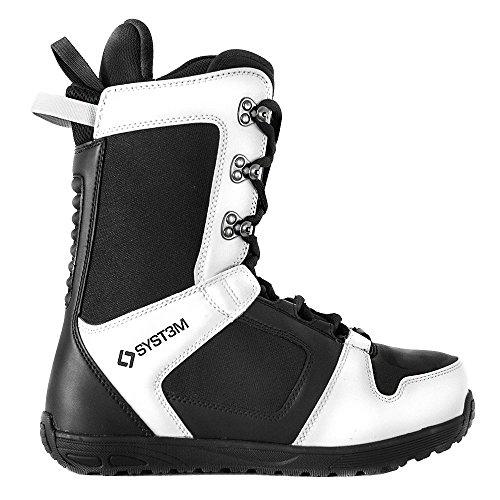
The System APX is a traditional-lace snowboard boot in size 11. Lace boots give riders direct control over pressure, and they are easy to repair in the field with spare laces. The APX is aimed at affordable everyday snowboarding rather than high-end backcountry travel. Its basic design may appeal to occasional riders who do not need complex closure hardware.