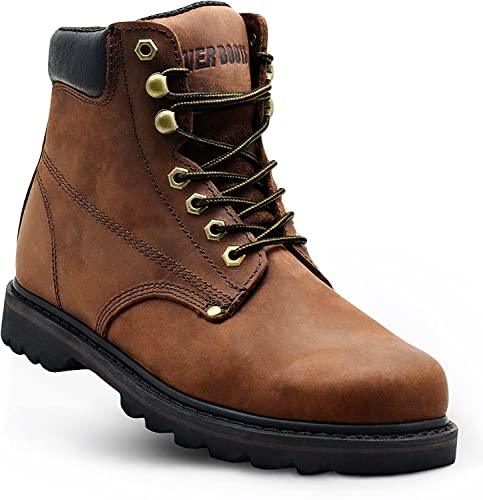
The best work boots for diesel mechanics combine toe protection, grip, comfort, and easy cleanup for long shop days.
A diesel mechanic may spend one hour on a concrete floor, the next under a truck, and the next walking through rain or spilled oil. Poor boots can turn that normal shift into sore feet, wet socks, and unsafe steps. I looked at these work boots through a mechanic’s lens: toe safety, traction, water resistance, fit, support, and daily value. The right pair should feel like a trusted shop tool—strong, useful, and ready for hard work.
ANGRYRAM Steel Toe Slip-On Boots

The ANGRYRAM slip-on boot is a practical choice for mechanics who want fast entry and strong toe protection. Its Chelsea-style design avoids laces, so I can step into the boots when a job starts without wasting time. The steel toe adds a useful layer of defense around heavy tools, parts, and dropped hardware. That matters in a busy diesel bay where a small mistake can cause a painful injury.
The waterproof build also suits outdoor service calls and wet shop floors. I like the simple shape because it has fewer parts to catch grease or snag on equipment. The boot should still be broken in with care, since steel-toe slip-ons can feel firm across the top of the foot at first. Always check the current size chart and safety details before ordering.
Pros:
- Steel toe helps guard against falling tools and parts
- Slip-on design makes changing boots quick
- Waterproof build suits wet work areas
- Simple upper is easy to wipe clean
- Useful choice for shop and roadside work
- Low-fuss style works well with work pants
Cons:
- Steel toes may feel heavier than composite toes
- Slip-on fit may not suit narrow or low-volume feet
- Waterproof boots can feel warm during hot shifts
My Recommendation
I recommend the ANGRYRAM for diesel mechanics who want a waterproof safety boot without laces. It is especially useful for workers who move between a service truck, a yard, and a repair bay. The steel toe supports basic impact protection, while the slip-on shape saves time during quick changes. For buyers searching for the best work boots for diesel mechanics on a practical budget, this model offers a useful mix of protection and convenience.
| Best for | Why |
|---|---|
| Fast boot changes | The slip-on Chelsea shape needs no lacing. |
| Wet shop floors | The waterproof design helps keep feet dry. |
| Basic toe protection | The steel toe helps shield feet from impact. |
SUREWAY Fire and Safety Composite-Toe Boots

The SUREWAY Fire and Safety boot uses a composite toe instead of steel. That can reduce the cold feel and weight that some workers notice with metal toe caps. The black slip-on design looks clean and works well for mechanics who do not want laces exposed to grease, oil, or moving parts. Its shape also makes it easy to put on before an early shift.
This boot fits workers who want a safety-minded design with a more flexible feel than many traditional steel-toe boots. The black finish hides daily shop marks better than light leather. Still, no boot replaces good housekeeping or careful footing around diesel fuel and fluids. I would confirm the exact safety rating and fit before relying on it for a workplace rule.
Pros:
- Composite toe can feel lighter than steel
- Slip-on design helps workers get ready fast
- Black finish hides many small stains
- Suitable for mechanics who dislike boot laces
- Fire and safety design fits demanding work settings
- Comfortable option for long periods on foot
Cons:
- Composite toes may not feel as compact as steel
- Slip-on boots offer less adjustment than lace-up boots
- Exact protection claims should be checked before purchase
My Recommendation
I would choose this SUREWAY model for a diesel mechanic who values light feel, quick entry, and a neat black look. It may suit shop workers who spend long hours standing and walking on hard floors. The composite toe is a good fit for people who dislike the cold or weight of steel. Among the best work boots for diesel mechanics, this pair stands out as a simple safety boot for daily indoor service.
| Best for | Why |
|---|---|
| Lightweight toe protection | Composite material may reduce the heavy feel of steel. |
| Clean shop style | The black upper looks neat and hides marks. |
| Fast daily use | The slip-on design saves time before each shift. |
SUREWAY Brown Composite-Toe Work Boots

The brown SUREWAY work boot gives the slip-on safety design a more traditional workwear look. Its composite toe helps protect the front of the foot without adding metal weight. I find brown uppers useful in a diesel shop because they look natural with work jeans and often hide dust well. The boot is aimed at workers who want a straightforward daily pair rather than a high, bulky logger boot.
The slip-on layout is convenient when a mechanic moves between the shop and home several times a day. It can also feel less restrictive than a tall lace-up boot around the ankle. The trade-off is that fit depends more on the boot’s shape, so careful sizing matters. Wear the socks you normally use at work when checking the fit.
Pros:
- Composite toe gives a lighter safety option
- Brown color pairs well with work clothing
- Slip-on entry is quick and simple
- Lower profile may feel less bulky than tall boots
- Good option for routine shop maintenance
- Easy style for work and casual use
Cons:
- Slip-on fit cannot be finely tightened like laces
- Brown material may show oil more than black material
- May need a break-in period for all-day comfort
My Recommendation
The brown SUREWAY is best for mechanics who want composite-toe protection in a relaxed, everyday shape. I would consider it for indoor truck shops, fleet garages, and light outdoor maintenance. It gives a nice balance between work function and a less industrial appearance. If you need the best work boots for diesel mechanics that can move from the garage to errands, this model is worth a close look.
| Best for | Why |
|---|---|
| Everyday shop work | The low-fuss slip-on style works for routine jobs. |
| Workwear looks | The brown color fits classic mechanic clothing. |
| Workers avoiding steel | The composite toe offers an alternative safety build. |
CAT Second Shift Steel-Toe Work Boot
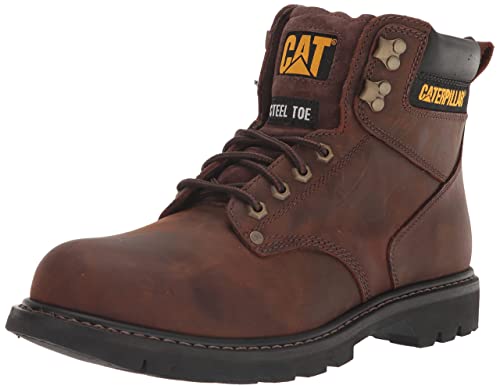
The CAT Second Shift is a familiar choice for workers who prefer a classic lace-up work boot. Its steel toe gives the firm, traditional protection many mechanics expect around heavy equipment. The dark brown upper has a rugged look that fits a diesel shop, fleet yard, or construction area. Unlike a slip-on, the laces let me adjust the boot around my heel and instep.
That adjustment can help reduce heel lift when climbing steps or walking across uneven ground. The boot also gives more ankle coverage than a low shoe, which is useful when a mechanic kneels, crawls, or works outdoors. Steel toe boots may feel heavier, so I suggest wearing them around the house before a full shift. CAT’s current product information and your employer’s rules should guide the final safety decision.
Pros:
- Steel toe offers strong traditional impact protection
- Laces allow a more precise fit
- Dark brown upper suits rugged work areas
- Higher shaft gives useful ankle coverage
- Good match for outdoor fleet and yard work
- Classic style is easy to pair with work pants
Cons:
- Steel toe adds more weight than composite designs
- Laces take longer to put on and remove
- May feel stiff until properly broken in
My Recommendation
I recommend the CAT Second Shift for mechanics who need a proven lace-up feel and strong toe coverage. It is a good match for diesel technicians who climb into cabs, walk through yards, or work on rough ground. The adjustable fit is a major advantage over many slip-on boots. For buyers comparing the best work boots for diesel mechanics, this is one of the more balanced choices for mixed shop and outdoor work.
| Best for | Why |
|---|---|
| Adjustable fit | Laces let you control heel and instep security. |
| Outdoor fleet work | The taller boot shape suits uneven work areas. |
| Classic steel-toe use | Steel provides familiar front-foot protection. |
NOLINSHIELD Slip-On Steel-Toe Boots

The NOLINSHIELD boot focuses on several needs that matter in a repair bay: slip-on entry, steel-toe protection, and a lightweight working feel. Its brown look is easy to wear with common shop clothing. The listed puncture-proof design is helpful for mechanics who may step near sharp scraps, fasteners, or broken metal. I still treat any puncture claim as a feature to verify against the job’s safety requirements.
This model makes sense for workers who dislike tying boots but still want a more serious safety design than a soft casual shoe. The slip-on shape can save time during breaks and after a messy job. A snug heel is important because loose slip-on boots can rub during long walks. Use proper work socks and check for pressure around the steel toe before committing to a full shift.
Pros:
- Steel toe helps guard against impact
- Slip-on shape makes entry quick
- Listed puncture-proof design adds useful job-site appeal
- Lightweight construction may reduce foot fatigue
- Brown color fits common mechanic workwear
- Useful for workers who dislike laces
Cons:
- Slip-on fit gives less control than a lace-up boot
- Steel toe can feel firm in the forefoot
- Puncture protection should be confirmed for your workplace
My Recommendation
I see the NOLINSHIELD as a strong candidate for a mechanic who wants many safety features in an easy slip-on boot. It is best for shop floors, service yards, and general maintenance where quick entry has real value. The possible puncture protection makes it more appealing around scrap and sharp debris. As one of the best work boots for diesel mechanics, it offers a practical feature list at a useful everyday price.
| Best for | Why |
|---|---|
| Quick changes | Slip-on entry is fast when work gets messy. |
| Sharp-floor hazards | The listed puncture-proof feature may add protection. |
| Light daily wear | The lightweight design may ease long walking shifts. |
ROCKROOSTER Lumen Soft-Toe Boots

The ROCKROOSTER Lumen takes a different path from the safety-toe boots above. It uses a soft toe, a six-inch shaft, and a rubber outsole in a slip-on design. That makes it attractive to mechanics whose employer does not require a protective toe cap. The soft front can feel more natural when kneeling, bending, and working in tight spaces.
The rubber outsole is the main reason I would consider this boot for a shop floor. A mechanic needs steady footing near tools, ramps, and fluids, though no outsole can make oil harmless. The six-inch height adds more coverage than a shoe while keeping the boot easy to wear. If your workplace requires ASTM-rated toe protection, choose a safety-toe model instead.
Pros:
- Soft toe gives a less rigid forefoot feel
- Rubber outsole suits daily shop movement
- Six-inch shaft offers more coverage than a shoe
- Slip-on design saves time at the start of a shift
- Comfortable option for toe-flexing tasks
- Useful for workplaces without a safety-toe mandate
Cons:
- Soft toe does not replace protective toe footwear
- Less fit adjustment than a lace-up boot
- May not meet every employer’s safety policy
My Recommendation
I recommend the ROCKROOSTER Lumen only for mechanics whose job allows soft-toe boots. It is best for light repair work, shop inspection, parts work, and tasks where comfort and easy movement matter more than impact protection. The rubber outsole and six-inch height give it a useful work-boot feel. It is not my first choice for heavy truck repair with falling tools, but it can be one of the best work boots for diesel mechanics when a soft toe is allowed.
| Best for | Why |
|---|---|
| Soft-toe comfort | The flexible front feels less rigid during movement. |
| Light shop work | The slip-on build suits routine, lower-risk tasks. |
| Extra shaft coverage | The six-inch height covers more of the ankle. |
WOLVERINE Floorhand Waterproof Boot

The WOLVERINE Floorhand is a six-inch waterproof steel-toe boot built for workers who face wet conditions and heavy daily use. Its taller shape gives the ankle more coverage than a low slip-on. The steel toe is suited to mechanics who handle large tools, wheels, brackets, and engine parts. I also like the dark brown color for hiding normal shop dust and scuffs.
Waterproof boots can make a long day much easier when a service call takes place outside. They also help when the shop floor is damp, though I still avoid standing in fuel, oil, or unknown fluids. The trade-off is that waterproof materials may feel warmer and need more drying time after a wet shift. This boot is a strong choice for workers who value coverage over a lightweight feel.
Pros:
- Waterproof design helps keep feet dry
- Steel toe supports impact protection
- Six-inch height gives added ankle coverage
- Good fit for outdoor diesel service work
- Dark brown color hides many work marks
- Traditional boot shape supports rugged use
Cons:
- May feel warmer than a non-waterproof boot
- Steel toe adds weight during long shifts
- Needs proper drying after wet work
My Recommendation
The WOLVERINE Floorhand is my pick for mechanics who split time between the garage and the outdoors. It is especially suited to fleet technicians, roadside repair workers, and diesel mechanics in wet climates. The waterproof build and steel toe cover two common needs in one rugged boot. For shoppers seeking the best work boots for diesel mechanics with strong all-weather value, this model deserves serious attention.
| Best for | Why |
|---|---|
| Wet service calls | The waterproof build helps block outside moisture. |
| Outdoor diesel work | The six-inch shaft gives useful foot and ankle coverage. |
| Heavy shop tasks | The steel toe helps protect against impact. |
How I Choose Work Boots for Diesel Mechanics
Diesel work is harder on boots than many jobs. A mechanic may kneel on concrete, climb metal steps, push heavy carts, and walk through dirt in one shift. I look first at protection, then at comfort, fit, traction, and maintenance. A boot that protects the toe but causes blisters is not a good long-term tool.
Toe type is a key choice. Steel toes offer familiar impact protection and a compact shape, but they can feel heavier and colder. Composite toes can reduce that cold metal feel and may weigh less, yet they can have a different fit and shape. Soft-toe boots can feel comfortable, but they do not replace safety-toe footwear when an employer requires it.
I also check the sole. A diesel mechanic needs stable contact on concrete, metal steps, and shop ramps. Look for a rubber outsole with a tread pattern that gives grip without holding too much dirt. Even a good tread can lose traction when covered in oil, so clean spills at once and follow the shop’s safety rules.
Water resistance is another useful feature. Waterproof boots help during rain, snow, puddles, and outdoor fleet work. They may run warmer than breathable boots, so hot-climate mechanics may prefer a lighter design. Do not confuse water resistance with chemical resistance; fuel, oil, solvents, and battery fluid can damage boot materials.
Fit and Comfort Tips for Long Diesel Shifts
Try boots later in the day if possible. Feet often swell after hours of walking, and a morning-only fit can become tight by lunch. Wear the same work socks you plan to use. Your toes should have room to move, while your heel should stay mostly in place as you walk.
Do not expect a stiff boot to feel perfect on day one. Wear it for short periods before a full shift. A small hot spot can become a large blister when you kneel and climb all day. If the toe presses against your foot, do not assume it will stretch enough; protective toe caps usually keep their shape.
Insoles can change the feel of a work boot, but they also take up space. If you add an insole, make sure your toes still have room and the boot does not press on the top of your foot. A clean, dry sock can help manage sweat better than a thick sock packed into a tight boot. Comfort begins with the correct size, not with extra padding.
Safety Notes for Shop and Fleet Work
The Occupational Safety and Health Administration advises employers to assess foot hazards and provide suitable protective footwear where needed. Your employer may require a specific ASTM safety standard, electrical rating, slip rating, or puncture feature. Check the label, product page, and workplace policy before you buy. A product title alone is not enough proof of compliance.
Diesel mechanics also face hazards beyond falling tools. Sharp scrap, hot parts, moving equipment, wet floors, and electrical systems can all affect boot choice. A steel or composite toe does not protect the whole foot. Use gloves, eye protection, hearing protection, and other gear required for the job.
Keep boots clean after each shift. Brush away grit, wipe off oil, and let the boots dry at room temperature. Do not place leather or synthetic boots against a heater, as high heat can weaken adhesives and dry materials. Replace boots when the outsole is smooth, the toe area is damaged, or the sole separates from the upper.
Which Boot Type Is Right for You?
Choose a steel-toe boot if you handle heavy parts and want a traditional protective design. The CAT Second Shift and WOLVERINE Floorhand fit that need well. Choose composite toe if you want a lighter feel or dislike the cold sensation of steel. The two SUREWAY models give you that direction in different colors and styles.
Choose a slip-on boot if speed matters and your foot shape works well with that design. ANGRYRAM, SUREWAY, and NOLINSHIELD are convenient for quick changes. Choose a lace-up boot if you need precise adjustment and strong heel hold. Choose a soft toe only when your workplace allows it; the ROCKROOSTER Lumen is designed for that lower-risk use.
FAQs Of Best Work Boots for Diesel Mechanics
What toe type is best for diesel mechanics?
Steel and composite toes can both work well. Steel gives a familiar, compact form of impact protection. Composite toes may feel lighter and less cold. Follow your employer’s required safety standard before choosing.
Are waterproof boots useful in a diesel shop?
Yes, especially for outdoor fleet work, roadside calls, and wet yards. Waterproof boots help block rain and puddles. They may feel warm, and they do not automatically resist fuel or harsh chemicals.
Are slip-on boots safe for mechanics?
They can be safe when they fit well and meet the job’s safety rules. Slip-ons are fast and have no loose laces. However, they provide less fit adjustment than lace-up boots, so heel movement must stay low.
Do diesel mechanics need steel-toe boots?
Not every workplace requires steel toe, but many diesel jobs involve heavy tools and parts. Check the hazard review and employer policy. If toe protection is required, use a boot with the correct certified rating.
How can I stop work boots from causing foot pain?
Start with the right size and wear suitable work socks. Break boots in with short walks before a full shift. Replace worn insoles and stop using boots that pinch, rub, or let your heel slide.
Final Verdict: Which Should You Buy?
For most diesel mechanics, I favor the WOLVERINE Floorhand for its waterproof build, steel toe, and six-inch coverage. The CAT Second Shift is a strong lace-up alternative. For quick changes, ANGRYRAM and SUREWAY offer useful slip-on value.
The best work boots for diesel mechanics should match your hazards, fit, and shift. Check safety ratings, keep soles clean, and choose comfort you can trust every day.

Madison Clark is a footwear expert and the voice behind MyStyleGrid.com. She specializes in honest shoe reviews, style tips, and practical guides to help readers find the perfect pair for any occasion. With years of experience in blogging and content creation, Madison makes footwear knowledge simple, stylish, and easy to follow.