The best work boots for pipefitters balance toe safety, wet traction, comfort, and support for long, hard shifts.
A pipefitter may climb ladders, cross steel grating, kneel on concrete, and work near water or hot metal in one day. Poor boots can turn each step into a strain. The right pair acts like a steady tool: it protects your toes, grips slick floors, and keeps your feet fresh until the shift ends. I reviewed these work boots for fit, safety features, weather protection, traction, support, and daily value. This guide will help you choose the best work boots for pipefitters based on your job site and work style.
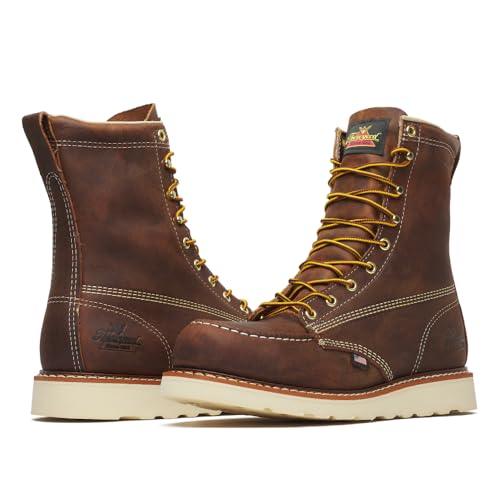
Thorogood American Heritage 8-Inch Boot

The Thorogood American Heritage is a classic choice for pipefitters who want a strong leather boot with a roomy moc toe. Its full-grain leather upper feels tough enough for daily industrial work. The 8-inch height adds useful ankle coverage when you climb, bend, or carry pipe. The steel toe helps guard against falling tools and fittings, while the electrical hazard rating adds another layer of job-site protection.
The wedge outsole gives this boot a stable feel on many indoor floors and smooth concrete areas. Its slip-resistant design can help when oil, water, or metal dust makes the surface less friendly. I also like the comfort insole for long hours on hard ground. This boot may need a short break-in period, but its traditional build makes it a strong long-term pick.
Pros:
- Full-grain leather handles daily wear well
- Steel toe protects against common impact hazards
- Electrical hazard rating supports job-site safety
- Wedge outsole offers steady contact on hard floors
- Comfort insole helps reduce foot fatigue
- 8-inch design gives useful ankle coverage
Cons:
- Leather may feel stiff during the first few wears
- Wedge soles may hold mud more than lug soles
- Not the best choice for deep water or heavy rain
My Recommendation
I recommend this Thorogood for pipefitters who spend most of the day inside plants, shops, warehouses, and commercial builds. It suits workers who value leather quality, a stable platform, and a proven steel-toe design. If your job includes frequent standing on concrete, this is one of the best work boots for pipefitters to consider. Its main value comes from the balance of comfort, protection, and repair-friendly construction.
ARIAT Rebar Lift 8-Inch Waterproof Boot
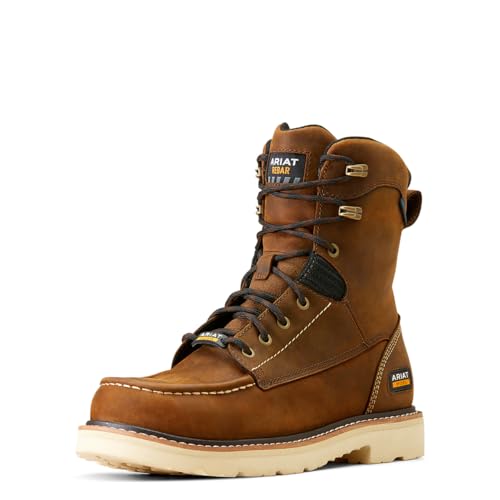
The ARIAT Rebar Lift 8-inch boot is built for pipefitters who work outside or move between wet and dry areas. Its waterproof build helps keep rain, puddles, and damp grass from soaking your socks. The taller shaft gives more coverage than a short work shoe. It also offers the kind of heel lift and support many workers prefer when they stand or walk for hours.
This boot has a rugged work look without feeling overly bulky. The outsole is designed for traction, which matters when you step over hoses, loose gravel, or wet concrete. The waterproof feature is helpful, but no boot stays waterproof if the upper is cut or the tongue is poorly laced. I would pair this boot with moisture-wicking socks and allow it to dry fully between shifts.
Pros:
- Waterproof design helps keep feet dry in wet work areas
- 8-inch shaft offers extra lower-leg coverage
- Lifted heel supports a natural work stance
- Rugged outsole helps on uneven ground
- Comfortable option for outdoor pipe work
- ARIAT construction gives the boot a work-ready feel
Cons:
- Waterproof boots can feel warmer in summer
- Taller shafts may take longer to put on
- May feel less flexible than a 6-inch boot
My Recommendation
I would choose the Rebar Lift 8-inch when wet weather is part of the job. It is a good match for utility crews, plant repair workers, and pipefitters who move across muddy or damp sites. Among the best work boots for pipefitters, this model stands out for weather protection and height. It offers good value when dry feet and ankle coverage matter more than a lightweight feel.
Irish Setter Ashby 6-Inch Soft Toe Boot
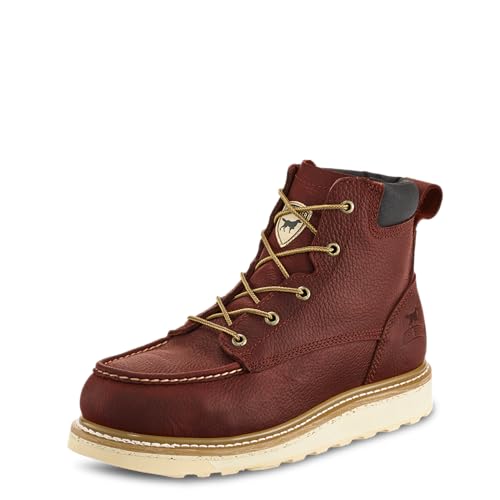
The Irish Setter Ashby is a simple, comfortable 6-inch work boot with a soft toe. Its lower height makes it easier to pull on and more flexible around the ankle. That can feel refreshing when your work involves repeated squats, kneeling, and climbing. The leather upper gives it a durable work-boot feel without the extra weight of a tall boot.
The soft toe is the key point here. It works well for pipefitters whose employer does not require a protective toe cap and who want more room at the front of the foot. The outsole provides useful traction for general work areas. However, I would not choose it for a site that requires ASTM-rated toe protection or has a high risk of dropped pipe and fittings.
Pros:
- Soft toe gives a flexible and roomy feel
- 6-inch height supports easy movement
- Leather upper suits everyday work use
- Comfortable choice for long standing periods
- Less bulky than many safety-toe boots
- Easy to pair with work pants and standard socks
Cons:
- Soft toe does not protect like steel or composite toe
- May not meet every employer’s safety rule
- Limited coverage compared with an 8-inch boot
My Recommendation
The Ashby is best for light-duty pipefitting, maintenance, fabrication support, and jobs where a safety toe is not required. It is also a smart pick for workers who dislike stiff or heavy boots. I would not call it the best work boots for pipefitters in a strict industrial setting, but it can be a comfortable daily boot for lower-risk work. Check your employer’s footwear policy before buying.
Irish Setter Wingshooter ST 8-Inch Boot

The Irish Setter Wingshooter ST brings safety-toe protection to a boot with a familiar outdoor style. Its 8-inch profile gives solid ankle coverage when you work on rough ground or climb around a job site. The safety toe is useful near pipe, tools, valves, and fittings. Its leather upper also gives the boot a classic look that can move from the work area to the truck without looking out of place.
This boot is a strong middle-ground option. It offers more protection than a soft-toe model while keeping a flexible hunting-boot feel. The outsole helps provide traction on common work surfaces, though I would still step carefully on oil or smooth wet steel. Proper sizing matters because a safety toe should not press against your toes during a long shift.
Pros:
- Safety toe adds protection from impact hazards
- 8-inch height gives useful ankle support
- Leather upper offers a durable work surface
- Outdoor-inspired shape supports flexible movement
- Good fit for mixed indoor and outdoor work
- Classic styling suits workers who dislike bulky boots
Cons:
- May require break-in time for some feet
- Not as light as a soft-toe boot
- Traction can vary with oil and metal surfaces
My Recommendation
I recommend the Wingshooter ST for pipefitters who need toe protection but also want an easier-moving boot. It is useful for workers who split time between a construction site, yard, and service truck. This is one of the best work boots for pipefitters seeking a balance between safety and comfort. It delivers strong everyday value when you need a taller boot without a very stiff industrial design.
Wolverine Floorhand Waterproof Steel-Toe Boot

The Wolverine Floorhand is a practical 6-inch boot for workers who need waterproof coverage and a steel toe. Its shorter shaft keeps the boot fairly easy to wear during active shifts. The steel toe helps guard against falling objects, while the waterproof upper helps block rain and shallow puddles. That combination makes it useful for general construction and service work.
This boot focuses on function rather than a fancy design. Its work outsole is made for traction, and the cushioned footbed helps soften the feel of hard floors. A 6-inch boot will not cover as much of your ankle or lower leg as an 8-inch model, but it may feel less restrictive. Keep in mind that waterproof leather still needs cleaning and conditioning to stay flexible.
Pros:
- Waterproof build helps protect against wet conditions
- Steel toe provides useful impact protection
- 6-inch height allows easier ankle movement
- Cushioned footbed improves shift-long comfort
- Good general-purpose design for construction work
- Often offers strong value for a safety boot
Cons:
- Shorter shaft gives less ankle coverage
- Waterproof lining may reduce warm-weather airflow
- Steel toe may feel heavy for some workers
My Recommendation
The Floorhand is best for pipefitters who want a straightforward waterproof steel-toe boot at a practical price. It suits indoor-outdoor work, service calls, and jobs with frequent contact with damp floors. If you need a shorter boot that still offers key protection, this model belongs on your list of the best work boots for pipefitters. Its value is strongest for buyers who want basic safety without paying for premium features.
Carhartt 6-Inch Waterproof Moc Toe Boot

The Carhartt 6-inch moc toe boot is designed for workers who want waterproof leather, a comfortable fit, and a stable wedge-style outsole. Its oil-tanned leather gives it a sturdy feel and should soften with care. The waterproof construction is useful when pipefitters work in wet plants, outdoor trenches, or changing weather. Its electrical hazard rating also adds helpful protection for suitable work areas.
The FastDry lining is intended to move moisture away from the foot, which can make long shifts feel more comfortable. The dual-density rubber wedge outsole gives a broad base for standing on concrete. This boot is not a replacement for careful footing on oil-coated steel, but it offers a good grip for many normal surfaces. The moc toe also gives the front of the boot a little extra visual room.
Pros:
- Waterproof leather helps block rain and job-site moisture
- FastDry lining supports a drier interior
- Electrical hazard rating adds useful protection
- Wedge outsole gives a stable standing platform
- Moc toe provides a comfortable work-boot shape
- Oil-tanned leather can age well with care
Cons:
- Wedge outsole is less suited to deep mud
- Waterproof construction may feel warm indoors
- Leather care remains important for long service life
My Recommendation
I would choose this Carhartt for pipefitters who spend long hours on concrete and need waterproof protection. It is especially suitable for plant maintenance, commercial construction, and shop work. For many workers, it ranks among the best work boots for pipefitters because it combines a stable sole with useful weather and electrical hazard features. It offers a comfortable, work-ready package at a sensible price when available.
ARIAT Rebar Lift Chukka Composite-Toe Boot

The ARIAT Rebar Lift Chukka offers a lower profile for pipefitters who prefer easy movement. Its composite toe can provide safety without the cold feel that some steel toes have in winter. The chukka height also makes it simple to step into the boot and move through a busy shift. It has a modern work style that fits service work, indoor projects, and light outdoor use.
Composite toe boots can weigh less than steel-toe styles, although the exact feel depends on size and construction. The raised heel supports a familiar work stance and can feel good when you spend hours on ladders or hard floors. A short boot gives less ankle coverage, so it may not suit rough terrain or deep debris. I suggest checking the required safety rating before choosing composite protection.
Pros:
- Composite toe avoids most cold-metal toe feel
- Chukka height supports fast on-and-off use
- Lower profile allows flexible ankle movement
- Lifted heel suits many work stances
- Good fit for indoor service and maintenance work
- Modern design feels less bulky than tall boots
Cons:
- Less ankle coverage than 6-inch or 8-inch boots
- May not suit deep mud or rough outdoor ground
- Fit can feel narrow for very wide feet
My Recommendation
This Rebar Lift Chukka is best for pipefitters who value a light, flexible boot and work mainly on stable surfaces. It is a smart option for maintenance crews, shop technicians, and service workers who climb and kneel often. I would include it among the best work boots for pipefitters when mobility is your first concern. Its overall value is good if the shorter design matches your site and safety rules.
Irish Setter Marshall 11-Inch Steel-Toe Boot

The Irish Setter Marshall is the tallest boot in this review. Its 11-inch height gives strong coverage around the ankle and lower leg. That can help when pipefitters work around brush, debris, mud, and rough outdoor ground. The steel toe adds protection in areas where pipe, tools, or fittings may fall or roll toward the foot.
A tall boot can feel secure, but it also asks more from your legs during a long shift. The Marshall makes more sense for outdoor crews than for workers who spend every hour inside a warm plant. It may take longer to put on and remove than a 6-inch boot. Still, when coverage matters, the taller shaft can feel like a dependable fence around your foot and ankle.
Pros:
- 11-inch shaft offers excellent lower-leg coverage
- Steel toe helps guard against impact hazards
- Strong choice for outdoor and rough-ground work
- Helps block debris from entering the boot
- Supportive design suits demanding job sites
- Classic leather construction looks work-ready
Cons:
- Tall shaft may feel warm and restrictive indoors
- Heavier than short work boots
- More difficult to put on during rushed mornings
My Recommendation
I recommend the Marshall for pipefitters who work outdoors, in trenches, or around loose debris. It is not the easiest boot for a hot indoor plant, but it offers coverage that shorter boots cannot match. Among the best work boots for pipefitters, this model is most useful when lower-leg protection and a steel toe rank high. Its value depends on whether you truly need the added height each day.
ARIAT Rebar Lift 6-Inch Waterproof Boot
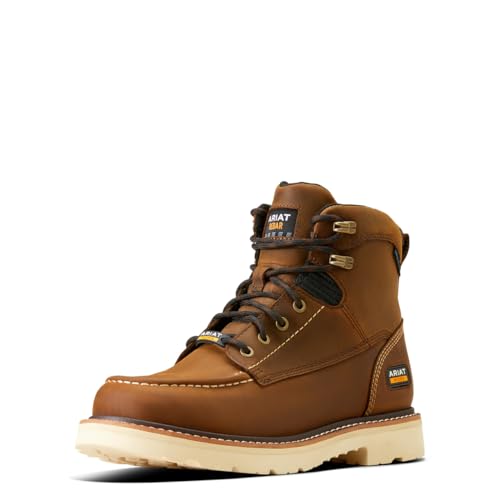
The ARIAT Rebar Lift 6-inch boot offers a useful middle ground between a tall work boot and a low chukka. Its waterproof design helps protect feet during rain, wet concrete work, and minor spills. The 6-inch height gives more coverage than a shoe without feeling as tall as an 8-inch or 11-inch boot. That makes it a practical daily choice for many pipefitters.
The lifted heel can support a steady stance while you stand, climb, or work around equipment. Its outsole is made for job-site use and gives useful grip on common surfaces. Since this is a waterproof boot, it may feel warmer than a non-waterproof leather pair. I like this style for workers who want one boot that can handle changing weather without becoming too cumbersome.
Pros:
- Waterproof design helps keep feet dry
- 6-inch height balances coverage and mobility
- Raised heel supports many work positions
- Good everyday size for indoor-outdoor jobs
- Rugged outsole helps provide steady traction
- Less bulky than taller waterproof boots
Cons:
- May feel warm during summer shifts
- Less lower-leg coverage than an 8-inch boot
- Waterproof materials need proper drying after use
My Recommendation
The 6-inch Rebar Lift is best for pipefitters who want weather protection without a tall shaft. It suits service calls, plant work, construction, and general maintenance. I see it as one of the best work boots for pipefitters who need a flexible all-season option. It offers strong value for workers who want comfort and waterproof coverage in one manageable boot.
VULTREAK Composite-Toe Safety Work Boot

The VULTREAK safety boot is aimed at industrial, welding, and construction users who need several safety features in one design. It uses a composite toe, a puncture-resistant Kevlar midsole, and a rubber outsole made for slip resistance. The listed waterproof and heat-resistant features can appeal to pipefitters who work near wet areas or hot tasks. Its quick-fit system is also useful when you change footwear often.
This boot has a broader safety focus than a traditional leather moc toe. The composite toe can reduce cold transfer and may help lower weight compared with steel. Still, every worker should confirm the exact certification and employer approval before relying on any safety claim. Fit is especially important because a boot with many protective layers can feel less flexible than a normal work shoe.
Pros:
- Composite toe offers protective coverage without a metal toe
- Kevlar midsole helps resist puncture hazards
- Waterproof design suits wet industrial areas
- Heat-resistant build supports demanding work settings
- Rubber outsole helps improve slip resistance
- Quick-fit system can save time before a shift
Cons:
- May feel stiffer than a standard leather boot
- Fit and comfort can vary by foot shape
- Workers must verify required certifications before use
My Recommendation
I recommend the VULTREAK for pipefitters who face mixed hazards, including wet floors, sharp debris, and heat. It may suit welding areas, industrial plants, and demanding fabrication work. This is one of the best work boots for pipefitters if you want a broad set of protective features in one boot. Its value is attractive, but certification, fit, and workplace approval should guide the final choice.
How to Choose the Best Work Boots for Pipefitters
Pipefitting is hard on footwear. You may spend part of the day walking on concrete, then kneel beside a pipe, climb a ladder, or stand near water and metal shavings. Because the work changes so fast, the best work boots for pipefitters must solve more than one problem. A soft, comfortable boot may fail when the site requires a safety toe. A very tough boot may become painful if it does not fit.
Start With Your Employer’s Safety Rules
Always check the site rule before you shop. Many industrial employers require a protective toe, electrical hazard protection, slip resistance, or a specific ASTM rating. OSHA rules address workplace foot protection, while ASTM standards describe performance tests for protective footwear. The label alone does not tell the whole story, so check the boot details and ask your safety manager when needed.
A steel toe is a common choice for heavy pipe and tools. A composite toe can weigh less and does not conduct cold as readily. Neither option is automatically best for every person. The right choice depends on the hazard, the required standard, the fit, and the climate.
Choose the Right Boot Height
A 6-inch boot is a good all-around height. It gives ankle coverage while keeping movement fairly easy. An 8-inch boot offers more support and helps keep debris out. An 11-inch boot gives the most coverage but can feel warmer and heavier.
Think about your real work day. If you work inside a clean plant, a 6-inch boot may be enough. If you cross mud, gravel, or uneven ground, an 8-inch boot may feel safer. For trench work or heavy outdoor use, the extra height of the Marshall can make sense.
Look for Reliable Traction
Pipefitters often face wet concrete, oily floors, smooth steel, and loose dirt. A lugged outsole can work well outdoors, while a wedge outsole can feel stable on flat concrete. No outsole makes an unsafe surface safe. Good traction only gives you more control when you place each step.
Check the tread pattern before you buy. Deep lugs can shed dirt better, but they may feel less smooth inside a plant. A flatter wedge sole can provide a broad contact area, but it may not perform as well in deep mud. The best work boots for pipefitters match the sole to the surface under your feet.
Do Not Ignore Waterproofing
Waterproof boots help during rain, puddles, wet trenches, and wash-down work. They can also help prevent cold, wet socks from ruining a shift. Yet waterproof boots may feel warmer because they reduce airflow. If you work indoors in a hot plant, a breathable non-waterproof boot may feel better.
Waterproof leather still needs care. Remove dirt, dry the boots away from direct heat, and use a product approved for the leather. Never place wet boots directly against a heater. High heat can dry leather too fast and weaken adhesives.
Prioritize Fit Over Brand Name
A famous brand cannot fix a poor fit. Your toes should not touch the safety cap. Your heel should stay mostly in place while you walk. The widest part of your foot should rest over the boot’s widest area.
Try boots near the end of the day because feet often swell after hours of work. Wear the socks you plan to use on the job. If you need thick winter socks, leave enough room before you buy. A boot that feels “just right” in thin socks may become painful by lunchtime.
Consider Break-In Time
Full-grain leather often needs time to soften. That does not mean you should suffer through a painful break-in. Wear new boots at home for short periods first. Check for pressure at the heel, ankle, tongue, and safety toe.
Use clean socks and keep the laces snug. Loose lacing can cause heel lift and blisters. Very tight lacing can restrict your foot and create hot spots. Slow, careful break-in is easier than trying to fix a damaged foot after a long shift.
Think About Foot Fatigue
Comfort comes from more than soft padding. A good boot supports your arch, holds your heel, and lets your toes spread. A stable midsole can reduce the tiring feeling that comes from standing on hard concrete. The Thorogood and Carhartt models are strong choices for workers who value a broad, steady platform.
Replace worn insoles when the boot still has life left. A new insole can restore some comfort, but it cannot repair a cracked outsole or collapsed midsole. If the boot bends sharply in the wrong place, shows deep cracks, or loses tread, replace it.
Steel Toe Versus Composite Toe
Steel toe caps are familiar and can provide strong impact and compression protection. They may feel colder in winter and heavier during long walks. Composite toes are usually nonmetallic and can feel warmer in cold weather. They may also help workers who pass through metal detectors.
Do not choose by material alone. Confirm the safety rating and toe shape. A well-fitting steel toe can feel better than a poorly shaped composite toe. The best work boots for pipefitters use the right toe type for the hazard and the wearer.
Electrical Hazard Protection
An electrical hazard rating may help reduce the chance of electric shock under specific dry conditions. It does not make a boot electrical-proof. It also does not replace lockout procedures, testing, or other safety controls. Treat the rating as one part of a safety plan, not a free pass near live power.
How I Compare Work Boots
When I compare work boots, I look at safety first. Then I consider traction, water protection, support, fit, flexibility, and long-term care. I also ask how the boot fits a real shift rather than a short walk in a store.
I give extra weight to features that solve common pipefitting problems. These include toe protection, stable footing, ankle coverage, dry feet, and comfort on concrete. A boot does not need every feature to be good. It needs the features that match your job.
Best-for Comparison Table
| Best for | Why |
|---|---|
| Best overall balance | Thorogood American Heritage combines leather durability, steel-toe protection, a stable wedge sole, and long-shift comfort. |
| Best for wet outdoor work | ARIAT Rebar Lift 8-Inch offers waterproof coverage, ankle support, and a rugged work outsole. |
| Best for mixed safety hazards | VULTREAK adds a composite toe, puncture-resistant midsole, waterproof build, heat resistance, and slip-resistant rubber. |
Boot Care Tips for Pipefitters
Good care can add months to the life of a work boot. Brush off dirt after each shift. If the boot gets wet, remove the insole and let both parts dry at room temperature. This simple habit helps control odor and protects the lining.
Condition leather when it starts to look dry. Use a small amount first because heavy conditioner can soften the leather too much. Avoid random chemicals, especially near rubber soles and waterproof membranes. Follow the care directions supplied by the maker.
Inspect the toe, sole, stitching, eyelets, and heel each week. Look for cracks, loose seams, worn tread, and exposed safety components. Replace boots when damage can affect protection or balance. A worn boot is not a bargain if it causes a fall.
FAQs Of Best Work Boots for Pipefitters
What toe type is best for pipefitters?
Steel toe works well for heavy impact risks. Composite toe may feel lighter and warmer in cold weather. Choose the type that meets your employer’s required safety standard and fits your foot well.
Are waterproof boots good for pipefitting?
Yes, waterproof boots help in rain, puddles, wet plants, and outdoor work. They may feel warm in hot indoor areas. Choose waterproofing when wet feet are a common job risk.
Should pipefitters wear 6-inch or 8-inch boots?
A 6-inch boot offers easy movement and everyday coverage. An 8-inch boot gives more ankle support and keeps out more debris. Pick the height that matches your ground conditions and comfort needs.
Are wedge soles safe for pipefitters?
Wedge soles can feel stable on flat concrete and indoor floors. They may not perform as well in deep mud or loose outdoor soil. Always check the tread and the site surface before choosing one.
How should work boots fit?
Your toes should have room without sliding forward. Your heel should stay mostly secure. Try boots with work socks at the end of the day, when your feet are slightly larger.
Final Verdict: Which Should You Buy?
For most workers, the Thorogood American Heritage offers the best overall mix of protection, comfort, traction, and durable leather. For wet outdoor work, choose the ARIAT Rebar Lift 8-Inch.
The best work boots for pipefitters should match your hazards, fit, and daily surface. Check safety rules, break in slowly, and care for the leather to get lasting value.

Madison Clark is a footwear expert and the voice behind MyStyleGrid.com. She specializes in honest shoe reviews, style tips, and practical guides to help readers find the perfect pair for any occasion. With years of experience in blogging and content creation, Madison makes footwear knowledge simple, stylish, and easy to follow.