Yes, you can wear sandals to work when company policy, safety rules, and your outfit support them.
The answer depends on your workplace, job duties, dress code, and the type of sandals you choose. After reviewing office dress standards, workplace safety guidance, and common professional styling practices, this guide explains when sandals look polished, when they may create a safety risk, and how to make the right choice with confidence.
Can I wear sandals to work?
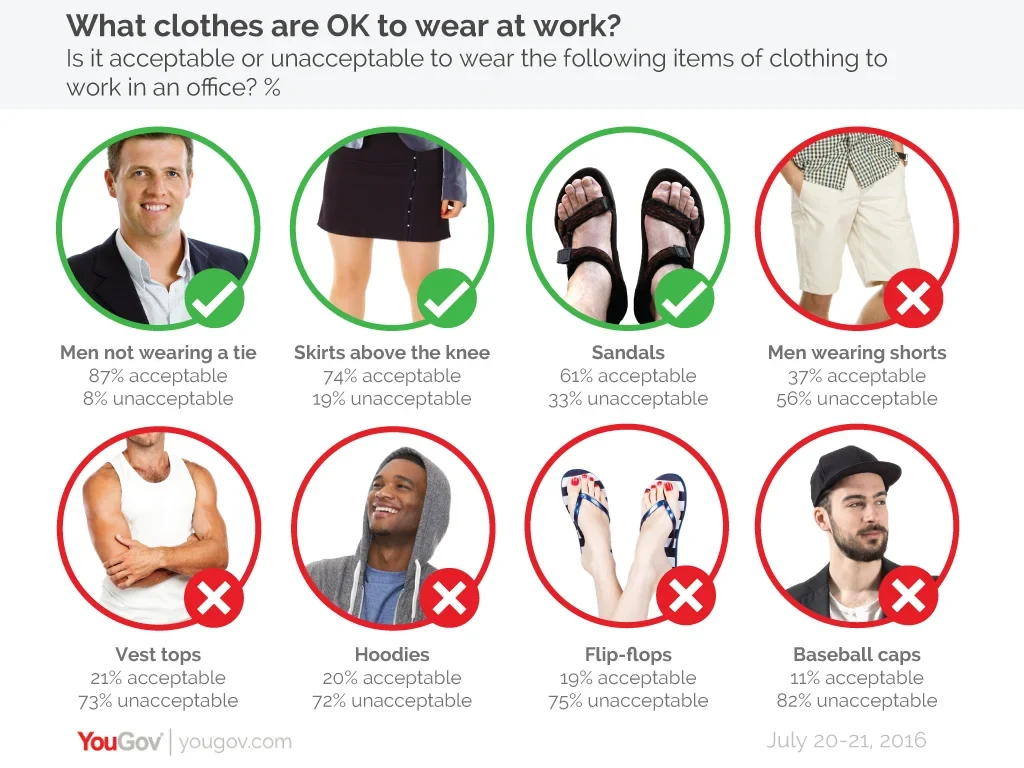
In many workplaces, you can wear sandals to work, especially in casual offices, creative industries, warm climates, and business-casual settings. However, sandals are not suitable for every job or company. Your employer’s dress code should always come first.
Open-toe shoes may be accepted in one office and banned in another. A sleek leather sandal may look professional at a design agency but feel too casual at a law firm. The same shoe can also be safe at a desk and unsafe in a warehouse, laboratory, kitchen, or construction site.
Before wearing sandals to work, consider these factors:
• Your written workplace dress code
• Whether your job involves machinery, chemicals, food, or heavy equipment
• How much walking or standing your role requires
• The type, color, and condition of the sandals
• Whether you meet clients, customers, or senior leaders
• The weather and local workplace culture
If the policy is unclear, ask your manager or human resources team. A simple question such as, “Are professional open-toe shoes allowed in the office?” can prevent an awkward mistake.
When are sandals appropriate for work?
Sandals are most appropriate in workplaces with a relaxed or business-casual dress code. They can work well when the design is clean, secure, and suited to the rest of your outfit.
You may be able to wear sandals to work in these settings:
• Creative offices, such as design, media, and advertising agencies
• Casual technology companies
• Retail or customer service roles with relaxed dress standards
• Warm-weather offices with business-casual clothing
• Remote or hybrid workdays when you are not meeting clients
• Outdoor workplaces that allow open footwear and have no safety risks
The best work sandals usually have a refined shape. Think of them as an office version of your favorite casual shoe. They should look intentional rather than like something you grabbed for a trip to the beach.
Good choices often include:
• Leather or high-quality faux-leather sandals
• Simple flat sandals with wide, secure straps
• Low-heeled block sandals
• Slingback sandals with a closed or stable heel
• Minimal ankle-strap sandals
• Dressy wedge sandals with good support
Color also matters. Black, brown, tan, navy, and other muted shades are easy to style. Bright colors can work in creative offices, but they should complement your outfit rather than dominate it.

When should you avoid wearing sandals to work?
There are workplaces where wearing sandals to work is not appropriate or safe. In these settings, closed-toe shoes protect your feet and support a more formal appearance.
Avoid sandals if you work in:
• Construction or manufacturing
• Warehouses and loading areas
• Laboratories or medical environments
• Restaurants and commercial kitchens
• Salons where chemicals or sharp tools are used
• Hospitals or patient-care areas, unless the facility allows them
• Workshops, garages, and repair spaces
• Jobs that require steel-toe, slip-resistant, or protective footwear
Safety is the main concern. The Occupational Safety and Health Administration requires employers to protect workers from foot injuries in many hazardous environments. Open shoes can expose your feet to falling objects, spills, sharp items, hot surfaces, and harmful substances.
You should also avoid sandals for formal business meetings, interviews, court appearances, and important presentations unless you know the company welcomes them. Even when sandals are technically allowed, they may not create the level of polish expected in a formal setting.
A useful rule is simple: if your feet need protection, wear closed shoes. If your workplace expects a formal image, choose a more structured shoe.
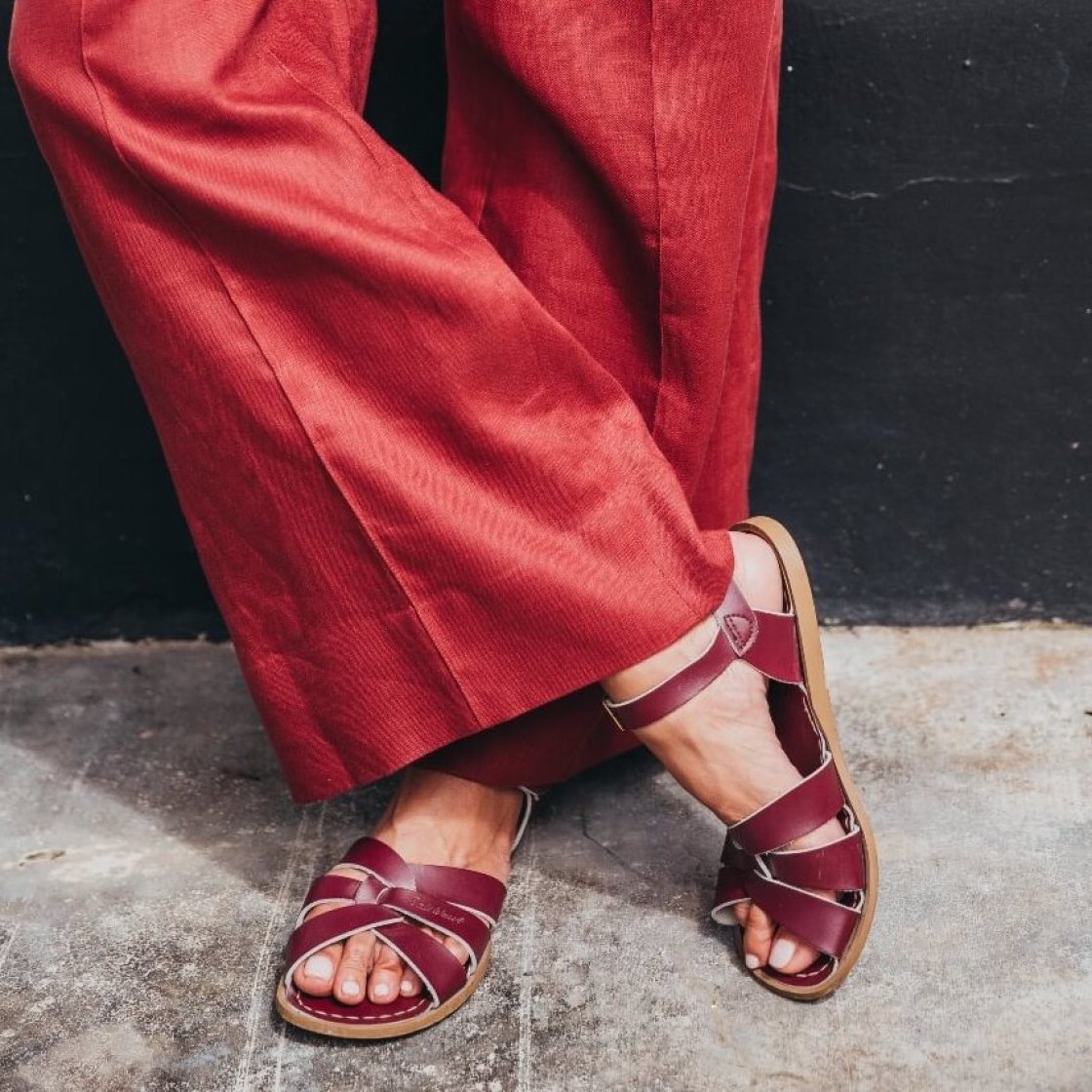
What type of sandals looks professional?
The right sandals can look polished, but not every style belongs in an office. Professional sandals tend to have clean lines, quality materials, and a secure fit.
Look for these features:
• A neat, well-kept finish
• Strong straps that hold the foot in place
• A low heel, block heel, or flat sole
• Minimal decorations
• Neutral or refined colors
• A clean footbed with no visible wear
• A shape that does not resemble beachwear
Avoid flip-flops, pool slides, rubber shower sandals, and worn-out foam footwear. These styles are made for comfort and casual use, not professional settings. They may also make noise, slip easily, or leave your feet less protected.
Platform sandals and very high wedges can also be poor choices. They may look stylish, but they can be unstable and uncomfortable during a long workday. If you need to walk across a large office or commute by public transportation, comfort should matter as much as appearance.
A sandal should support your outfit, not become the main topic of conversation. When in doubt, choose a simple style with a tailored outfit.
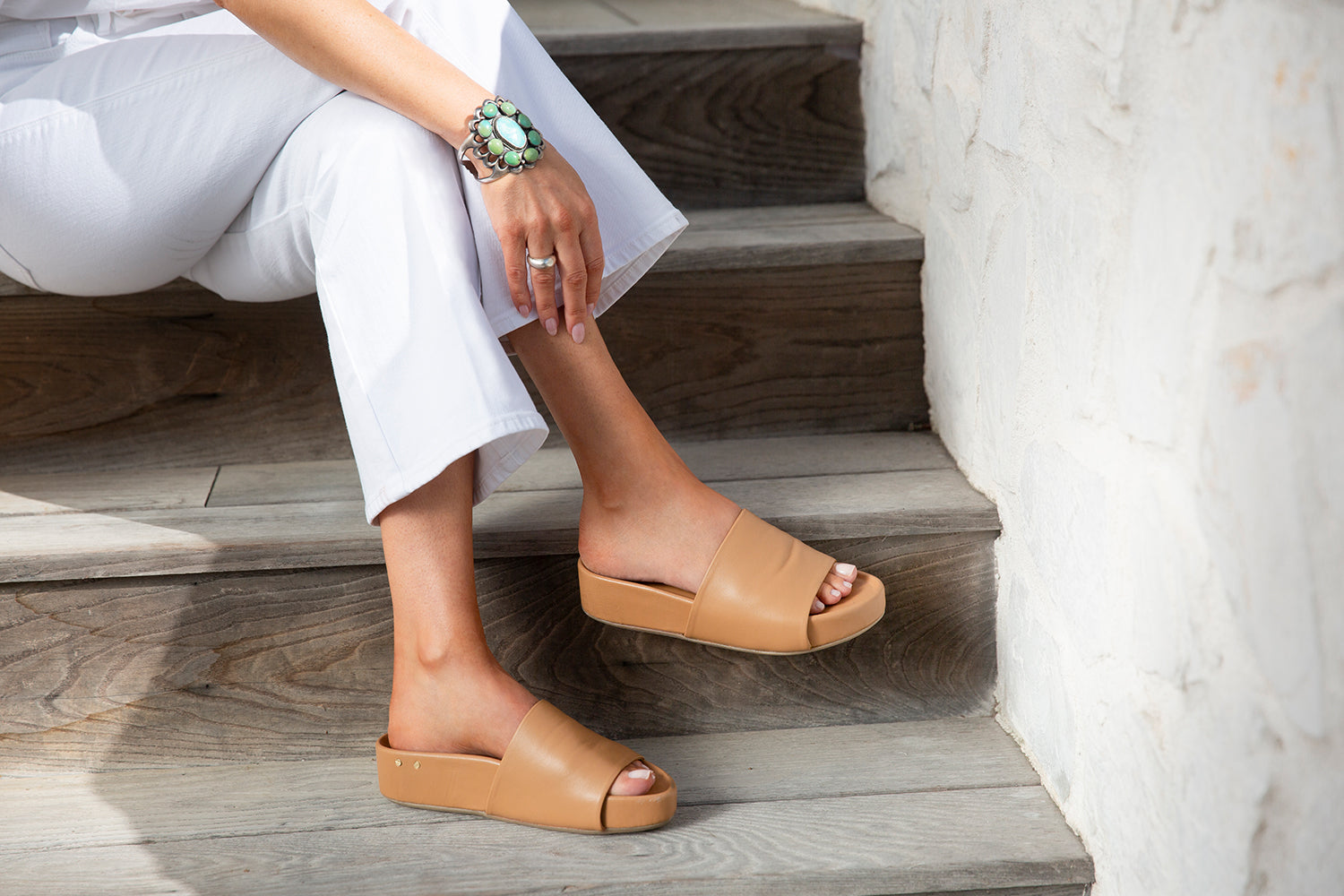
How to style sandals for a professional outfit
A professional sandal outfit works best when the clothing looks structured. Tailored pieces balance the relaxed nature of open footwear.
Try these combinations:
• Leather sandals with ankle-length trousers and a tucked-in blouse
• Low block-heel sandals with a midi dress and a light blazer
• Simple flat sandals with wide-leg pants and a fitted knit top
• Neutral slingback sandals with a pencil skirt and a button-down shirt
• Minimal sandals with cropped trousers and a structured jacket
• Refined wedge sandals with a knee-length summer dress
Pay attention to proportions. If your sandals are simple, you can add interest through color, texture, or accessories. If the sandals have straps, metallic details, or a bold shape, keep the rest of the outfit quiet.
Your clothing should also be clean and pressed. Wrinkled linen, overly sheer fabric, and casual graphic shirts can make sandals look less professional. This does not mean your outfit must be stiff. It simply needs to look planned.
Grooming matters, too. Clean toenails and moisturized feet are part of wearing open footwear in a shared professional space. You do not need a salon pedicure, but basic care helps your sandals appear intentional.

Can I wear sandals to work in a business-casual office?
You can often wear sandals to work in a business-casual office, but the style must match the company’s version of business casual. Some offices define business casual as trousers, blouses, and polished flats. Others allow dresses, jeans, sneakers, and open-toe shoes.
Look at what trusted coworkers and managers wear. Observe the normal standard, not the most relaxed outfit you see on a Friday. If most people wear loafers, ballet flats, or closed-toe heels, very casual sandals may appear out of place.
A safe approach is to choose:
• A closed-heel sandal
• A low block heel
• A dark or neutral color
• A clean leather finish
• A design with secure straps
• Clothing that is slightly more polished than casual
If you are new to the company, wait a week or two before wearing sandals to work. This gives you time to understand the culture. First impressions can be difficult to change, so it is usually better to dress slightly more formally at the start.
When office policy is flexible, professionalism still matters. Sandals should look like part of a complete work outfit, not a compromise made because the weather is hot.

Can I wear sandals to work in a formal office?
In a formal office, you should be cautious about wearing sandals to work. Many traditional workplaces prefer closed-toe pumps, loafers, oxfords, or other structured shoes.
Some formal offices allow dress sandals, especially during summer. These are usually elegant, secure, and paired with formal clothing. A delicate sandal with a low heel may be acceptable, while a flat rubber slide probably is not.
Consider the situation as well as the office:
• An ordinary desk day may allow more flexibility
• A client presentation calls for a conservative choice
• A job interview requires careful attention to company norms
• A board meeting may call for closed-toe footwear
• A summer office party may have a more relaxed standard
When you are unsure, closed-toe shoes are the safer option. They communicate care and professionalism without raising questions about dress expectations.

Workplace safety rules and open-toe shoes
Whether you can wear sandals to work is not only a fashion question. It may also be a workplace safety issue.
Employers often restrict open-toe shoes when workers face hazards such as falling objects, sharp tools, moving equipment, electrical risks, hot materials, or chemical spills. The exact rule depends on the job and the employer’s hazard assessment.
Footwear must also provide enough traction and stability. A loose sandal can catch on stairs or uneven flooring. Thin soles may offer little protection from heat or sharp objects. Flip-flops can slide off and make it harder to move safely.
The Centers for Disease Control and Prevention has also highlighted the importance of proper footwear in reducing slips, trips, and falls. While not every office needs protective footwear, employees should still choose shoes that fit well and support steady movement.
Ask these safety questions before wearing sandals:
- Could something fall on my foot?
- Could I step on a sharp object?
- Could liquid, oil, or chemicals reach my skin?
- Do I need slip-resistant soles?
- Will I operate equipment or move through a work area?
- Can I walk safely in these shoes for my full shift?
If you answer yes to any risk question, wear closed, protective shoes instead.
Benefits and drawbacks of wearing sandals at work
Sandals can be useful during warm weather, but they also have limits. Understanding both sides helps you make a practical choice.
Benefits include:
• Better airflow during hot weather
• Less foot heat during long office days
• A stylish option for summer clothing
• Easy pairing with dresses, skirts, and trousers
• More comfort than some stiff formal shoes
Drawbacks include:
• Less protection from injury
• Limited support in very flat styles
• Possible slipping or tripping
• A less formal appearance
• Exposure to cold air conditioning
• Noise from loose or hard soles
• Blisters from straps and friction
Comfort deserves special attention. Many sandals have thin soles and little arch support. They may feel fine for an hour but cause foot pain after a full shift. The American Podiatric Medical Association recommends choosing shoes that fit properly and provide suitable support for your activity.
Try your sandals at home before wearing them to work. Walk, sit, climb stairs, and stand for at least 30 minutes. This simple test can reveal rubbing, loose straps, or poor balance before the shoes create trouble during your workday.
Common mistakes to avoid
The biggest mistake people make when deciding whether they can wear sandals to work is treating all sandals as equal. A refined leather sandal and a worn flip-flop may both expose the toes, but they send very different messages.
Avoid these common errors:
• Wearing beach sandals in a professional office
• Choosing shoes with dirty or damaged soles
• Ignoring a written footwear policy
• Wearing unstable high platforms
• Pairing casual sandals with an overly relaxed outfit
• Forgetting that clients may judge the full appearance
• Wearing a style that causes pain or blisters
• Choosing open footwear in a hazardous work area
One practical lesson from workplace styling is that context beats trends. A shoe can be fashionable and still be wrong for a specific job. The safest wardrobe choice is one that respects the dress code, the setting, and your daily tasks.
It also helps to keep a backup pair of closed-toe shoes at work. This is useful for surprise meetings, sudden weather changes, or a manager’s request. A simple pair of loafers can save the day without taking up much space.
A simple checklist before wearing sandals to work
Use this checklist when you are still asking, “Can I wear sandals to work?”
- Read the company dress code.
- Check whether open-toe shoes are allowed.
- Identify any safety risks in your role.
- Look at what respected coworkers wear.
- Select a clean, secure, professional style.
- Test the shoes for comfort and stability.
- Match the sandals with tailored clothing.
- Keep closed-toe shoes available when possible.
- Reconsider the choice for formal meetings.
- Ask your manager if the rule is unclear.
This process takes only a few minutes. It can help you avoid discomfort, protect your feet, and feel more confident throughout the day.
When the answer is still uncertain, choose the more conservative option. It is easier to become more relaxed with your footwear later than to repair a poor first impression.
Frequently Asked Questions About Can I Wear Sandals to Work
Can I wear sandals to work if my office has a casual dress code?
Often, yes. Choose clean, secure sandals and pair them with polished clothing rather than shorts, beachwear, or worn-out casual pieces. Always check whether your employer has a specific rule about open-toe shoes.
Are open-toe shoes professional?
Open-toe shoes can be professional when they have a refined design, good construction, and a secure fit. Simple leather sandals or low block-heel styles usually look more polished than flip-flops, slides, or plastic beach sandals.
Can I wear flip-flops to work?
Flip-flops are rarely appropriate in a professional workplace. They look very casual, provide limited support, and may create a trip or slip risk.
Can I wear sandals to work for a job interview?
It is usually better to wear closed-toe shoes for a job interview, especially when you do not know the company’s dress culture. If the workplace is clearly casual and summer-focused, a refined dress sandal may be acceptable, but conservative footwear remains the safer choice.
Are sandals safe for standing all day at work?
Some sandals provide adequate support, but many flat styles do not. Choose shoes with cushioning, stable soles, secure straps, and enough arch support, and test them before wearing them for a full shift.
Can I wear sandals to work in a restaurant or kitchen?
Usually not. Restaurants and kitchens often require closed, slip-resistant shoes to protect workers from hot liquids, sharp objects, spills, and falling items. Follow your employer’s safety policy instead of relying on general fashion advice.
What should I do if my workplace dress code is unclear?
Ask your manager or human resources department for a clear answer. You can also review employee handbooks and observe the footwear worn by people in similar roles.
Conclusion
So, can I wear sandals to work? In many casual or business-casual offices, the answer is yes, provided the shoes are polished, secure, comfortable, and allowed by company policy. In formal or hazardous workplaces, closed-toe footwear is usually the better choice.
Think beyond fashion. Check the dress code, consider your job duties, study the office culture, and choose sandals that support both your feet and your professional image. If you are unsure, keep a pair of closed-toe shoes nearby and choose the safer option.
Use these tips before your next warm-weather workday, and share your own office footwear experience in the comments.

Madison Clark is a footwear expert and the voice behind MyStyleGrid.com. She specializes in honest shoe reviews, style tips, and practical guides to help readers find the perfect pair for any occasion. With years of experience in blogging and content creation, Madison makes footwear knowledge simple, stylish, and easy to follow.