Introduction
For most people in the United States, Converse shoes last about 1 to 3 years with regular casual wear. Light use can extend that time. Daily walking, outdoor work, rain, heat, and rough sidewalks can shorten it.
There is no fixed expiration date for Converse shoes. Their life depends on the model, materials, fit, care, and how often you wear them. Canvas Chuck Taylor sneakers may wear sooner than leather or utility styles.
The best answer is not a single number. It is this: replace Converse shoes when the sole, upper, or fit no longer gives you safe and useful wear—not simply because they reach a certain age.

How Long Do Converse Shoes Usually Last?
Converse shoes often last one to three years for casual wear. This is a practical planning range, not a service-life promise from Converse.
A pair worn once or twice a week may last several years. A pair worn every day may show serious wear within one year. Someone who uses Converse for long walks, physical work, or sports may need a replacement much sooner.
| Use pattern | Typical planning range | What may happen first |
|---|---|---|
| Light use, indoors or short outings | 2–5 years | Aging, stains, or loss of shape |
| Regular casual use | 1–3 years | Worn tread, dirty canvas, loose seams |
| Daily walking | 6–18 months | Thin soles, heel wear, weak cushioning |
| Heavy outdoor or work use | 3–12 months | Torn upper, damaged sole, poor support |
| Occasional special use | 3–7 years | Rubber aging, yellowing, or cracking |
These ranges are estimates based on common wear patterns. They are not controlled durability test results. Converse does not give one universal lifespan for every shoe, because a canvas Chuck 70, a leather model, and a platform style face different stresses.
What usually wears out first?
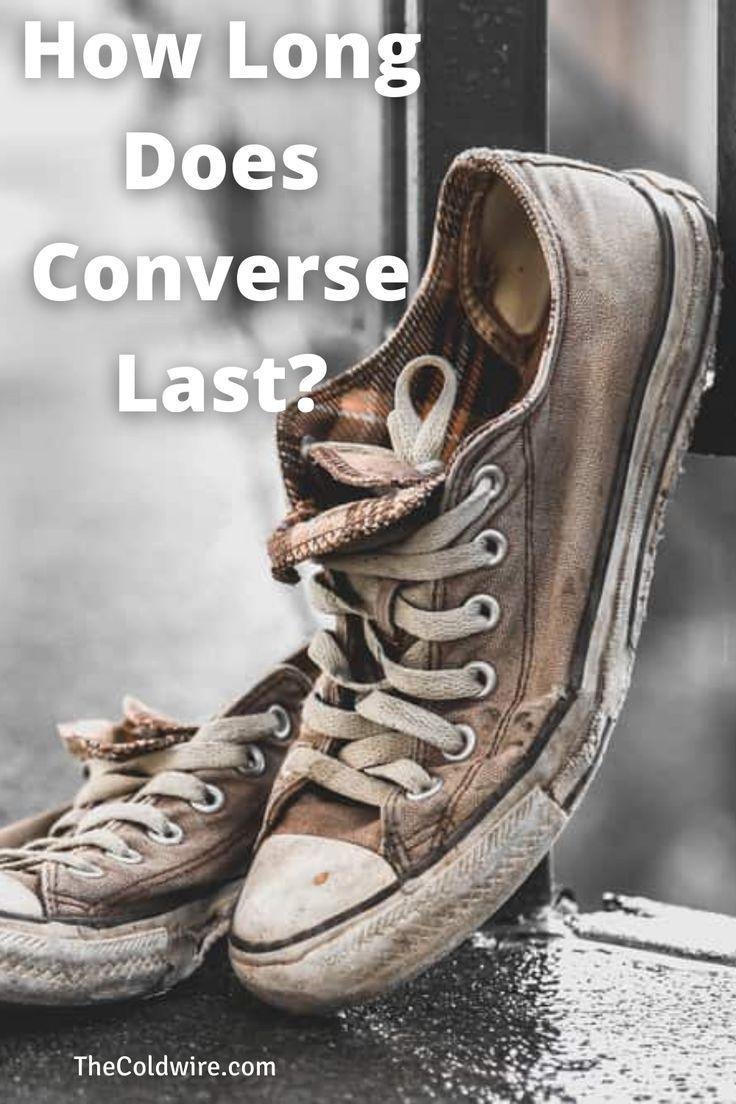
The outsole often shows the clearest wear. The outsole is the part that touches the ground. Repeated contact with pavement slowly removes the tread and can make the rubber smooth.
The canvas upper may last longer than the sole, but it can tear near the eyelets, toe box, or side seams. Frequent bending and tight lacing place stress on these areas.
The insole and inner heel can also fail before the outside looks badly worn. Flattened cushioning, rough lining, or heel collapse can make the shoe less comfortable.
The design also matters. Low-top shoes may bend more easily at the front. High-tops may place more stress around the ankle and eyelets. Platform soles can feel stable at first but may show separation if the shoe bends or twists often.

What Affects Converse Shoe Lifespan?
The biggest factors are wear frequency, walking conditions, fit, materials, and care. Two people can own the same Converse model and get very different results.
1. How often you wear them
Daily use gives the shoe little time to dry and recover. Sweat and moisture can stay inside the shoe. Constant bending also speeds up wear at the toe crease and outsole.
Rotating between two or more pairs can help each pair dry between uses. It does not make the materials stronger, but it can reduce nonstop stress and odor.


2. Where you wear them
Smooth indoor floors are usually easier on shoes than rough pavement. Gravel, concrete, and unfinished outdoor surfaces can wear the rubber faster.
Heat and strong sunlight can also affect rubber, glue, and color. Snow, road salt, and repeated wet conditions may stain the upper and weaken some materials if the shoes are not cleaned and dried well.
3. The shoe material
Common Converse materials include canvas, leather, synthetic materials, rubber, and textile linings.
- Canvas: Light and flexible, but it can stain, fray, or tear.
- Leather: Often resists light moisture better than canvas, but it still needs care and can crease or crack.
- Rubber: Durable, but it can wear smooth, split, or separate from the upper.
- Suede or mixed materials: Need more careful cleaning and may react poorly to excess water.
Material alone does not decide lifespan. A well-fitting canvas shoe used lightly may last longer than a leather shoe used every day on rough ground.
4. How well they fit
A poor fit can shorten shoe life. If your toes press against the front, the toe box may crease sharply and wear faster. If your heel slips, the lining can rub away.
A shoe that is too small may also cause foot pain. A shoe that is too loose may make you grip with your toes or change your walking pattern. Converse shoes are not automatically a good fit for every foot shape.
5. How you clean and dry them
Dirt can act like fine sandpaper. It may work into fabric, seams, and the rubber edge. Leaving shoes wet can also create odor and may affect adhesives.
Converse’s care guidance recommends cleaning methods based on the shoe material. Follow the care instructions for the exact model rather than treating leather, suede, and canvas the same way.

How Can You Tell When Converse Shoes Need Replacing?
Replace Converse shoes when damage affects traction, structure, comfort, or fit. Cosmetic marks alone do not always mean the shoes are finished.
Look for these signs:
Worn or smooth tread
Turn the shoe over and inspect the outsole. If the tread is nearly smooth, the shoe may grip less well on wet or polished surfaces.
A small worn area near the heel is common. A deep, uneven patch suggests that your walking pattern or the shoe’s structure may be changing.
Sole separation
Check the edge where the rubber meets the upper. If you see a gap, peeling, or a section that lifts, the shoe may continue to separate.
Do not rely on household glue for a lasting repair. Glue can create a hard spot, change how the shoe bends, and fail when exposed to water or repeated flexing.


A hole in the upper
A small surface mark may be harmless. A hole that exposes your sock or foot can let in water and dirt. It can also grow quickly near a bend or seam.
Flattened or damaged insoles
If the insole has lost its shape, you may feel the ground more clearly or notice new foot fatigue. A replacement insole may help if the upper and outsole remain sound.
However, a new insole cannot fix a worn tread, broken sole, or collapsed heel counter.
Heel collapse
The heel area should hold your foot in place. If it folds inward or stays crushed after you put the shoe on, the shoe may no longer support a stable fit.
Avoid forcing your foot into a crushed heel. That can damage the shoe further.
New pain or discomfort
Pain is a practical warning. Stop using the shoes for long walks if they cause rubbing, blisters, numbness, or new foot, knee, or leg discomfort.
People with diabetes, reduced feeling in their feet, or ongoing foot pain should ask a qualified health professional about footwear. A worn sneaker can hide a bigger fit or support problem.

How to Make Converse Shoes Last Longer
You can extend the useful life of Converse shoes with simple care. The goal is to reduce moisture, dirt, twisting, and uneven wear.
1. Rotate your shoes
Let each pair rest between wears when possible. Remove the insoles if they are removable, and let the shoes air out in a dry place.
Do not place wet shoes on a radiator or use intense heat. High heat can affect rubber, adhesives, and some upper materials.
2. Clean dirt early
Brush off dry dirt before it becomes embedded. Use a soft brush or cloth and a mild cleaning method suited to the material.
Test any cleaner on a hidden area first. A cleaner that works on rubber may discolor canvas, leather, or suede.
3. Dry them fully
If Converse shoes get wet, remove loose inserts and let them dry at room temperature. Stuffing them lightly with plain paper can help them keep their shape.
Avoid wearing them again while the inside is still damp. Damp shoes can smell, feel rough, and wear faster.


4. Lace them to reduce rubbing
Use a secure fit without pulling the laces so tight that they crease or strain the eyelets. The heel should stay in place while you walk.
Do not use very loose lacing to compensate for a shoe that is too small or too wide. A different size or shape may be the better answer.
5. Use the right shoe for the activity
Converse sneakers work well for many casual settings. They are not a universal substitute for hiking shoes, running shoes, work boots, or activity-specific footwear.
Running and court sports place different demands on traction, cushioning, and stability. Using a casual sneaker for those tasks may shorten its life and reduce comfort.
6. Store them in a cool, dry place
Keep shoes away from prolonged dampness and direct sun. Do not store them compressed under heavy objects.
Good storage cannot stop normal aging. It can, however, reduce avoidable cracking, odor, and shape loss.

Can You Repair Converse Shoes?
You can repair some minor problems, but repair is not always worthwhile.
A replacement insole may solve a comfort issue when the outsole and upper are still strong. A professional shoe repair shop may also handle certain stitching or sole problems, depending on the model and damage.
Repair becomes less practical when the outsole is worn smooth, the upper has several tears, the heel has collapsed, or the sole has separated over a large area. The cost and quality of the repair can vary by location and shoe construction.
Before repairing a pair, check:
- Is the tread still useful?
- Is the upper free of major tears?
- Does the shoe still fit well?
- Is the repair likely to last?
- Would a replacement cost less than the repair?
A repair should not hide a safety problem. If the shoe slips, causes pain, or cannot stay securely on your foot, replace it rather than continuing to wear it.

Converse Chuck Taylor All Stars vs. Chuck 70: Do They Last the Same?
Not always. The exact model can change the materials, construction, cushioning, and feel.
Chuck 70 models are generally positioned as a more detailed version of the classic Chuck Taylor design, with differences such as construction and interior comfort features. That does not guarantee that every Chuck 70 will outlast every All Star.


Actual lifespan still depends on use. A lightly worn classic model may last longer than a Chuck 70 used every day on rough pavement.
When comparing models, check:
- Upper material
- Outsole thickness and tread
- Insole construction
- Stitching and reinforcement
- Intended use
- Fit and comfort during walking
The best long-term choice is the model that fits your foot and matches your activity. A more expensive or more structured model is not automatically the most durable option for every wearer.

Common Mistakes That Shorten Converse Shoe Life
Several habits can damage Converse shoes faster than normal use.
Wearing them for every activity
A casual sneaker may not handle running, hiking, heavy labor, or wet outdoor work well. Match the shoe to the task.
Washing them without checking the material
Water and strong cleaners can damage some finishes. Read the care instructions for the model first.
Drying them with high heat
Heat may cause shrinkage, hardening, discoloration, or adhesive problems. Air drying is the safer general approach.
Ignoring uneven wear
Uneven wear can point to a fit issue, walking pattern, or worn structure. Continuing to use the pair may make discomfort worse.
Waiting for a complete failure
A shoe does not need to split in half before it needs replacing. Reduced grip, painful rubbing, and a collapsed heel are enough reason to stop using it.
Frequently Asked Questions
Do Converse shoes last longer than Vans?
Neither brand has one lifespan for every model. Both make shoes with different materials and constructions. Use, fit, care, and surface usually matter more than the logo.
Can I wear Converse in the rain?
You can wear them in light rain, but regular exposure to water can stain the upper and increase drying time. Canvas Converse are not waterproof unless the specific model says otherwise.
Dry wet shoes at room temperature and follow the care instructions for that model.
Are Converse good for walking all day?
They may work for some people, but classic Converse models have a simple, flat design and may not provide the cushioning or support that every foot needs for long walks.
Try them for short periods first. Stop if they cause pain, numbness, blisters, or unusual fatigue.
How often should I replace Converse insoles?
Replace an insole when it is flattened, damaged, smells strongly after cleaning, or no longer feels comfortable. The timing can range from months to years, depending on use.
A new insole will not repair a worn outsole or damaged upper.
Can old Converse shoes still be safe to wear?
Yes, if the outsole still grips, the upper holds your foot securely, the sole is attached, and the shoes do not cause pain. Age alone does not decide whether a pair is usable.
Inspect both shoes before wearing them for a long walk or demanding activity.
Conclusion
Most Converse shoes last about 1 to 3 years with regular casual use, but that range can change widely. Light use may provide several years of wear, while daily walking, wet conditions, and rough surfaces can reduce the life to less than a year.
Inspect the tread, sole bond, upper, heel, and fit. Clean the shoes with a material-safe method, dry them without high heat, and rotate pairs when possible.
Your next step is simple: turn the shoes over and check the tread. If it is smooth, the sole is separating, or the shoes cause pain, replace them or seek a professional repair assessment before using them again.

Rubel Miah is the Senior Editor at MyStyleGrid.com, where he brings a sharp editorial eye and an unshakable love for fashion to everything he does. A true style addict, Rubel lives and breathes trends, from streetwear to high fashion, and has a knack for turning inspiration into impactful stories. With years of experience in fashion journalism and digital media, he curates content that empowers readers to express themselves through style. When he’s not editing features or forecasting the next big thing, you’ll find him hunting down vintage pieces or capturing street style moments around the city.