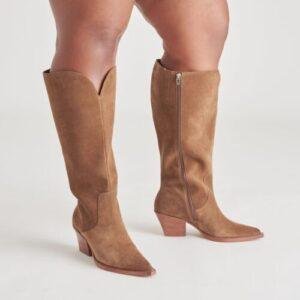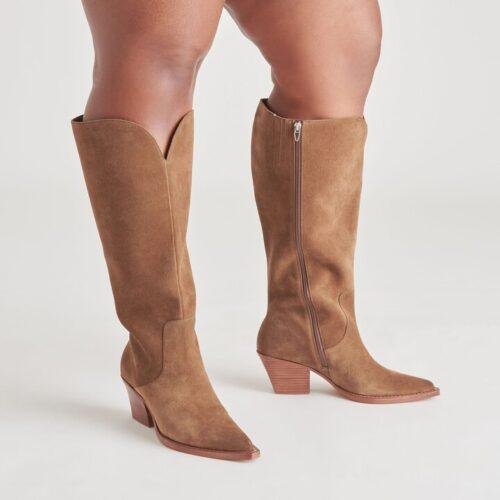
The widest calf boot size sold in the United States depends on the brand and boot type. Most standard wide-calf boots fit calves up to about 17 to 20 inches around. Extended-size boots may fit 22 to 24 inches, while specialty and custom boots can fit 25 inches or more.
There is no single U.S. maximum. The key number is the boot’s shaft circumference, not the shoe size or the label “wide.”

What Does “Wide Calf” Mean in U.S. Boots?
A wide-calf boot has a larger shaft opening than a regular boot. The shaft is the tall part of the boot that covers the lower leg.
In the U.S. market, brands often use these rough ranges:
| Boot type | Approximate calf circumference |
|---|---|
| Regular calf | 13–15 inches |
| Wide calf | 15–18 inches |
| Extra-wide calf | 18–22 inches |
| Extended or specialty wide calf | 22–26 inches or more |
| Custom calf boot | Made to the wearer’s measurement |
These ranges are general. One brand’s “wide calf” may fit like another brand’s regular calf. Some boots also use elastic panels, stretch leather, or adjustable laces, which can add room.
The term wide width usually refers to the footbed, not the calf. A boot can have a wide foot and a narrow shaft. It can also have a roomy calf and a standard-width foot.
The most reliable detail is the brand’s size chart. Look for:
- Calf circumference
- Shaft height
- Boot opening
- Foot width
- Whether the measurement includes stretch
- Whether the measurement was taken in a specific shoe size

What Is the Widest Calf Boot Size You Can Buy?
For ready-to-wear boots in the United States, 24 inches is a useful upper range to search for in extended wide-calf styles. Some specialty brands list boots above 24 inches, and custom boot makers can make a shaft for nearly any practical calf measurement.
A more useful way to view the market is by availability:
- Up to 18 inches: Common in many wide-calf collections
- 18 to 20 inches: Widely available, but fewer choices may exist
- 20 to 22 inches: Usually labeled extra-wide or extended wide calf
- 22 to 24 inches: Available from select brands and specialty retailers
- Over 24 inches: More likely to require a specialty or custom order
This does not mean every boot in a category will fit every calf in that range. A 22-inch shaft may fit well at the ankle but feel tight higher up. A soft boot with stretch may fit better than a stiff boot with the same listed measurement.
The widest calf boot size is therefore not a shoe size such as 9W or 11WW. It is the largest calf circumference that the boot shaft can fit while still closing comfortably.

How to Measure Your Calf for Boots
Measure your calf before shopping. A correct measurement can save you from ordering several pairs that cannot zip.


You need:
- A soft measuring tape
- A thin sock or the sock you plan to wear
- A chair or flat surface
- Paper to record the result
Follow these steps:
- Sit with your foot flat on the floor.
- Wear the socks, leggings, or pants you expect to wear with the boots.
- Wrap the tape around the fullest part of your calf.
- Keep the tape level and snug.
- Do not pull the tape tight enough to press into your skin.
- Record the measurement in inches.
- Measure both legs and use the larger number.
For example, if one calf measures 19 inches and the other measures 19.5 inches, shop for a boot that fits at least 19.5 inches.
If you plan to wear thick jeans or warm socks, measure with those layers on. A thin pair of tights can produce a very different result from fleece-lined leggings.

How Much Extra Room Should a Boot Have?
A boot should not fit like a compression sleeve. Most shoppers need a small amount of ease between the calf and the shaft.
As a practical starting point:
- Add about 0.25 to 0.5 inch for a close fit.
- Add about 0.5 to 1 inch for jeans, thick socks, or more movement.
- Choose stretch or adjustable features when your calf size changes during the day.
This is a starting point, not a universal rule. A firm leather boot may need more room than a soft stretch boot. A riding boot may need a closer fit than a casual slouch boot.
Avoid excessive space. A shaft that is much larger than your calf can rub, slide down, crease, or let cold air and water in. The best fit leaves room to move without allowing the boot to spin around your leg.
Example Calculation
Suppose your calf measures 20 inches while wearing jeans. A reasonable target may be:
20 inches + 0.5 inch of ease = 20.5-inch boot circumference
A boot listed at 19 inches will likely feel tight. A boot listed at 20.5 inches may work if the measurement is accurate and the material has some flexibility.

Why Boot Measurements Can Be Hard to Compare
Boot measurements are not always taken in the same place. This is one reason two boots with the same listed circumference can fit differently.
Check these details before ordering:


Shoe size
Some brands measure the shaft on a medium shoe size. The shaft may become slightly larger or smaller as the shoe size changes.
A boot made in a size 8 may not have the same shaft circumference as the same model in a size 11. Read the chart for your exact size when possible.
Shaft height
A tall boot can feel tighter than a short boot even when both have the same circumference. The calf usually widens as it moves upward.
A boot that reaches just below the widest part of your calf may fit. A taller boot may need a larger opening.
Measurement point
One brand may measure at the top of the shaft. Another may measure around the widest part. A third may list the opening when the boot is lying flat.
If a retailer gives a flat measurement, do not assume it is the full circumference. A flat opening of 10 inches may equal about 20 inches around, but this depends on the shape and construction.
Material
Leather, suede, neoprene, and knit fabric do not behave the same way. Stretch panels may expand, but they may not provide the same support or appearance when fully stretched.
Boot shape
A boot with a tapered shaft may have enough room at the top but feel tight around the ankle. A straight shaft may fit the calf more easily but look loose lower down.

Which Boot Features Help Fit Larger Calves?
The right construction can matter as much as the listed size. Look for features that give the shaft controlled room instead of forcing the material to stretch.
Useful features include:
- Full-length elastic panels
- Stretch fabric around the back of the shaft
- Adjustable buckles
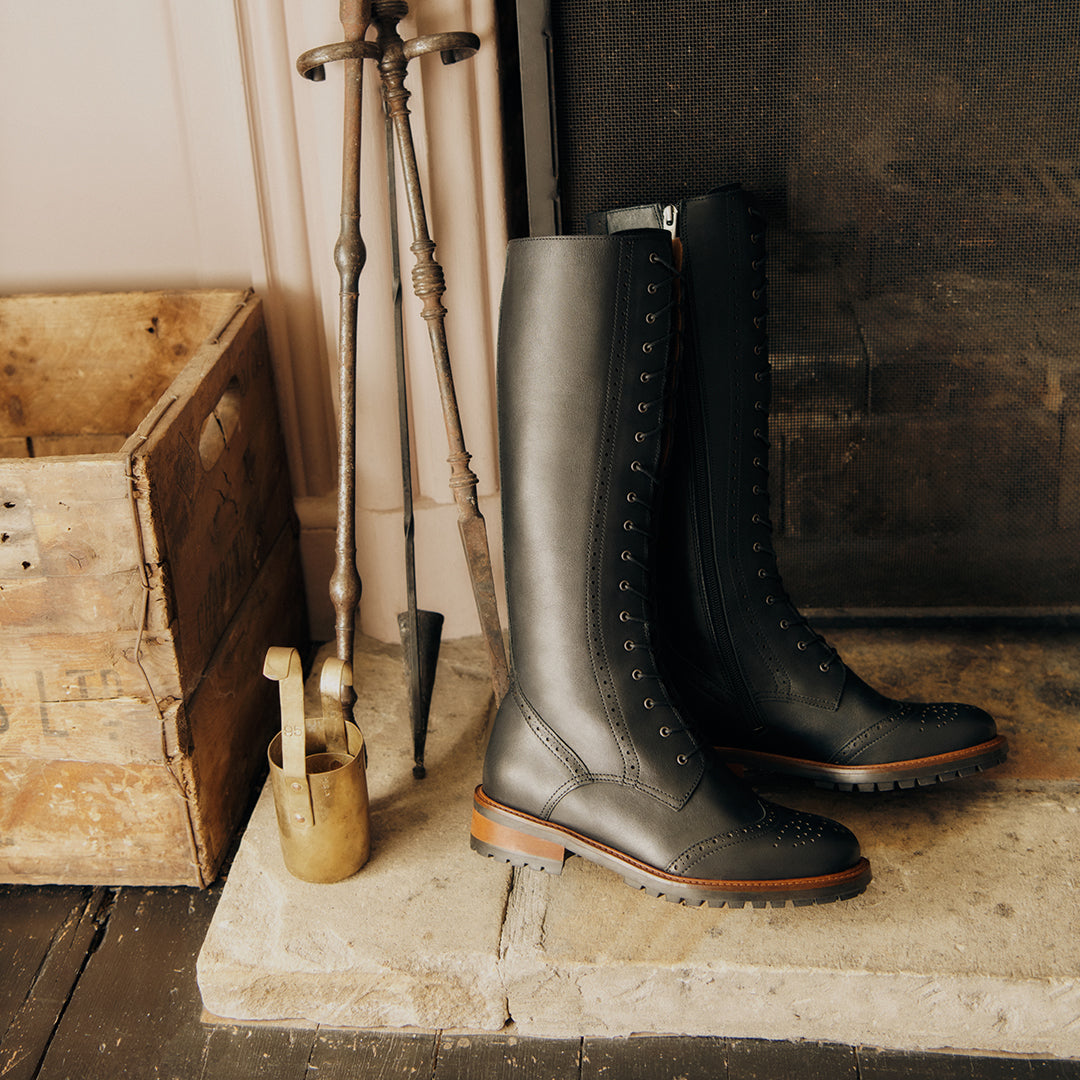
- Laces or corset-style closures
- Side zippers with elastic gussets
- Slouch shafts
- Expandable inserts
- Custom shaft measurements
A full elastic panel usually offers more flexibility than a small elastic strip. However, too much stretch can make the boot lose shape or slide down.
Adjustable buckles and laces can help when your calf falls between two sizes. They may also let you change the fit for jeans, leggings, or bare legs.
A side zipper is helpful, but it does not automatically mean the boot fits a wide calf. The zipper only closes the boot. The shaft still needs enough circumference.


What If Your Calf Is Wider Than 24 Inches?
If your calf measures more than 24 inches, begin with extended-size and specialty boot sellers. Search by the actual measurement rather than by the phrase “wide calf.”
Useful search terms include:
- 25-inch calf boots
- 26-inch extra-wide calf boots
- extended wide-calf riding boots
- custom shaft boots
- made-to-measure calf boots
Check whether the listed measurement is:
- The relaxed circumference
- The stretched circumference
- The maximum opening
- A measurement taken at the top or widest point
If ready-to-wear boots do not fit, a cobbler may be able to add an elastic panel or replace part of the shaft. This works best when the boot has enough material and a suitable seam. It may not work well on molded rubber boots or heavily structured designs.
Custom boots are the most dependable option when you need a specific calf measurement, unusual ankle shape, or precise shaft height. They usually cost more and may have stricter return rules, so confirm every measurement before ordering.
Common Mistakes When Buying Wide-Calf Boots
Many fit problems come from using the wrong measurement or trusting a label without checking the chart.
Mistake 1: Choosing a shoe width as a calf measurement
A size 10W describes the width of the foot area. It does not tell you how wide the shaft is.
Mistake 2: Measuring below the widest part
The widest part of the calf may sit higher than expected. Measure the full area that the boot shaft will cover.
Mistake 3: Measuring without clothing
If you plan to wear jeans, measure over jeans. A boot that fits a bare leg may not close over a thick layer.
Mistake 4: Assuming “wide calf” means one standard size
There is no universal U.S. wide-calf standard. Always check the number in inches.
Mistake 5: Ignoring the ankle
A boot can fit the calf but feel loose around the ankle. This may cause rubbing and poor support.
Mistake 6: Treating stretch as unlimited
Stretch material can provide flexibility, but it cannot always make up for several missing inches. A boot that must stay fully stretched may wear out faster or feel uncomfortable.
Mistake 7: Forgetting return policies
Boot fit can vary by model. Check the return window, return shipping cost, and whether worn boots can be returned. Try boots indoors on a clean floor until you know they fit.
How Should Wide-Calf Boots Fit?
A properly fitting boot should close without force and allow normal movement. The zipper should not bow away from the shaft, and the material should not create painful pressure at the widest part of the calf.
Check the fit in several ways:


- Walk for a few minutes.
- Sit down and stand up.
- Bend your knee.
- Check the fit over your planned clothing.
- Look for rubbing at the ankle and top edge.
- Confirm that the zipper stays closed.
- Make sure the boot does not slide down with each step.
Stop wearing the boots if you develop numbness, sharp pain, skin damage, or swelling. Foot and leg discomfort can have many causes, so persistent symptoms should be discussed with a qualified health professional.
A boot that feels slightly firm may soften with wear, especially if made from leather. A boot that causes strong pressure or prevents normal movement is too small and should not be treated as a break-in problem.
Frequently Asked Questions
Is a 20-inch calf considered wide?
Yes. A 20-inch calf is wider than the shaft of many regular boots and may require a wide-calf or extra-wide-calf style. Measure the boot’s actual circumference rather than relying on the label.
Are 22-inch calf boots available?
Yes. Some U.S. retailers and specialty brands offer boots with shafts around 22 inches. Availability varies by style, shoe size, color, and season.
What is the widest calf size for women’s boots?
There is no fixed maximum. Standard wide-calf boots often reach about 18 to 20 inches, extended styles may reach 22 to 24 inches, and custom boots can be made for larger measurements.
Do wide-calf boots fit wide feet?
Not always. “Wide calf” describes the shaft, while “wide width” describes the foot area. Check both measurements before buying.
Can a cobbler make a boot shaft wider?
Sometimes. A cobbler may add an elastic gusset or alter a seam when the boot’s design allows it. Ask for an assessment before buying a boot for alteration.
Should I size up if the calf is too tight?
Sizing up may give you a longer or wider foot area without adding enough calf room. It is usually better to choose a model with the correct shaft measurement and the correct foot width.
Bottom Line
The widest off-the-shelf calf boot size commonly available in the U.S. is around 22 to 24 inches, but some specialty styles go beyond that. Custom boots can be made to a larger measurement.
Measure the fullest part of your calf, include the clothing you plan to wear, and compare that number with the boot’s shaft circumference. If you are between sizes, choose based on the boot’s material, stretch, shaft height, and return policy—not the words “wide calf” alone.

Madison Clark is a footwear expert and the voice behind MyStyleGrid.com. She specializes in honest shoe reviews, style tips, and practical guides to help readers find the perfect pair for any occasion. With years of experience in blogging and content creation, Madison makes footwear knowledge simple, stylish, and easy to follow.