
Most shoes add about 0.5 to 1.5 inches to your height. Thin sneakers may add less than 1 inch. Running shoes, boots, and casual shoes often add 1 to 1.5 inches. Platform shoes and elevator shoes can add 2 to 4 inches or more.
The exact amount depends on the sole, heel, cushioning, foot position, and how much the shoe compresses under your weight. A shoe’s listed heel height is not always the same as the height it adds to your full body.
For an accurate answer, measure your height barefoot and then measure it again while wearing the shoes.

What Determines How Much Height Shoes Add?
The sole is the main part that adds height, but several design features affect the final result.
Sole thickness
A thicker sole raises your foot farther from the ground. A flat sneaker with a 1-inch sole may add close to 1 inch. A softer sole may compress when you stand, so the actual gain can be slightly lower.
Heel height
A raised heel lifts the back of your foot. However, the front of your foot may stay close to the ground. This means a 3-inch heel does not always add 3 inches to your full standing height.
Your body also tilts forward when you wear high heels. Your ankle, knees, hips, and spine adjust to keep you balanced. The top of your head may rise by less than the heel measurement.
Platform height
A platform lifts the front and back of the foot at the same time. It often adds height more directly than a high heel.
For example, a shoe with a 2-inch platform may add close to 2 inches, minus the small amount lost through sole compression.
Cushioning and compression
Foam and rubber can flatten under body weight. Firm rubber usually keeps more of its original height. Soft foam may feel thick in the hand but add less height when worn.
Foot position
Your foot may sit inside the shoe rather than directly on top of the outsole. Insoles, arch support, and internal padding can change the distance between your foot and the ground.
The American Podiatric Medical Association recommends choosing shoes that fit well and provide suitable support. A taller shoe is not useful if it causes pain, poor balance, or an unstable stride. See the APMA’s shoe-shopping guidance for basic fit advice.

How Many Inches Do Common Shoe Types Add?
Most everyday shoes add between 0.5 and 1.5 inches. The table below gives practical estimates, not fixed rules.


| Shoe type | Typical height added | Main reason for the difference |
|---|---|---|
| Thin dress shoes | 0.3–0.8 inches | Low outsole and little padding |
| Ballet flats | 0.2–0.6 inches | Very thin sole |
| Low-profile sneakers | 0.5–0.9 inches | Light rubber sole |
| Standard sneakers | 0.8–1.3 inches | Rubber outsole and foam midsole |
| Running shoes | 1.0–1.5 inches | Thick foam and raised heel |
| Work boots | 1.0–1.5 inches | Firm outsole and heel |
| Western boots | 1.0–1.5 inches | Stacked heel and firm sole |
| Hiking boots | 1.0–1.7 inches | Thick sole and heel structure |
| Low wedge shoes | 1.0–2.0 inches | Continuous raised sole |
| High heels | About 1.5–3 inches | Raised heel and altered foot angle |
| Platform shoes | 2–4 inches or more | Thick sole under much of the foot |
| Elevator shoes | About 2–4 inches | Internal lift and thicker outsole |
These ranges can overlap. One sneaker may add more height than one boot, while another boot may add more than a platform shoe.
The best estimate comes from measuring the shoe while you wear it. Product specifications can help, but they may list outsole thickness, heel height, or stack height rather than true height gain.
A simple example
Suppose you are 5 feet 10 inches tall barefoot.
- A shoe that adds 0.75 inches may make you about 5 feet 10.75 inches.
- A shoe that adds 1.25 inches may make you about 5 feet 11.25 inches.
- A shoe that adds 2 inches may make you about 6 feet.
These are estimates. Your measured height may differ by a small amount because of posture, time of day, and sole compression.

How to Measure the Height Shoes Add
The most reliable method is to compare your height barefoot with your height in the shoes.
What you need
Use:
- A hard, level floor
- A flat wall
- A book with a firm, square edge
- A tape measure
- The shoes you want to check
Avoid carpet. It can make the reading less consistent.
Follow these steps
- Stand barefoot with your back against the wall.
- Keep your heels near the wall.
- Look straight ahead, with your chin level.
- Place the book flat against the wall and gently on top of your head.
- Mark the wall at the bottom of the book.
- Measure from the floor to the mark.
- Repeat the process while wearing the shoes.
- Subtract your barefoot height from your height in the shoes.
Use this formula:
Height added = height wearing shoes − barefoot height
Example calculation
Your barefoot height is 70.00 inches.
Your height while wearing the shoes is 71.15 inches.
71.15 − 70.00 = 1.15 inches
Those shoes add about 1.15 inches to your measured height.
Take two or three readings. If the results differ, use the average. Keep your posture the same each time.


Measure at the same time of day
People are often slightly taller in the morning. The discs in the spine compress during the day. For a fair comparison, measure barefoot and with shoes during the same session.
Why the result may not match the sole
A shoe may have a sole that appears 1.5 inches thick but add only 1.2 inches. The difference can come from:
- Foam compression
- A foot sinking into the upper
- A curved sole
- A sloped footbed
- Uneven ground
- A change in posture
- A heel-to-toe design
Your real standing measurement matters more than the advertised sole thickness.

Do High Heels Add Their Full Heel Height?
No. A high heel does not always add its full listed height to your total height.
A heel measurement usually describes the distance between the heel and the ground. It does not describe how much the top of your head rises. The front of the shoe may have a sole, and your body must adjust to the angled position.
For example, a shoe with a 4-inch heel and a 1-inch platform has a 3-inch difference between the heel and the front of the shoe. This is often called the shoe’s “pitch.” The pitch affects comfort and foot position.
The shoe may raise your overall height by roughly 2.5 to 3.5 inches, but only a direct measurement can tell you the exact amount.
High heels can also affect balance and walking comfort. Research published in the Journal of Applied Physiology has linked high-heel use with changes in muscle and tendon function. That does not mean every person will have a problem, but it supports using caution with frequent or extended wear.
Choose a stable heel, a secure fit, and enough room for your toes. Stop wearing the shoes if you feel sharp pain, numbness, or loss of balance.

Do Running Shoes Make You Taller?
Running shoes usually add about 1 to 1.5 inches to your standing height.
They often have:
- A thick foam midsole
- A raised heel
- A rubber outsole
- A cushioned insole
The exact amount varies by model. Some lightweight running shoes have a low stack. Others have a much thicker midsole.
A term such as stack height describes the material between your foot and the ground. It may include the midsole, outsole, and insole, depending on the brand’s measurement method. Because brands do not always measure stack height in the same way, do not treat it as a guaranteed height increase.


A running shoe should fit its intended use first. Using a tall running shoe only to gain height may create an unstable feel, especially if the sole is soft or narrow.

Do Boots Add More Height Than Sneakers?
Often, but not always. Many boots add 1 to 1.5 inches, while common sneakers add 0.8 to 1.3 inches.
Boots often have a thicker outsole and a defined heel. Work boots and hiking boots may also use firm rubber that compresses less than soft sneaker foam.
Some sneakers have thick midsoles and can add as much height as boots. A low-profile leather sneaker may add less than a lightweight work boot.
When comparing the two, check:
- Total sole thickness
- Heel-to-toe slope
- Sole firmness
- Insole thickness
- Your measured height in each shoe
A boot that adds more height may also feel heavier. Extra height can change your balance, especially on stairs, uneven ground, or wet surfaces.

How Much Height Do Elevator and Platform Shoes Add?
Platform shoes commonly add 2 to 4 inches. Some specialized elevator shoes claim more, but comfort and stability can decrease as the lift becomes taller.
Platform shoes
A platform has a thick sole under the front of the foot. Since much of the foot is raised evenly, the shoe can add a large amount of height without the same steep angle as a traditional high heel.
The trade-off is weight and flexibility. A stiff platform may make it harder to walk naturally.
Elevator shoes
Elevator shoes hide a lift inside the shoe. The lift may be under the heel, the midfoot, or much of the foot.
The advertised number may refer to the internal lift, not the final height gain measured at the head. The shoe’s outsole and insole also contribute, while compression reduces some of the total.
If you consider elevator shoes, check:
- The actual measured height gain
- Whether the lift runs under the full foot
- Toe room
- Heel security
- Weight
- Return terms
- Walking stability
Do not place a large lift into a normal shoe with an added insert. The shoe may become too tight and may not hold your heel securely.


Can Insoles Add Height?
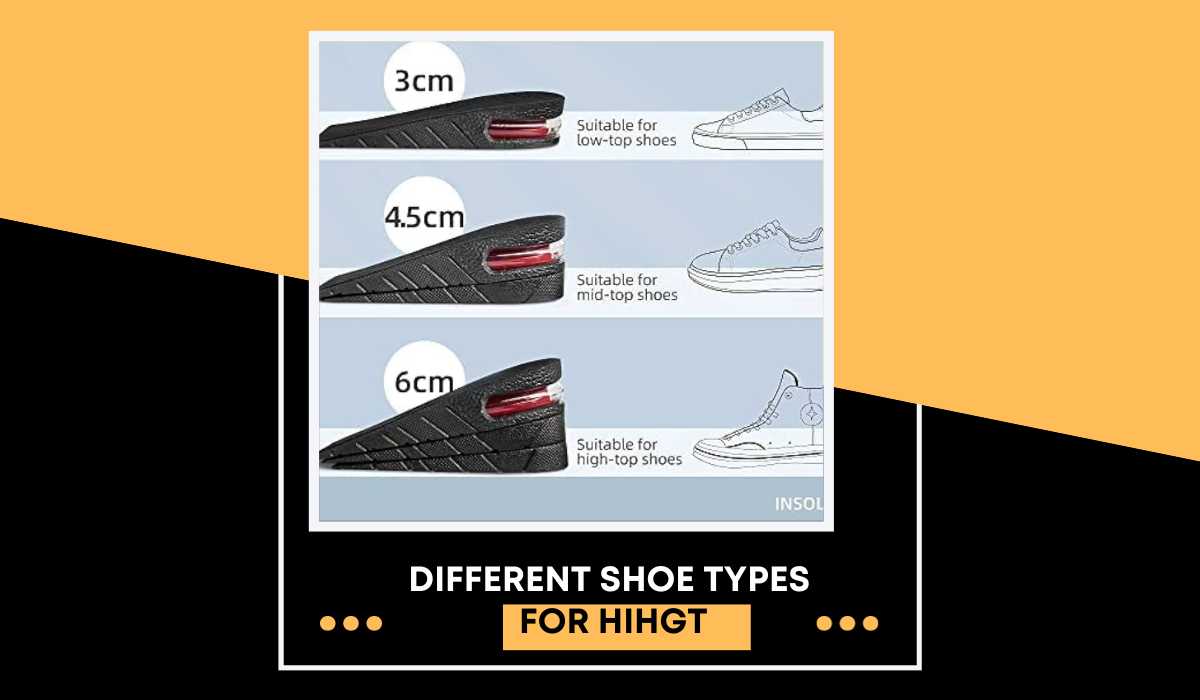
Height-increasing insoles usually add about 0.5 to 1.5 inches. Some have a gradual lift, while others raise only the heel.
A small lift may fit in a roomy shoe. A larger lift can crowd the toes and push the heel out of the shoe. It may also change how your foot contacts the ground.
A safer setup has:
- A firm heel counter
- A secure lace or strap
- Enough toe room
- A gradual lift
- No slipping inside the shoe
Avoid using thick inserts in tight shoes. The added pressure can cause blisters, numbness, or pain. If the insert causes discomfort, remove it rather than trying to “break it in.”
People with diabetes, reduced foot sensation, circulation problems, or a history of falls should ask a qualified health professional before using height-increasing inserts. The National Institute of Diabetes and Digestive and Kidney Diseases explains why foot protection matters for people with diabetes.

What Changes the Answer?
The most useful answer depends on what you mean by “add height.”
Measured height
This is the difference between your barefoot height and your height in the shoes. It is the most objective method.
Visual height
Some shoes make you look taller because they lengthen the leg or create a higher profile. Color, shape, and clothing can affect appearance even when the measured gain is small.
Advertised height
This may refer to:
- Heel height
- Platform height
- Stack height
- Internal lift
- Total sole thickness
These terms are not interchangeable.
Usable height
A shoe may technically add 2 inches but feel unstable. A comfortable 1-inch shoe may work better for walking, work, or daily wear.
The best choice depends on the activity. For long periods on your feet, fit and stability matter more than the last fraction of an inch.
Common Mistakes When Estimating Shoe Height
Several simple mistakes can lead to an inaccurate answer.
Mistaking heel height for total height gain
A 3-inch heel does not guarantee 3 extra inches of standing height. Measure the difference instead.
Measuring the shoe in your hand
A loose measurement does not show how much the sole compresses under your weight.
Comparing different measurement terms
A brand’s stack height may not use the same method as another brand’s heel height. Compare like with like.
Ignoring posture
Standing taller in the second measurement can make the shoes seem more effective than they are. Keep your head, back, and legs in the same position.
Adding the sole and insole without checking overlap
The insole may sit inside the outsole’s space. Adding both numbers can overstate the true height gain.
Using lifts in a tight shoe
A lift takes up space. If your toes feel crowded or your heel slips, the shoe is not a good fit.

How to Choose Shoes for More Height
Choose the lowest lift that meets your goal and still feels stable.
For everyday wear, a sneaker or boot that adds about 1 to 1.5 inches is often a practical range. It can provide a visible increase without requiring the steep angle of a high heel.
For a larger increase, consider a platform or purpose-built elevator shoe. Look for a lift that spreads across the foot rather than placing all the height under the heel.
Before keeping the shoes, walk on a hard surface. Check for:
- Heel slipping
- Toe pressure
- Side-to-side wobble
- Pain under the arch
- Strain in the calf
- Difficulty using stairs
The shoes should stay secure without forcing your toes forward. If they fail this test, a smaller lift or different design is the better choice.

FAQs About How Many Inches Shoes Add
How many inches do Nike or Adidas shoes add?
Most standard Nike and Adidas sneakers add roughly 0.7 to 1.4 inches, depending on the model. Running and lifestyle shoes with thick foam usually add more than low-profile sneakers. Check the exact model, then confirm it with a height measurement.
Do shoes add height permanently?
No. Shoes only increase your measured height while you wear them. They do not change your natural height.
Do shoe inserts add more height than the shoe itself?
Usually not. Most inserts add about 0.5 to 1.5 inches. They can make a normal shoe feel taller, but they also reduce interior space and may affect stability.
Can shoes make you look 2 inches taller?
Yes. Platforms, thick boots, and elevator shoes can add around 2 inches or more. The visual effect may differ from the exact measured gain.
What shoes add the most height while staying comfortable?
A platform shoe or elevator shoe with a gradual lift often offers more height than a standard high heel with the same visual effect. Comfort still depends on fit, weight, flexibility, and your walking pattern.
Key Takeaways
- Most shoes add 0.5 to 1.5 inches.
- Sneakers often add 0.8 to 1.3 inches.
- Boots commonly add 1 to 1.5 inches.
- Platforms and elevator shoes may add 2 to 4 inches or more.
- Heel height is not the same as total height gain.
- The most accurate method is to measure your height barefoot and in the shoes.
- A taller shoe is not better if it causes pain or poor balance.
Conclusion
For most people in the United States, everyday shoes add about 1 inch to standing height. Thick sneakers and boots may add closer to 1.5 inches, while platform and elevator shoes can add 2 to 4 inches.
Use the shoe’s design as a starting point, not a promise. Measure the shoes on your feet, keep your posture the same, and choose a lift that lets you walk with control.

Rubel Miah is the Senior Editor at MyStyleGrid.com, where he brings a sharp editorial eye and an unshakable love for fashion to everything he does. A true style addict, Rubel lives and breathes trends, from streetwear to high fashion, and has a knack for turning inspiration into impactful stories. With years of experience in fashion journalism and digital media, he curates content that empowers readers to express themselves through style. When he’s not editing features or forecasting the next big thing, you’ll find him hunting down vintage pieces or capturing street style moments around the city.