Slide sandals should fit snugly across the foot, with your toes and heel fully supported by the sole.
Knowing how should slide sandals fit can prevent sore feet, blisters, slips, and poor posture. The right pair should feel secure without squeezing your foot, and the sole should match your foot’s shape from heel to toe. This guide explains the fit tests, common mistakes, sizing tips, and safety signs that help you choose with confidence.

What a Proper Slide Sandal Fit Looks Like
A well-fitting slide sandal should support your foot without making it feel trapped. Your foot should sit naturally on the footbed, and the sandal should stay in place as you walk.
When checking how should slide sandals fit, focus on four areas:
- Your toes should not hang over the front edge.
- Your heel should stay on the sole without spilling over the back.
- The upper strap should hold your foot gently.
- The sole should feel wide and long enough for your whole foot.
Think of the sandal as a small platform for your foot. Your foot should rest on it like a book on a shelf, not hang over the edges like a loose sheet of paper.
A good fit may feel slightly snug when you first put the sandals on. However, it should never cause numbness, sharp pressure, rubbing, or a need to curl your toes to keep the sandal in place.

How Much Room Should Be in Slide Sandals?
Most people need about ⅜ to ½ inch of space in front of the longest toe. You should also have a small amount of space behind the heel. This room allows your foot to move naturally while walking.
Do not judge the fit by your big toe alone. Many people have a second toe that is longer than the big toe. Measure the space from the longest toe, not simply from the largest toe.
Use these simple checks:
- Stand up before checking the fit.
- Place your full weight on both feet.
- Make sure the longest toe stays inside the sole.
- Check that the heel does not extend past the back edge.
- Look for a little space around both sides of your foot.
Your feet spread when you stand. They may also swell during the day, especially in warm weather or after long periods of walking. For this reason, try slide sandals in the afternoon or evening rather than early in the morning.
When learning how should slide sandals fit, remember that extra room is not always better. A sandal that is too long can make your foot slide forward, while one that is too short can force your toes and heel into poor positions.

How Tight Should the Strap Be?
The strap should hold your foot in place without pressing hard on the top of your foot. You should be able to slide one finger under the strap, depending on its design and stretch.
A loose strap creates a different problem from a short sole. If the strap is too loose, your foot may move inside the sandal with every step. You may then grip the footbed with your toes to stay stable. Over time, this can lead to tired feet and cramping.
A strap that is too tight may cause:
- Red marks that last more than a few minutes
* Tingling or numbness - Pain across the top of the foot
- Swelling near the strap
- Skin rubbing or blisters
Some slide sandals have adjustable buckles. These can help if your feet swell or if one foot is slightly wider than the other. Do not assume that a buckle can fix a sandal that is too short or too narrow.
In my experience testing casual footwear, people often tighten the strap to solve a sizing problem. That rarely works. If your toes hang over the edge, a tighter strap will not make the sole longer. Choose a better size or a wider style instead.
:max_bytes(150000):strip_icc()/vwt-recovery-slides-may-24-test-olukai-maha-olu-mens-ricky-marson-15-07272d4b2b6a475488e4816ff498e87b.jpeg)
How to Check Slide Sandal Length and Width
Length and width work together. A sandal can have the right length but still feel too narrow. It can also feel wide enough but leave too much space at the heel.
Use this step-by-step fit test:
- Put on both sandals while standing.
- Walk across a hard floor.
- Stop and check whether your foot has moved forward.
- Look at the toe and heel margins.
- Check for pressure along the outer edge of each foot.
- Bend your knees and take a few steps.
- Remove the sandals and inspect your skin for red spots.
Your foot should stay centered on the footbed. If it slides from side to side, the sandal may be too wide, too loose, or made from a very smooth material.
People with wide feet may need a wide-fit slide rather than simply sizing up. Going up a size adds length, but it does not always add enough width. A longer sandal may also make your foot slide forward.
People with narrow feet may need a contoured footbed or an adjustable strap. A flat, loose slide can feel unstable even when the length is correct.

Signs Your Slide Sandals Are Too Small
Small slide sandals often feel fine for a few minutes. Problems may appear after walking, standing, or spending time outdoors.
Your sandals may be too small if:
- Your toes touch the front edge.
- Your heel hangs over the back.
- Your little toe rests partly on the side of the sole.
- The strap leaves deep marks.
- Your toes curl while walking.
- Your feet feel cramped or hot.
- You develop blisters near the toes or strap.
Toe overhang is more than a style issue. It can make your toes strike the ground or lose support during each step. It may also increase your risk of stubbing a toe.
A short footbed can change how you walk. You may shorten your stride or grip with your toes to keep the sandal attached. That is a clear sign that the fit is not doing its job.
If you are between sizes, check the brand’s size chart and measure your foot. Size numbers vary between brands, countries, and models. A size 9 in one brand may not match a size 9 in another.
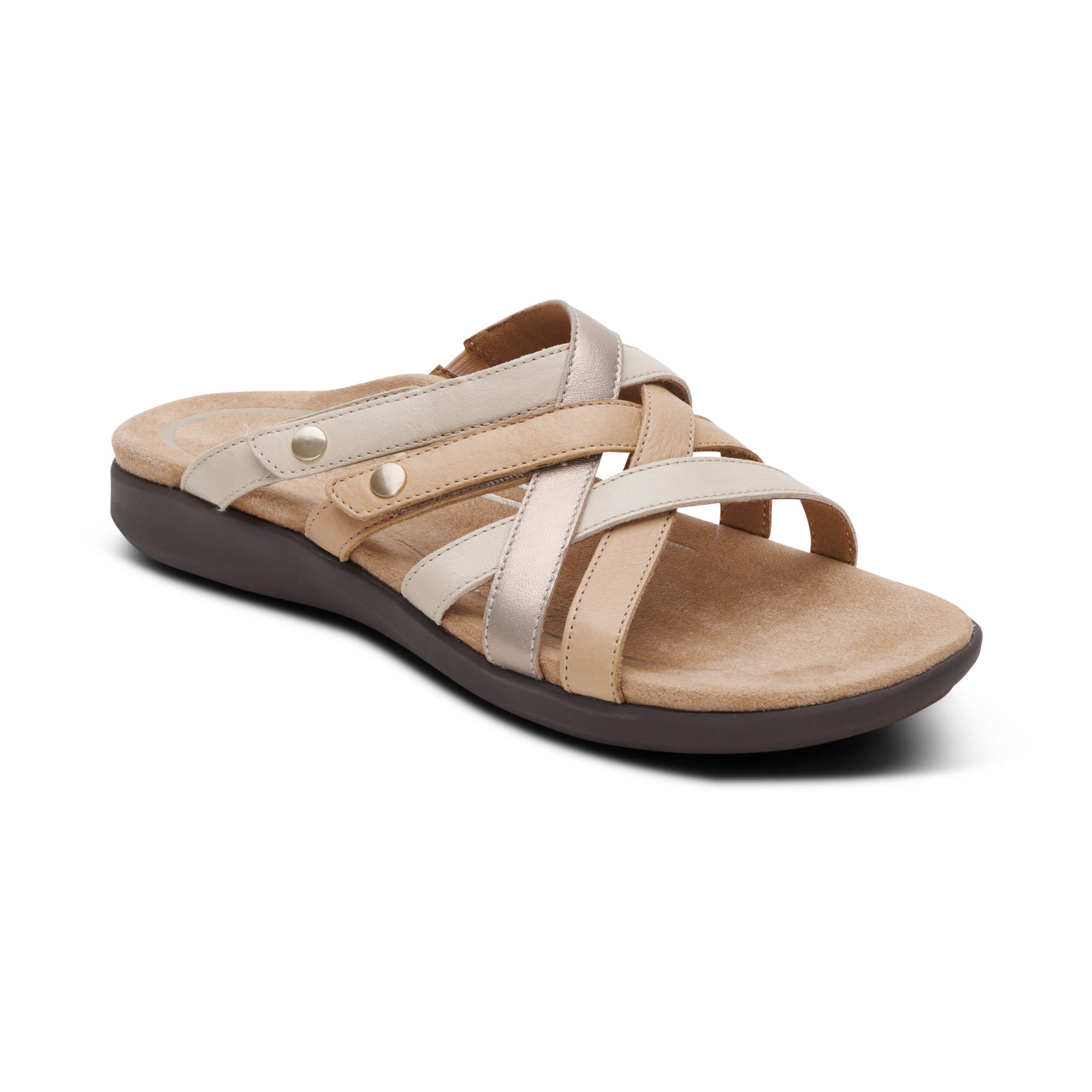
Signs Your Slide Sandals Are Too Big
Oversized slides can look comfortable, but too much room may reduce control. Your foot should not slide around inside the sandal as you walk.
Watch for these signs:
- Your foot moves forward with every step.
- The heel lifts far off the footbed.
- You slap the sandal against the ground.
- You must curl your toes to hold the sandal.
- The strap feels loose even after adjustment.
- The sole bends or twists away from your foot.
- You trip when changing direction.
A little heel movement can be normal in soft, casual slides. Large movement is not. The sandal should follow your foot rather than lag behind it.
One simple test is to walk slowly, then stop. If your toes push into the front edge when you stop, your foot may be sliding forward. This often means the sandal is too loose, too smooth, or lacks enough arch support.
When deciding how should slide sandals fit, do not rely only on comfort while sitting. A sandal that feels perfect on a couch may feel unsafe after 30 minutes of walking.

Should Slide Sandals Feel Loose or Snug?
Slide sandals should feel secure and gently snug. They should not feel loose enough to move freely, and they should not press so hard that your foot feels restricted.
The correct feeling depends partly on the sandal’s purpose:
- Pool slides can have a simple, relaxed fit.
- Walking slides should have stronger foot support and better grip.
- Recovery sandals may use a soft, contoured footbed.
- Fashion slides may focus more on appearance but still need stable sizing.
- Sport slides should stay secure during short walks and quick movements.
A soft upper may stretch after wear. Leather can relax slightly, while synthetic materials may keep their shape. Do not buy a painful pair expecting it to stretch into a perfect fit.
Likewise, do not expect a loose slide to shrink. Insoles and heel grips may help with minor movement, but they cannot fully correct the wrong size.
The best test is simple: walk naturally. If you change your step to keep the sandals on, they are not fitting correctly.
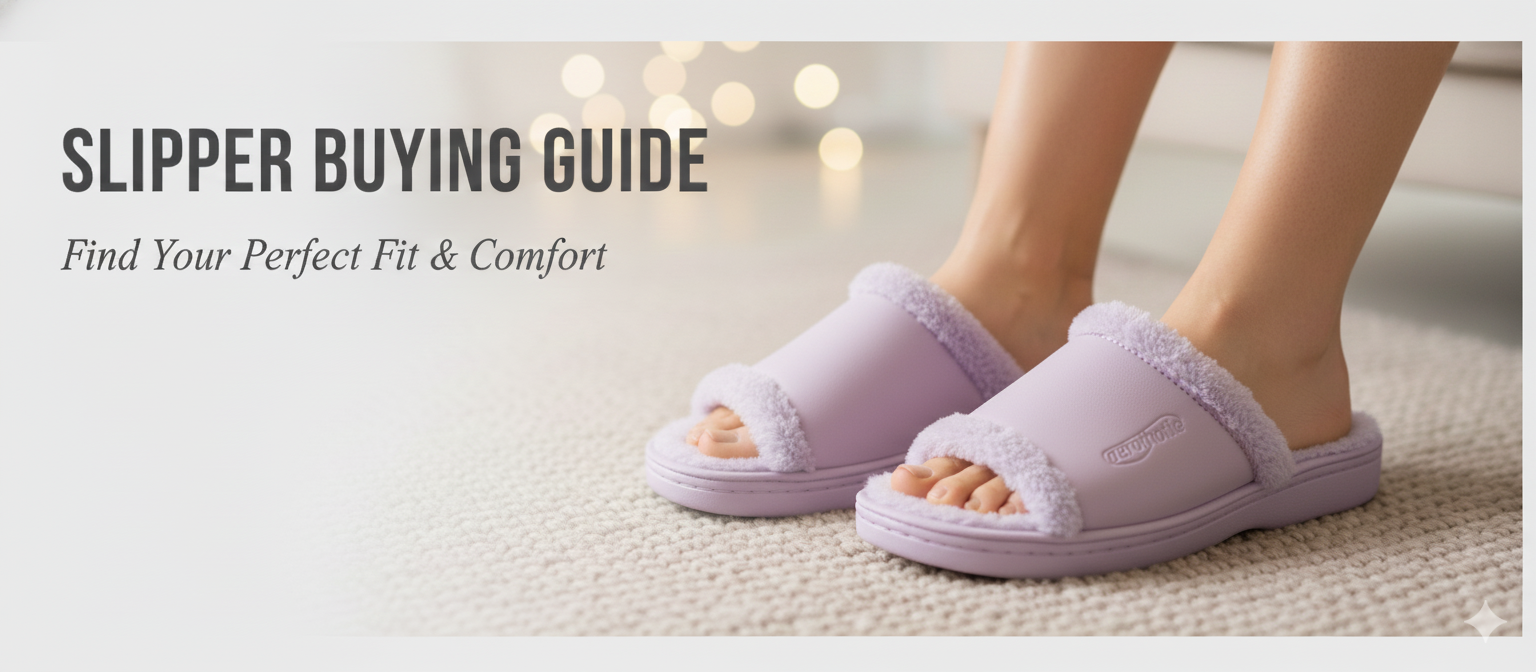
How Should Slide Sandals Fit for Walking?
Walking slides need more support than sandals used only for short trips. Look for a stable sole, a secure strap, and a footbed that matches your arch and heel.
For regular walking, check the following:
- The heel should sit inside a defined heel area.
- The arch should feel supported, not pushed sharply.
- The sole should resist excessive twisting.
- The tread should grip the surface.
- The upper should not rub during repeated steps.
- The sandal should stay in place without toe gripping.
Flat slides may work for quick errands, but they may not provide enough support for long walks. People with foot pain, plantar fasciitis, arthritis, diabetes, or past injuries may need footwear recommended by a podiatrist.
Research on walking mechanics shows that poor footwear fit can increase pressure in parts of the foot. Still, fit is only one factor. Cushioning, sole stiffness, walking surface, activity level, and personal foot shape also matter.
If you plan to walk several miles, break in the sandals at home first. Wear them for short periods and check your skin after each trial.

How Should Slide Sandals Fit With Socks?
Most slide sandals are designed to be worn barefoot, but some people wear them with socks for warmth, comfort, or style. If you wear socks, try the sandals with the same sock thickness you plan to use.
Socks take up space inside the sandal. A pair that fits perfectly barefoot may feel tight with thick socks. Thin socks may have little effect, but they can still change how your foot slides.
Check these points:
- The strap should not press into the sock-covered foot.
- Your toes should still stay inside the sole.
- The fabric should not bunch under your heel.
- The footbed should not become slippery.
- Your foot should not slide forward as you walk.
If the sandal only fits with thick socks, it may be too large for barefoot use. If you switch between socks and bare feet, an adjustable strap can provide a more flexible fit.
Common Slide Sandal Fitting Mistakes
Even experienced shoppers can make simple fitting errors. Most problems come from checking the sandal while seated or trusting the printed size too much.
Avoid these mistakes:
- Buying based only on your usual shoe size
- Checking only one foot
- Ignoring width
- Trying sandals on in the morning
- Assuming leather will stretch a full size
- Choosing a longer size to solve a narrow fit
- Tightening the strap to fix a short sole
- Wearing new sandals on a long walk
- Ignoring pain because the style looks good
Your feet are rarely identical. One foot may be longer or wider than the other. Fit the larger foot and use an adjustable feature if needed.
I have seen many shoppers focus on the label instead of the footbed. The label is only a starting point. How the sandal feels during movement matters much more than the number printed inside it.
A Simple At-Home Fit Test
You can check how should slide sandals fit without special tools. You need the sandals, a flat floor, and a few minutes.
Follow this test:
- Put on the sandals while standing.
- Walk at a normal pace for five minutes.
- Walk up and down a few steps if it is safe.
- Turn left and right without rushing.
- Check whether your foot slides forward or sideways.
- Remove the sandals and inspect your skin.
- Repeat the test later in the day.
The sandals pass if your foot stays centered, your toes remain inside the sole, and the strap does not cause pain. They fail if you grip with your toes, limp, trip, or feel pressure in one specific spot.
For online purchases, measure both feet on paper. Trace each foot while standing, then measure from the heel to the longest toe and across the widest part. Compare those numbers with the brand’s own chart.
Materials, Footbeds, and Sole Design
Material affects fit as much as size. A soft foam slide may feel comfortable at first, while a firm molded footbed may provide better support during longer use.
Consider these features:
- Foam offers light cushioning but may compress over time.
- Rubber often provides good water resistance and grip.
- Leather may soften with wear but can rub during the break-in period.
- Contoured footbeds can help guide the heel and arch.
- Textured footbeds may reduce slipping.
- Thick soles can add cushioning but may reduce ground feel.
- Flexible soles feel easy to wear but may offer less stability.
A deep heel cup can help keep your foot centered. Arch support should feel like a gentle lift, not a sharp bump. If the arch support hits the wrong place, the sandal may have the wrong shape for your foot even if the length is correct.
Check the outsole before buying slides for outdoor use. A smooth sole may work indoors but become risky on wet floors, tile, or uneven pavement.
When to Stop Wearing a Pair
Some discomfort comes from a short break-in period. Pain is not something you should accept as normal.
Stop wearing the sandals if you notice:
- Numbness or tingling
- Open blisters
- Persistent redness
- Sharp heel or arch pain
- Swelling caused by the strap
- New pain in your knees, hips, or back
- Repeated slipping or tripping
People with diabetes or reduced foot sensation should be especially careful. Small areas of rubbing can become serious before they are noticed. A health professional can offer safer footwear advice for specific medical needs.
Replace slides when the tread is worn, the footbed is deeply compressed, or the sole begins to bend unevenly. Worn footwear can change how your foot meets the ground.