Do you feel a sharp pain in your lower leg?
It hurts when you walk. It hurts when you run. It might even hurt when you sit still.
If you are nodding your head, you likely have shin splints.
I know that pain. It is frustrating. It stops you from doing what you love.
But I have good news for you.
You can fix this. And the shoes you wear play a huge part in that fix.
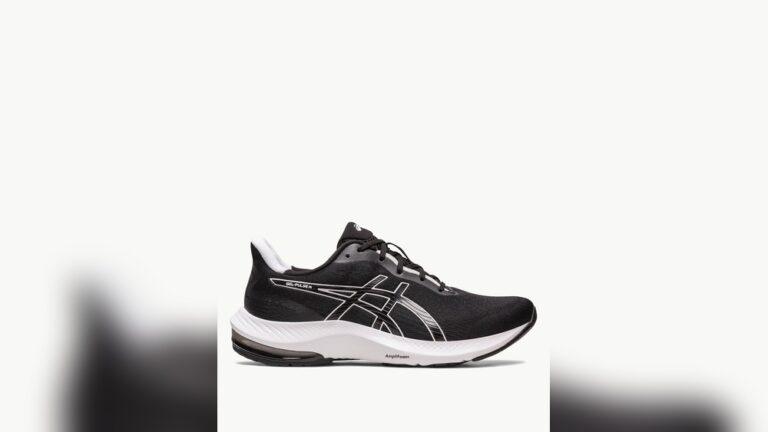
Today, we are going to talk about a specific shoe. We will look at how to reduce shin splints with Asics Gel Pulse 14.
This shoe is famous for comfort. It is known for its soft gel. But does it really work for shin pain?
I have been a runner for over ten years. I have coached beginners. And yes, I have dealt with shin splints.
In this guide, I will share what I know. I will share my experience. And I will help you get back on the road.
Let’s get started.
What Are Shin Splints Anyway?
First, we need to know what we are fighting.
Shin splints have a fancy medical name. It is Medial Tibial Stress Syndrome.
That sounds scary. But it is simple.
It means your shin bone is stressed. The muscles around the bone are pulling too hard. This causes tiny tears.
And those tears hurt.
Why Do They Happen?
There are a few main reasons.
- Too Much, Too Soon: You ran too far before your legs were ready.
- Hard Surfaces: You run on concrete sidewalks every day.
- Bad Form: You land hard on your heel.
- Old Shoes: This is a big one.
If your shoes are old, the foam is dead.
Dead foam does not absorb shock. So, the shock goes into your leg.
This is one of the main causes of shin splints running.
So, changing your shoes is often the first step to relief.
Credit: runrepeat.com
Meet the Asics Gel Pulse 14
Let’s talk about the gear.
The Asics Gel Pulse 14 is a popular shoe. It is not the most expensive shoe Asics makes. But it has great features for the price.
I have held this shoe. I have worn this shoe.
It feels solid but light.
Key Features for Comfort
There are two main things you need to know about this model.
1. AmpliFoam Midsole:
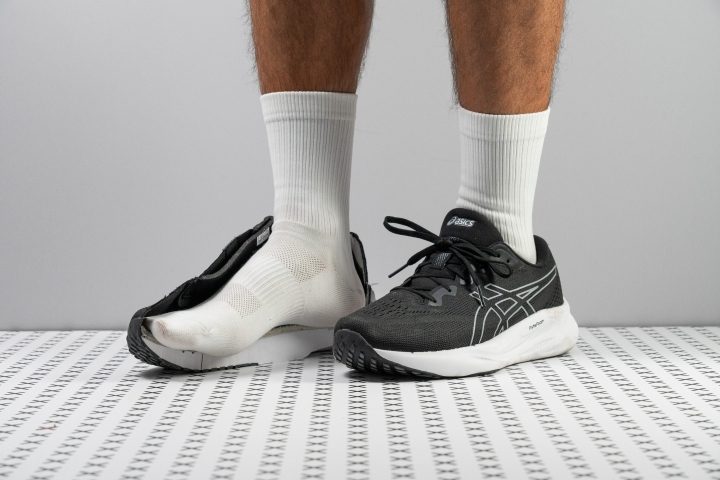
This is the foam under your foot. It is engineered to be soft. It is also flexible. This means it bends with your foot.
2. Rearfoot GEL Technology:
This is the magic part. Asics puts a squishy gel unit in the heel.
Why is this there?
To stop the shock.
When you land, you hit the ground hard. The gel takes that hit. So, your shin bone does not have to.
Who Is It For?
This is very important.
The Gel Pulse 14 is a neutral shoe.
This means it is for runners with normal arches. Or for runners who roll their feet outward (supination).
If your feet roll inward a lot (overpronation), this might not be the only tool you need. You might need an insole too. We will talk more about neutral running shoes vs stability shoes later.
How Asics Gel Pulse 14 Helps Reduce Shin Splints
So, how does this shoe actually help?
It comes down to physics.
Running is high impact. Every step sends a shockwave up your leg.
If you have shin splints, that shockwave is your enemy.
The Power of Shock Absorption
The Asics Gel Pulse 14 acts like a shield.
Imagine dropping an egg on concrete. It breaks.
Now, imagine dropping an egg on a pillow. It is safe.
The Rearfoot GEL is that pillow.
Because the gel is in the heel, it protects you where you land. Most beginners land on their heels. So, this is perfect for them.
By soaking up that force, the shoe reduces the stress on your tibia (shin bone).
Less stress means less pain. And less pain means your shins can heal.
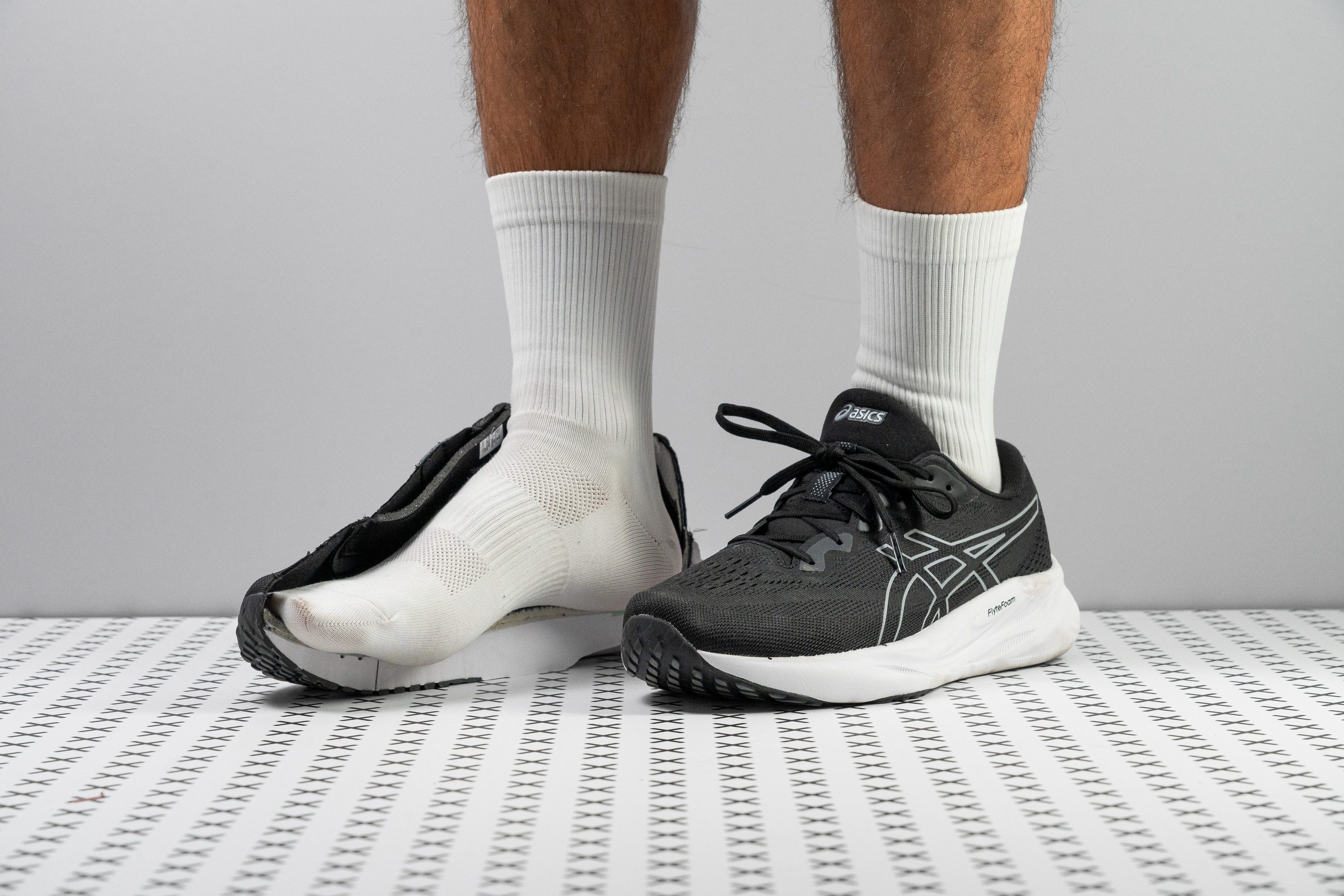
Smooth Transitions
The AmpliFoam helps too.
It is not just soft. It helps you roll from your heel to your toe.
This smooth roll is vital.
If your shoe is stiff, your leg muscles have to work harder. They have to fight the shoe.
But the Gel Pulse 14 is flexible. It moves with you. This keeps your calf muscles relaxed.
Tight calves pull on shin bones. So, relaxed calves mean happy shins.
Credit: runrepeat.com
My Personal Experience: Testing the Gel Pulse 14
I want to share a story with you.
A few years ago, I took a break from running. When I came back, I made a mistake. I ran too fast.
Within a week, my shins were throbbing.
I knew I needed a softer shoe. I didn’t want to spend $200. So, I picked up a pair of Asics Gel Pulse.
The First Run
I remember putting them on. They felt snug but not tight. The mesh on top was breathable.
I went for a very short jog. Just two miles.
Usually, my shins would hurt after half a mile.
But with the Gel Pulse, I felt a difference. The landing felt softer. It wasn’t a hard “slap” on the pavement. It was a soft “thud.”
The Recovery
I wore them for all my easy runs that month.
Did the shoes magically cure me instantly? No. Shoes are tools, not magic wands.
But they let me run without making it worse.
The cushion gave my legs a break. Combined with ice and rest, the pain went away.
If you want an honest Asics Gel Pulse 14 review, here it is: It is a dependable workhorse. It is soft enough to protect you, but firm enough to last.
Is This Shoe Right for Your Foot Type?
We need to check your feet.
Not all feet are the same. And wearing the wrong type of shoe can cause shin splints too.
The Wet Test
Do this simple test.
- Wet your foot.
- Step on a piece of paper.
- Look at the print.
If you see almost your whole footprint:
You have flat feet. You likely overpronate (roll in).
If you see just your heel and toes:
You have high arches. You likely underpronate (roll out).
If you see something in between:
You have normal arches.
Where the Gel Pulse 14 Fits
The Gel Pulse 14 is best for High Arches and Normal Arches.
These runners need shock absorption. High arches are rigid. They don’t absorb shock well naturally. So, the shoe must do it.
What if you have flat feet?
Can you still use them?
Yes, but be careful.
Flat feet roll inward. This twists the shin bone. That twisting causes shin splints.
The Gel Pulse 14 does not stop that roll. It is a neutral shoe.
If you have flat feet, you have two choices:
- Buy a stability shoe (like the Asics GT-2000).
- Buy the Gel Pulse 14 and put in a support insole.
I have seen many runners do option 2. It works well. You get the soft gel cushion, plus the arch support from the insole.
Step-by-Step Guide to Reducing Pain
You have the shoes. Now, let’s make a plan.
Here is how to cure shin splints fast using your new gear.
Step 1: Check the Fit
Your toes should not touch the end.
There should be a thumb’s width of space.
If the shoe is too tight, your toes curl. This tightens your foot muscles. That tension travels up to your shin.
If the shoe is too loose, your foot slides. Your toes grab the bottom to hold on. This also causes shin tension.
The Gel Pulse 14 runs true to size. But always measure your feet.
Step 2: The Surface Matters
The shoe cushions the blow. But you can help it.
Avoid concrete if you can.
Try to run on:
- Grass
- Dirt trails
- A rubber track
- Asphalt (it is softer than concrete sidewalks)
Step 3: The Warm-Up
Cold muscles snap. Warm muscles stretch.
Walk for 5 minutes before you run.
Do some leg swings.
Get the blood flowing. This preps your shins for impact.
Step 4: R.I.C.E. After Running
After your run, take care of your legs.
- Rest: Don’t run every day.
- Ice: Put ice on your shins for 15 minutes.
- Compression: Wear tight socks to help blood flow.
- Elevation: Put your legs up.
Credit: www.asics.com
Essential Exercises to Pair with Your Shoes
Shoes are great. But strong legs are better.
You need to strengthen the muscles around the shin.
Here are the best shin splint exercises for runners. You can do these at home.
1. Toe Taps
This is my favorite.
- Sit on a chair.
- Keep your heels on the ground.
- Lift your toes up high.
- Tap them down fast.
- Do this for 30 seconds.
Your shins will burn. That is good. It builds the muscle on the front of your shin.
2. Calf Raises
- Stand on a step.
- Hang your heels off the edge.
- Lower your heels down.
- Push up on your toes.
- Do 3 sets of 15.
This stretches and strengthens the calf. A loose calf pulls less on the shin.
3. Heel Walks
- Take your shoes off.
- Lift your toes up.
- Walk across the room on just your heels.
- Walk back.
This looks funny. But it works wonders for shin strength.
Improving Your Running Form
The Gel Pulse 14 has a 10mm drop.
This means the heel is 10mm higher than the toe.
This design helps relieve pressure on the calf.
But you must run with proper running form to avoid injury.
Don’t Overstride
Overstriding is bad.
This is when your foot lands far in front of your body.
When you do this, your leg is straight. It acts like a brake. All the shock goes right into the shin bone.
Shorten Your Steps
Try to take more steps.
Keep your feet under your hips.
Imagine running on hot coals. Quick, light steps.
The lighter you land, the less work the shoe has to do. And the happier your shins will be.
When to Replace Your Running Shoes
Even the best shoe dies.
The foam has tiny air bubbles. Over time, these bubbles pop. The foam gets hard.
When the foam is hard, the shin splints come back.
The 300-500 Mile Rule
Most experts agree. You should change shoes every 300 to 500 miles.
For the Asics Gel Pulse 14, the rubber is durable. It might look new on the bottom.
But do not be fooled.
The cushion inside wears out before the rubber outside.
Signs your shoes are dead:
- You see wrinkles in the foam.
- Your shins hurt after a run.
- The shoe feels “flat” or dead.
If you feel pain, buy new shoes. It is cheaper than a doctor visit.
Best Running Shoes for Shin Splints: Alternatives
I really like the Gel Pulse 14. It is a great value.
But is it the only choice? No.
Here is how it compares to others.
Gel Pulse 14 vs. Asics Gel Kayano
The Kayano is a stability shoe.
- Buy Pulse 14 if: You have high arches or neutral feet.
- Buy Kayano if: You have flat feet and overpronate badly.
Gel Pulse 14 vs. Asics Gel Nimbus
The Nimbus is a max-cushion shoe. It is more expensive.
- Buy Pulse 14 if: You want a lighter shoe and to save money.
- Buy Nimbus if: You want running on a cloud and price doesn’t matter.
The Pulse 14 sits in the middle. It is a great balance of cushion and price.
FAQ: Asics Gel Pulse 14 and Shin Health
I get asked these questions a lot. Here are simple answers.
Are Asics Gel Pulse 14 good for flat feet?
They are okay, but not perfect. They are neutral shoes. If you have flat feet, you might need to add a support insole to prevent rolling in.
Can walking in these shoes help?
Yes, absolutely. They are great for walking. The gel cushion works for walkers too. It reduces impact on hard floors or concrete.
How tight should they be?
They should feel like a hug, not a squeeze. Your heel should not slip. Your toes should wiggle. If they squeeze your sides, try a wide size.
Do they run true to size?
Yes, usually. Asics fits very standard. Order your normal running shoe size. If you are unsure, go half a size up for toe room.
Can I wash them in the machine?
No, please don’t. The heat and water ruin the gel and glue. Clean them with a brush and mild soap. Let them air dry.
Conclusion
Dealing with shin splints is hard. It takes patience.
But having the right gear is half the battle.
The Asics Gel Pulse 14 is a strong ally.
It offers the shock absorption you need. It has the fit you want. And it comes at a price that is fair.
Remember my story? I got back to running because I respected the injury. I used the right shoes. I did the exercises.
You can do it too.
Don’t let the pain stop you.
Check your form. Stretch your calves. Lace up your Gel Pulse 14s.
And take that next step.
Your shins will thank you.
Action Plan for Today:
- Check the bottom of your current shoes. Are they worn out?
- Try the “Toe Tap” exercise while you sit reading this.
- If you need relief, give the Asics Gel Pulse 14 a try.
Run safe. Run happy.

Madison Clark is a footwear expert and the voice behind MyStyleGrid.com. She specializes in honest shoe reviews, style tips, and practical guides to help readers find the perfect pair for any occasion. With years of experience in blogging and content creation, Madison makes footwear knowledge simple, stylish, and easy to follow.