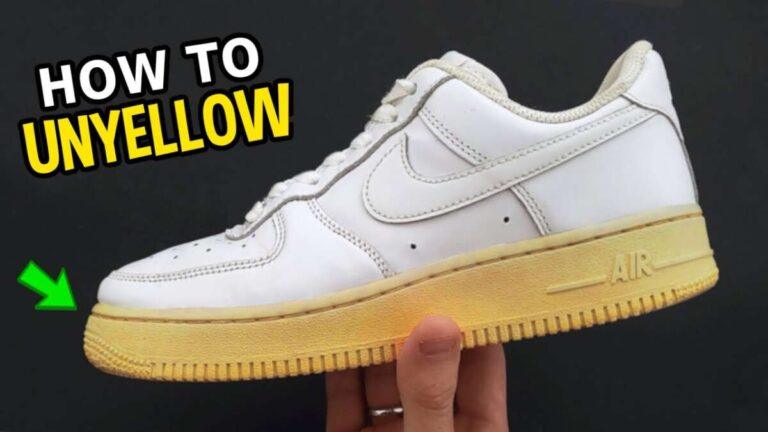
Use a baking soda and hydrogen peroxide paste, gentle scrubbing, and UV-free drying to remove yellowing.
I’ve spent years restoring sneakers, canvas shoes, and leather pairs for friends and clients. I’ll walk you through how to remove yellowing from shoes step by step. You’ll learn why yellowing happens, safe home methods, material-specific fixes, and prevention tips that really work. This guide blends hands-on experience, tested tips, and clear warnings so you can fix yellowed shoes without making them worse.
Why shoes yellow
Yellowing happens for a few simple reasons. Oxygen and UV light break down polymers in rubber and foam. Oils from skin and sweat react with shoe materials. Dirt builds a film that darkens over time. Improper cleaning agents and heat can also speed yellowing.
Knowing these causes helps you pick the right fix. For example, yellowed rubber soles often respond to an oxidizing cleaner, while fabric yellowing may need a soak and enzyme cleaner. I’ll show you methods matched to causes and materials so you get predictable results.

Materials matter: how different shoe materials react
Different materials yellow for different reasons. Match the method to the material to avoid damage.
- Rubber and thermoplastic soles
- Yellowing comes from oxidation and UV exposure. These often need mild oxidizers.
- White foam midsoles (EVA, PU)
- Foam can yellow internally and may not fully return to bright white.
- Canvas and fabric
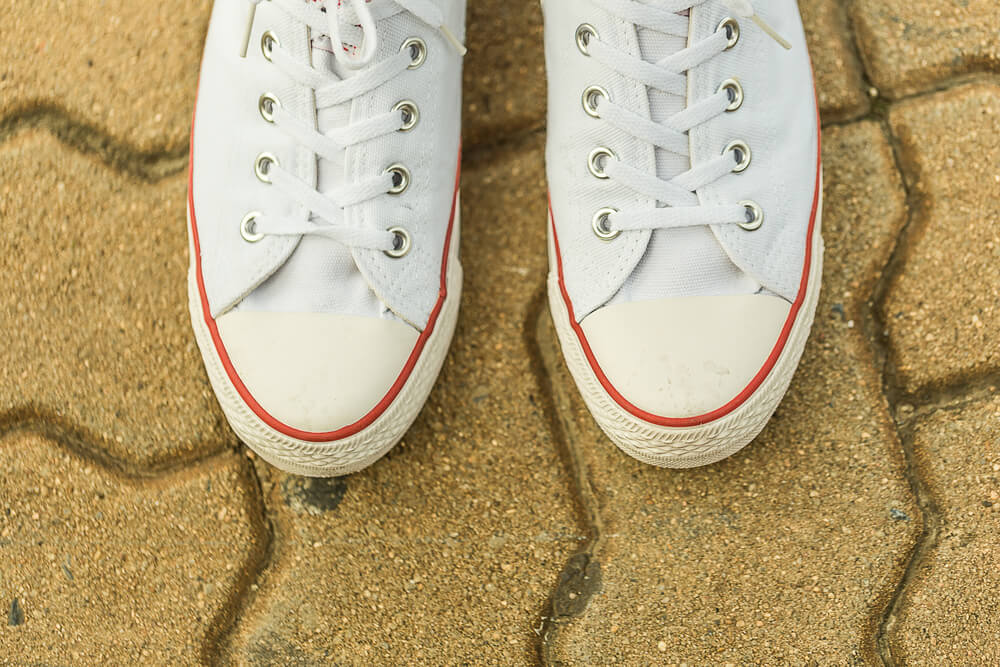
- Stains and sweat cause yellowing. Machine washing and enzyme cleaners work well.
- Leather and patent leather
- Leather discolors from oils and dyes. Use pH-neutral cleaners and conditioners.
- Mesh and knit uppers
- Delicate fibers need gentle soap and air drying to avoid fraying.
Picking the right method prevents damage and improves results when you remove yellowing from shoes.
Safe household methods to remove yellowing from shoes
Below are reliable home methods. Always test on a small, hidden area first.
- Baking soda + hydrogen peroxide paste
- Mix 1 tablespoon baking soda with 1 tablespoon water and 1 tablespoon 3% hydrogen peroxide. Apply to yellowed areas. Let sit 15–30 minutes, then scrub gently with a soft brush and rinse.
- Toothpaste (non-gel, white)
- Apply a small amount, scrub with a toothbrush, wipe clean. Works on rubber but can be abrasive on some finishes.
- White vinegar soak (for fabric)
- Mix 1 part vinegar to 4 parts water. Soak fabric parts briefly, then rinse. Good for sweat stains and dinginess.
- Oxygen bleach (sodium percarbonate)
- Dissolve per package instructions. Soak fabric or removable insoles. Avoid chlorine bleach on colored materials.
- Commercial sole whiteners and sneaker cleaners
- Follow product instructions. Use for stubborn rubber yellowing if home methods fail.
Safety tips:
- Wear gloves and work in a ventilated area.
- Avoid chlorine bleach on leather and colored fabrics.
- Never put leather in a washing machine.
These methods are the core ways to remove yellowing from shoes at home. They are simple, low-cost, and often effective when matched to the right material.

Step-by-step: how to remove yellowing from shoes (white rubber soles and sneakers)
This step-by-step works for common white soles and rubber trim.
- Prep the shoe
- Remove laces and insoles.
- Brush off loose dirt with a soft brush.
- Clean surface grime
- Wipe with a damp cloth and mild dish soap. Rinse and dry.
- Apply the baking soda + hydrogen peroxide paste
- Spread paste on yellowed areas.
- Use a soft toothbrush to work the paste into the rubber.
- Let it sit
- Wait 15–30 minutes in shaded, ventilated space.
- Rinse and inspect
- Rinse thoroughly with water and dry with a towel.
- Repeat if needed. For stubborn yellowing, try a second application or use a commercial sole cleaner.
- Dry carefully
- Air dry in shade. Avoid direct sun or heat, which can darken glue lines or warp materials.
I’ve used this method on older sneakers with great success. It revived yellowed soles without harming the uppers when I kept the paste off leather and fabric. Use gentle pressure when scrubbing to avoid scuff marks.
Leather and patent leather: how to remove yellowing from shoes
Leather needs caution. Harsh chemicals can strip dyes and oils.
- Dry-clean first
- Wipe with a soft cloth to remove dust.
- Mild soap solution
- Use a small amount of saddle soap or pH-neutral leather cleaner. Work gently in circular motions.
- Condition after cleaning
- Apply leather conditioner to replace lost oils and keep leather supple.
- For yellowed patent leather
- Use a mild rubbing alcohol on a cloth to remove surface grime. Then buff with a microfiber cloth.
- Professional restoration
- If yellowing is deep or the leather is vintage, consult a professional to avoid irreversible damage.
From my experience, gentle care and conditioning prevent dryness that makes yellowing worse. Never use hydrogen peroxide or oxygen bleach on leather.

Canvas and fabric shoes: how to remove yellowing from shoes
Fabric can handle wet cleaning better than leather.
- Pre-treat stains
- Apply a small amount of liquid detergent or enzyme cleaner to yellow areas.
- Machine or hand wash
- Use cold water and a gentle cycle in a laundry bag, or hand wash in a basin.
- Use oxygen bleach for tough yellowing
- Soak per instructions for 30–60 minutes, then rinse.
- Drying
- Air dry in shade. Direct sun can fade colors and set stains.
Tip: Remove laces and wash them separately. For glued-in insoles, use spot cleaning instead of full immersion. I’ve restored canvas sneakers with a short oxygen-bleach soak and noticed a big difference after one treatment.

Prevent yellowing and maintain whiteness
Prevention saves time and keeps shoes looking fresh longer.
- Store shoes properly
- Keep pairs in a cool, dark place. Avoid hot attics and sun-lit windowsills.
- Use protective sprays
- Apply a fabric or leather protector to repel dirt and oils.
- Rotate shoes
- Wear different pairs to reduce sweat and dirt buildup.
- Clean small stains immediately
- Fresh stains are easier to remove before they oxidize.
- Avoid direct heat
- Do not use heaters or hair dryers for fast drying. Heat can yellow glues and foam.
Simple habits make a big difference when you want to remove yellowing from shoes less often. Regular light cleaning keeps yellowing from setting.

Troubleshooting and when to seek professional help
Some yellowing won’t come out at home. Know when to stop and get help.
- Deep foam yellowing
- If foam midsole has yellowed internally, cleaning may only help superficially.
- Vintage or delicate materials
- Old leather and specialty finishes may need pro care.
- Glue line and structural yellowing
- If glue has yellowed, home cleaners can’t restore structural parts; a cobbler may replace soles or rebond layers.
- Persistent stains after multiple treatments
- Stop and consult a specialist to avoid further damage.
I once tried repeated peroxide treatments on a delicate trainer and ended up weakening the foam. Bring valuable or sentimental shoes to a professional if you’re unsure.

Frequently Asked Questions of how to remove yellowing from shoes
How long does it take to remove yellowing from shoes?
Most home treatments take 15–60 minutes per application, plus drying time. Stubborn yellowing may need multiple treatments over several days.
Is hydrogen peroxide safe for all shoes?
Hydrogen peroxide is safe for many rubber and fabric areas but can bleach dyes and dry leather. Always patch-test first and avoid use on colored uppers.
Can I use bleach to remove yellowing from shoes?
Chlorine bleach can damage fabrics, leather, and colored parts. Use oxygen bleach or gentler methods instead for safer results.
Will sun exposure help remove yellowing from shoes?
Sunlight can help whiten some items but also speeds oxidation and fades dyes. Dry in shade to avoid worsening yellow stains.
How often should I treat shoes to prevent yellowing?
Light cleaning once every few wears and protective sprays every few months keeps yellowing at bay. Immediate spot cleaning after stains helps most.
Conclusion
You can remove yellowing from shoes with the right approach. Match the method to the material, use gentle cleaners like baking soda and hydrogen peroxide for many rubber and fabric jobs, and avoid harsh bleaches on leather. Test first, work patiently, and use prevention to keep shoes bright longer. Try one of the step-by-step fixes today, and share your results or questions in the comments — I’d love to help troubleshoot your pair.

Madison Clark is a footwear expert and the voice behind MyStyleGrid.com. She specializes in honest shoe reviews, style tips, and practical guides to help readers find the perfect pair for any occasion. With years of experience in blogging and content creation, Madison makes footwear knowledge simple, stylish, and easy to follow.