Use gentle heat, leather conditioner, and slow stretching to soften hard leather boots quickly.
I’ve worked on boots and tested many fast methods, so I know what actually works without wrecking the leather. This guide shows clear, safe steps and options for how to soften hard leather boots quickly, why some approaches fail, and which tools and products save time while keeping boots wearable and long‑lasting. Read on to get practical, tested advice you can use today.
Why leather gets hard and what that means for your boots
Leather stiffens from loss of moisture, drying oils, and compacted fibers after storage, exposure to sun, or poor care. Stiff leather feels tight, cracks under stress, and hurts when you wear the boots.
Understanding the cause matters because how to soften hard leather boots quickly depends on whether the leather is simply dry, varnished, or damaged. For dry leather, reintroducing oils and gentle heat works. For leather with finish coatings or glue failures, you need gentler or professional treatment to avoid damage.

Top fast methods to soften hard leather boots quickly
Below are fast, effective methods I use and recommend, ranked by speed and safety. Each method balances quick results with care to avoid stretching, cracking, or stripping colors.
- Apply leather conditioner and wear
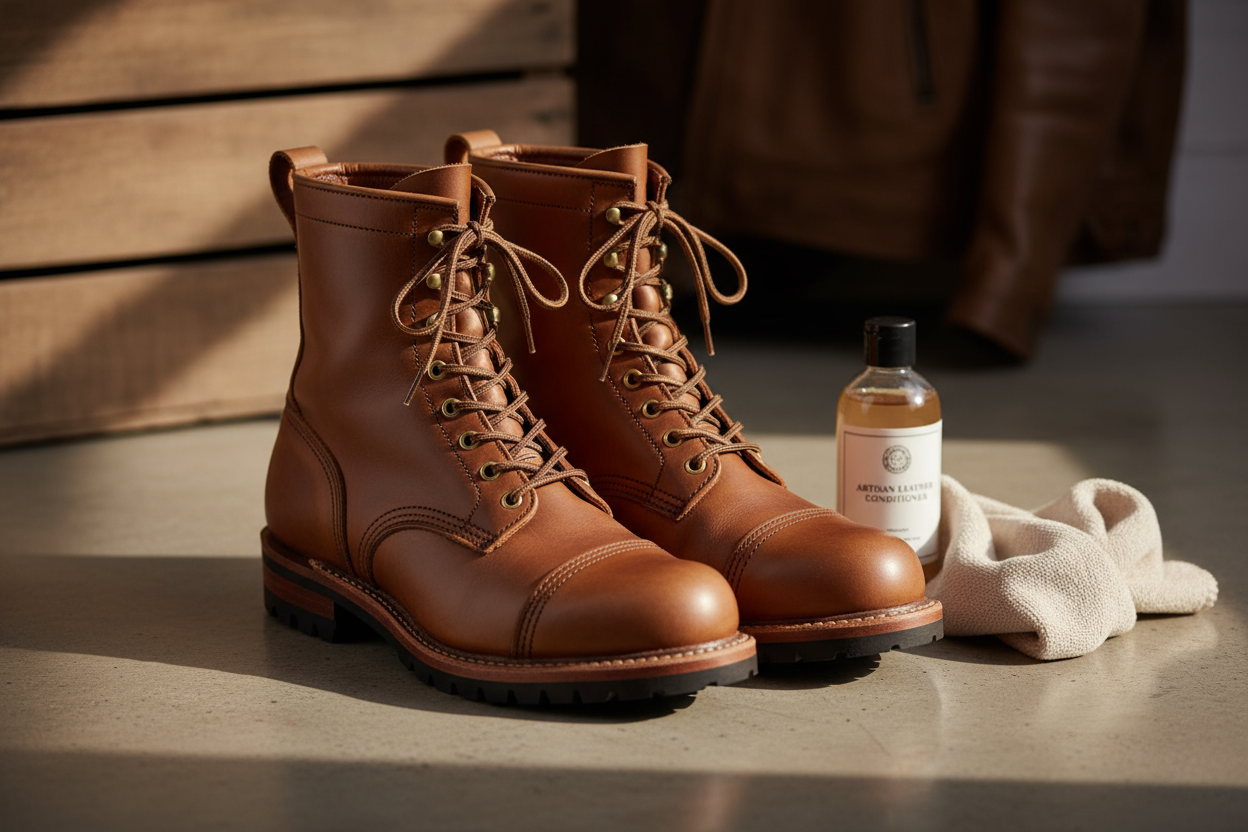
- Use a quality leather conditioner bottled for footwear. Rub in a thin layer, let it sit 15–30 minutes, then wear the boots around the house until they feel looser.
- Use leather oil for deep softening
- Light oils like mink oil or neatsfoot oil penetrate and soften faster. Apply sparingly so you don’t over-oil or darken leather excessively.
- Warmth and movement technique
- Warm the leather with a hair dryer on low, keep it moving, then flex and wear the boots so the fibers relax. Don’t overheat—aim for warm, not hot.
- Boot stretching with tools
- Use a boot stretcher or insert thick socks and walk. Stretchers target tight spots and can be used with conditioner for faster results.
- Steam method for quick pliability
- Briefly expose the boot to steam from a kettle, then wear while warm to shape. Use caution: steam can affect finishes and glued parts.
When you want to learn how to soften hard leather boots quickly, try conditioner plus brief heat and movement first. That combo is fast, safe, and easy to control.
Quick PAA-style questions
Will leather conditioner soften boots fast?
Yes. A good conditioner softens the leather within 15–30 minutes, and wearing the boots afterward speeds pliability further.
Can I use a hair dryer to soften leather quickly?
Yes, on low heat and at a distance. Keep the dryer moving and stop if the leather feels hot to the touch.
Is oil safer than conditioner for quick softening?
Oil is faster and more powerful but can darken or saturate leather; use oils sparingly and test an inside area first.
Step-by-step: fastest safe method I use
This step-by-step method balances speed with care and works for most full-grain and top-grain leathers.
- Clean the boots
- Remove dirt with a soft brush or damp cloth. Let them dry fully before conditioning.
- Test in a discreet spot
- Apply a pea-sized amount of conditioner or oil inside the ankle area or under the tongue to check for color change.
- Apply leather conditioner
- Work a thin, even layer into the leather using circular motions. Don’t soak seams or stitching.
- Warm gently
- Use a hair dryer on low for 20–40 seconds while keeping the dryer moving. Aim for warmth, never hot.
- Wear and flex
- Put on thick socks and wear the boots around the house until they feel comfortable. Walk, bend, and flex to help fibers relax.
- Reapply if needed
- For very stiff boots, repeat steps 3–5 once more, waiting several hours between treatments.
This sequence answers how to soften hard leather boots quickly while minimizing risk of damage.
Other methods, risks, and when to avoid DIY
Not every fast method is safe for all leather types. Know the limits.
- Using hot water
- Risk: Can warp soles, loosen glue, and discolor leather. Avoid soaking boots.
- Excessive oiling
- Risk: Saturation causes darkening, sticky feel, and weakens stitching over time.
- Chemical solvents or household oils
- Risk: Can strip finishes, remove dyes, or degrade protective coatings.
- Professional stretching and resoling
- Use when boots are expensive, have structural issues, or DIY attempts fail.
If your boots are vintage, have decorative finishes, or are made of suede or nubuck, take them to a cobbler. Knowing how to soften hard leather boots quickly is useful, but when in doubt, professional help keeps value and structure intact.

Care and maintenance to prevent future stiffness
Preventive care reduces the need to learn how to soften hard leather boots quickly again.
- Regular cleaning
- Remove dirt and salts after use to prevent drying.
- Condition periodically
- Condition every 2–6 months depending on wear and climate.
- Store properly
- Keep boots in a cool, dry place away from direct sunlight and heat.
- Use shoe trees
- Cedar shoe trees absorb moisture and keep shape, slowing fiber collapse.
- Rotate footwear
- Let boots rest between wears so leather recovers natural oils.
These small habits save time and extend the life of your boots.

Personal experience, mistakes I made, and practical tips
I’ve repaired and softened hundreds of boots. Early on, I over-oiled a pair and watched the leather darken and the stitching loosen. That taught me to always test and use thin layers.
Real tips from my workbench:
- Always test products on a hidden area first.
- Use thin applications and build up; faster is not better here.
- Combine a mild warm method with movement; heating alone won’t relax fibers.
- If a boot has glue separations or cracked leather, stop DIY and seek repair.
These practical lessons show that knowing how to soften hard leather boots quickly comes from careful practice, not shortcuts.
Frequently Asked Questions of how to soften hard leather boots quickly
How long does it take to soften hard leather boots quickly?
Most safe methods take 15–60 minutes for noticeable softening, with full pliability achieved after a few wear cycles. Repeated short treatments often work better than one aggressive attempt.
Can I use olive oil or coconut oil on leather?
You can, but avoid household oils. They can leave a sticky residue, attract dirt, and break down stitching over time. Use products made for leather instead.
Will heat damage leather when trying to soften it quickly?
Heat can help but must be gentle. High heat can dry or crack leather, so use low settings and keep the source moving.
Are suede boots softened the same way as smooth leather?
No. Suede and nubuck need specialized suede conditioners and brushing rather than oils or heavy conditioners. Steam and suede-specific sprays are safer.
What if my boots crack when I try to soften them quickly?
Stop immediately. Cracks need repair and possibly professional restoration. Continued DIY attempts can make cracks worse and reduce boot life.
Conclusion
Softening hard leather boots quickly is doable with the right steps: clean, test, condition lightly, add gentle heat, and wear to shape. Use caution with oils and strong heat, and prefer gradual treatments to protect color and stitching. Try the step-by-step method here for fast, safe results, and adopt regular care to avoid repeat problems. If you found this helpful, try the steps on a less-loved pair first, leave a comment with your results, or subscribe for more boot care tips.

Rubel Miah is the Senior Editor at MyStyleGrid.com, where he brings a sharp editorial eye and an unshakable love for fashion to everything he does. A true style addict, Rubel lives and breathes trends, from streetwear to high fashion, and has a knack for turning inspiration into impactful stories. With years of experience in fashion journalism and digital media, he curates content that empowers readers to express themselves through style. When he’s not editing features or forecasting the next big thing, you’ll find him hunting down vintage pieces or capturing street style moments around the city.