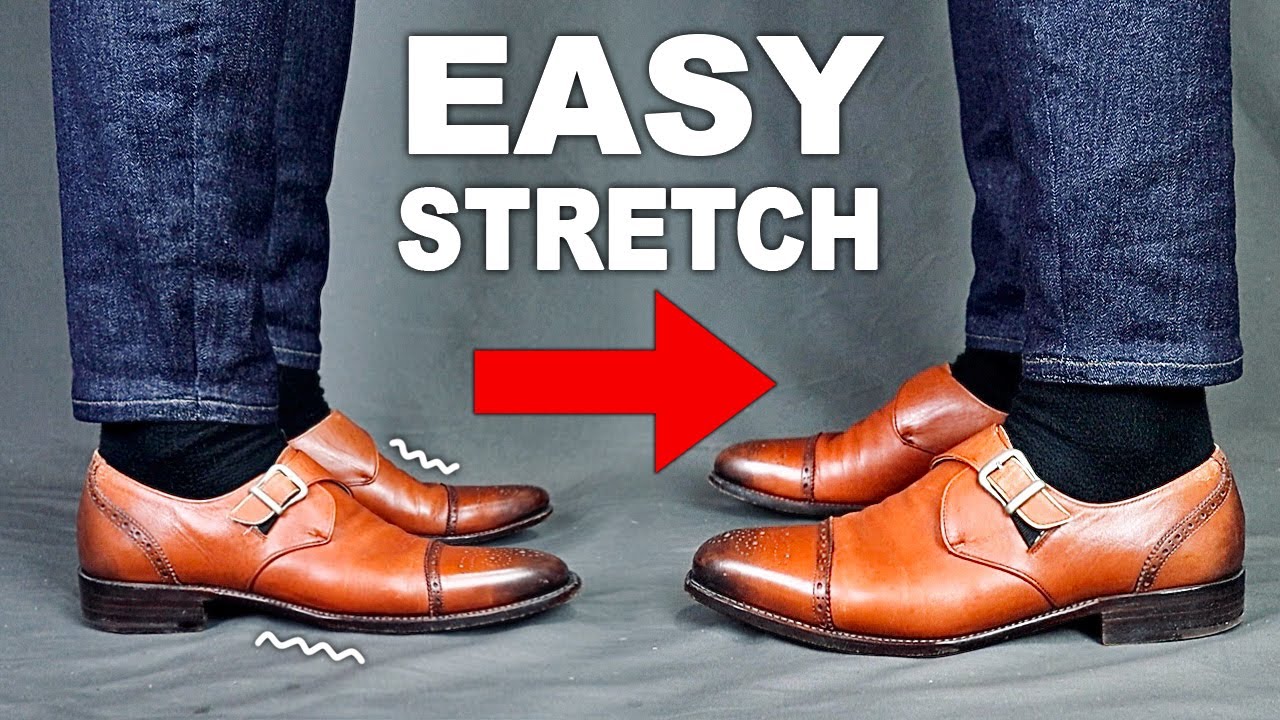
Yes — most leather shoes can be gently stretched to improve comfort and fit.
I’ve spent years repairing shoes and working with cobblers, so I know the real limits and safe methods for stretching leather. This guide answers whether can leather shoes be stretched, explains how different leathers react, walks through proven DIY and pro methods, and gives practical tips to avoid damage. Read on to learn safe, effective steps you can use today to make your leather shoes fit better.

Can leather shoes be stretched? How leather behaves
Leather is a natural material made of collagen fibers. Those fibers relax when exposed to moisture, heat, or pressure. That means can leather shoes be stretched is not a yes-or-no mystery — it depends on leather type, shoe construction, and how you stretch them.
Some leather stretches easily and returns close to shape. Other leather resists change or may deform when forced. Knowing the leather type tells you how far you can safely stretch a pair.
Methods to stretch leather shoes
There are several safe ways to stretch leather shoes. Choose a method based on how much stretch you need and the shoe style.
Professional stretching
- A cobbler uses a powered stretcher and lasts. It can add width, length, and even target tight spots.
- Best for expensive shoes or when you need precise results.
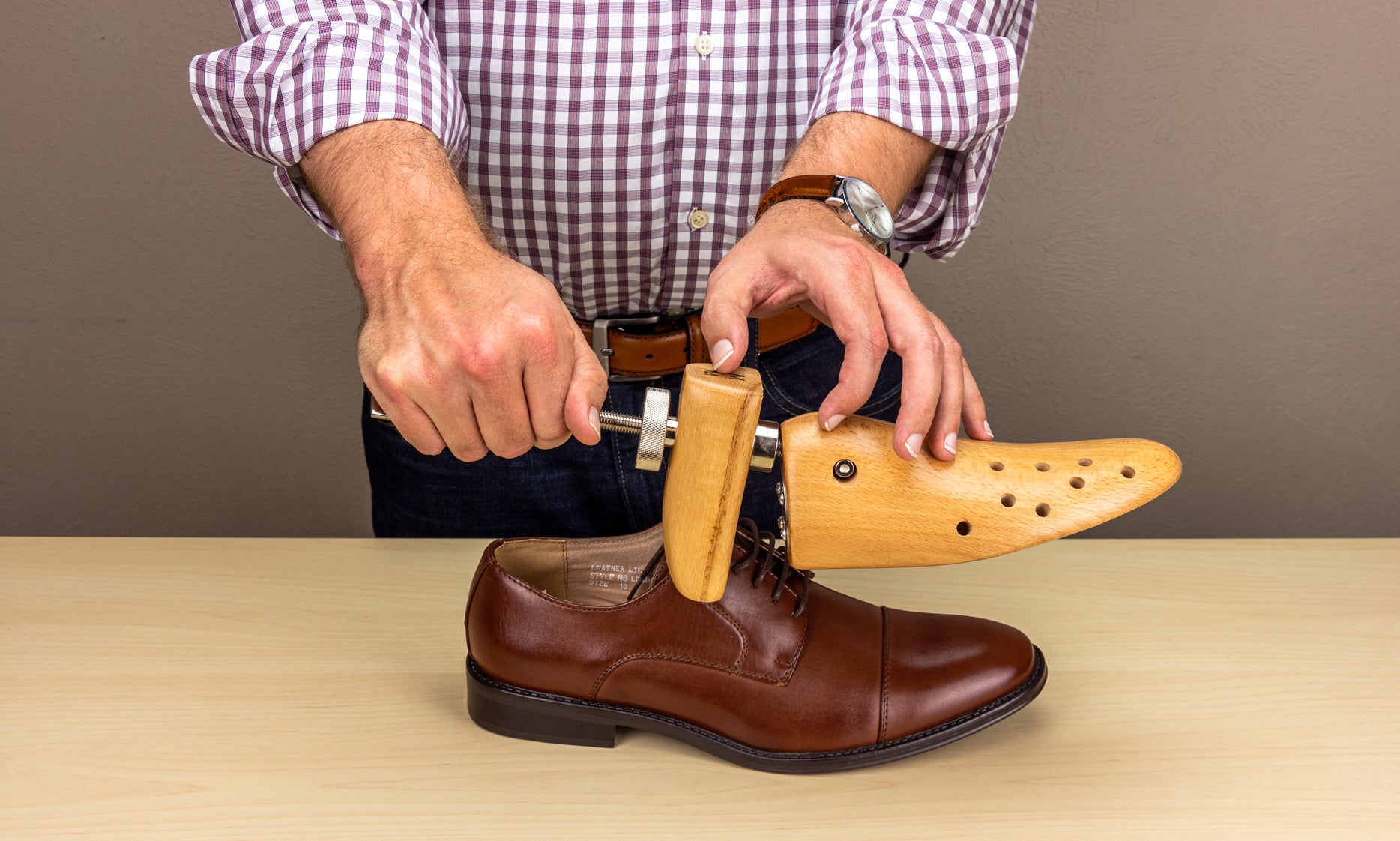
Shoe stretchers (at-home)
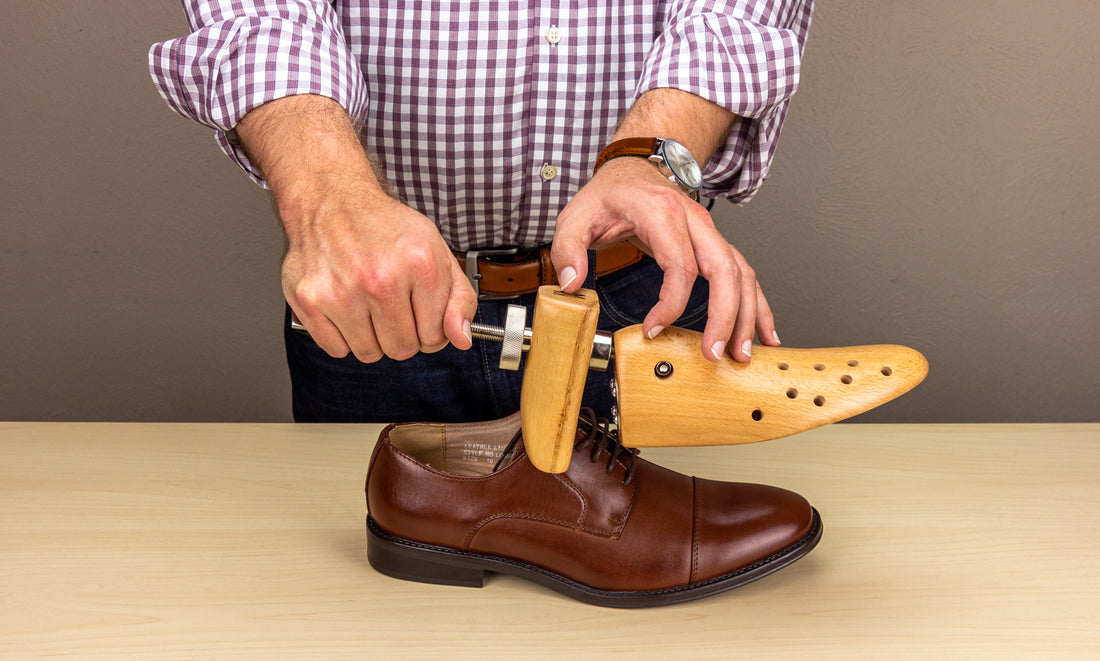
- Wooden or plastic stretchers expand inside the shoe. Leave them in for 24–48 hours, checking fit.
- Use low expansion steps to avoid over-stretching.
Stretching sprays and conditioners
- Sprays soften leather fibers so they yield when pressure is applied. Apply lightly, then use a stretcher or wear thick socks.
- Choose a product for leather; avoid alcohol-based sprays that dry leather.
Heat and steam methods
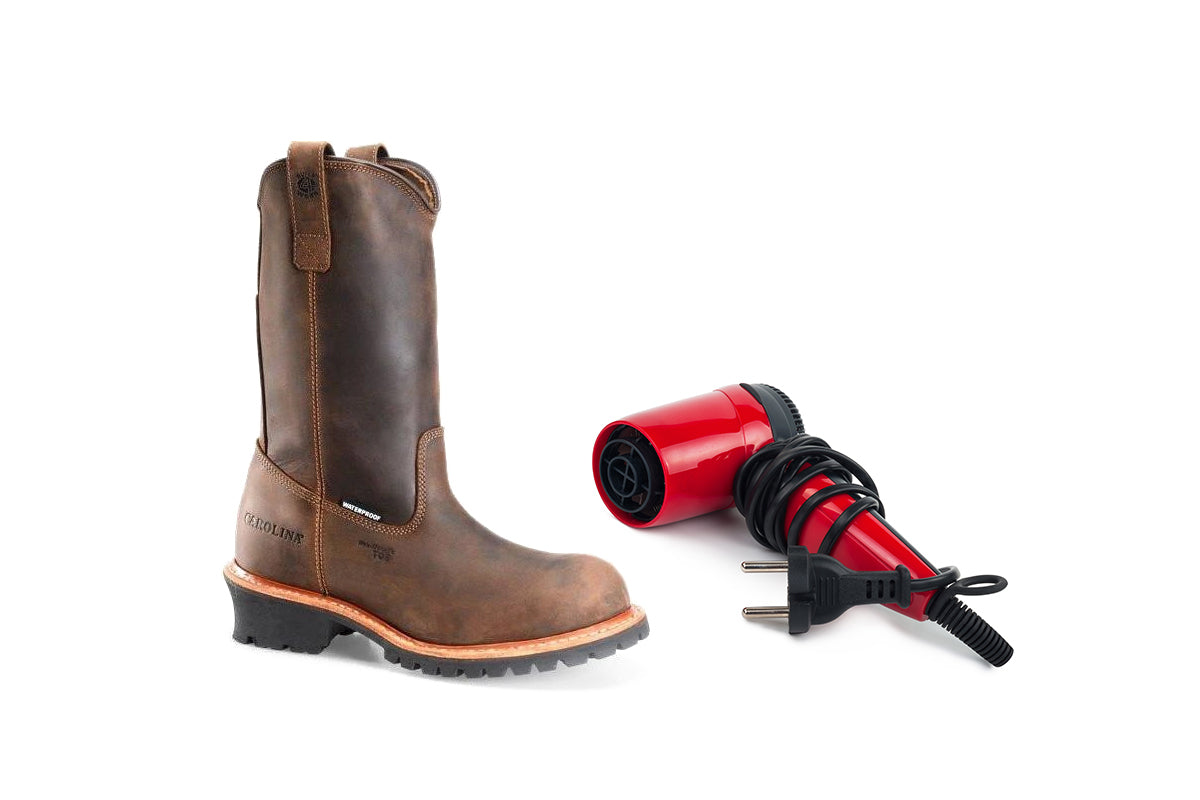
- Warm leather becomes more pliable. Use a hairdryer on low while flexing the shoe or wearing thick socks.
- Don’t overheat — high heat dries and cracks leather.
Wet leather and the freezer bag trick
- Slight dampening makes leather flexible. Wear the shoes with thick socks while damp, then walk until dry.
- Put a sealed water bag inside the shoe and freeze to expand? That method is better for boots and needs caution to avoid water damage.
Physical stretching by wear
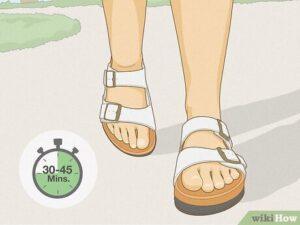
- Wearing shoes with thicker socks or in short bursts helps leather slowly conform to your foot.
- This is the safest but slowest approach.
When you ask can leather shoes be stretched, choose the least aggressive method that meets your need first. Test carefully and proceed step by step.
Best types of leather for stretching
Not all leather behaves the same when you try to answer can leather shoes be stretched.
Full-grain leather
- Strong and slightly flexible. It stretches a bit but keeps shape well.
- Good candidate for modest stretching.
Top-grain leather
- Sanded for uniformity. It stretches more easily than full-grain.
- Often responds well to at-home stretchers.
Corrected-grain and bonded leather
- Treated surfaces may have coatings that limit stretching.
- Stretch with caution; finishes can crack.
Patent leather
- Very little stretch. The finish can split if stretched too far.
- Avoid aggressive methods.
Suede and nubuck
- Softer and more forgiving. They can stretch but may mark or change texture.
- Use gentle methods and brushing afterward.
When you wonder can leather shoes be stretched, consider the leather finish and whether the shoe has glued or stitched constructions that will affect results.

DIY vs professional stretching: when to choose which
If a pair is expensive, vintage, or has delicate finishes, professional stretching is the safer choice. Cobblers have specialized lasts and expertise to adjust exact areas.
For budget shoes or minor tightness, DIY methods work well. Use a shoe stretcher and a leather-friendly spray. My experience: I stretched office shoes at home successfully three times using a plastic stretcher and conditioner, but I took boots to a cobbler when heel and sole construction was complex.
Guidelines to choose:
- Use a pro when structural change or big size change is needed.
- Use DIY for small, localized adjustments.
- Always test gently and stop if leather creases badly or seams pull.

Risks, limitations, and when stretching won't work
Stretching has limits. Here are risks to know when considering can leather shoes be stretched.
Risk of over-stretching
- Leather can sag or wrinkle if stretched too far.
- Shoes may lose arch or heel support.
Damage to finish
- Coated or patent finishes can flake or crack when forced.
- Decorative elements like broguing or stitching can split.
Structural limits
- Shoes with glued soles can delaminate if stressed.
- Some last shapes or stiff reinforcements simply won’t change.
Permanent changes
- Stretched leather may not return to original shape. That can help or harm fit in the long run.
Be honest about the amount of change needed. If you need a whole size more, replacing the shoe is often the best option.

Practical tips to stretch leather shoes safely
Follow these practical steps to stretch leather shoes with minimal risk.
- Measure before you stretch. Compare foot length and width to the shoe sole and last.
- Condition first. A leather conditioner softens fibers, making them more forgiving.
- Stretch little by little. Expand a stretcher a small amount and check fit after several hours.
- Target only tight spots. Use plugs on stretchers or padded methods for toe boxes and bunion areas.
- Protect interiors. Use a cloth when applying heat or moisture to avoid staining linings.
- Dry naturally. Avoid strong heat sources that can dry out leather.
- Re-condition after stretching to restore oils and help shape hold.
- Use inserts if needed. Sometimes a thinner insole or heel pad solves fit without stretching.
From my work, the biggest mistake people make is rushing. Slow, low-force stretching delivers the best results.
Quick practical questions (PAA-style)
What tools help stretch leather shoes at home?
- A manual shoe stretcher, leather stretch spray, and thick socks are the core items. Start gentle and repeat sessions.
How long does leather stretching take?
- Minor stretches may take a few hours to a day; larger stretches can require multiple 24–48 hour sessions.
Will stretching ruin shoe shape?
- Over-stretching can change shape. Controlled stretching usually preserves overall design while easing tight spots.
Can insoles help instead of stretching?
- Yes. Insoles or orthotics can lift or pad areas to reduce pressure and sometimes eliminate the need to stretch.
Are boots easier to stretch than dress shoes?
- Often yes. Boots have taller shafts and more flexible panels, which allow more room for safe stretching.
Frequently Asked Questions of can leather shoes be stretched
Will stretching leather shoes make them weaker?
Properly done stretching does not make leather weaker. Overdoing it or using heat/solvents can damage fibers and reduce strength.
How many sizes can leather shoes be stretched?
Most shoes can be stretched about half a size in length or a full width. Larger changes risk structure and comfort.
Can I stretch leather shoes at home without a stretcher?
Yes. Using leather spray and wearing thick socks or using DIY stretchers works for small adjustments. For big changes, a professional is safer.
Is it safe to use a hairdryer to stretch leather shoes?
You can use low heat to make leather pliable briefly, but avoid high heat which dries and cracks leather. Move the dryer constantly and test often.
How do I restore shape after stretching?
Condition the leather after stretching and use shoe trees to help shoes keep a balanced shape as they dry and settle.
Will stretching affect the sole or heel?
It can if the shoe’s construction is rigid or glued. Stretching the upper might separate glued soles or affect heel support in poorly built shoes.
Can suede be stretched the same as smooth leather?
Suede stretches easier but marks more. Use gentle pressure and a suede brush afterward to restore nap.
Conclusion
Stretching leather shoes can often solve fit problems, but success depends on leather type, shoe build, and method. Start conservatively, prefer conditioning and gradual stretching, and use a pro for costly or complex shoes. Try the simplest safe method first, measure results, and stop if the shoe shows stress. If you found this guide helpful, try a gentle stretch on a single pair today and share your results or questions below.

Rubel Miah is the Senior Editor at MyStyleGrid.com, where he brings a sharp editorial eye and an unshakable love for fashion to everything he does. A true style addict, Rubel lives and breathes trends, from streetwear to high fashion, and has a knack for turning inspiration into impactful stories. With years of experience in fashion journalism and digital media, he curates content that empowers readers to express themselves through style. When he’s not editing features or forecasting the next big thing, you’ll find him hunting down vintage pieces or capturing street style moments around the city.