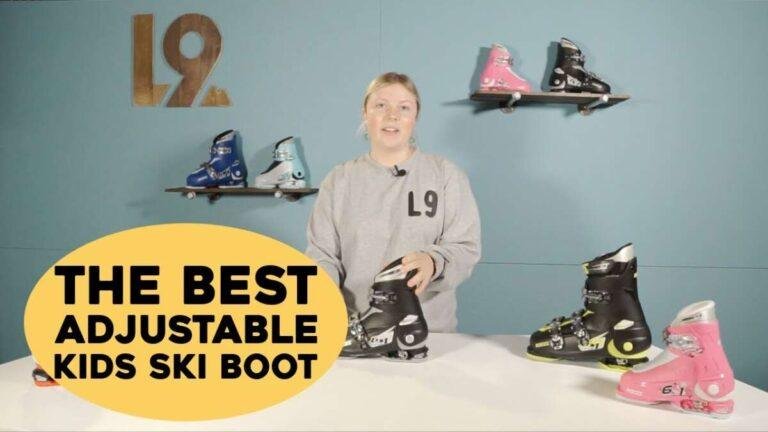
To adjust Roces ski boots, identify the model, set the shell length, then fine-tune buckles, cuff, and liner fit.
Learning how to adjust roces ski boots can make a major difference in comfort, control, and safety on the snow. Roces makes several boot designs, and the adjustment system may differ by model, so the safest method starts with the boot manual and the markings on the shell.
This guide explains how to adjust roces ski boots in a clear, practical way. You will learn how to change the boot size, set the buckles, improve heel hold, check cuff alignment, avoid common mistakes, and know when a ski shop should handle the work.

Before You Adjust Roces Ski Boots
Before learning how to adjust roces ski boots, check the exact model name and inspect the boot closely. Roces has produced adjustable ski boots with different shell designs, rear levers, buckles, and cuff systems. A Roces Idea boot may adjust in a different way from another Roces recreational model.
Look for:
• The model name on the shell or liner
• A size scale near the heel or rear adjustment lever
• Buckles with several catch points
• A power strap near the top of the boot
• Screws, clips, or levers around the cuff
• Arrows or size markings molded into the plastic
Use a flat, stable surface and wear the ski socks you will use on the slopes. Thick cotton socks can create pressure points and give you a false sense of tightness. Ski-specific socks are usually thinner, warmer, and better suited to a close boot fit.
Do not force a lever or turn a screw that does not clearly belong to an adjustment system. Some parts hold the cuff or shell together. Changing them without guidance may affect boot safety or performance.

How to Adjust Roces Ski Boots Step by Step
The basic process for how to adjust roces ski boots is simple, but each step matters. Make one change at a time. Then put the boots on and check the fit before making another change.
1. Open the boot fully
Release every buckle and loosen the power strap. Open the tongue as far as it will move. This gives your foot room to enter without crushing the liner or catching your heel.
If the boot has a rear size lever, move it only after the boot is open. Trying to adjust a loaded shell can put extra stress on the mechanism.
2. Set the shell length
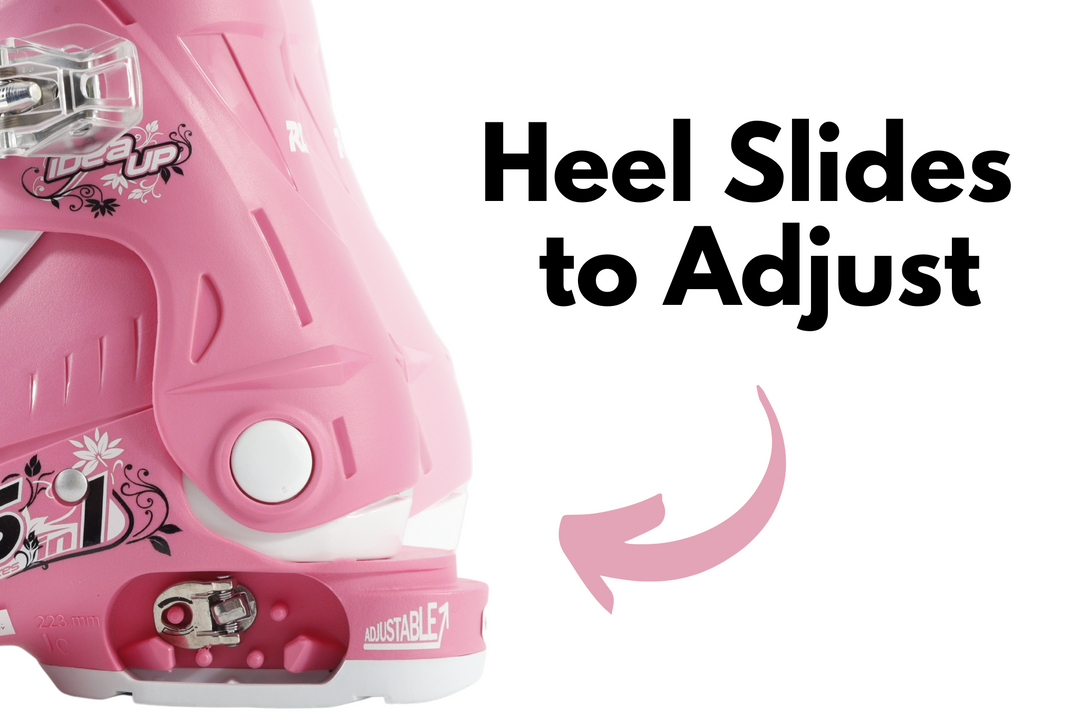
Many adjustable Roces ski boots use a rear lever or slider to change the shell length. Place the boot on the floor, find the size scale, and move the heel section to the marking that matches the wearer’s foot size.
The correct setting should allow the foot to sit securely without pressing the toes hard against the front. The shell should not be set larger than needed simply to create more room. Too much space can cause heel lift, weak control, and cold feet.
For growing children, choose a setting that allows reasonable room, but avoid using the largest setting as a substitute for proper fit. A child’s toes may lightly touch the front when standing upright, then move back slightly when the knees bend.
3. Put the foot into the boot
Sit down and guide the foot into the boot. Pull the tongue forward so it sits flat across the shin and instep. Make sure the heel is fully down inside the heel pocket.
A useful method is to tap the heel gently on the floor while the boot is open. Do not stomp hard. The goal is to settle the heel, not shock the shell or liner.
4. Close the lower buckle
Fasten the lower buckle with light pressure. It should hold the foot without causing numbness across the instep. If the buckle feels too tight at the first catch, move it to a different catch position rather than forcing it.
The lower buckle mainly helps hold the foot and heel in place. It should not be used to crush the foot. A tight buckle does not always mean a secure fit.
5. Close the upper buckle
Bend the knee slightly and close the upper buckle around the lower leg. Keep the shin centered over the tongue. Tighten the buckle until the cuff feels supportive, but leave enough room for normal ankle and knee movement.
Most recreational skiers need a firm, comfortable setting rather than maximum pressure. You should be able to flex forward without sharp pain or restricted blood flow.
6. Adjust the power strap
If your Roces boots have a power strap, place it snugly around the upper cuff. The strap adds support and helps connect the lower leg to the boot.
Do not use the power strap to solve a loose shell. If the boot is too large, the strap may make the top feel tight while the heel still moves inside.
7. Flex and walk carefully
Stand up and bend both knees. The boot should flex forward in a smooth way. Walk a few steps on a clean floor, but remember that ski boots are not designed for long indoor walks.
Check for:
• Heel lift
• Toe pressure
• Numbness
• Sharp pressure on the shin
• A loose feeling around the ankle
• Buckles that open too easily
This step is central to how to adjust roces ski boots because the fit can feel different when you stand than when you bend into a skiing position.
How to Use the Roces Size Adjustment System
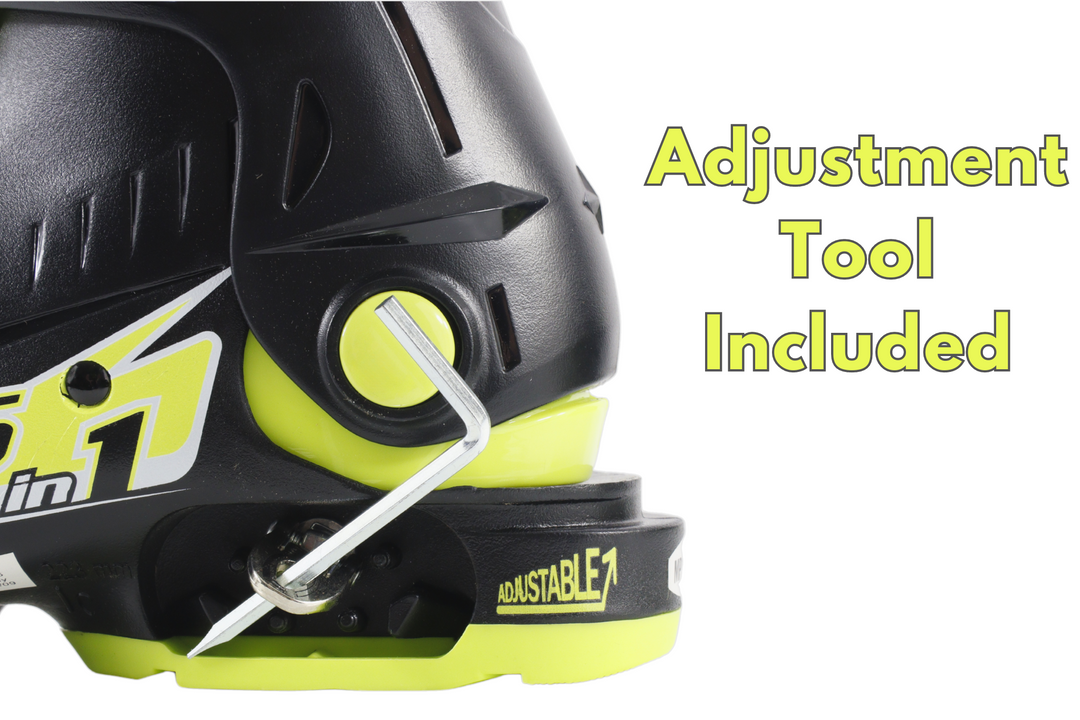
The size system is the most important feature on many adjustable Roces ski boots. It may use a lever, a sliding heel, or a locking mechanism. Since designs vary, always follow the printed size guide on the boot when one is available.
A typical adjustment process looks like this:
-
Remove the boot from your foot.
-
Open all buckles and the power strap.
-
Find the rear lever, slider, or locking tab.
-
Release the mechanism as shown by the boot markings.
-
Move the heel section to the required size.
-
Confirm that both sides sit evenly.
-
Lock the mechanism fully.
-
Pull gently on the heel section to check that it does not move.
Never ski with the size lever partly open. A partly locked shell can shift while skiing. If the lever will not close, the setting may be between sizes, the shell may be dirty, or the mechanism may be damaged.
Some boots use a range such as small to large rather than standard US shoe sizes. Do not assume the boot setting matches your everyday shoe size. Measure the foot and use the Roces size chart when possible.
A practical fit test is the heel check. With the boot buckled, bend the knees forward. The heel should stay mostly in place. A small amount of movement may be normal in a soft recreational boot, but noticeable lifting usually means the shell is too large or the foot is not seated correctly.

How to Adjust Roces Ski Boots for Children
Roces adjustable ski boots are popular for children because one boot can cover more than one foot size. The adjustment can help families save money, but the setting still needs regular checks.
Children grow quickly, and their feet can change during a season. Check the fit every few weeks and before each ski trip. Ask the child where the boot feels tight, but also inspect the toes, heel, and shin yourself.
A child’s ski boot should:
• Hold the heel without painful pressure
• Allow the toes to move slightly
• Keep the foot warm without loose space
• Close without excessive force
• Let the child bend the knees comfortably
Avoid setting a child’s boot several sizes too large. Extra room can make the boot hard to control and may increase rubbing. It can also make the child lean back because the boot does not respond quickly.
One useful test is to have the child stand straight, then bend the knees as if skiing. The toes may touch the front while standing. When the knees bend, the heel should settle back and the toes should have more room.
If the child complains of pain, tingling, or cold toes, stop and reassess the fit. These signs should not be treated as something the child must simply endure.
How to Adjust Roces Ski Boots for Comfort
Comfort comes from even support, not from tightening every buckle as much as possible. When learning how to adjust roces ski boots, think of the boot as a firm handshake. It should hold the foot securely without squeezing it.
Start with the foot in a neutral position. Keep the toes relaxed and avoid curling them. A curled toe often causes cramps and can make a boot feel smaller than it really is.
Try these adjustments:
• If the toes hit the front, check that the heel is seated and that the shell is not set too small.
• If the heel lifts, check the shell size, lower buckle, and liner position.
• If the instep hurts, loosen the lower buckle and inspect the tongue.
• If the shin hurts, center the tongue and reduce upper buckle pressure.
• If the foot feels numb, loosen the boot and check circulation.
• If the boot feels loose at the ankle, use a closer buckle catch rather than over-tightening the top buckle.
Cold feet are not always caused by a cold boot. Tight buckles can reduce comfort and may restrict circulation. Thin ski socks, dry liners, and a correct shell size often help more than extra tightening.
Do not add thick socks to fill a boot that is too large. This can create pressure and still leave poor control. A proper liner or professional fitting adjustment is usually a better solution.

How to Adjust Roces Ski Boot Buckles
Roces ski boot buckles usually offer several catch points. The catch determines how tightly the buckle holds the shell. Use the catch that provides firm contact while allowing normal movement.
Close the buckle with your hand. If you need to use your full strength, the setting is likely too tight. If the buckle closes with no resistance and the foot moves inside the boot, use a tighter catch.
Make small changes. Move one buckle by one catch, then test the boot again. This method helps you understand which adjustment solved the problem.
A good buckle sequence is:
-
Seat the heel.
-
Fasten the lower buckle lightly.
-
Bend the knee.
-
Fasten the upper buckle.
-
Add the power strap.
-
Recheck the lower buckle.
The lower buckle may feel different after the heel settles. Many skiers make the mistake of tightening it first and then creating too much pressure after the foot moves into position.
Inspect the buckle ladders and hooks for cracks. A damaged buckle can release without warning. Replace worn parts before skiing rather than trying to secure them with tape or improvised hardware.

How to Adjust the Cuff and Upper Shell
Some Roces ski boots allow limited cuff adjustment. This may involve a screw, clip, or position setting near the upper shell. The cuff controls how the boot surrounds the lower leg and can affect comfort and stance.
Only change cuff screws or clips if the boot manual identifies them as adjustment points. Do not remove structural screws without knowing their purpose. If the cuff appears twisted, loose, or uneven, ask a qualified ski technician to inspect it.
When checking the cuff:
• Stand with both feet facing forward.
• Bend both knees evenly.
• Look for pressure on one side of either shin.
• Check that the tongue stays centered.
• Compare the left and right boots.
A slight difference between legs is normal. Large differences may come from stance, foot shape, sock thickness, or a bent cuff. It is usually better to correct the cause than to force the cuff into an unusual position.
Most recreational Roces ski boots do not offer the same level of alignment adjustment as high-performance alpine boots. Their main goal is easy use, comfort, and a broad size range. Keep that limitation in mind when trying to correct stance problems.

Common Mistakes When Adjusting Roces Ski Boots
Knowing what not to do is an important part of how to adjust roces ski boots. Small errors can create pain or reduce control.
Choosing the boot by shoe size alone
Shoe sizes vary by brand and style. Use the boot’s size markings and measure the foot when possible.
Setting the shell too large
A large setting may feel comfortable at first, but it often causes heel movement and weak edge control.
Over-tightening the buckles
Too much pressure can cause numbness, pain, and poor circulation. Tight is not the same as secure.
Ignoring the liner
The liner must sit flat and centered. A folded tongue or twisted liner can create pressure that buckle changes cannot fix.
Adjusting the boot while fully closed
Release the buckles before changing the shell length. This reduces stress on the mechanism and makes the adjustment more accurate.
Skiing with a loose lever
Always check that the size mechanism is completely locked. A loose lever can allow the shell to change length during use.
Using household tools carelessly
A screwdriver may damage plastic or strip a fastener. Use the correct tool and stop if a part resists.
Wearing thick everyday socks
Thick socks can cause pressure and reduce warmth by making the fit too tight. Use one thin, moisture-wicking ski sock.

When to Visit a Ski Shop
You can handle basic size, buckle, and strap adjustments at home. More complex problems need professional attention.
Visit a ski shop if:
• The shell is cracked.
• The rear adjustment will not lock.
• A buckle or ladder is broken.
• The cuff is loose.
• The liner is badly compressed.
• You have strong pain after several fit changes.
• Your heel still lifts noticeably.
• You need custom alignment or boot fitting.
A trained technician can inspect shell alignment, measure the foot, check the liner, and identify whether the boot is simply the wrong size. Ski shops may also carry replacement Roces buckles and compatible parts.
Do not drill, heat, grind, or reshape the shell at home. Alpine boot modification requires controlled heat and specialist knowledge. A poor modification can weaken the plastic or change how the boot releases from the binding.
Roces ski boots are generally designed for recreational use, and their adjustment range has limits. A professional can improve the fit, but cannot always make an unsuitable boot perform like a custom race boot.
A Practical Fit Checklist
Use this checklist before each ski day:
• Confirm the shell is set to the correct size.
• Check that the adjustment lever is locked.
• Inspect the buckles and catch ladders.
• Make sure the liner tongue is centered.
• Seat the heel before tightening.
• Fasten the lower buckle with light pressure.
• Fasten the upper buckle for firm support.
• Tighten the power strap only as needed.
• Bend both knees and test forward flex.
• Check for pain, numbness, or heel movement.
Take the boots off after 10 to 15 minutes and inspect your feet. Red marks that fade quickly may be normal. Deep marks, blisters, numbness, or lasting pain show that the fit needs attention.
A simple notebook can help. Record the shell setting, buckle catches, sock type, and any pressure points. This turns fitting into a repeatable process instead of guesswork.
The best answer to how to adjust roces ski boots is often found through small, measured changes. Your feet should feel supported before you reach the lift, not only after several runs.
Safety and Care Tips
Correct adjustment cannot replace proper binding setup. The boot, binding, and ski must work together. Binding release settings should be checked by a qualified professional, especially for children, beginners, and anyone using different boots.
Keep the boots dry after skiing. Remove the liners if the design allows it, and let them air-dry at room temperature. Do not place them on a radiator or use high heat, which can damage foam and plastic.
Before storing the boots:
• Brush away snow and dirt.
• Dry the shell and liner.
• Close the buckles lightly.
• Store the boots in a cool, dry place.
• Avoid leaving them in a hot vehicle.
Cold plastic can become less flexible, while hot plastic may soften or deform. Let the boots reach room temperature before making detailed adjustments.
Industry boot-fitting guidance consistently treats heel retention, circulation, shell integrity, and binding compatibility as key safety factors. If any of these areas seem uncertain, professional inspection is the responsible choice.
Frequently Asked Questions About How to Adjust Roces Ski Boots
How do I make Roces adjustable ski boots smaller?
Open the boot, release the rear adjustment mechanism, and move the heel section toward the smaller size marking. Lock the mechanism fully, then test the fit with the heel seated and the buckles closed.
How do I make Roces ski boots larger?
Release the size lever or slider and move the heel section toward the larger marking shown on the shell. Do not exceed the printed adjustment range, and confirm that the mechanism is fully locked before skiing.
How tight should Roces ski boot buckles be?
The buckles should hold the foot and lower leg firmly without causing pain, tingling, or numbness. Use the nearest comfortable catch and avoid tightening the boot simply to compensate for an oversized shell.
Why does my heel lift inside Roces ski boots?
Heel lift can result from a shell that is too large, an incorrectly positioned liner, a loose lower buckle, or poor heel placement. Reseat the heel, check the size setting, and seek a professional fitting if the movement continues.
Can children use the same Roces ski boots for more than one season?
Many adjustable Roces models are designed to cover several foot sizes, so they may last as a child grows. Check the fit often and do not use the largest setting if it creates excessive heel movement or poor control.
Can I adjust Roces ski boots without tools?
Basic size levers, buckles, and power straps can often be adjusted without tools. Cuff screws or structural parts may require tools and should only be changed when the manual clearly identifies them as adjustment points.
Should my toes touch the front of Roces ski boots?
Your toes may lightly touch the front when you stand upright. When you bend your knees into a skiing position, the toes should move back slightly and should not feel crushed.
Conclusion
Learning how to adjust roces ski boots is mainly about setting the shell length correctly, seating the heel, and using steady buckle pressure. Check the model markings, make small changes, and test the boots while standing and flexing.
Avoid oversized settings, thick socks, forced levers, and excessive tightening. If the shell, cuff, buckle, or liner has a serious problem, let a qualified ski technician handle it.
Take a few minutes to adjust your Roces boots before your next ski day. Your feet will feel better, your turns will feel more controlled, and your time on the snow will be more enjoyable. Share your fitting experience or explore your boot manual for model-specific guidance.

Rubel Miah is the Senior Editor at MyStyleGrid.com, where he brings a sharp editorial eye and an unshakable love for fashion to everything he does. A true style addict, Rubel lives and breathes trends, from streetwear to high fashion, and has a knack for turning inspiration into impactful stories. With years of experience in fashion journalism and digital media, he curates content that empowers readers to express themselves through style. When he’s not editing features or forecasting the next big thing, you’ll find him hunting down vintage pieces or capturing street style moments around the city.