Yes, many Nike shoes are made in China, but not all.
Are Nike shoes made in China? Yes, but China is only one part of Nike’s global manufacturing network. Nike uses factories in several countries, including Vietnam, Indonesia, China, and others. This guide explains where Nike shoes are made, why production moves between countries, how to check your pair, and whether country of origin affects quality.
Are Nike Shoes Made in China?
Yes, Nike makes some shoes in China. However, Nike does not manufacture every shoe in the same country. The production location can vary by model, size, production season, and factory capacity.
Nike designs most products through its global design and development teams. Independent contract factories then make the shoes under Nike’s specifications. This means the country listed on the label shows where the shoe was assembled, not where every material or idea came from.
Nike has used Chinese factories for many years. China has a large footwear industry, skilled workers, strong material suppliers, and mature export systems. These factors make it an important part of Nike’s supply chain.

Where Are Nike Shoes Made?
Nike shoes are made in several countries around the world. The main locations can change from year to year as Nike adjusts its supplier network.
Common manufacturing countries include:
• Vietnam, one of Nike’s largest footwear production centers
• Indonesia, a major source of athletic footwear
• China, which still produces many Nike shoes
• India, which makes selected Nike products
• Thailand, which supports some footwear and apparel production
• Cambodia, which is more strongly linked with apparel production
Nike’s annual business filings provide useful production data. In one recent fiscal-year report, Nike Brand footwear production was concentrated in Vietnam, Indonesia, and China. Together, these countries made the large majority of Nike Brand footwear.


The exact percentage may change each year. A Nike Air Max made this year may come from Vietnam, while another pair of the same model made earlier may come from China.

Why Does Nike Manufacture Shoes in China?
Nike manufactures shoes in China because the country has deep experience in footwear production. Many factories have the machinery, trained staff, and supplier relationships needed to make complex athletic shoes.
Modern sneakers are not made from one material. A typical pair may include:
• Rubber outsoles
• Foam midsoles
• Mesh or knit uppers
• Synthetic leather
• Textile lining
• Adhesives
• Foam padding
• Plastic support parts
China has suppliers for many of these components. This can make production faster and easier to manage. It also helps factories produce large orders with consistent processes.
Cost is another factor, but it is not the only one. Nike chooses factories based on quality, capacity, technical skill, delivery time, labor standards, and business performance. A lower production cost alone does not explain why Nike uses a certain country.
Does “Made in China” Mean Nike Shoes Are Fake?
No. A “Made in China” label does not mean Nike shoes are fake. Genuine Nike shoes can be made in China, Vietnam, Indonesia, and other countries.


Counterfeit sellers sometimes use real country names on fake labels. Therefore, the manufacturing country cannot prove that a pair is authentic. You must check the seller, product details, packaging, and shoe construction together.
Warning signs may include:
• A price far below normal retail pricing
• A seller with no clear return policy
• Poor stitching or loose glue
• A blurry or incorrect size tag
• A product code that does not match the box
• Spelling mistakes on packaging
• Colors that do not match official product photos
A “Made in China” label is only one piece of information. It is not an authenticity test by itself.

How to Check Where Your Nike Shoes Were Made
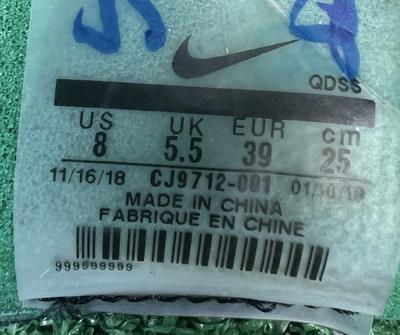
You can usually find the country of origin inside the shoe. Look at the tongue label, inner lining, or printed size tag.
Follow these steps:
-
Remove the shoe laces if they cover the label.
-
Check the inside of the tongue or side panel.
-
Find wording such as “Made in China,” “Made in Vietnam,” or “Made in Indonesia.”
-
Look for the style code and size information.
-
Compare the style code with the shoe box and the official Nike product listing.
-
Check whether both shoes have matching labels.


The label may also show a manufacturing date or factory code. These details can help with product research, but they do not guarantee authenticity.
Nike shoes sold in the United States may also include country-of-origin details on the box or retail label. Online listings may not show this information, so the physical shoe is often the best source.

Are Nike Shoes Made in China Good Quality?
Nike shoes made in China can be good quality. The production country does not automatically determine how well a shoe performs.
Nike gives approved factories product specifications. These may cover:
• Material type
• Foam density
• Sole shape
• Stitch strength
• Adhesive use
• Logo placement


• Color standards
• Fit measurements
• Safety and durability checks
The same Nike model may be made in different countries at different times. Nike expects each approved factory to follow its standards, although small differences can still occur between production runs.
Quality also depends on the model. A basic running shoe, a premium basketball shoe, and a limited-edition sneaker have different materials and construction methods. It is more useful to assess the specific model than to judge the country printed on the tag.

China-Made Nike Shoes Compared With Vietnam-Made Shoes
There is no simple rule that China-made Nike shoes are better or worse than Vietnam-made shoes. Both countries produce genuine Nike footwear under Nike’s manufacturing requirements.
Differences may occur because of:
• The factory’s equipment
• The production year
• Material batches
• Quality-control results
• The specific shoe model
• Storage and shipping conditions
For example, two pairs of the same shoe may feel slightly different because foam materials can vary between production runs. One pair may also have been stored in a hot warehouse for a long time, which can affect glue or foam.
When comparing shoes, focus on fit, comfort, support, condition, and authenticity. The country label should not be the main deciding factor.
Nike’s Global Manufacturing Model
Nike generally does not own and operate most of the factories that make its shoes. Instead, it works with independent contract manufacturers.
This model gives Nike access to factories with specialized skills. It also allows Nike to shift production when demand, costs, trade rules, or supply conditions change.
The model has benefits:
• It supports large-scale production
• It gives Nike access to specialized factories
• It allows production to move between regions
• It can reduce dependence on one country
• It helps Nike respond to changes in demand
It also creates challenges. Nike must monitor working conditions, environmental practices, quality, delivery times, and supplier compliance across many facilities.
Nike publishes supplier information and discusses manufacturing risks in its public business reports. Still, public supplier lists do not provide every detail about each shoe. The company’s overall country data is more reliable than guessing the factory from a product photo.

Why Nike Is Moving Some Production Away From China
Nike has gradually increased footwear production in countries such as Vietnam and Indonesia. This does not mean that Nike has stopped making shoes in China.
Companies may change production locations for several reasons:
• Rising labor and operating costs
• Tariffs and trade restrictions
• Supply-chain disruption
• Factory capacity
• Shipping needs
• Access to raw materials
• Business and political risk
• Regional demand
This shift is common across the footwear industry. Large brands often use multiple countries so that a problem in one region does not stop all production.
China remains important because its industrial base is broad and well developed. Vietnam and Indonesia are also major footwear hubs, but each country has different strengths and limits.

Does the Country of Origin Affect Nike Shoe Comfort?
Usually, no. Comfort depends more on the shoe’s design, fit, materials, and your foot shape.
Important factors include:
• Arch support
• Cushioning level
• Heel stability
• Toe-box width
• Upper flexibility
• Insole shape
• Shoe size
• Intended activity
A Nike running shoe may feel comfortable because of its foam and geometry, whether it was made in China or Vietnam. A poor fit will still feel uncomfortable regardless of the factory location.
Try both shoes when possible. Walk, stand, and move as you would during normal use. Your toes should have room to move, and your heel should not slip badly.
How to Buy Genuine Nike Shoes Made in China
If you want to buy Nike shoes made in China, start with a trusted seller. Nike stores, authorized retailers, and established online shops are safer choices than unknown marketplace accounts.
Use this checklist:
• Check the seller’s reviews and business details.
• Compare the price with normal retail prices.
• Ask for clear photos of the size tag.
• Check the shoe box label.
• Match the style code across the shoe and box.
• Review the return and refund policy.
• Avoid sellers who pressure you to pay outside the platform.
• Be careful with “factory reject” claims.
The phrase “factory reject” is often used to make questionable shoes sound legitimate. A seller may claim that a product is genuine but has a small flaw. Without proof of authorized sourcing, treat that claim cautiously.
A real country label does not make a fake shoe genuine. Always judge the full purchase.
Common Mistakes Buyers Make
Many buyers assume that all Nike shoes should be made in the United States. That is not how Nike’s current global production system works. Nike designs products worldwide and uses overseas contract factories for most footwear.
Another mistake is believing that Vietnam-made shoes are always better than China-made shoes. There is no reliable rule that supports this claim.
Buyers also sometimes compare a new pair with an older pair and assume one is fake because the label differs. Nike can change factories between production periods. The same model may have different country labels over time.
A practical lesson from reviewing footwear details is simple: do not rely on one clue. Check the product code, seller, build quality, box, price, and return policy together.
What Nike’s Country Label Really Tells You
The country label tells you where the shoe was made or assembled under applicable labeling rules. It does not tell you where Nike designed the product or where every material came from.
For example, a shoe labeled “Made in China” may use rubber, foam, fabric, and other parts from different suppliers. The final assembly took place in China, but the supply chain may involve several countries.
The label also does not tell you:
• Whether the shoe is comfortable
• Whether it will last for years
• Whether it is better than a Vietnam-made pair
• Whether the seller is trustworthy
• Whether the product is authentic
Treat the label as useful information, not a complete product review.
Frequently Asked Questions About Whether Nike Shoes Are Made in China
Are all Nike shoes made in China?
No, Nike shoes are not all made in China. Nike also produces footwear in Vietnam, Indonesia, and other countries.
How can I tell if my Nike shoes were made in China?
Check the label inside the shoe, usually on the tongue or inner side. It may say “Made in China” and include the style code, size, and production details.
Are Nike shoes made in China authentic?
They can be authentic because Nike uses legitimate Chinese factories. However, the country label alone cannot prove authenticity, so also check the seller, product code, packaging, and construction.
Are China-made Nike shoes lower quality?
Not necessarily. Genuine Nike shoes made in China must follow Nike’s product requirements, and quality depends more on the model, materials, factory process, and production batch.
Does Nike still make shoes in the United States?
Nike has limited footwear manufacturing in the United States compared with its overseas production. Most Nike athletic shoes sold worldwide are made through international contract manufacturers.
Why are some Nike shoes made in Vietnam instead of China?
Nike uses multiple countries to manage cost, capacity, materials, shipping, and supply-chain risk. Vietnam has become one of Nike’s largest footwear production centers.
Can the same Nike shoe be made in different countries?
Yes. Nike may produce the same model in different factories or countries during different production periods, depending on capacity and supply needs.
Conclusion
Are Nike shoes made in China? Yes, many are, but Nike also makes shoes in Vietnam, Indonesia, and other countries. The country on the label does not decide whether a pair is real, comfortable, or well made.
For a smart purchase, inspect the inner label, match the style code, buy from a trusted seller, and review the shoe’s fit and condition. Use the country of origin as one helpful detail, not as your only test. If this guide helped, share your experience or explore more footwear buying tips before your next Nike purchase.

Rubel Miah is the Senior Editor at MyStyleGrid.com, where he brings a sharp editorial eye and an unshakable love for fashion to everything he does. A true style addict, Rubel lives and breathes trends, from streetwear to high fashion, and has a knack for turning inspiration into impactful stories. With years of experience in fashion journalism and digital media, he curates content that empowers readers to express themselves through style. When he’s not editing features or forecasting the next big thing, you’ll find him hunting down vintage pieces or capturing street style moments around the city.