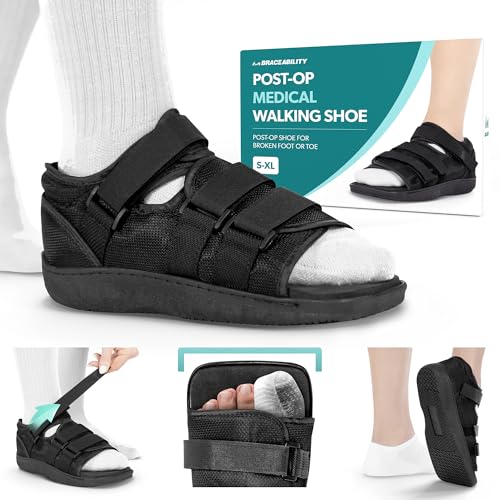
For most small toe fractures, the BraceAbility closed-toe medical walking shoe offers the best blend of protection, fit, and comfort.
A broken pinky toe can make each step feel like a sharp reminder. Regular shoes may squeeze the sore toe, while loose sandals can leave it exposed to bumps. I looked at support, toe room, sole control, closure design, and daily comfort to find the best boot for broken pinky toe care. These shoes can help reduce unwanted motion and protect the foot during recovery, but they do not replace an exam or treatment plan. If the toe looks crooked, numb, blue, badly swollen, or painful after an injury, seek medical care before choosing a boot.
BraceAbility Closed-Toe Walking Shoe, Medium

The BraceAbility closed-toe medical walking shoe is my leading choice for many adults with a broken pinky toe. Its enclosed front helps shield the toes from light bumps, dust, and accidental contact. The roomy shape gives the little toe more space than a typical street shoe. It also uses adjustable straps, which can help accommodate swelling during the day.
I like the balance between protection and weight here. The sole is made for short, careful walks, and the shoe can help limit painful bending while the foot heals. The closed design may also feel more secure for people who dislike an open post-op sandal. Still, the fit must be right, and users should follow their clinician’s advice about weight bearing and wear time.
Pros:
- Closed front helps protect the pinky toe from bumps
- Roomy toe area supports a less cramped fit
- Adjustable straps can allow for swelling
- Lightweight design feels less tiring than a tall boot
- Works for several toe, forefoot, and post-op needs
- Suitable for many adult users on either foot
Cons:
- Medium size may not fit every foot shape
- Not intended for driving unless a medical professional approves
- May feel warm compared with an open surgical shoe
BraceAbility Closed-Toe Walking Shoe, Large
The large version of the BraceAbility closed-toe shoe is a practical pick for a wider foot or a foot with more swelling. A tight shoe can press on the outside edge of the foot, so extra room matters when the pinky toe is sore. The enclosed toe area adds a layer of daily protection. Its straps let the wearer make small fit changes without forcing the foot into a fixed shape.
This model suits adults who need more volume than a medium medical shoe can offer. I find it useful after a toe injury, forefoot injury, or foot procedure when comfort changes from morning to evening. The sole offers a stable base for slow movement around the home or on approved short trips. Measure carefully, since a shoe that is too large may slide and create rubbing.
Pros:
- Large size gives extra room for broad feet
- Closed toe protects the injured area during daily tasks
- Adjustable straps help manage changes in swelling
- Can fit over a light dressing when space allows
- Stable sole supports careful walking
- Useful for adults who find standard shoes too narrow
Cons:
- A loose fit may cause heel movement or rubbing
- Large sizing may not suit slim feet
- It does not replace a cast or rigid medical treatment when prescribed
BraceAbility Closed-Toe Kids’ Walking Shoe
Children need a different approach to foot protection. They move fast, forget limits, and may not explain pressure or rubbing until the pain is strong. This BraceAbility kids’ closed-toe walking shoe gives the injured foot a covered front and an adjustable fit. The smaller design is made for young users rather than simply shrinking an adult shoe.
I would consider this option for a child whose clinician recommends a protective walking shoe for a toe or forefoot injury. The closed front may help protect the foot during school, home play, and routine movement. Parents should check the fit often, because children grow quickly and swelling can change the fit. An adult should also inspect the skin for red marks after use.
Pros:
- Designed for children rather than adult foot dimensions
- Closed toe helps protect against common bumps
- Adjustable closure supports a more flexible fit
- May help a child walk with less toe pressure
- Useful for approved post-op or injury recovery
- Lightweight shape may be easier for children to manage
Cons:
- Only the listed children’s size may be available
- Parents must monitor fit and skin comfort closely
- Young children may still need help walking safely
BraceAbility Closed-Toe Walking Shoe, Small
The small BraceAbility closed-toe walking shoe is worth a look for adults with shorter or narrower feet. Many recovery shoes feel bulky when the foot is small, and excess space can make each step less steady. This model keeps the protective closed front while offering a smaller size choice. The adjustable straps help create a closer fit than a one-size shoe.
A good small-size fit should hold the heel in place without pressing on the injured pinky toe. I would use this shoe for routine, clinician-approved walking rather than sports, running, or long outdoor trips. The covered design is helpful when the foot needs a barrier from furniture, pets, or crowded spaces. Before buying, compare the brand’s size chart with foot length and width.
Pros:
- Smaller size helps reduce excess shoe movement
- Closed front shields the outer toes
- Straps allow fit changes as swelling shifts
- Roomy front may reduce side pressure
- Useful for smaller adult feet
- Stable base supports slow, careful steps
Cons:
- May not provide enough room for a wide or heavily swollen foot
- Not a substitute for a rigid boot when one is ordered
- Some users may need a thicker sock for the best fit
BraceAbility Adjustable Post-Op Shoe, Large

The BraceAbility adjustable post-op shoe uses an open, flexible format for people who need room around a dressing or swollen forefoot. Unlike a closed medical shoe, it does not surround the toes in the same way. That can feel cooler and less restrictive after foot surgery or when a bandage needs space. The universal cast-shoe style is designed to work on either foot, while the listed size gives a better starting point for fit.
This is a strong option when toe coverage is not the main goal. It can help support the foot during careful movement and may be easier to put on than a normal shoe. However, the open front leaves the pinky toe more exposed to bumps, so I would use extra caution in busy homes or outdoor areas. If your main search is the best boot for broken pinky toe protection, choose this one only when your clinician favors an open post-op shoe.
Pros:
- Open front leaves more space for dressings and swelling
- Adjustable design can fit many foot shapes
- May feel cooler than a closed shoe
- Works on the left or right foot
- Simple closure can make dressing easier
- Useful after foot surgery or forefoot injury
Cons:
- Open toe offers less protection from direct bumps
- Large female sizing may not fit every user
- Loose straps can cause movement if not adjusted well
BraceAbility Short Walking Boot

The BraceAbility short walking boot offers more structure than a simple post-op shoe. Its shorter profile can support the foot and ankle without the height of a tall walker boot. That makes it appealing for a broken toe, metatarsal stress issue, mild ankle sprain, or post-op recovery when a clinician approves protected walking. The design fits either the left or right foot.
I see this as the most supportive choice in this group for users who need more than toe coverage. It may help reduce motion through the foot during each step, but a firm boot can also feel heavier and less natural. A careful fit matters around the heel, ankle, and forefoot. Wear the boot only as directed, and do not assume that a short boot is safe for every fracture.
Pros:
- Short boot shape offers more structure than a flat shoe
- Supports several foot and ankle recovery needs
- Fits either the left or right foot
- May reduce painful foot motion during walking
- Protects more of the foot than an open sandal
- Useful for users who need moderate support
Cons:
- Heavier and bulkier than a simple post-op shoe
- Medium size may not suit very small or very large feet
- Can alter gait and may need a matching shoe on the other foot
SANGENG Closed Post-Op Shoe

The SANGENG closed post-op shoe is built for users who want a covered recovery shoe with room for an injured foot. Its closed front can help guard the toes during normal indoor movement. The broad medical shape is more forgiving than many everyday shoes, especially when swelling makes regular footwear hard to wear. It is listed for both men and women, with the large size suited to a roomier fit.
This shoe may work well for a person who wants a simple recovery option after a broken toe or foot procedure. I would pay close attention to the size, strap tension, and heel position before walking. A closed shoe can feel secure, but it should never squeeze the pinky toe or make the foot numb. As with any recovery shoe, comfort is useful only when the level of support matches the injury.
Pros:
- Closed design helps protect the toes
- Roomy medical shape may suit swollen feet
- Can work for men and women
- Useful for post-op and broken-toe recovery
- May feel more secure than an open shoe
- Large size offers extra space for some users
Cons:
- Large size may slide on a narrow foot
- Less established fit information may require extra care when ordering
- Closed material may feel warm in hot weather
My Recommendation
For most adults, I recommend the BraceAbility closed-toe medical walking shoe in the correct size. It gives the pinky toe a useful shield while leaving room for swelling and light dressings. The medium model suits average adult feet, while the small and large versions help users avoid a poor one-size fit. Among the choices here, it offers the best mix of protection, comfort, and everyday use.
The short walking boot is better for someone who needs more support around the foot and ankle. The open post-op shoe makes more sense when a dressing is large or toe space is the top concern. For a child, choose the kids’ model only after checking the size and getting medical advice. In my view, the best boot for broken pinky toe care is the one that protects the toe without adding pressure, slipping, or more pain.
| Best for | Why |
|---|---|
| Most adults with a sore or broken pinky toe | The closed-toe BraceAbility shoe offers protection, room, and adjustable support. |
| More support for foot or ankle recovery | The BraceAbility short walking boot has a more structured shape. |
| Large dressings or heavy swelling | The adjustable open post-op shoe leaves extra space around the forefoot. |
How I Chose the Best Boot for Broken Pinky Toe
A broken pinky toe does not always need a tall orthopedic boot. In many mild cases, the goal is simple: protect the toe, reduce painful movement, and make safe walking easier. The right choice depends on the fracture, swelling, pain level, and instructions from a health professional. I focused on features that matter during real recovery, not just a long product name.
Toe protection
The outside toe is easy to hit on a chair, bed frame, or door. A closed front creates a guard around the toes. It does not make the shoe impact-proof, but it can add a helpful layer between the injury and the world. If the toe is very sensitive, a closed shoe often feels safer than an open sandal.
Room for swelling
Swelling may rise after standing or walking. A shoe that fits well in the morning can feel tight later. Adjustable straps help the wearer make small changes without forcing the foot into a narrow shell. The front should have enough length and width for the toes to rest without curling or pressing together.
Sole stability
A good recovery shoe should feel steady on clean, dry floors. A flat, firm sole can help reduce toe bend during a step. It may also make the foot feel less exposed than a soft slipper. Still, no medical shoe removes all fall risk, so move slowly and use support when needed.
Weight and height
A tall boot can offer more control, but it can also change the way you walk. A light post-op shoe may feel easier for short trips around the home. A short walker can provide more structure for users with broader foot or ankle needs. I would not choose the heaviest product unless the injury or clinician calls for that level of support.
Correct sizing
Size is one of the most important parts of this decision. Measure the injured foot at the end of the day, when swelling may be greatest. Compare both length and width with the product chart. Do not guess based on your normal sneaker size, especially when using a bandage or thick sock.
Closed-Toe Shoe or Open Post-Op Shoe?
This is a common question when shopping for the best boot for broken pinky toe recovery. A closed-toe shoe can protect the injured toe from light contact. It can also keep the foot warmer and may feel more like a normal shoe. An open post-op shoe leaves more room for swelling and large dressings, but it exposes the toes.
For an active home with pets, children, or tight spaces, I usually prefer a closed front. For a fresh operation with a bulky dressing, an open design may be easier. The best answer depends on the injury and the care plan. If your clinician tells you to keep the toe uncovered, follow that direction.
How to Wear a Medical Walking Shoe Safely
Put the shoe on while seated. Place the heel fully into the rear of the shoe before tightening the straps. The foot should feel held, not squeezed. Check that the pinky toe does not press against the side or front.
Walk a few steps on a clear, level floor. Look for slipping, rubbing, new pain, or pressure points. If the shoe makes the foot numb, pale, cold, or more swollen, remove it and contact a health professional. A medical shoe should make movement safer, not create a new problem.
Wear the shoe for the time your clinician recommends. Some people need it for all weight-bearing activity, while others use it only outside bed. Do not sleep in it unless directed. Keep the sole clean and inspect the straps before each use.
Can You Walk in a Boot With a Broken Pinky Toe?
Many people can walk in a protective shoe after a minor pinky toe fracture, but the answer is not the same for every injury. A displaced fracture, open wound, severe swelling, or damage to another bone may need a different treatment. Pain alone cannot show how serious the injury is. An X-ray and exam may be needed.
If a doctor or podiatrist approves walking, take short steps and avoid quick turns. Keep the floor free of cords and clutter. Use a cane or crutch if balance is poor. Stop if pain increases instead of easing.
What to Wear Under a Broken-Toe Shoe
A thin, soft sock can reduce rubbing. Avoid thick seams that sit over the pinky toe. If the foot has a dressing, use only the amount of padding that still allows a safe fit. Too much material can make the shoe tight.
Do not add hard inserts or extra layers without asking a clinician. The shoe’s sole and strap system work as a set. A homemade change can shift pressure to the toe or make the foot unstable. Keep the dressing dry and follow the care instructions you were given.
Signs the Shoe Does Not Fit
The shoe may be too small if the toe touches the front, the side feels tight, or the skin turns red. It may be too large if the heel lifts, the foot slides, or the straps need extreme tightening. New blisters are also a warning sign. Swelling that worsens after putting on the shoe deserves attention.
Remove the shoe and check the foot after the first short walk. Look at the skin around the pinky toe, heel, and ankle. A mild change from activity can happen, but strong pain, numbness, blue color, or lasting marks should not be ignored. Ask for a professional fit check when in doubt.
Common Mistakes to Avoid
The first mistake is choosing a shoe by size label alone. A medium in one brand may feel different from a medium in another. The second mistake is tightening every strap as hard as possible. Firm support is useful, but excess pressure can worsen swelling and skin irritation.
Another mistake is wearing the boot for sports or long walks too soon. A recovery shoe is not a running shoe. It helps protect the foot during approved movement, not during jumping, climbing, or fast exercise. Give the bone time to heal.
Some people also wear a medical boot on one foot with a very thin slipper on the other. That height difference can strain the back, hips, or knees. A supportive shoe with a similar sole height on the other foot may help, but ask a professional if walking feels uneven.
When to Seek Medical Care for a Broken Pinky Toe
Get prompt care if the toe points in an odd direction, the skin is broken, or the toe looks blue or very pale. Seek help for numbness, severe pain, loss of movement, or swelling that keeps getting worse. Fever, drainage, or spreading redness can signal infection. These signs need more than a shopping decision.
Children, people with diabetes, and anyone with poor blood flow should take toe injuries seriously. A small wound can become a larger issue when sensation or healing is reduced. A health professional can decide if you need an X-ray, buddy taping, a boot, or another form of care. Do not tape a crooked toe yourself.
Best Boot for Broken Pinky Toe: Care Tips
Keep the shoe dry and let it air out between uses. Check the sole for dirt, loose parts, or wear. Clean the outside according to the care directions, and do not soak the shoe unless the maker says it is safe. A damp interior can soften skin and increase rubbing.
Store the shoe where you can reach it easily. Night-time trips are a common time for bumps and falls, so keep a light near the bed. Remove clutter from paths. Small changes can protect the foot as well as the boot.
Do not share a medical walking shoe without cleaning it and checking the fit. Foot shape, dressing size, and injury needs differ. A shoe that works for one person may press on another person’s toe. Personal fit matters more than a product rating alone.
FAQs Of Best Boot for Broken Pinky Toe
What is the best boot for broken pinky toe protection?
For many adults, a closed-toe medical walking shoe is the best starting point. It protects the toe from light bumps and gives swelling more room than a normal shoe. The correct size and medical advice matter more than the brand name.
Should a broken pinky toe be covered?
A covered toe can help prevent bumps, but not every injury should be covered in the same way. A closed shoe may work for routine walking, while a large dressing may need an open post-op shoe. Follow the instructions from your clinician.
Can I wear a walking boot all day?
Wear time depends on the injury and the care plan. Some people wear the shoe for all approved walking, while others use it for short periods. Do not sleep in it or wear it longer than advised unless a professional tells you to.
How tight should a broken-toe shoe be?
It should hold the foot in place without squeezing the toes. You should not feel numbness, tingling, coldness, or strong pressure. Recheck the fit when swelling changes during the day.
Can I drive while wearing a medical walking boot?
Do not drive in a medical boot unless your doctor and local rules allow it. A boot can limit ankle movement and slow braking. Ask your clinician for safe guidance before driving.
Final Verdict: Which Should You Buy?
The BraceAbility closed-toe walking shoe is my top pick for the best boot for broken pinky toe recovery. It offers toe coverage, room, adjustable straps, and a light feel for approved daily walking.
Choose the right size, follow medical advice, and check your skin often. A well-fitted broken-toe shoe can make recovery safer and more comfortable.

Madison Clark is a footwear expert and the voice behind MyStyleGrid.com. She specializes in honest shoe reviews, style tips, and practical guides to help readers find the perfect pair for any occasion. With years of experience in blogging and content creation, Madison makes footwear knowledge simple, stylish, and easy to follow.