The best dog boots for knuckling help lift dragging toes, protect paws, and support safer daily movement.
A dog that suddenly scrapes the top of a paw can turn a short walk into a painful, stressful task. Knuckling may happen with nerve weakness, arthritis, injury, or a spinal problem, so boots should support care—not replace a veterinary exam. I reviewed these corrective braces and protective shoes for toe lift, fit, comfort, grip, and daily use. My goal is to help you find the best dog boots for knuckling without wasting money on a boot that slips, twists, or rubs.
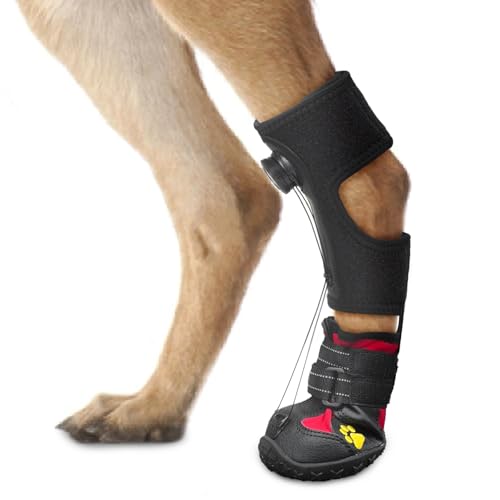
Drop Foot Brace With Reel for Dogs, M

This medium drop foot brace is designed for dogs that drag or fold their toes while walking. Its reel-style support aims to lift the front of the paw as the leg moves forward. That makes it different from a simple winter boot, which only covers the paw. For a dog with mild to moderate toe dragging, this design may offer more useful gait support than a loose shoe.
I would pay close attention to the fit before using it for a full walk. A brace must feel snug enough to stay in place but never tight enough to limit blood flow or cause swelling. Start with a few minutes indoors and check the skin after removal. As with all options in this guide, a veterinarian should assess new or worsening knuckling because the cause may involve the nerves, spine, muscles, or joints.
Pros:
- Designed specifically for drop foot and toe dragging
- Reel support may help lift the paw during a step
- More corrective than a basic paw-covering boot
- Medium size suits many mid-sized dogs
- Can help protect scraped nails and toe tops
- Useful for short, controlled walking sessions
Cons:
- Correct sizing may take careful measuring
- Some dogs need time to accept the brace
- It may not suit severe weakness or major injury
Strap-On Drop Foot Brace for Dogs, XL
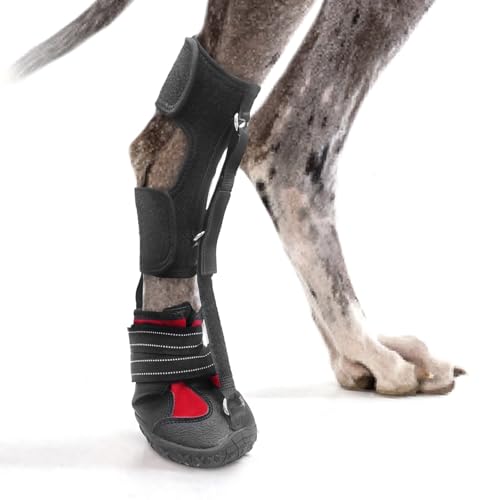
This XL strap-on drop foot brace targets a common problem in large dogs: the paw folds under, catches the ground, or drags across the pavement. The strap-on format can feel simpler than a multi-part support system. It gives the owner a direct way to position the brace around the lower leg and paw. That may help dogs that need toe lift but cannot wear a narrow, enclosed boot comfortably.
Large dogs place more force on every strap and seam, so I would test this brace indoors before outdoor use. Watch for shifting when the dog turns, climbs, or walks on uneven ground. The best dog boots for knuckling should stay aligned through a natural step without pinching the hock or wrist. If the brace moves, stop and adjust it rather than adding extra tightness.
Pros:
- Large size is made for bigger dogs
- Strap-on design may be easier to put on
- Helps address toe dragging and paw folding
- Can protect nails from repeated scraping
- May offer a less bulky feel than a full boot
- Suitable for short rehab walks when properly fitted
Cons:
- Large dogs may place extra stress on the straps
- It may shift if the leg shape does not match well
- Not intended to diagnose or treat the cause of knuckling
Strap-On Drop Foot Brace for Dogs, M

This medium strap-on brace combines corrective support with a protective knee-pad style design. It is aimed at dogs with arthritis, gait changes, or foot weakness that causes the toes to lift poorly. The support may help keep the paw in a more useful position during slow movement. I see it as a practical option for owners who want a simple brace for brief walks and supervised activity.
It is important to remember that a brace should not force a stiff or painful joint into a straight position. Introduce it slowly, reward calm behavior, and inspect the paw after each session. Medium dogs vary widely in leg shape, so the listed size alone cannot guarantee a good fit. Measure the dog as directed and compare both the paw and lower-leg dimensions before ordering.
Pros:
- Supports dogs with mild gait weakness
- Medium size fits many average-sized breeds
- Strap-on style may simplify daily use
- Can help reduce contact on the top of the toes
- Useful for controlled walks and home practice
- May suit dogs with arthritis-related movement changes
Cons:
- Fit depends heavily on leg shape
- Some dogs may resist the added support at first
- It is not a substitute for pain control or physical therapy
Strap-On Drop Foot Brace for Dogs, S

Small dogs often need a lighter brace because extra weight can change their whole stride. This small strap-on drop foot brace is intended to help lift the toes and reduce paw dragging. Its compact format may be less overwhelming for a little dog than a large, rigid boot. It can be worth considering for supervised use after a vet has identified the reason for the gait change.
Small paws also have less room for error. A strap that seems only slightly tight can create rubbing or pressure within a short time. I recommend checking the nails, paw pads, and skin between each early session. When used carefully, this can be one of the best dog boots for knuckling for a small dog that needs light toe support rather than heavy outdoor protection.
Pros:
- Small size is suited to smaller dogs
- Light design may be easier for tiny legs to carry
- Helps address dragging toes and poor paw clearance
- Strap-on construction supports quick fitting
- May protect small nails from pavement wear
- Useful for short, supervised mobility sessions
Cons:
- Small sizing requires very careful measurement
- May not provide enough coverage for rough outdoor ground
- Small dogs may need several short training sessions
Drop Foot Brace With Reel for Dogs, L

This large reel-style drop foot brace is built for dogs that need more active toe-lift support. A reel mechanism may help guide the paw upward as the leg swings forward. That matters when the front of the paw catches on carpet, grass, or pavement. Compared with a standard dog shoe, the design focuses more on gait correction than on weather protection.
I would use this brace during calm, short sessions at first. A dog with weakness may tire quickly, even if the brace improves paw clearance. Keep the first walk on a flat surface and watch whether the dog takes even steps. If the dog shows pain, distress, increased stumbling, or new swelling, remove the brace and contact a veterinarian.
Pros:
- Large size serves many bigger dogs
- Reel design aims to improve toe clearance
- More focused on drop foot than a normal shoe
- May reduce scraping on the front of the paw
- Can support controlled gait practice
- Useful for dogs with moderate paw-dragging concerns
Cons:
- It may feel more complex than a simple strap brace
- Large dogs still require close fit checks
- It cannot correct severe neurologic weakness by itself
Protective Dog Shoes for Hot Pavement, XS
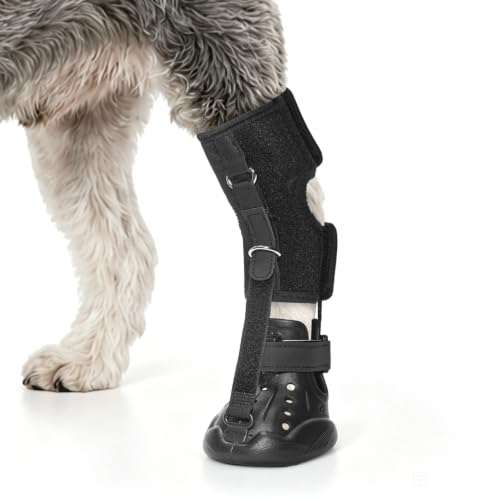
This extra-small dog shoe serves a different role from the corrective braces in this review. It focuses on paw protection for hot pavement, which can matter when a dog already drags a toe. A durable shoe may reduce heat exposure, surface cuts, and wear on a tender paw. It is best viewed as a protective companion product, not a true drop-foot brace.
For knuckling, the key question is whether the shoe stays centered when the paw lands. A loose shoe can twist and may not protect the toe as intended. I would use this option for very small dogs that need pavement protection, then consider a corrective brace if a veterinarian recommends toe-lift support. Test it indoors first because many dogs need time to learn how to walk in shoes.
Pros:
- Protects small paws from hot pavement
- May reduce contact with rough walking surfaces
- Extra-small size suits tiny dogs
- Useful for dogs with sensitive or healing paw pads
- Can supplement a corrective brace during outdoor use
- Helps limit surface-related paw damage
Cons:
- It is not designed as a full drop-foot brace
- May not lift dragging toes on its own
- Small dogs may need patient shoe training
Strap-On Drop Foot Brace for Dogs, L
This large strap-on brace is made for dogs that need a straightforward support system for dragging feet. It may help lift the toes during a controlled step while also shielding the lower leg from some contact. The design can appeal to owners who prefer an adjustable strap rather than a closed shoe. It may work well for dogs that tolerate handling and need support during brief walks.
I would compare this model with the reel brace based on how much guidance the dog needs. A strap-on brace may feel less complicated, while a reel model may offer more active lift. Neither choice is automatically right for every dog. The best dog boots for knuckling should match the dog’s diagnosis, leg shape, strength, and daily activity level.
Pros:
- Large size fits many medium-large and large dogs
- Simple strap format may speed up daily fitting
- Can help reduce toe scraping
- Supports supervised gait work
- May provide useful lower-leg protection
- Adjustable design can accommodate some leg variation
Cons:
- It may slide on tapered or unusually shaped legs
- It needs frequent skin and circulation checks
- It offers support, not a cure for neurologic disease
WALKABOUT Toe’sUP No Knuckling Brace

The WALKABOUT Toe’sUP brace is one of the most targeted choices for dogs that drag their paws. Its purpose is to safely lift the toes rather than simply cover them. That makes it a strong candidate for owners who want a dedicated no-knuckling design. It may be especially helpful during controlled movement for a dog with paw-placement problems.
I like the clear focus of this type of product, but careful setup still matters. A corrective device should support a natural step and should not make the dog hop, twist, or resist movement. Begin on a clean indoor floor and observe the paw from the side. If the dog improves but tires, shorten the session; a brace should be a tool, not a reason to push past fatigue.
Pros:
- Made specifically for paw dragging and knuckling
- Designed to lift the toes during movement
- May protect the top of the paw from abrasions
- Useful for dogs with gait and paw-placement issues
- Focused corrective design may reduce the need for a bulky shoe
- Good option for supervised rehabilitation routines
Cons:
- It may require more fitting practice than a normal boot
- Some dogs may need gradual desensitization
- Outdoor protection may be limited compared with a full shoe
Drop Foot Brace With Reel for Dogs, S

This small reel-style brace gives little dogs access to the same general drop-foot support as the larger versions. The reel aims to help lift the toes as the leg moves forward. That can reduce repeated scraping on indoor floors and outdoor paths. It may suit a small dog with weakness that needs more than a soft paw cover.
Small dogs can be sensitive to weight and bulk, so I would keep the first trials short. Look for calm steps, normal breathing, and no rubbing at the edges. Measure before ordering, and do not assume a small breed always needs the smallest option. When properly fitted and approved for use, this is a practical choice for owners seeking the best dog boots for knuckling in a compact size.
Pros:
- Small format is suited to little dogs
- Reel mechanism aims to improve toe lift
- Can help reduce paw-top scraping
- More corrective than a basic soft boot
- Useful for brief indoor and outdoor sessions
- May support safer movement during mild weakness
Cons:
- Small dogs may need extra time to accept it
- Accurate measurement is essential
- It does not replace veterinary care or rehabilitation
How Knuckling Affects a Dog’s Walk
Knuckling occurs when a dog does not place the paw normally. Instead, the toes may fold under, scrape the ground, or land on the top of the paw. You may hear a scraping sound on a hard floor. You may also see worn nails, red skin, cuts, or a dog that looks unsure when turning.
The problem can come from many sources. Nerve damage, spinal disease, weakness after surgery, arthritis, injury, and some muscle disorders can affect paw placement. A dog may also knuckle because pain changes the way it bears weight. Since the causes vary, a veterinary exam is the safest first step.
A dog boot can act like a small shield and, in some designs, a light guide for the paw. It cannot repair a damaged nerve or cure a spinal condition. Think of it as a handrail on a steep path. It may make movement safer, but the dog still needs the right medical plan.
What Makes the Best Dog Boots for Knuckling?
Many products called dog boots are made for snow, rain, or hot roads. Those boots may protect the paw, but they may not help a dog lift a dragging toe. For knuckling, I look first for a corrective shape or support that addresses paw clearance. A boot that only slips over the paw may still twist as the dog walks.
Fit comes next. The brace should stay in position without cutting into the skin. You should be able to check the paw and feel that the toes remain warm and normally colored. If you see swelling, pale toes, cold skin, raw spots, or a sudden change in gait, remove it at once.
Weight also matters. A weak dog may struggle with a heavy product. A very stiff brace can change the dog’s stride and create stress in another joint. In my view, the best dog boots for knuckling provide enough support to protect the paw while still allowing a calm, natural step.
Correct Sizing and Fit Tips
Measure both paws if the product instructions allow it. One leg may be larger after swelling, injury, or muscle loss. Measure when the dog is standing, since the paw spreads under body weight. Record the width and length, then compare those numbers with the seller’s chart.
Do not guess based only on breed or body weight. A compact bulldog and a slim terrier may weigh the same but have very different feet. Long nails can also change the fit. Trim nails safely before measuring, but ask a groomer or vet for help if the nails are overgrown or painful.
After fitting, let the dog stand still. Then walk five to ten steps on a flat surface. Check that the brace does not rotate, slide down, or press behind the joint. Remove it and inspect the skin. Repeat this process each time you change the fit or use a new product.
How to Teach a Dog to Wear a Brace
Dogs often walk like they have forgotten their legs when they first wear boots. That reaction does not always mean the product is wrong. The new feel can surprise them. I start with the brace nearby, then reward the dog for sniffing it.
Next, I put it on for a very short time while the dog stands. I use praise and a small treat. If the dog stays calm, I take a few steps indoors. I increase time slowly over several sessions instead of going straight outside for a long walk.
Never force a frightened dog through a session. Stress can make the gait worse and may create a bad association with the brace. Use a quiet room and a soft voice. The goal is steady trust, like teaching a child to use a new pair of glasses.
Safety Checks Before Every Walk
Check the brace for loose parts, sharp edges, worn straps, and damaged support pieces. Clean dirt from the contact areas. A grain of sand can act like a tiny piece of sandpaper when trapped against the skin. Make sure the paw is dry before fitting it.
Keep early walks short and slow. Avoid stairs, steep hills, slippery floors, and rough trails until you know how the dog moves in the product. Watch the dog from the side and from behind. A brace that looks fine while standing may shift once the dog turns.
Take the brace off after the planned session unless your veterinarian gives different instructions. Inspect the top of the paw, pads, nails, and lower leg. If the dog licks one spot, limps more, or seems sore later, pause use and seek advice.
When Knuckling Needs Urgent Veterinary Care
Sudden knuckling deserves prompt attention, especially if it appears with weakness, pain, crying, collapse, or trouble standing. Contact a veterinarian quickly if the dog cannot walk, loses bladder control, or shows signs of severe back or neck pain. Do not rely on a brace while waiting if the condition is getting worse.
Even gradual knuckling needs an exam. A vet may check reflexes, paw placement, joints, muscle strength, and the spine. The care plan could include rest, pain relief, physical therapy, weight control, imaging, or other treatment. A brace may be useful, but only as one piece of that plan.
How I Compared These Dog Boots and Braces
I compared each option by its intended job rather than treating every product as the same type of shoe. Corrective braces received more attention for toe lift, alignment, and support. The hot-pavement shoe received more attention for surface protection because it is not marketed as a full no-knuckling brace.
I also considered size range, ease of use, likely comfort, and the needs of different dogs. A product can be excellent for a small dog and poor for a large one. A strap brace may suit a dog that dislikes enclosed shoes. A reel brace may suit a dog that needs more active guidance.
My advice reflects safe use principles from veterinary rehabilitation practice. Product results can vary because dogs have different diagnoses and body shapes. Always follow the product directions and your veterinarian’s instructions.
My Recommendation
For a dog with true toe dragging, I would start with the WALKABOUT Toe’sUP No Knuckling Brace because its main purpose is corrective toe lift. The reel braces are also strong choices when the dog needs guided paw clearance, with small, medium, and large options available. The strap-on braces are useful for owners who want a simpler setup and adjustable support.
For hot pavement, the extra-small protective shoe makes sense as a paw shield, but I would not call it a complete solution for knuckling. The right choice depends on the dog’s cause of weakness, size, tolerance, and walking plan. In 2026, these products remain most valuable when used with careful fitting, short sessions, and professional guidance.
| Best for | Why |
|---|---|
| Dedicated toe lift | WALKABOUT Toe’sUP focuses on dogs that drag their paws and need corrective support. |
| Guided drop-foot movement | The reel-style braces aim to lift the toes during the forward part of a step. |
| Simple adjustable support | The strap-on braces may be easier for owners who prefer a direct, less enclosed design. |
FAQs Of Best Dog Boots for Knuckling
Can dog boots fix knuckling?
No. A boot may protect the paw or help guide the toes, but it does not fix the underlying cause. Knuckling can result from nerve, spine, joint, muscle, or pain problems. Ask a veterinarian to examine your dog before relying on a brace.
Are corrective braces better than regular dog boots?
For toe dragging, a corrective brace may be more useful than a regular boot because it aims to improve paw lift. A regular boot mainly protects against heat, cold, cuts, and rough ground. Some dogs may need both types for different situations.
How long should a dog wear a knuckling brace?
Start with a few minutes and increase time slowly if the dog stays comfortable. Inspect the paw and skin after every early session. Your veterinarian or canine rehabilitation professional can provide a schedule based on the dog’s condition.
How tight should a dog foot brace be?
It should be secure but not tight. The paw should remain warm, normally colored, and free of swelling. If the dog licks the area, limps more, or develops a red mark, remove the brace and reassess the fit.
Can a dog sleep in a knuckling boot?
Do not let a dog sleep in one unless a veterinarian specifically recommends it. Long wear can trap moisture and cause pressure sores. Most dogs need regular breaks for skin checks and free movement.
Final Verdict: Which Should You Buy?
The WALKABOUT Toe’sUP is my top pick for focused toe lift, while the reel braces offer strong support in size-specific options. Choose a strap-on brace for simpler fitting, and use the XS shoe mainly for hot-pavement protection.
The best dog boots for knuckling work best with a vet-led plan, careful sizing, and gradual training. Protect the paw, watch the gait, and stop if comfort changes.

Madison Clark is a footwear expert and the voice behind MyStyleGrid.com. She specializes in honest shoe reviews, style tips, and practical guides to help readers find the perfect pair for any occasion. With years of experience in blogging and content creation, Madison makes footwear knowledge simple, stylish, and easy to follow.