The best sandals for cracked heels pair soft support, roomy straps, and heel-care products that help skin heal.
If every step feels sharp because your heel skin is dry, split, or sore, you are not alone. I have found that the right sandal can reduce rubbing while a simple heel-care routine softens rough skin. Open shoes alone cannot repair cracks, but they can give treated heels room to breathe. In this guide, I review popular heel balms, patches, socks, masks, and creams that work well with supportive footwear. I also explain what to look for in the best sandals for cracked heels, including cushioning, smooth straps, arch support, and a stable sole.
Dry Cracked Heel Repair Balm

This organic foot balm is a simple choice for dry heels that feel rough but are not deeply damaged. The balm creates a rich layer over the skin, which helps slow moisture loss during the day and night. I like this type of formula for people who want a small product that fits beside the bed or in a travel bag. It can also work well before putting on soft heel socks.
Use a small amount on clean, dry feet and give it time to sink in before walking. That step matters because a greasy foot can slide inside a sandal. For the best sandals for cracked heels, pair this balm with a smooth footbed and straps that do not touch the split area. If the heel is bleeding, swollen, or very painful, skip self-care and ask a health professional for advice.
Pros:
- Rich texture helps seal in moisture
- Useful for rough heels and dry calluses
- Easy to apply before bed
- Convenient size for travel
- Works well with cotton or gel heel socks
- Can support a daily foot-care routine
Cons:
- May feel oily if too much is applied
- Needs regular use for lasting results
- May not be enough for very deep heel splits
My Recommendation
I recommend this balm for shoppers who want a gentle daily layer rather than a strong exfoliating cream. It suits mild to moderate dryness and works best when used after a short shower or foot soak. People who wear open footwear often may appreciate how it helps keep the heel surface from feeling tight. Still, let the balm absorb before wearing sandals.
| Best for | Why |
|---|---|
| Daily heel care | Simple balm texture supports regular use. |
| Travel | The compact format is easy to pack. |
| Mild dry skin | It adds a protective moisture layer without a complex routine. |
30PCS Cracked Heel Treatment Patches

Heel patches offer a targeted way to cover a dry or split spot. Instead of spreading cream over the whole foot, you place the patch where the skin needs extra care. This design can help protect the heel from friction caused by floors, bedding, or a sandal edge. The 30-piece count also makes this set practical for repeat use.
I would apply a patch to clean, dry skin and press the edges down well. Do not place one over an infected wound or skin that reacts easily to adhesives. These patches are most helpful when your sandals have a stable heel area and do not force the patch to peel. A patch is not a substitute for medical care, but it can be a useful part of a heel-care plan.
Pros:
- Targets one cracked area at a time
- Large pack supports repeated treatment
- May reduce contact with rough surfaces
- Useful for people who dislike heavy creams
- Easy to add to a bedtime routine
- Can help limit rubbing from footwear
Cons:
- Adhesive may not suit sensitive skin
- Can loosen with sweat or foot moisture
- Requires careful placement on the heel
My Recommendation
These patches are best for people with one or two problem spots rather than full-foot dryness. I especially like them for nights when a thick cream feels messy. If you are comparing the best sandals for cracked heels, choose a pair with a wide, soft heel strap so it does not lift the patch. Test a small area first if you have a history of skin sensitivity.
| Best for | Why |
|---|---|
| Targeted heel cracks | The patch focuses care on a small area. |
| Mess-free use | It avoids the slippery feel of wet cream. |
| Frequent treatment | The 30-piece pack is suited to repeated use. |
Dr. Frederick’s Moisturizing Gel Socks
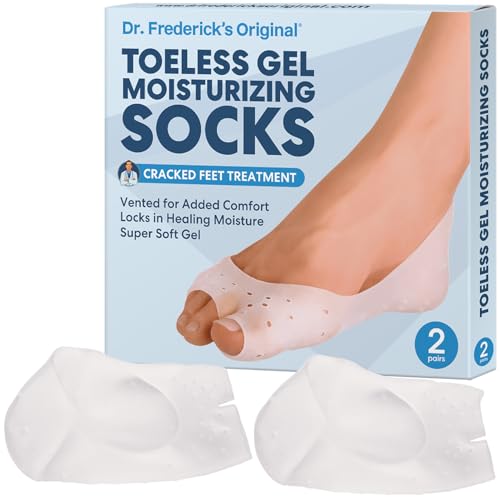
Gel socks are designed to hold moisture close to the skin around the heel. This pair gives you a hands-off option for overnight care, especially when you prefer not to wrap your foot in a bandage. The soft gel section may cushion dry skin from light contact with sheets. I view this style as a moisture-locking aid, not a cure on its own.
Apply a thin layer of foot cream first, then pull the sock on without stretching it too hard. Keep feet clean, and follow the care instructions for washing the socks. Avoid wearing gel socks inside tight sandals because heat and pressure can increase rubbing. For daytime footwear, use them at night and choose breathable sandals during the day.
Pros:
- Helps hold foot cream against the heel
- Useful for overnight treatment
- Soft gel can cushion dry skin
- Reusable design offers ongoing value
- Does not require adhesive
- Works with many simple foot creams
Cons:
- May feel warm in hot weather
- Can slide if the wrong size is chosen
- Needs regular washing and drying
My Recommendation
I recommend these socks for people who want a low-effort way to improve a nighttime routine. They are a good match for dry, rough heels that need more contact time with a balm. I would not wear them beneath a tight strap sandal or for long walks. Instead, treat your feet at night and use cushioned, open sandals the next day.
| Best for | Why |
|---|---|
| Overnight care | The gel lining helps keep cream near the heel. |
| Non-bandage users | No adhesive is needed. |
| Dry heel skin | The soft design supports moisture retention. |
ZenToes Moisturizing Heel Socks

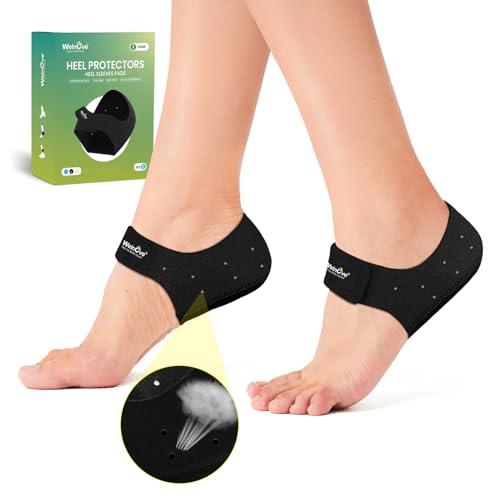
ZenToes heel socks focus on the heel rather than covering the full foot. That smaller shape can feel less bulky than a complete moisturizing sock. The open-toe style, if it fits your foot shape, may also feel more comfortable for nighttime wear. I find this design helpful for people who want heel coverage without a heavy layer around the toes.
For best results, use the socks with a thin, fragrance-free cream or balm. Do not treat a cracked heel like dry paint; adding too much product can make the sock slip. Check the fit before sleeping, since a tight band may leave a mark. When looking for the best sandals for cracked heels, use these socks as a night treatment and select sandals with a roomy toe area during the day.
Pros:
- Focuses coverage on the heel
- Less bulky than many full-foot socks
- Can be paired with a foot moisturizer
- Useful for overnight use
- Reusable for an ongoing care plan
- Open design may improve toe comfort
Cons:
- Fit can vary by foot size
- May move during sleep
- Does not cover the sole or toe area
My Recommendation
These heel socks suit adults whose main concern is a dry back edge of the heel. They are a smart choice if full socks feel hot or restrictive. I would use them with a modest amount of cream and wash them often. Their value is strongest when paired with supportive sandals that reduce heel shock and prevent extra rubbing.
| Best for | Why |
|---|---|
| Heel-only care | The design centers on the dry heel area. |
| Warm sleepers | Less fabric may feel cooler than full socks. |
| Light moisturizer use | The sock helps keep a thin layer in place. |
Kerasal Nighttime Intensive Foot Repair

Kerasal is made for people who need more than a light lotion. Its ointment texture is suited to hard, rough skin on the feet, including dry heels and callused areas. Products in this category often use exfoliating ingredients alongside occlusive ingredients. That combination can help loosen rough surface skin while reducing moisture loss.
I suggest applying a thin layer at night because ointment can feel slick. Wash your hands after use, and follow the label directions closely. Do not scrub a painful crack or apply strong products to broken skin without professional advice. In my view, this is one of the more focused options for shoppers who want intensive care to support their search for the best sandals for cracked heels.
Pros:
- Designed for intensive foot repair
- Useful for rough, thick callus areas
- Works well as a nighttime treatment
- Small amount may cover both heels
- Ointment helps reduce moisture loss
- Good fit for a structured care routine
Cons:
- Can feel greasy before bedtime
- May sting on open or sensitive cracks
- Small tube may not suit whole-foot use
My Recommendation
I recommend Kerasal for adults with stubborn rough heels who want a stronger nighttime product. It is less suited to someone who only needs a light daily lotion. Use it with soft socks and give the skin time to respond. During the day, wear sandals with a padded footbed and avoid hard, flat soles that increase heel pressure.
| Best for | Why |
|---|---|
| Thick calluses | The intensive formula targets rough foot skin. |
| Night treatment | The rich texture can work while you rest. |
| Focused heel repair | A small amount can treat problem zones. |
Dr. Scholl’s Severe Cracked Heel Balm

This Dr. Scholl’s balm contains 25% urea, an ingredient often used in foot care to soften and hydrate thick, dry skin. Urea can attract water to the outer skin and may help loosen rough buildup. That makes this product a strong candidate for severe dryness, though it may feel more active than a basic cream. The 2.5-ounce size is useful for regular heel treatment.
Apply only as directed and avoid using it on irritated skin unless a clinician says it is safe. I prefer using a small amount in the evening, followed by a clean sock. If your feet feel sore after wearing sandals, inspect the straps and sole as well as the skin. Even the best sandals for cracked heels cannot help much if the fit causes constant friction.
Pros:
- Contains 25% urea for dry, rough skin
- Made specifically for severe cracked heels
- Helps soften hard heel texture
- Good size for repeated use
- Works well in a nighttime routine
- Recognizable foot-care brand
Cons:
- May irritate very sensitive skin
- Can feel thick on the foot
- Requires careful use on deep cracks
My Recommendation
This is my pick for shoppers with heavy callus and severe dryness who want a urea-based balm. It is not the first product I would choose for a child or a person with fragile skin without medical guidance. Start with a small amount and watch how your skin reacts. The best results come from pairing treatment with sandals that have a cushioned, stable heel and no rough seams.
| Best for | Why |
|---|---|
| Severe dry heels | Its 25% urea content is aimed at rough skin. |
| Thick callus | The balm helps soften hard surface buildup. |
| Routine heel repair | The larger tube supports repeated treatment. |
Aquaphor Advanced Therapy Foot Masks

Foot masks are useful when your heels need a quick moisture boost and you enjoy a set treatment. Aquaphor’s six-mask package gives you several applications for a planned care routine. A mask can cover more of the foot than a heel patch, which helps when dryness spreads across the sole. It also saves time compared with building a routine from several products.
Use the mask on clean feet and remain seated while it works. The material may feel wet or slippery, so do not walk around in it. After removal, massage leftover product into the skin and let your feet dry before putting on sandals. I see this as a weekly care tool, not a replacement for daily moisturizer or proper footwear.
Pros:
- Provides full-foot moisture treatment
- Six masks offer multiple uses
- Convenient for a planned self-care session
- Useful when dryness covers more than the heel
- Simple application process
- Can leave skin feeling softer after use
Cons:
- Requires time while seated
- May feel slippery during use
- Not a daily replacement for foot cream
My Recommendation
I recommend these masks for people who want occasional, whole-foot care. They are especially handy before a vacation, sandal season, or an event when dry skin feels more noticeable. Use them when you can relax instead of trying to walk in them. For lasting comfort, follow the mask with breathable sandals that have a padded footbed and a broad base.
| Best for | Why |
|---|---|
| Whole-foot dryness | The mask covers more than just the heel. |
| Weekly care | The six-count pack supports planned treatments. |
| Pre-sandal preparation | It gives dry skin a focused moisture session. |
40% Urea Foot Cream With Salicylic Acid

This maximum-strength foot cream combines 40% urea with salicylic acid and other skin-supporting ingredients. A formula like this targets thick, rough callus more directly than a plain lotion. It may suit heels that have become hard and flaky from dry weather, long standing, or open footwear. Because it is strong, I would treat it with respect and follow the label instead of applying more for faster results.
Use a small amount on the intended area and avoid cuts, raw skin, and active irritation. Salicylic acid and high-strength urea may be too intense for some users. People with diabetes, poor circulation, or reduced foot feeling should ask a medical professional before using strong callus products. This can support a search for the best sandals for cracked heels, but safe skin care must come first.
Pros:
- High-strength 40% urea formula
- Includes salicylic acid for rough callus
- Large 4.3-ounce size
- Targets thick, flaky heel skin
- Includes moisturizing and skin-support ingredients
- May reduce the need for harsh foot filing
Cons:
- May be too strong for sensitive skin
- Should not be used on open cracks
- Needs extra caution for high-risk feet
My Recommendation
This cream is best for experienced foot-care users with thick callus who understand how to use active ingredients. It is not my first choice for mild dryness or delicate skin. Patch-test it, follow the directions, and stop if burning or rash develops. If your heels are painful or repeatedly split, seek medical advice instead of increasing the dose.
| Best for | Why |
|---|---|
| Heavy callus | High-strength urea focuses on thick skin. |
| Experienced users | The active formula suits a careful routine. |
| Large-area dry skin | The 4.3-ounce tube offers generous coverage. |
Dr. Frederick’s Original Moisturizing Heel Socks

These moisturizing heel socks offer another easy way to keep a cream or balm close to dry heel skin. The original formula is made for repeat use, which makes it useful for people who prefer reusable care products. The sock-style design can also reduce the mess that comes from applying ointment and then walking around. I would use them mainly during rest or sleep.
Choose a product that matches your skin before putting the socks on. A thin layer usually works better than a heavy coating because too much product can make the fabric slide. Wash the socks as directed and allow them to dry fully. They are not a substitute for the best sandals for cracked heels, but they can make a sandal-friendly foot routine easier to maintain.
Pros:
- Reusable design supports regular care
- Helps hold moisturizer near the heel
- Useful for overnight treatment
- Reduces direct contact with bedding
- Does not use adhesive
- Can complement many heel creams
Cons:
- May feel warm during summer nights
- Fit may not suit every foot shape
- Needs routine cleaning
My Recommendation
I recommend these socks for people who want a basic, reusable moisture aid. They are a good value when you plan to use foot cream several nights each week. I would not rely on them if the heel is infected, bleeding, or severely painful. Use them at home, then switch to sandals with soft straps and a supportive sole when you go outside.
| Best for | Why |
|---|---|
| Reusable care | The socks can support repeated applications. |
| Bedtime routines | They help keep cream close to the heel. |
| Simple foot care | The routine needs only cream and the socks. |
How to Choose the Best Sandals for Cracked Heels
Heel treatment matters, but the sandal you wear can either protect progress or undo it. I look first at the footbed. A contoured footbed with light arch support can spread pressure across the foot instead of placing every step on the heel. A soft top layer also feels kinder than a hard, flat surface.
Next, check the straps. They should hold the foot in place without cutting into the back or sides of the heel. Smooth leather, soft fabric, and padded synthetic materials are often more comfortable than stiff plastic edges. Avoid loose sandals that make your toes grip the sole, because that can change your walking pattern and increase foot strain.
The sole should bend near the toes but remain stable under the heel. A very thin sole may provide little shock control on pavement. A very soft, unstable sole can also make balance harder. The best sandals for cracked heels usually offer a steady base, modest cushioning, and enough width for natural toe movement.
Size matters more than many shoppers expect. Your heel should sit inside the footbed, not hang over its edge. Your toes should not press against the front. Try sandals later in the day, when feet often swell slightly, and walk on a clean indoor floor before removing tags.
What Causes Cracked Heels?
Cracked heels form when dry, thick skin loses flexibility and splits under pressure. Open-back shoes, cold air, hot showers, long standing, and low indoor humidity can all play a part. Extra weight and repeated friction may add more stress. Some skin conditions can also cause severe dryness.
Moisture loss is only one piece of the puzzle. A hard callus at the heel edge can act like a stiff rim around softer skin. Each step pulls on that rim. Over time, small lines may deepen, much like a dry patch of earth that cracks after the sun stays out too long.
Good care often includes gentle washing, careful drying, regular moisturizer, and footwear that fits well. Do not cut calluses with a blade. If you use a foot file, use a light touch and never file raw skin. Strong acids and high-urea formulas need extra care, especially for people with medical conditions that affect the feet.
How I Evaluated These Heel-Care Products
I judged these products by their purpose, texture, ease of use, size, and fit within a real daily routine. A good heel product should be simple enough to use often. It should also match the problem. A light balm makes sense for mild dryness, while a targeted patch or stronger urea cream may suit a focused area.
I also considered how each item works with sandals. Greasy formulas need time to absorb. Patches need a smooth, dry surface. Gel socks work better at night than inside outdoor shoes. This practical view matters because the best sandals for cracked heels are only part of the answer.
Ingredient strength deserves attention, too. Urea can soften rough skin, while occlusive ingredients help hold moisture in. Salicylic acid may loosen surface scale, but it can irritate sensitive or broken skin. Product labels change, so always check the current package and directions before use.
Safe Tips for Healing Dry, Cracked Heels
Start with warm water, not very hot water. Hot water can strip natural oils and leave skin tighter after drying. Pat your feet dry, then apply cream while the skin still has a little moisture. Focus on the heel edges, where cracks often begin.
Wear clean socks after applying a balm at night. During the day, choose sandals that do not rub the split area. Keep floors and shower areas clean, and do not share foot files. If you have diabetes, nerve problems, poor blood flow, or a weak immune system, ask your clinician before treating a crack at home.
Seek care if a crack bleeds, drains fluid, becomes red or hot, or fails to improve. Pain that gets worse also deserves attention. These signs may point to infection or another issue. No online review can replace an exam when the skin looks unhealthy.
FAQs Of Best Sandals for Cracked Heels
Can sandals heal cracked heels?
Sandals cannot heal cracked skin by themselves. However, well-fitted sandals can reduce rubbing and heel pressure while creams, balms, or patches support skin care. Choose a soft, stable footbed and avoid stiff straps near the crack.
Should I wear open-back sandals with cracked heels?
You can, if the sandal fits well and does not let your heel slide. A secure heel strap may offer more stability than a loose slide. Avoid any design that rubs the split area or leaves the heel hanging over the sole.
Are urea creams good for dry cracked heels?
Urea creams can help soften and hydrate thick, dry skin. Lower strengths may suit mild dryness, while high strengths need more care. Do not use strong formulas on open cracks unless a health professional approves them.
Should I use heel socks with foot cream?
Yes, heel socks can help keep a thin layer of cream close to the skin. Use them at night and follow the washing instructions. Remove them if they feel tight, hot, or irritating.
When should I see a doctor about cracked heels?
See a doctor if the crack bleeds, swells, drains fluid, feels hot, or becomes more painful. People with diabetes, poor circulation, or reduced sensation should seek advice early. A medical check is safer than aggressive home treatment.
Final Verdict: Which Should You Buy?
For severe rough heels, Dr. Scholl’s 25% urea balm is my top pick. For mild dryness, the organic repair balm or moisturizing heel socks offer easier daily care. Pair treatment with the best sandals for cracked heels: soft, stable, roomy, and free from harsh heel straps.
Use products as directed, avoid picking at cracks, and watch for infection. The right sandal protects each step, while steady moisture care helps your heels feel smoother and more comfortable.

Madison Clark is a footwear expert and the voice behind MyStyleGrid.com. She specializes in honest shoe reviews, style tips, and practical guides to help readers find the perfect pair for any occasion. With years of experience in blogging and content creation, Madison makes footwear knowledge simple, stylish, and easy to follow.